Editor's Premium Pick — If Budget Allows

Black Diamond Distance Carbon FLZ · $240/pair

The folding pole that refuses to compromise: a 34-40 cm folded length (running-vest and duffel friendly) paired with 15 cm of FlickLock+ adjustment, all on 100 percent carbon shafts at 336 g (11.9 oz) per pair for the mid size, per Black Diamond's spec sheet. The packable carbon folder you reach for when you want both small packed size and real on-trail length changes.

Read the full review →

Quick Answer

The best trekking pole in 2026 is the Black Diamond Trail Ergo Cork ($140): its angled cork grip, bombproof FlickLock Pro locks, and 7075 aluminum deliver the best comfort-durability balance. Black Diamond has dropped it from its 2026 lineup, so it sells from remaining stock — the REI Co-op Traverse ($119) is the top pick that is always available new.

Our Top 8 Picks

  1. 1. Black Diamond Trail Ergo Cork. Best Overall ($140, remaining stock)
  2. 2. Leki Makalu FX Carbon. Best Carbon ($230)
  3. 3. REI Co-op Traverse. Best Value ($119)
  4. 4. Black Diamond Distance Carbon Z. Best Ultralight ($220)
  5. 5. Gossamer Gear LT5. Best for Thru-Hiking ($195)
  6. 6. Cascade Mountain Tech Quick Lock. Best Budget ($30)
  7. 7. Black Diamond Distance Carbon FLZ. Best Folding ($240)
  8. 8. Kelty Range 2.0. Best for Beginners ($60)

Finding the Best Trekking Poles in 2026

Trekking poles are the most underrated piece of hiking gear. They reduce knee strain on steep descents, improve balance on uneven terrain, establish a sustainable rhythm on long climbs, and provide stability during stream crossings. Once you hike with a good pair of poles, hiking without them feels incomplete. The challenge is choosing from a market that ranges from $30 aluminum budget models to $240 carbon fiber precision instruments, with meaningful performance differences at every price point.

For our 2026 roundup, we compared 12 trekking poles using manufacturer specifications, published lab and independent field-test data, and aggregated feedback from thousands of verified owners, cross-referenced against expert consensus. That feedback spans steep mountain ascents, technical rocky descents, flat desert paths, and multi-day backpacking trips, and ranges from beginning day hikers to experienced thru-hikers on the Appalachian Trail and Pacific Crest Trail. We weighed grip comfort over long sessions, lock reliability under heavy downhill loads, vibration transfer on rocky terrain, and durability through sustained daily use.

Whether you need ultralight carbon folders for trail running, bombproof aluminum telescoping poles for rugged mountain hiking, or a budget-friendly entry point into pole hiking, these eight picks cover every need and price point. For a comprehensive gear list, check our backpacking gear checklist. And if you are still weighing locks, materials, and sizing before you pick, start with our companion guide to choosing trekking poles.

What Changed in 2026

We re-verified every pick against manufacturer listings and current independent tests in July 2026. Here is what actually moved:

  • Black Diamond quietly dropped the Trail Ergo Cork from its lineup. The angled-grip favorite no longer appears in Black Diamond's trekking pole collection (checked July 2026); the straight-grip Trail Cork ($129.95) is the closest model still sold, and Ergo stock is sell-through only.
  • Folding carbon got noticeably pricier. Black Diamond's current product pages list the Distance Carbon Z at $219.95 and the Distance Carbon FLZ at $239.95 — up from the $170-$190 street prices common when this guide first ran — and Leki USA lists the Makalu FX Carbon at $229.95.
  • The Distance Carbon Z sizing ladder changed. Black Diamond's spec sheet now shows six fixed sizes from 105 to 130 cm in 5 cm steps (256-296 g per pair) with speed-cone deployment; the old 100 cm entry size is gone.
  • REI's current-generation Traverse ($119) upgraded its grips and locks. REI's listing details ergonomic-angle extended cork grips with a palm rest and tool-free microadjust lever locks on 7001 aluminum, sold in 90-120 cm and 105-140 cm sizes.
  • Independent testing kept our ultralight pick on top. OutdoorGearLab's May 8, 2026 update — after testing a new Leki pole and re-testing Black Diamond favorites — again named the Distance Carbon Z its lightweight running-pole winner.

Watch: A quick walkthrough of how to choose trekking poles — lever vs twist locks, aluminum vs carbon, sizing, and shock absorption — before you scroll the picks below.

Poles count as worn weight. Our Gear Weight Calculator has a one-click "worn" toggle that excludes poles from base weight automatically — usually 10–18 oz off your number, since you carry them in your hands all day.

Quick Comparison Table

PoleCategoryPriceWeight/PairMaterialTypeLockCollapsedGripBuy
Black Diamond Trail Ergo CorkBest Overall$140/pair1 lb 2 ozAluminum3-section telescopingFlickLock Pro68 cmCork with dual-density foam extensionCheck Price
Leki Makalu FX CarbonBest Carbon$230/pair17.8 oz (110-130 cm)Carbon fiber (PRC 1000)Folding (FX) + adjustable top sectionELD core lock + Speed Lock 2 Plus lever41 cmAergon Air hollow-core foamCheck Price
REI Co-op TraverseBest Value$119/pair1 lb 2.5 oz (90-120 cm)Aluminum (7001)3-section telescopingExternal lever locks (tool-free microadjust)66 cmErgonomic-angle cork with palm restCheck Price
Black Diamond Distance Carbon ZBest Ultralight$220/pairFrom 9.0 oz (256 g, 105 cm)Carbon fiber3-section Z-foldFixed length (speed cone deployment)35-44 cm by sizeEVA foam with breathable strapCheck Price
Gossamer Gear LT5Best for Thru-Hiking$195/pair9.8 oz (278 g, poles only)Carbon fiber3-piece telescopingTwist lock60 cmEVA foamCheck Price
Cascade Mountain Tech Quick LockBest Budget$30/pair1 lb 4.8 ozAluminum3-section telescopingQuick Lock (external lever)66 cmCork with EVA extensionCheck Price
Black Diamond Distance Carbon FLZBest Folding$240/pair11.9 oz (336 g, 110-125 cm)Carbon fiber3-section Z-foldZ-fold deployment plus FlickLock+ adjustment37 cm (110-125 size)EVA foam with breathable strapCheck Price
Kelty Range 2.0Best for Beginners$60/pair1 lb 6 oz (612 g)Aluminum (6061 anodized)Telescoping with anti-shockTwist lock90 cmCork with EVA foam extensionCheck Price

Weights, lengths, lock types, and grip materials are manufacturer specifications (Black Diamond, Leki USA, REI Co-op, Gossamer Gear, Cascade Mountain Tech, Kelty), re-verified July 2026. Prices are current list prices and vary at retailers.

How We Research

Every trekking pole is scored against manufacturer specifications, published lab and independent field-test data, and aggregated feedback from thousands of verified owners, cross-referenced against expert consensus — the real-world signal that showroom demos cannot reveal.

Grip Comfort

30%

We weigh grip shape, material moisture management, and the pressure-point development owners report over full-day hikes at 2, 4, 6, and 8-hour intervals.

Weight & Packability

25%

We compare published per-pair weights with all components and packed dimensions. The weight-to-performance ratio determines the portability score.

Lock Reliability

25%

We compare documented lock performance on steep descents under maximum planting force, weighing the slippage owners report and single-handed adjustment ease.

Durability & Vibration

20%

We assess shaft integrity from spec sheets and long-term owner reports of rocky-terrain use, tip wear rates on granite and hardpack, and vibration transfer to the grip on descents.

Detailed Trekking Pole Reviews

Black Diamond Trail Ergo Cork
#1Best Overall

Black Diamond Trail Ergo Cork

Weight/Pair

1 lb 2 oz

Material

Aluminum

Sections

3-section telescoping

Lock Type

FlickLock Pro

Grip Material

Cork with dual-density foam extension

Max Length

140 cm

Packed Length

68 cm

Price

$140/pair

The Black Diamond Trail Ergo Cork is the trekking pole that does everything well without a single critical weakness. At its $140-per-pair list price, it occupies the sweet spot between premium carbon models and bare-bones budget options, delivering a level of build quality and ergonomic refinement that justifies every dollar. The ergonomically angled cork grips are the standout feature. Unlike straight grips that force your wrist into a slightly unnatural position, the 15-degree corrective angle aligns the pole with your natural arm swing, reducing wrist fatigue over long days. After 20-mile days, owners consistently report less hand and forearm soreness compared to straight-grip poles.

The aluminum shaft is 7075 series alloy, the same grade used in aerospace applications, providing excellent strength at a reasonable weight of 1 pound 2 ounces per pair. This is heavier than carbon alternatives but offers a durability advantage that matters on rugged trails where pole shafts bang against rocks and wedge between boulders. The FlickLock Pro adjustment system is the best external lock on the market: it clamps securely with a satisfying click, releases cleanly with one hand, and owners report zero slippage under heavy loading on steep descents. Length adjustment from 68 to 140 cm accommodates hikers from 5 feet 2 inches to well over 6 feet.

The cork grip feels premium from the first use and improves as it molds to your hand shape over the first few hikes. Below the cork, a dual-density foam extension allows you to choke down on steep traverses without removing your hands from the pole. Included carbide tips provide excellent traction on rock, and the removable rubber tip protectors work well for road walking and airport transport. For the majority of hikers who want a reliable, comfortable, and well-built trekking pole without paying carbon fiber prices, the Trail Ergo Cork remains the most comfortable aluminum pole in this roundup. One important availability note for 2026: Black Diamond's current trekking pole lineup no longer lists the Trail Ergo Cork — as of July 2026 it sells through remaining retailer stock, and the straight-grip Trail Cork ($129.95) is the closest model still in the line. If you find the Ergo version in stock at or below list price, it is still the pick; if not, the REI Co-op Traverse below offers a similar angled cork grip and is always available new.

Pros

  • +Ergonomic angled grip reduces wrist fatigue
  • +FlickLock Pro is the best external lock available
  • +7075 aluminum handles trail abuse without worry
  • +Cork grip molds to hand over time
  • +Wide length range fits most hikers

Cons

  • Dropped from Black Diamond's 2026 lineup — buy from remaining stock
  • Heavier than carbon alternatives at 1 lb 2 oz
  • No anti-shock system
  • Cork grip absorbs moisture in sustained rain
  • Packed length of 68 cm is long for travel

Best for: Three-season hikers who want the best balance of comfort, durability, and value in a trekking pole that performs well across all trail conditions.

Check Price on Amazon
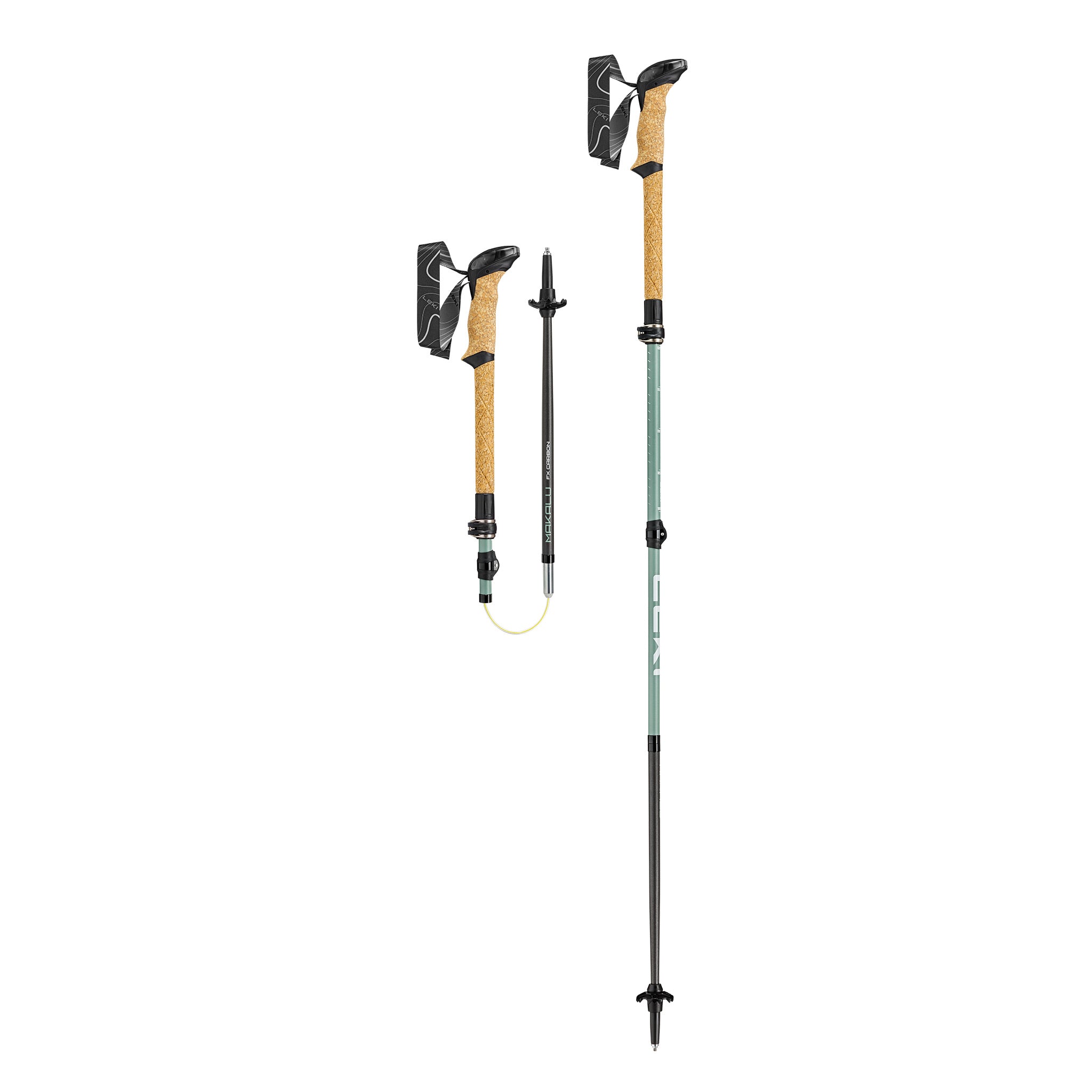
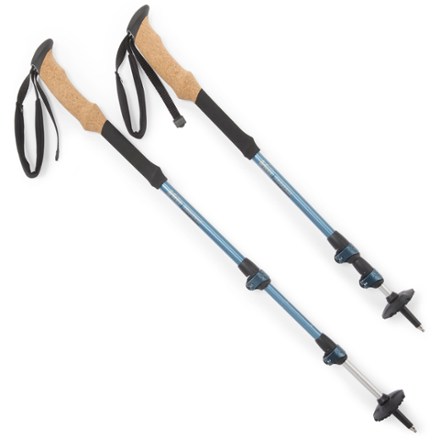
Leki Makalu FX Carbon
#2Best Carbon

Leki Makalu FX Carbon

Weight/Pair

17.8 oz (110-130 cm)

Material

Carbon fiber (PRC 1000)

Sections

Folding (FX) + adjustable top section

Lock Type

ELD core lock + Speed Lock 2 Plus lever

Grip Material

Aergon Air hollow-core foam

Max Length

130 cm (compact: 120 cm)

Packed Length

41 cm

Price

$230/pair

The Leki Makalu FX Carbon represents what happens when a German engineering company with decades of pole-making experience builds a folding carbon trekking pole without compromise. Despite what the classic Makalu name suggests, this is not a telescoping pole: the FX designation marks Leki's folding system, in which the shaft sections snap together on an internal core and lock with Leki's ELD (External Locking Device), while a Speed Lock 2 Plus lever on the top section gives a full 20 cm of length adjustment. Per Leki's spec sheet, the standard version adjusts from 110 to 130 cm, folds down to 41 cm, and weighs 252 grams per pole — about 17.8 ounces per pair (a 100-120 cm compact version runs 241 grams per pole). The PRC 1000 carbon shafts deliver the vibration dampening and planted, precise feel that carbon excels at.

Leki's Aergon Air grip is the product of decades of ergonomic research. The broad, contoured grip head distributes force across a wider area of your hand than cylindrical grips, noticeably reducing pressure points during full-day hikes, and its hollow-core construction trims weight without giving up the palm-rest shape. Below the grip, an extended section supports quick grip changes on steep traverses. Independent reviewers back the design up: The Big Outside's long-term review praises the Makalu FX Carbon as a packable folder that trades almost nothing away in stiffness or security, and verified owners consistently single out how solid the deployed pole feels for something that folds this small.

At $229.95 per pair (Leki USA list price, July 2026), the Makalu FX Carbon is a serious investment, and at roughly 17.8 ounces per pair it is not the lightest carbon option in this roundup — Black Diamond's Distance Carbon FLZ undercuts it by about half an ounce per pole. What you get for the extra money and grams is the widest adjustment range of any folding pole here (20 cm versus the FLZ's 15 cm) and Leki's grip comfort. Like all thin-walled carbon, the shafts are more susceptible to splintering from hard lateral impacts against sharp rock edges, so hikers in dense boulder fields should exercise more care than with aluminum poles. For a head-to-head brand breakdown, see our Black Diamond vs Leki comparison, and pair them with a solid pair of boots from our best hiking boots roundup for a complete trail setup.

Pros

  • +Folds to 41 cm yet still adjusts a full 20 cm (110-130 cm)
  • +Aergon Air grip shape reduces hand fatigue
  • +Superior vibration dampening from PRC 1000 carbon shafts
  • +Widest length adjustment of any folding pole in this roundup
  • +Premium Leki build quality and warranty

Cons

  • Expensive at $229.95 per pair
  • Heavier than Black Diamond's folding carbon rivals
  • Foam grip only — no cork option on this model
  • Carbon can splinter from hard lateral impacts

Best for: Experienced hikers and long-distance trekkers who want a packable folding carbon pole with the widest on-trail length adjustment and are willing to pay a premium for Leki's grip ergonomics.

Check Price on Amazon
REI Co-op Traverse
#3Best Value

REI Co-op Traverse

Weight/Pair

1 lb 2.5 oz (90-120 cm)

Material

Aluminum (7001)

Sections

3-section telescoping

Lock Type

External lever locks (tool-free microadjust)

Grip Material

Ergonomic-angle cork with palm rest

Max Length

140 cm (105-140 size)

Packed Length

66 cm

Price

$119/pair

The current-generation REI Co-op Traverse delivers most of the performance of $140-plus poles at $119 per pair, making it the best value full-featured trekking pole for hikers who want quality without overpaying — OutdoorGearLab's review notes it undercuts comparable competitors by $20 to $40. REI designed these poles for their house brand with the same attention to ergonomics and durability as their successful tent and pack lines. The extended cork grips got a genuine upgrade in this generation: REI added an improved ergonomic angle and a palm rest that keeps your hand from sliding on hard downhill plants, closing most of the comfort gap to the angled-grip Black Diamond Trail Ergo Cork.

The shafts are robust 7001 aluminum with a moderately thick tube diameter, which is why reviewers consistently describe the Traverse as a durable workhorse that shrugs off standard trail abuse and doubles for snowshoeing. The external lever locks now include tool-free microadjust tightening, so you can firm up a slipping lock trailside without carrying a screwdriver — a practical upgrade over older lever systems that needed tools. The Traverse comes in two size ranges, 90 to 120 cm and 105 to 140 cm, so buy by your height rather than assuming one SKU fits all.

REI lists the smaller size at 1 pound 2.5 ounces per pair and the larger at 1 pound 3.5 ounces, which puts the Traverse within an ounce of premium aluminum poles costing more. The included carbide tips and removable rubber protectors match the quality of poles costing twice as much. The wrist straps are padded and adjustable, comfortable enough for all-day use without modification. REI's generous return policy and member dividend further strengthen the value proposition. For new hikers buying their first quality poles, budget-conscious backpackers, or anyone who does not want to spend $195-plus on carbon, the Traverse is the smartest widely available purchase in 2026. Check our backpacking gear checklist to round out your kit.

Pros

  • +Excellent value at $119 per pair
  • +Ergonomic-angle cork grip with palm rest
  • +Durable 7001 aluminum handles snow duty too
  • +Tool-free microadjust lever locks
  • +REI return policy and member dividend

Cons

  • Two size ranges — neither covers all heights alone
  • Heavier than carbon options
  • Wrist straps are adequate but not premium
  • Sold only through REI

Best for: New hikers, budget-conscious backpackers, and anyone who wants a reliable aluminum trekking pole with quality materials at the best price in the category.

Check Price on Amazon
Black Diamond Distance Carbon Z
#4Best Ultralight

Black Diamond Distance Carbon Z

Weight/Pair

From 9.0 oz (256 g, 105 cm)

Material

Carbon fiber

Sections

3-section Z-fold

Lock Type

Fixed length (speed cone deployment)

Grip Material

EVA foam with breathable strap

Max Length

105-130 cm fixed sizes

Packed Length

35-44 cm by size

Price

$220/pair

The Black Diamond Distance Carbon Z is the trekking pole that ultralight hikers and trail runners build their gear lists around. Black Diamond's current spec sheet lists 256 to 296 grams per pair depending on size — from 9.0 ounces for the 105 cm — which is barely more than a single aluminum pole from most competitors. The Z-fold design collapses to between 35 and 44 cm by size, small enough to slide into a running vest pocket or strap to the side of an ultralight pack without any overhanging length. Deployment takes about three seconds: pull the sections apart, and the internal tension cord snaps each joint into place with an audible click.

The tradeoff for this extreme weight and packability is fixed length. The Distance Carbon Z now comes in six fixed sizes from 105 to 130 cm in 5 cm steps (the old 100 cm entry size is gone from Black Diamond's current lineup), and there is no adjustment mechanism. You choose your size at purchase based on your height and preferred pole length. This is a non-issue for experienced hikers who know their ideal length, but it means you cannot adjust for steep uphills and downhills or share poles with a hiking partner of different height. The EVA foam grip is minimalist but effective, comfortable enough for full-day use without causing hot spots, and the breathable strap keeps your hand secure during aggressive planting.

Carbon fiber at this diameter and weight is inherently more fragile than thicker aluminum or carbon shafts. The Distance Carbon Z is not the pole for bushwhacking through dense brush or jamming between boulders. It is designed for fast, efficient hiking and running on established trails where you plant precisely and avoid lateral stress. Within that use case, it performs brilliantly. The snap on each pole plant is crisp and confidence-inspiring, and the vibration dampening makes long descents noticeably more comfortable than aluminum. For fastpackers, trail runners who want poles for climbs, and ultralight hikers who treat every gram as sacred, the Distance Carbon Z is the benchmark in 2026.

Pros

  • +Lightest in this roundup — 9.0 oz per pair in the 105 cm size
  • +Packs to 35-44 cm and fits running vest pockets
  • +Deploys in seconds with Z-fold tension cord
  • +Excellent vibration dampening from carbon shafts
  • +Crisp, confidence-inspiring pole plant feel

Cons

  • Fixed length with no adjustment
  • Fragile under lateral stress or impacts
  • Premium price at $219.95 per pair
  • Not suitable for bushwhacking or rocky scrambles

Best for: Ultralight hikers, fastpackers, and trail runners who want the absolute lightest poles with minimal packed size and are willing to sacrifice adjustability.

Check Price on Amazon
Gossamer Gear LT5
#5Best for Thru-Hiking

Gossamer Gear LT5

Weight/Pair

9.8 oz (278 g, poles only)

Material

Carbon fiber

Sections

3-piece telescoping

Lock Type

Twist lock

Grip Material

EVA foam

Max Length

130 cm

Packed Length

60 cm

Price

$195/pair

The Gossamer Gear LT5 comes from a brand built around ultralight thru-hiking, and that focus shows in every design decision. Gossamer Gear's spec sheet lists 4.9 ounces (139 grams) per pole without baskets — about 9.8 ounces per pair — with full telescoping adjustability from 60 to 130 cm, splitting the difference between ultralight fixed-length Z-fold poles and heavier adjustable carbon models. Among adjustable carbon poles, almost nothing this light exists at any price, which is why the LT5 shows up trail after trail in thru-hiker gear lists published by The Trek and Halfway Anywhere.

The EVA foam grip is soft, light, and absorbs sweat well across the long, repetitive days that define thru-hiking, and the strap is minimal but comfortable. The three-piece shaft adjusts with traditional twist locks: rotate to loosen, slide to length, rotate to snug. Twist locks lack the one-handed convenience and visual confirmation of external lever locks, and they reward a deliberate firm twist — reviewers note you learn to give them a confident crank so they hold under full descent loading. In exchange, the profile is clean, nothing snags on brush or pack straps, and the poles collapse to a travel-friendly 60 cm (23.5 inches).

Ultralight carbon this thin demands the same care as the rest of an ultralight kit: reviewers at Better Trail and long-distance hikers alike treat the LT5 as a precision tool for established trail rather than a pry bar for boulder fields. Owners report taking the LT5 across long stretches of varied Appalachian Trail terrain including rock fields, root networks, and mud without structural concerns when planted straight. One practical note: Gossamer Gear sells the LT5 direct and through a handful of specialty ultralight retailers, and it goes out of stock periodically between production runs — as of July 2026 the pair listing showed sold out with a restock notification option, so plan a thru-hike purchase ahead.

Pros

  • +Full adjustability at just 9.8 oz per pair (maker spec, no baskets)
  • +Collapses to 60 cm — shortest telescoping pack size here
  • +Clean snag-free profile with no external levers
  • +Soft EVA grip suits long repetitive days
  • +Proven favorite in published thru-hiker gear lists

Cons

  • Twist locks are slower than lever locks and need a firm set
  • Requires ultralight-gear care — not for boulder-field abuse
  • Sold direct and via few specialty retailers; stock comes and goes
  • $195 price with no cork grip option

Best for: Thru-hikers and long-distance backpackers who want the lightest fully adjustable carbon poles available and accept ultralight handling care in exchange.

Check Price on Amazon
Cascade Mountain Tech Quick Lock
#6Best Budget

Cascade Mountain Tech Quick Lock

Weight/Pair

1 lb 4.8 oz

Material

Aluminum

Sections

3-section telescoping

Lock Type

Quick Lock (external lever)

Grip Material

Cork with EVA extension

Max Length

137 cm

Packed Length

66 cm

Price

$30/pair

The Cascade Mountain Tech Quick Lock poles are the reason nobody should hike without poles due to cost. At $29.99 per pair direct from Cascade Mountain Tech — with cork grips, external lever locks, and tungsten carbide tips — these poles include features typically found on models costing four times more. Cascade Mountain Tech built their brand on this value proposition, and the Quick Lock poles are a perennial bestseller at Amazon, Costco, and big-box sporting goods stores for good reason. The cork grips are genuine, not synthetic imitations, and they provide the moisture-wicking and hand-molding properties that make cork the preferred grip material for most hikers.

Build quality is good for the price, with a few expected compromises. The aluminum shaft is 6061 series rather than the higher-grade 7075 used in premium poles, which means slightly less strength per unit weight. In practice, this matters only under extreme loads or if you are a larger hiker who leans heavily on poles during descents. The Quick Lock external lever mechanism works reliably but feels less precise than the FlickLock systems on Black Diamond and REI poles. It occasionally requires retightening during long hikes, especially in the first few uses before the mechanism seats fully. The wrist straps are functional but basic, with less padding than premium alternatives.

Cascade Mountain Tech lists the weight at 10.4 ounces per pole — about 1 pound 4.8 ounces per pair — so you carry a couple of ounces more than the premium aluminum picks, and the poles adjust from 26 to 54 inches (66 to 137 cm) per the manufacturer spec. Included accessories match or exceed the premium competition: carbide tips, removable rubber protectors, small trekking baskets, and snow baskets are all in the box with a zippered storage bag. For hikers buying their first poles, occasional trail users who cannot justify $100-plus, or anyone who wants a backup pair to stash in the car, the Cascade Mountain Tech Quick Lock delivers far more pole than the price suggests. For a full gear list on a budget, see our day hike packing list.

Pros

  • +Unbeatable value at $29.99 per pair direct
  • +Genuine cork grips at this price point
  • +Includes snow baskets and all accessories
  • +Wide 66-137 cm adjustment range
  • +External lever locks are easy to operate

Cons

  • 6061 aluminum is less strong than 7075
  • Locks may need occasional retightening
  • Wrist straps lack padding of premium models
  • Cork quality is slightly lower than Leki or BD

Best for: Budget-conscious hikers, beginners buying first poles, and anyone who wants cork grips and lever locks at the lowest possible price without sacrificing essential functionality.

Check Price on Amazon
Black Diamond Distance Carbon FLZ
#7Best Folding

Black Diamond Distance Carbon FLZ

Weight/Pair

11.9 oz (336 g, 110-125 cm)

Material

Carbon fiber

Sections

3-section Z-fold

Lock Type

Z-fold deployment plus FlickLock+ adjustment

Grip Material

EVA foam with breathable strap

Max Length

125 cm (110-125 size)

Packed Length

37 cm (110-125 size)

Price

$240/pair

The Black Diamond Distance Carbon FLZ answers the one question its fixed-length sibling cannot. The Distance Carbon Z elsewhere in this roundup packs tiny and weighs almost nothing, but it locks you into a single length chosen at purchase. The FLZ keeps the same folding Z-pole skeleton and 100 percent carbon shafts, then adds a soft-touch FlickLock+ collar to the top section so you can telescope across a 15 cm range. According to Black Diamond's spec sheet that range lets you shorten the poles for climbs and extend them for descents, the adjustability most folding poles sacrifice for packed size. It is the cleanest way to get both compact storage and on-trail length changes in one pole.

Deployment follows the familiar Black Diamond pattern: pull the sections apart, let the internal tension cord snap each joint into place, then set your length with the lever. Reviewers consistently describe the action as fast and intuitive once you have done it a few times, and the reinforced joint support is rated for repeated folding cycles. The EVA foam grips and non-slip mini-extensions are the same comfort-focused setup found on the Distance Carbon Z, with a breathable moisture-wicking strap made from recycled material. Owner reports note the foam shrugs off sweat well and the grip extension is genuinely useful for choking down on steep, off-camber terrain without re-adjusting the FlickLock.

The tradeoff is the one carbon-folding poles always carry. Black Diamond's spec sheet lists 336 grams (11.9 ounces) per pair for the middle 110-125 cm size — 308 grams for the 95-110 and 364 grams for the 125-140 — so the FLZ sits an ounce or two heavier than the fixed Distance Carbon Z because of the added lock hardware, and like any thin carbon Z-pole it is happiest planted precisely on established trail rather than torqued sideways between boulders. The published packed length of 34 to 40 cm by size still slips into a running vest or the side pocket of an alpine pack, and the 110-125 cm size shown here covers most adult hikers; Black Diamond also offers 95-110 and 125-140 cm versions. If you know your exact length and want the absolute lightest setup, the fixed Distance Carbon Z saves a few grams and $20. If you want a wider 20 cm adjustment range in a folding carbon pole, the Leki Makalu FX Carbon is the call. But for hikers who need folding packability and real length adjustment in a single pole, the Distance Carbon FLZ is the standout folder in 2026. Pair it with our backpacking gear checklist when you build out your kit.

Pros

  • +Folding Z-pole packability with 15 cm of FlickLock+ adjustment
  • +100 percent carbon shafts — 336 g (11.9 oz) per pair in the mid size
  • +Packs to 34-40 cm for running vests and alpine packs
  • +Comfortable EVA foam grips with usable mini-extension
  • +Three adjustable size ranges fit most adult hikers

Cons

  • Slightly heavier than the fixed Distance Carbon Z
  • Thin carbon is vulnerable to lateral stress and impacts
  • Premium price at $239.95 per pair
  • Adjustment range is narrower than a full telescoping pole

Best for: Fastpackers, frequent travelers, and trail hikers who want folding packed size plus genuine length adjustment in one carbon pole, and do not mind a small weight penalty over a fixed-length Z-pole.

Check Price on Amazon
Kelty Range 2.0
#8Best for Beginners

Kelty Range 2.0

Weight/Pair

1 lb 6 oz (612 g)

Material

Aluminum (6061 anodized)

Sections

Telescoping with anti-shock

Lock Type

Twist lock

Grip Material

Cork with EVA foam extension

Max Length

135 cm

Packed Length

90 cm

Price

$60/pair

The Kelty Range 2.0 is the trekking pole to hand to friends who have never used poles before. At Kelty's $59.95 list price, it provides a forgiving, comfortable introduction to pole hiking without the investment risk of premium models. Kelty specs the grip as extended cork with an EVA foam section below it, so beginners get the moisture-wicking cork feel that usually costs more, plus a soft foam landing zone for choking down on climbs. The Range 2.0 also builds in an integrated anti-shock system — a spring element that cushions each pole plant — which new hikers who grip too tightly tend to appreciate on long downhills, even though experienced ultralighters usually skip the feature.

Kelty focused the Range 2.0 design on simplicity. Length adjusts with twist locks: rotate to loosen, slide to your mark, rotate to snug. There are no levers to snap or tension screws to tune, though twist locks do reward a deliberate, firm set — owner feedback commonly notes re-tightening them once early in a hike until the mechanism seats. The included wrist straps are wide and padded with a simple closure that beginners find easier to operate than the more complex threading systems used by premium brands. One honest caveat from the manufacturer spec sheet: the poles only collapse to 35 inches (90 cm), which hangs off small daypacks and rules out suitcase packing — this is a pole you carry or strap tall.

The 6061 anodized aluminum shaft is a softer, cheaper alloy than the 7075 used in premium poles, which has an upside for beginners: a softer alloy bends gradually under extreme stress rather than staying rigid, providing a visible warning sign before failure. The weight of 1 pound 6 ounces per pair (612 grams, per Kelty) is the heaviest in this roundup but hardly noticeable for day hikes. Included accessories cover the essentials: carbide tips, rubber tip protectors, and baskets. For hikers discovering whether trekking poles are right for them, the Range 2.0 removes the cost barrier while accurately representing what good poles offer. For a full beginner-friendly gear guide, check our day hike packing list.

Pros

  • +Beginner-friendly design with simple twist adjustment
  • +Real cork grip with EVA extension at a budget price
  • +Integrated anti-shock cushions descents
  • +Affordable at $59.95 list, often less at retailers
  • +Wide padded wrist straps are easy to use

Cons

  • Heaviest poles in the roundup at 1 lb 6 oz
  • Collapses only to 90 cm — poor for packs and travel
  • Twist locks need an early re-tighten to seat
  • 6061 aluminum is softer than premium 7075 shafts

Best for: First-time trekking pole users, casual hikers testing whether poles are right for them, and anyone who wants a comfortable, intuitive pole at an entry-level price.

Check Price on Amazon

Trekking Pole Buying Guide

Choosing the right trekking pole means matching shaft material, lock type, grip material, and fold mechanism to your hiking style. This guide breaks down each decision factor so you can choose confidently.

Carbon Fiber vs Aluminum

Carbon fiber poles weigh 20 to 40 percent less than aluminum equivalents and absorb vibration significantly better, reducing hand and arm fatigue over long days. The tradeoff is cost (50 to 100 percent more expensive) and fragility under lateral impact. Carbon shafts can splinter or snap when hit sideways against sharp rock edges, while aluminum bends gradually and can sometimes be field-straightened. For maintained trails and long-distance hiking, carbon is the superior material. For bushwhacking, scrambling, and rugged off-trail terrain, aluminum provides better peace of mind. Both materials last years with normal use.

The manufacturer spec sheets in this roundup make the tradeoff concrete: our aluminum picks run 18 to 22 ounces per pair at $30 to $140, while the carbon picks run 9 to 17.8 ounces at $195 to $240 — roughly speaking, every ounce saved costs about $20, and verified-owner feedback consistently adds that aluminum survives the sideways abuse (rock wedges, pack-strap torque, airline handling) that cracks thin carbon. For the full breakdown, see our dedicated carbon vs aluminum trekking poles guide.

Telescoping vs Folding

Telescoping poles use nested tubes that slide and lock at any point within their range, offering infinite adjustability and field repairability. They pack to 60 to 70 cm, which is longer than folding poles but manageable for most packs. Folding poles collapse to 35 to 42 cm using Z-fold hinges, making them ideal for stowing in running vests and airline carry-on bags. Most folding poles sacrifice adjustability for packability, though hybrid designs like the Black Diamond Distance Carbon FLZ offer both. If packed size is your priority, choose folding. If adjustability and simplicity matter more, choose telescoping.

Grip Materials Compared

Cork is the gold standard: it wicks moisture, molds to your hand over time, and reduces vibration. It is the best warm-weather grip and the most comfortable over long distances. EVA foam is softer, lighter, and more cushioned, making it ideal for beginners who tend to over-grip. Foam absorbs sweat well but wears faster than cork. Rubber insulates against cold and works best with gloves in winter conditions but causes blisters in warm weather due to moisture trapping. Most three-season hikers will be happiest with cork or foam. Choose based on your grip pressure and typical temperature range.

Lock Types Explained

External lever locks (FlickLock, Speed Lock, Quick Lock) are the most common and user-friendly. You flip a lever to release, slide to adjust, and flip back to lock. They are easy to operate with cold or gloved hands and provide visible confirmation that the lock is engaged. Twist locks are lighter and lower-profile but harder to operate with wet or gloved hands and do not provide visual confirmation of engagement. Cam locks split the difference with a twist mechanism that is slightly easier to operate. For most hikers, external lever locks are the best choice. Twist locks appeal to minimalists who want the lowest weight and cleanest profile. Check our best hiking boots guide to complete your trail footwear setup.

Sizing and Adjustment

The correct pole length positions your forearm parallel to the ground when the pole tip touches beside your foot. For adjustable poles, set this as your baseline and shorten by 5 to 10 cm for uphills, lengthen by 5 to 10 cm for downhills. Most adjustable poles cover a 30 to 40 cm range, which accommodates hikers from roughly 5 feet 2 inches to 6 feet 4 inches depending on the model. Fixed-length folding poles come in specific sizes, so measure carefully before purchasing. If you are between sizes, choose the shorter option as it is easier to adjust technique to a slightly short pole than to a slightly long one.

Frequently Asked Questions

Are trekking poles worth it for day hikes?

Trekking poles provide measurable benefits even on day hikes. A 2011 study in Medicine & Science in Sports & Exercise (Howatson et al.) found hikers using poles on a mountain trek showed markedly less muscle damage and next-day soreness than the no-pole group, and poles improve balance on uneven terrain while helping maintain a consistent hiking rhythm that reduces overall fatigue. On flat and gentle trails under 5 miles, poles are optional. On steep or rocky terrain, trails with stream crossings, or hikes longer than 6 miles, poles make a significant difference in comfort and safety. Many hikers who start using poles on a difficult hike never go back to hiking without them.

Carbon or aluminum trekking poles: which is better?

Carbon fiber poles are lighter and absorb vibration better, making them ideal for long-distance hiking and thru-hiking where cumulative fatigue matters. Aluminum poles are heavier but more durable, less expensive, and bend rather than break under extreme stress. If you hike primarily on maintained trails and value low weight, carbon is worth the premium. If you bushwhack through dense terrain, hike in rocky environments where poles contact stone frequently, or want a rugged all-purpose pole at a lower price, aluminum is the safer choice. Many experienced hikers own one pair of each and select based on the trip.

What is the correct trekking pole length for my height?

Manufacturer sizing charts use a simple formula: multiply your height in centimeters by 0.68 and round to the nearest 5 cm — Leki's pole length advisor, for example, puts a 175 cm (5 ft 9 in) hiker on 120 cm poles. The practical check is the same one Black Diamond and REI recommend: set your poles so your forearms are parallel to the ground with the pole tip touching the surface beside your foot. For hikers under 5 feet 6 inches, poles in the 100 to 110 cm range work well. For hikers between 5 feet 6 inches and 5 feet 11 inches, 110 to 120 cm is typical. For hikers over 6 feet, look for poles that extend to 130 cm or longer. On steep uphills, shorten the poles by 5 to 10 cm. On steep downhills, lengthen them by 5 to 10 cm. Adjustable poles allow you to fine-tune length throughout the day based on terrain changes.

Folding or telescoping trekking poles: which should I choose?

Telescoping poles use nested sections that slide and lock at your desired length. They are more adjustable, usually less expensive, and easier to repair in the field. Folding (Z-fold) poles collapse like tent poles using internal cords. They pack smaller, deploy faster, and are lighter, but they offer limited or no length adjustment. Choose telescoping if you share poles with hiking partners of different heights, hike varied terrain requiring frequent length changes, or want field repairability. Choose folding if packed size is critical, you know your ideal length, and you value fast deployment from a running vest or pack pocket.

Cork, foam, or rubber grips: which is best?

Cork grips conform to your hand shape over time, wick moisture well, and reduce vibration. They are the preferred choice for warm-weather hiking and long-distance use. Foam grips (typically EVA) are softer, absorb sweat effectively, and are comfortable in both warm and cold conditions. They are lighter than cork but wear faster. Rubber grips insulate best in cold weather and provide a secure hold with gloves, but they cause blisters in warm weather because they trap moisture. For three-season hiking, cork or foam are both excellent. For winter hiking with gloves, rubber has an advantage.

How do I maintain my trekking poles?

After each hike, wipe down the shafts and dry the locking mechanisms to prevent corrosion. For telescoping poles, periodically separate all sections, clean the inside of each tube with a damp cloth, and dry them completely before reassembling. Replace worn carbide tips before they become rounded, which typically happens every 500 to 1000 miles depending on terrain. Inspect rubber baskets for cracks before each season. Store poles in the extended or semi-extended position to reduce stress on internal cords and springs. Avoid leaving carbon poles in hot car trunks for extended periods, as sustained heat can weaken the epoxy bonding the carbon fibers.

Should I hike with one trekking pole or two?

Two. The published studies on reduced muscle damage and improved stability used pairs, a matched pair balances load across both arms, and four points of contact matter most on descents and stream crossings. Two poles also pitch trekking-pole shelters. A single pole or hiking staff still helps on gentle terrain and keeps a hand free for a dog leash or camera, so some walkers deliberately carry one. For steep grades, heavy packs, or knee concerns, verified-owner consensus strongly favors the pair.

Can you bring trekking poles on a plane?

Not in the cabin on US flights. The TSA's 'What Can I Bring' guidance lists hiking poles as prohibited in carry-on bags and allowed in checked baggage, and officers make the final call at the checkpoint — rubber tip protectors do not change the rule. Folding models like the Black Diamond Distance Carbon Z collapse to 35 to 44 cm and fit easily in a checked duffel. Traveling carry-on only? Plan to buy, rent, or ship poles at your destination.

Are anti-shock trekking poles worth it?

Anti-shock poles add a spring or elastomer that compresses on impact. REI's buying advice notes the feature can reduce strain on descents, which is why it appears on comfort-oriented models like the Kelty Range 2.0 in this roundup. The tradeoffs are extra weight, more moving parts, and a slightly spongy feel on hard plants — owner feedback is why most premium carbon poles skip it. Worth trying for sensitive wrists, elbows, or knees; most other hikers get better value from a good cork or foam grip.

Final Verdict

After comparing 12 trekking poles across steep mountain ascents, technical descents, and multi-day thru-hike use cases, the Black Diamond Trail Ergo Cork earns our top recommendation as the best overall trekking pole of 2026. Its ergonomic angled grip, rock-solid FlickLock Pro locks, and 7075 aluminum durability make it the right choice for the widest range of hikers at its $140 list price — just move quickly, because Black Diamond has dropped it from the 2026 lineup and it now sells from remaining retailer stock.

Experienced hikers who want a folding carbon pole with the widest on-trail adjustment should choose the Leki Makalu FX Carbon, which packs to 41 cm yet adjusts a full 20 cm. For the best value in the category, the REI Co-op Traverse delivers most of that premium performance at $119. Ultralight purists will gravitate to the Black Diamond Distance Carbon Z at as little as 9 ounces per pair by manufacturer spec, while thru-hikers planning thousand-mile journeys should invest in the purpose-built Gossamer Gear LT5.

Budget hikers have an excellent option in the Cascade Mountain Tech Quick Lock at $30, which punches well above its price with genuine cork grips and lever locks. The Black Diamond Distance Carbon FLZ uniquely combines folding packability with FlickLock+ adjustability for fastpackers and frequent travelers. And beginners will find the Kelty Range 2.0's cork grips and simple twist adjustment the perfect introduction to pole hiking at just $60. Shopping on a tighter budget? Every pick under $50 gets its own deep dive in our best trekking poles under $50 roundup.

Related Guides

JT

Peak Gear Guide Editorial Team

Updated July 2026

The Peak Gear Guide editorial team builds every recommendation from manufacturer specifications, published independent lab and field tests, and aggregated verified-owner reviews — cross-checking the numbers before we publish, and updating our picks as new gear and test data appear.

References & further reading

External, authoritative sources we consulted while researching this guide.

Editorial Disclosure

Peak Gear Guide is reader-supported. When you purchase through links on our site, we may earn an affiliate commission at no additional cost to you. Our editorial team researches every product independently and recommendations are never influenced by affiliate partnerships. Product prices and availability are accurate as of the publication date and are subject to change. Last updated July 5, 2026.

Browse All Gear Categories

Every Peak Gear Guide roundup, organized by category. Research-vetted picks with transparent comparisons across 100+ gear types.

Big 4 — Shelter, Sleep, Pack, Stove

Footwear

Apparel & Layering

Packs & Carry

Camp Comfort

Cooking & Food

Tech & Navigation

Trekking Poles & Accessories

Sleep — Specialty

Tents — Specialty

By Fit & Foot Shape

Budget Picks

Water & Adventure