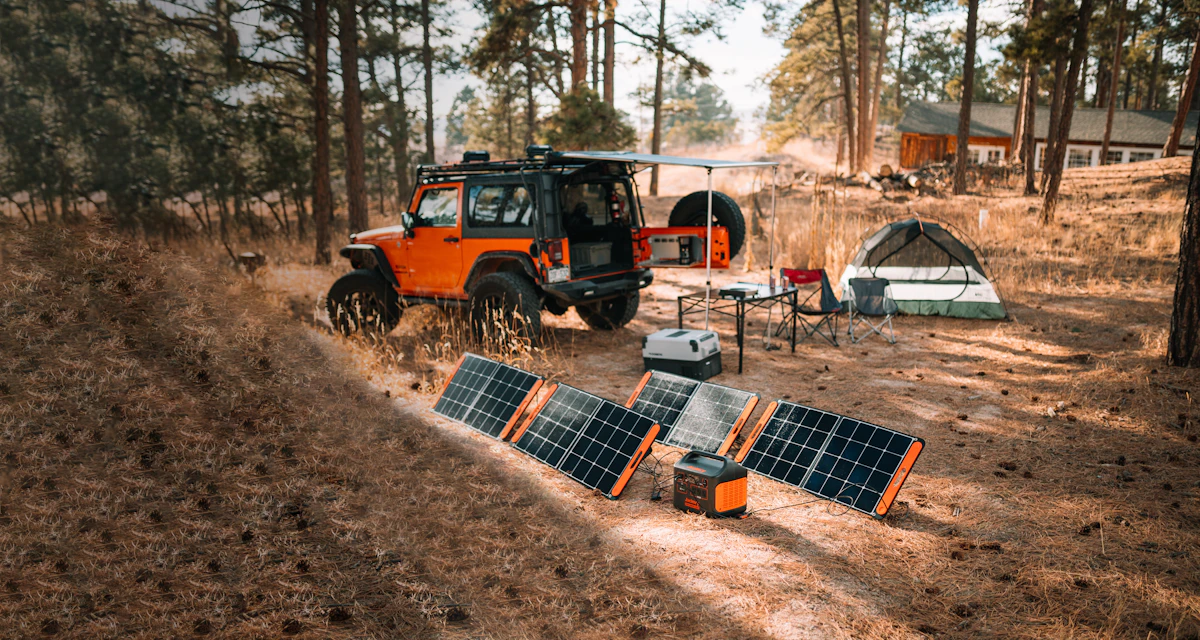
Solar charger panel in outdoor setting
Best Gear 2026

Best Solar Chargers for Camping

Tested for wattage, efficiency, and durability — keep your devices powered on any backcountry trip.

Quick Picks

Best Overall

Goal Zero Nomad 10

$60 · 10W

Check Price →
Best High Wattage

BigBlue 28W Solar Charger

$60 · 28W

Check Price →
Best Value

Anker 21W PowerPort Solar

$45 · 21W

Check Price →
Best with Power Bank Built-In

BioLite SolarPanel 10+

$80 · 10W

Check Price →
Best Ultralight Value

Nekteck 21W Solar Charger

$30 · 21W

Check Price →

In This Review

  1. Goal Zero Nomad 10Best Overall
  2. BigBlue 28W Solar ChargerBest High Wattage
  3. Anker 21W PowerPort SolarBest Value
  4. BioLite SolarPanel 10+Best with Power Bank Built-In
  5. Nekteck 21W Solar ChargerBest Ultralight Value
  6. Buying Guide: Choosing a Camping Solar Charger
  7. Frequently Asked Questions

The Best Camping Solar Chargers for 2026

Running out of battery in the backcountry is more than an inconvenience — for navigation and emergency communication, it's a safety issue. A quality solar panel keeps your phone, GPS, satellite communicator, and headlamp batteries topped up without adding much weight to your pack. We tested panels across a range of wattages and price points, comparing real-world charging speeds against rated specs, durability under field conditions, and overall value.

If you're building out a complete backcountry power system, pair a solar panel with a quality camping lantern with built-in USB charging output and a satellite communicator to stay connected anywhere. Our ultralight backpacking guide also covers power management strategies for extended trips.

Comparison at a Glance

ChargerWeightWattsPortsEfficiencyPrice
Goal Zero Nomad 1010.4 oz10WUSB-A23%$60
BigBlue 28W Solar Charger20 oz28W3× USB-A24%$60
Anker 21W PowerPort Solar15.9 oz21W2× USB-A21.5%$45
BioLite SolarPanel 10+15.9 oz10WUSB-A + USB-C22%$80
Nekteck 21W Solar Charger13.6 oz21W2× USB-A21%$30

Full Reviews

Goal Zero Nomad 10
Best Overall
#1 Pick

Goal Zero Nomad 10

$60

Weight

10.4 oz

Output

10W

Ports

USB-A

Efficiency

23%

Folded Size

5.75 × 3.75 in

The Goal Zero Nomad 10 is the benchmark for portable solar panels, and for good reason. The monocrystalline silicon panels deliver a genuine 10W output in good conditions, and the rugged nylon and TPU construction has survived years of abuse on backcountry trips. The integrated kickstand holds the panel at an optimal angle whether you're stopped at camp or strapping it to a pack.

Charging performance is consistent. In direct afternoon sun, a modern smartphone goes from 20% to full in about 90 minutes. The chain daisy port lets you connect multiple Nomad panels for more output if needed. The chain port also connects to Goal Zero's Sherpa or Flip power banks for stored charging, though those are sold separately.

The Nomad 10 costs more than Chinese alternatives with similar watt ratings, but the build quality and customer support are noticeably better. For serious backcountry travelers who depend on GPS, satellite communicators, and camera batteries, the reliability premium is worth it.

Best for: Solo backpackers on multi-day trips

Check Price

BigBlue 28W Solar Charger
Best High Wattage
#2 Pick

BigBlue 28W Solar Charger

$60

Weight

20 oz

Output

28W

Ports

3× USB-A

Efficiency

24%

Folded Size

6.3 × 3.4 in

The BigBlue 28W delivers the highest wattage-per-dollar ratio on this list. Three USB-A ports let you charge three devices simultaneously, and the built-in ammeter gives real-time current output — a surprisingly useful feature for positioning the panel to maximize sun exposure. At 24% panel efficiency, it punches above its weight class.

The SolarPower auto-detect technology reads each device's power requirements and optimizes output accordingly. In practice this means your iPad, GPS, and headlamp can all charge simultaneously without the slowdowns common in multi-port USB chargers. Folded, it's compact enough to slip into a laptop sleeve or pack lid.

The 20-ounce weight is heavier than ultralight options, but for car campers and base campers who need to keep multiple devices charged over several days, it's one of the most cost-effective solutions available. Backpackers who need high wattage should look here first.

Best for: Multi-device charging and base camps

Check Price
Anker 21W PowerPort Solar
Best Value
#3 Pick

Anker 21W PowerPort Solar

$45

Weight

15.9 oz

Output

21W

Ports

2× USB-A

Efficiency

21.5%

Folded Size

6.3 × 3.0 in

Anker's reputation for reliable, affordable electronics carries over to this solar panel. The 21W output hits a sweet spot — powerful enough to charge two devices simultaneously at reasonable speed, without the weight and bulk of a 28W+ panel. PowerIQ technology identifies each device and delivers optimized charging current.

The polyester canvas exterior holds up well to field use, and the integrated carabiner loops make pack attachment straightforward. The PowerIQ circuit is the real differentiator over cheaper alternatives — it prevents the voltage fluctuations that can slow charging on sensitive devices like GPS units and satellite communicators.

Some buyers find the efficiency drops more noticeably on overcast days compared to premium panels, but for the price it's exceptional value. If you want a dependable solar charger without paying Goal Zero prices, the Anker 21W is the obvious choice.

Best for: Budget-conscious campers

Check Price
BioLite SolarPanel 10+
Best with Power Bank Built-In
#4 Pick

BioLite SolarPanel 10+

$80

Weight

15.9 oz

Output

10W

Ports

USB-A + USB-C

Efficiency

22%

Folded Size

8.7 × 4.9 in

The BioLite SolarPanel 10+ is unique on this list for its integrated 3,000 mAh battery. The panel captures solar energy into the onboard battery, which you can then use to charge devices at consistent USB output — no intermittency from cloud cover. It's essentially a self-contained solar power system in a single package.

The sunlight indicator dial on the front helps you position the panel for optimal sun angle — something you'd otherwise need a separate app or meter to assess. USB-C output is a major plus over older USB-A-only panels, ensuring compatibility with current-generation devices including newer GPS units and smartphones.

The 10W output is modest, and at $80 it costs more per watt than alternatives. But the convenience of an all-in-one solution that eliminates the panel-plus-power-bank two-piece setup justifies the premium for campers who want simplicity.

Best for: Campers who want panel and power bank in one

Check Price
Nekteck 21W Solar Charger
Best Ultralight Value
#5 Pick

Nekteck 21W Solar Charger

$30

Weight

13.6 oz

Output

21W

Ports

2× USB-A

Efficiency

21%

Folded Size

6.7 × 3.1 in

The Nekteck 21W is genuinely surprising for its price. At $30 you might expect cut corners, but the panel produces consistent output in good sun conditions and the SolarPower IC technology prevents current fluctuations that would otherwise slow charging. In direct testing, it charged a modern smartphone from 0% to full in about two hours of direct sun — comparable to panels costing twice as much.

Build quality is the obvious trade-off. The canvas backing feels thinner than premium panels and the stitching isn't as robust. It'll survive normal camping use but probably won't last as long as a Goal Zero or BigBlue under heavy backcountry abuse. The carabiner loops are functional but could be more heavy-duty.

For campers who want to try solar charging without a large investment, or who want a backup panel to keep in the car for emergencies, the Nekteck 21W delivers exceptional value. Just treat it carefully and it'll serve well.

Best for: Campers on a tight budget

Check Price

Buying Guide: Choosing a Camping Solar Charger

Wattage vs. Weight

Higher wattage means faster charging but more weight and bulk. A 10W panel is sufficient for charging one device per day on a solo trip. A 20–28W panel handles multiple devices or provides more charging buffer on cloudy days. For car camping, maximize wattage; for backpacking, 10–21W is the practical sweet spot.

Panel Type

Monocrystalline panels are more efficient than polycrystalline, meaning more power per square inch of panel area. This matters most when weight is a concern. Most quality backpacking panels use monocrystalline cells — check the specs before buying.

Charging Technology

Look for panels with auto-detect charging ICs (marketed as PowerIQ, Smart IC, or similar) that identify each device's charging requirements and optimize output. This prevents slow charging and is especially important for sensitive electronics like GPS units.

Panel + Power Bank Strategy

For maximum versatility, pair a solar panel with a high-capacity power bank. Charge the bank during the day while hiking, then use the bank to charge devices at camp at consistent speed regardless of sun conditions. This is the most reliable approach for extended off-grid trips.

Frequently Asked Questions

How many watts do I need to charge a phone while camping?
A 10W panel can charge a smartphone in 2–3 hours of direct sun. A 20W+ panel is better for consistent charging and can handle tablets or simultaneously charge multiple devices. For a GPS device or satellite communicator, even a 10W panel is sufficient.
Can solar chargers charge phones directly?
Yes — most camping solar panels have USB-A and/or USB-C output ports for direct device charging. However, direct solar charging is less efficient and can be interrupted by clouds. Pairing a solar panel with a power bank gives you stored energy that charges at consistent speed regardless of real-time sun conditions.
Are solar chargers worth it for backpacking?
For trips longer than 3–4 days, a lightweight solar panel is worth the weight investment. Modern 10W panels weigh around 10–12 ounces — less than carrying the equivalent battery weight. For shorter trips, a single large power bank is usually more weight-efficient.
How do I maximize solar charging efficiency while hiking?
Attach the panel to the back of your pack facing the sun as you hike. Most modern panels with MPPT or Auto IC technology regulate output automatically. Avoid shading any cell — partial shade on a single cell can significantly reduce output from the entire panel.
What's the difference between MPPT and PWM solar controllers?
MPPT (Maximum Power Point Tracking) controllers are more efficient — they extract up to 30% more power from the same panel compared to PWM (Pulse Width Modulation). In small camping panels, look for 'smart charging' or 'MPPT' in the specs. Most quality panels in the $40+ range include this technology.
Can I leave a solar charger in the rain?
Most camping solar panels are water-resistant but not fully waterproof. They can handle light rain and splashing, but should not be submerged or left out in heavy downpours. The junction box and USB ports are the most vulnerable points. In rain, angle the panel to drain water off the surface and keep the port area protected. If you know you'll face wet conditions frequently, look for panels with IPX4 or higher weather resistance ratings.

Our Verdict

The Goal Zero Nomad 10 is the most reliable choice for backpackers who need consistent performance. For car camping and group trips, the BigBlue 28W offers the best wattage-per-dollar. Budget-conscious campers should start with the Anker 21W or Nekteck 21W — both deliver solid performance at a fraction of premium prices.

Related Gear Guides

Related Videos

Reviewed by the Peak Gear Guide Editorial Team. Our testers spend 50+ nights per year in the field across a range of conditions. All products are independently selected; we may earn a commission if you buy through our links at no extra cost to you.

Peak Gear Guide participates in the Amazon Services LLC Associates Program. Buying through our links helps support our testing — thank you.