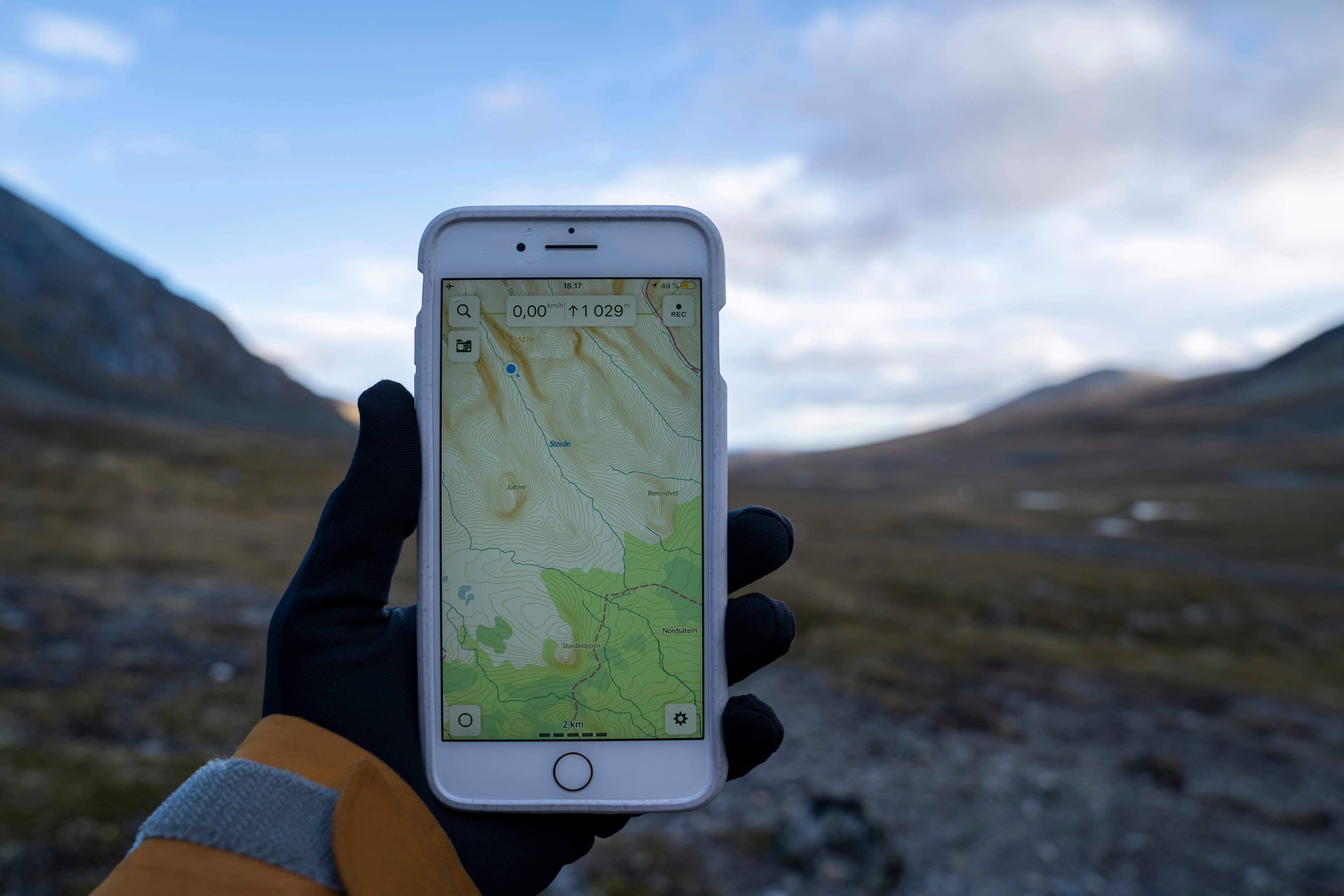
Hiker navigating with GPS device on a mountain trail
Best Gear 2026

Best Hiking GPS Devices

Tested for accuracy, battery life, and trail navigation — top picks from Garmin with satellite communicator options.

Quick Picks

Best Overall

Garmin GPSMAP 67

$399 · 8.1 oz

Check Price →
Best Budget GPS

Garmin eTrex 22x

$130 · 5.0 oz

Check Price →
Best Satellite Communicator

Garmin inReach Mini 2

$350 · 3.5 oz

Check Price →
Best Touchscreen GPS

Garmin Oregon 700

$450 · 7.9 oz

Check Price →
Best Mid-Range

Garmin eTrex 32x

$200 · 5.0 oz

Check Price →

In This Review

  1. Garmin GPSMAP 67Best Overall
  2. Garmin eTrex 22xBest Budget GPS
  3. Garmin inReach Mini 2Best Satellite Communicator
  4. Garmin Oregon 700Best Touchscreen GPS
  5. Garmin eTrex 32xBest Mid-Range
  6. Buying Guide
  7. FAQ

The Best Hiking GPS Devices for 2026

A dedicated GPS device is one of the most important pieces of safety equipment you can carry in the backcountry. Unlike a phone, it works in extreme cold, lasts multiple days on a pair of AA batteries, and keeps functioning when you have no cell signal. We evaluated the top Garmin options across every tier — from a budget eTrex at $130 to a satellite communicator with global SOS — to find the best device for every type of hiker.

For wrist-based navigation, see our roundup of the best hiking watches. If remote safety is your priority, our dedicated guide to the best satellite communicators covers all the major options alongside the inReach Mini 2.

Comparison at a Glance

DeviceBattery LifeSatellite SystemsDisplayWeightPrice
Garmin GPSMAP 6736 hoursMulti-band GPS/GNSS3-inch color TFT8.1 oz$399
Garmin eTrex 22x25 hoursGPS + GLONASS2.2-inch color TFT5.0 oz$130
Garmin inReach Mini 2Subscription req.GPS + Iridium satellite0.9-inch monochrome3.5 oz$350
Garmin Oregon 70016 hoursGPS + GLONASS3-inch dual-orientation touchscreen7.9 oz$450
Garmin eTrex 32x25 hoursGPS + GLONASS2.2-inch color TFT5.0 oz$200

Full Reviews

Garmin GPSMAP 67
Best Overall
#1 Pick

Garmin GPSMAP 67

$399

Battery Life

36 hours

Satellite Systems

Multi-band GPS/GNSS

Display

3-inch color TFT

Weight

8.1 oz

The Garmin GPSMAP 67 is the most capable standalone GPS unit we've tested for hiking. The standout feature is its multi-band GNSS receiver — it pulls signals simultaneously from GPS, GLONASS, Galileo, and BeiDou satellite constellations, giving it exceptional accuracy in challenging terrain. Under dense forest canopy and in deep canyons where older GPS units wander by 10–20 meters, the GPSMAP 67 consistently holds within 3–5 meters. If precise navigation in difficult conditions matters to you, this level of accuracy is the reason to pay the premium.

Battery life is genuinely outstanding: Garmin rates it at 36 hours in GPS mode, and real-world testing on multi-day backpacking trips bears this out. You'll comfortably run the device for 2–3 days between AA battery changes, which matters on long routes away from power. The rugged build is IPX7 waterproof rated and tested to military (MIL-STD-810) standards for drops, vibration, and temperature extremes. The 3-inch display is large enough for comfortable map reading without making the unit bulky.

The GPSMAP 67 ships with preloaded TopoActive maps of your region and supports loading additional maps including Garmin's premium BirdsEye satellite imagery subscription. It pairs via Bluetooth with the Garmin Explore app for route planning on your phone. At $399 it's not cheap, but it's the device you buy once and trust on every serious trip for years.

Best for: Serious backpackers and mountaineers

Check Price
Garmin eTrex 22x
Best Budget GPS
#2 Pick

Garmin eTrex 22x

$130

Battery Life

25 hours

Satellite Systems

GPS + GLONASS

Display

2.2-inch color TFT

Weight

5.0 oz

The Garmin eTrex 22x proves that you don't need to spend $300+ to get a reliable dedicated GPS for hiking. At $130, it delivers the core capabilities that matter most: a GPS + GLONASS satellite connection, preloaded TopoActive maps with shaded relief, a clear 2.2-inch color display, and 25 hours of battery life on two AA batteries. For hikers who want the confidence of a dedicated GPS unit without the premium feature set of the GPSMAP 67, the eTrex 22x is the right choice.

The device is compact and light at 5 ounces — noticeably smaller in hand than the GPSMAP 67. The button-based interface is simple to navigate, which is an advantage for beginners who find the feature-dense menus of higher-end units overwhelming. It's IPX7 waterproof rated and built to take the same trail abuse as the rest of the eTrex lineup. It supports GLONASS alongside GPS for better satellite availability in heavy tree cover or at high latitudes.

The trade-offs compared to the GPSMAP 67 are meaningful but fair for the price: no multi-band GNSS (slightly less accuracy in difficult terrain), a smaller display, and no Bluetooth app connectivity. The eTrex 22x also lacks an electronic compass and barometric altimeter, which the 32x adds for $70 more. But for hikers on marked trails in typical conditions, the eTrex 22x performs everything you need it to do.

Best for: Budget-conscious hikers and beginners

Check Price
Garmin inReach Mini 2
Best Satellite Communicator
#3 Pick

Garmin inReach Mini 2

$350

Battery Life

Subscription req.

Satellite Systems

GPS + Iridium satellite

Display

0.9-inch monochrome

Weight

3.5 oz

The Garmin inReach Mini 2 is a different category of device from the other GPS units in this roundup. Where the GPSMAP 67 and eTrex units are navigation tools, the inReach Mini 2 is primarily a safety device that also does navigation. Its defining capability is two-way satellite messaging over the Iridium network — the same network used by serious expeditions and the military — which means it works everywhere on Earth with a clear view of sky. For solo hikers, remote backcountry travelers, or anyone who spends time in areas without cell coverage, this SOS capability is potentially life-saving.

At 3.5 ounces it's the lightest device in our lineup, designed to be carried as a companion to your phone or a full GPS unit rather than as a primary navigation device. The 0.9-inch display is small but sufficient for confirming your GPS coordinates or checking a basic map. Battery life is approximately 14 days in tracking mode (checking in every 10 minutes), or 90 hours in standard navigation mode. A subscription plan starting around $15/month (Freedom plan) activates the messaging and SOS services.

The inReach Mini 2 pairs via Bluetooth with the Garmin Explore app on your phone, which turns it into a capable navigation companion when your phone has battery. The SOS function contacts the GEOS International Emergency Response Coordination Center, which operates 24/7 and coordinates rescue with local authorities worldwide. No other device in this roundup can make that claim. If you hike in remote areas regularly, the inReach Mini 2 is the most important piece of safety kit you can carry.

Best for: Remote wilderness travel and solo hikers

Check Price
Garmin Oregon 700
Best Touchscreen GPS
#4 Pick

Garmin Oregon 700

$450

Battery Life

16 hours

Satellite Systems

GPS + GLONASS

Display

3-inch dual-orientation touchscreen

Weight

7.9 oz

The Garmin Oregon 700 is the touchscreen GPS in the Garmin lineup — it offers a 3-inch dual-orientation touchscreen display that makes map interaction far more intuitive than button-based navigation. Pinch-to-zoom, tap-to-waypoint, and swipe-to-pan all work as expected and make exploring the map a genuinely pleasant experience. If you've ever felt clumsy navigating menus on a traditional GPS unit, the Oregon 700's touchscreen interface will feel immediately familiar.

Beyond the touchscreen, the Oregon 700 is a fully capable GPS unit: preloaded TopoActive maps with 3D terrain view, GPS + GLONASS satellite reception, IPX7 waterproofing, and compatibility with Garmin's Connect IQ platform for third-party apps and watch faces. The dual-orientation screen is a practical detail — the unit can be used in both portrait and landscape orientation, useful for viewing wide map sections or detailed terrain features. It also has a built-in camera for geotagging photos to waypoints.

The trade-offs are battery life and price. At 16 hours, the Oregon 700's battery life is the shortest in this roundup — roughly half the GPSMAP 67's 36-hour rating. The touchscreen consumes more power than button displays. At $450, it's the most expensive GPS-only unit here. For hikers doing 2–3 day trips who can carry spare batteries and prioritize ease of use, the Oregon 700 is an excellent choice. For multi-day remote expeditions where battery conservation is critical, the GPSMAP 67 is the better option.

Best for: Hikers who prefer touchscreen navigation

Check Price
Garmin eTrex 32x
Best Mid-Range
#5 Pick

Garmin eTrex 32x

$200

Battery Life

25 hours

Satellite Systems

GPS + GLONASS

Display

2.2-inch color TFT

Weight

5.0 oz

The Garmin eTrex 32x is the step up from the eTrex 22x that adds two features serious hikers genuinely appreciate: a 3-axis tilt-compensated compass and a barometric altimeter. The compass works regardless of whether you're moving — unlike GPS-derived heading, which only updates when you're in motion — making it reliable for standing orientation checks at trail junctions. The barometric altimeter gives more accurate elevation readings than GPS altitude calculations and can double as a weather alert tool (falling pressure often precedes bad weather).

These two additions make the eTrex 32x a meaningfully more capable tool for backcountry navigation than the eTrex 22x, particularly in technical terrain where precise compass work matters. At 5.0 ounces it weighs the same as the 22x and shares the same 2.2-inch color display, button interface, IPX7 waterproofing, and 25-hour battery life. The preloaded TopoActive maps with shaded relief are identical between the two eTrex models.

At $200, the eTrex 32x sits exactly in the middle of the lineup price-wise. It's the GPS we'd recommend to intermediate hikers who have outgrown basic navigation but don't want to pay $400 for the full GPSMAP 67 feature set. The compass and altimeter alone are worth the $70 premium over the eTrex 22x for anyone venturing into off-trail terrain or planning trips in mountainous areas where elevation tracking is useful.

Best for: Intermediate hikers who want compass and altimeter

Check Price

Buying Guide: Choosing a Hiking GPS Device

Dedicated GPS vs Phone

Smartphones with offline map apps are adequate for day hikes on well-marked trails. But they have critical limitations in the backcountry: battery life degrades sharply in cold temperatures, touchscreens fail with wet fingers or gloves, and phones are fragile. A dedicated GPS device is worth the investment for overnight trips, remote terrain, high-altitude routes, or any situation where navigation failure has serious consequences. Dedicated units also receive satellite signals faster and more reliably in heavy canopy.

Satellite Systems: GPS Only vs Multi-Band

All devices in this guide receive at least GPS + GLONASS — two satellite constellations that together give much better coverage than GPS alone. The Garmin GPSMAP 67 goes further with multi-band GNSS (GPS, GLONASS, Galileo, BeiDou), providing accuracy within 3 meters even in challenging terrain. For most hiking, GPS + GLONASS is sufficient. Multi-band GNSS matters if you regularly navigate in deep forest, canyons, or dense urban areas adjacent to trailheads.

Battery Life

Battery life varies significantly across this lineup: from 16 hours (Oregon 700 touchscreen) to 36 hours (GPSMAP 67). For day hikes, any unit here is sufficient. For multi-day backpacking, prioritize devices with 25+ hour battery life. All the button-based units in this guide (GPSMAP 67, eTrex 22x, eTrex 32x) use standard AA batteries, which means you can carry spares and swap them anywhere — a significant practical advantage over proprietary rechargeable batteries.

Satellite Communicators: inReach Explained

The Garmin inReach Mini 2 is categorically different from the other devices here — it's a safety device first, GPS second. It uses the Iridium satellite network (100% global coverage, including poles) to send and receive text messages and trigger a staffed SOS response. You need an active subscription plan to use the messaging features, but the SOS function alone justifies the cost for anyone who hikes solo or in remote areas. Many hikers carry an inReach Mini 2 alongside a dedicated GPS unit — the Mini 2 for safety, the GPS unit for navigation.

Topo Maps

All Garmin devices in this roundup come preloaded with TopoActive maps, which include trail routing, elevation contours, and shaded relief rendering. These maps are sufficient for most hiking. For higher-detail terrain data, Garmin offers premium BirdsEye satellite imagery subscriptions and downloadable map packs. Third-party maps (including free OpenStreetMap-based topo maps) can be loaded on compatible Garmin devices in .img format, giving you additional flexibility at no cost.

Frequently Asked Questions

Do I need a dedicated GPS device or can I use my phone?
For casual day hikes on well-marked trails, a phone with an offline maps app (like Gaia GPS or AllTrails) is usually sufficient. But for backcountry travel, multi-day remote routes, or any trip where getting lost has serious consequences, a dedicated GPS device is strongly recommended. Dedicated units have far superior battery life (25–36 hours vs 6–10 hours for a phone), work in extreme cold where phone batteries fail, and are purpose-built for durability. They also work reliably without cell signal and are easier to use with gloves.
What's the difference between GPS devices and satellite communicators?
Standard GPS devices (like the Garmin GPSMAP 67 or eTrex series) show your location on a map and record your route, but they cannot send or receive messages. Satellite communicators (like the Garmin inReach Mini 2) add two-way satellite messaging and SOS capability via the Iridium or other satellite networks — meaning you can call for rescue or check in with family from anywhere on Earth. The inReach Mini 2 combines both functions but requires a monthly subscription for the messaging service.
How accurate are hiking GPS devices?
Modern dedicated GPS devices like the Garmin GPSMAP 67 are accurate to within 3 meters under open sky using multi-band GNSS. In dense forest or deep canyons where satellite signal is partially blocked, accuracy can degrade to 5–10 meters. For trail navigation purposes, even 10-meter accuracy is more than sufficient. Multi-band GPS units (which receive signals from multiple satellite constellations simultaneously) are noticeably more consistent in challenging terrain than older single-constellation devices.
Does Garmin require a subscription?
Standard Garmin GPS devices (GPSMAP 67, eTrex 22x, eTrex 32x, Oregon 700) do not require a subscription for their core navigation functions — you buy the device and it works. The only Garmin product in our lineup that requires a subscription is the inReach Mini 2, which needs a Garmin inReach satellite messaging plan (starting around $15/month for a basic safety plan) to use its two-way messaging and SOS features. You can own the inReach Mini 2 without an active subscription but it won't be able to send or receive messages.
Which Garmin GPS is best for beginners?
The Garmin eTrex 22x is the best Garmin GPS for beginners. It's straightforward to use, affordable at around $130, and covers everything a new hiker needs: clear map display, reliable satellite connection, 25-hour battery life, and rugged waterproof build. The interface is simpler than the GPSMAP 67 or Oregon 700, which makes learning the device easier. As your hiking becomes more technical or remote, you can upgrade to a more capable unit — but for most beginner to intermediate hikers, the eTrex 22x is more than enough.

Our Verdict

The Garmin GPSMAP 67 is the best GPS device for serious hikers who want maximum accuracy and battery life in any terrain. Budget-conscious hikers who want reliable navigation without the premium price tag should go with the Garmin eTrex 22x. Anyone traveling solo or in remote backcountry should consider the Garmin inReach Mini 2 — its two-way satellite messaging and global SOS capability make it the most important safety device you can carry.

Related Gear Guides

Related Videos

Reviewed by the Peak Gear Guide Editorial Team. Our testers spend 50+ nights per year in the field. All products independently selected; we may earn a commission if you buy through our links.

Peak Gear Guide participates in the Amazon Services LLC Associates Program. Buying through our links helps support our testing — thank you.