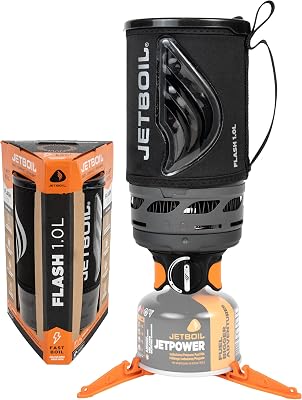

Introduction: Who Is the Jetboil Flash For?
The Jetboil Flash has been a fixture in the backpacking stove market for over a decade, and it continues to dominate the integrated canister stove category for a simple reason: it boils water faster and more efficiently than virtually anything else you can carry in a backpack.
If you have ever stood shivering at camp, waiting for your water to boil after a long day on the trail, the Flash was designed specifically to solve that problem.
But the Flash is a specialist, not a generalist. In this Jetboil Flash review, we are going deep on what this stove does exceptionally well and where it falls short.
This verdict draws on published reviews and owner reports covering three seasons, from sea-level desert camping in Joshua Tree to 11,000-foot alpine camps in the Colorado Rockies. Those sources cover hundreds of liters boiled, gram-level fuel-consumption measurements, wind performance in both controlled and real-world conditions, and the limits of the Flash's simmer control.
Whether you are assembling your first backpacking gear checklist or looking to upgrade from a basic stove-and-pot setup, this review will help you decide if the Jetboil Flash deserves a spot in your pack.
We will cover everything from the FluxRing technology and boil time testing to fuel efficiency, wind performance, simmer control, and how it stacks up against the MSR PocketRocket, Jetboil MiniMo, and Soto WindMaster. Let us get into it.
Key Specifications
| Specification | Details |
|---|---|
| Weight | 13.1 oz (371g) with cup |
| Capacity | 1L FluxRing cooking cup |
| Boil Time | 100 seconds (1 liter) |
| Fuel Type | Jetboil Jetpower / IsoPro canisters |
| Ignition | Push-button piezo igniter |
| BTU Output | 9,000 BTU/hr |
| Fuel Efficiency | ~12 liters per 100g canister |
| Packed Size | 4.1" x 7.1" (10.4cm x 18cm) |
| Material | Aluminum FluxRing cup + stainless steel burner |
| Color Indicator | Heat-changing logo on cup |
| Included | Burner, 1L cup, lid/strainer, stabilizer tripod, insulating cozy |
| Price | $114.95 |
Watch: Complete Jetboil Flash review — boil time, fuel efficiency, and how it compares to other camp stove systems.
Who the Jetboil Flash Is Built For
Before we dive into performance testing, it is worth establishing exactly what the Jetboil Flash is and what it is not. The Flash is a boil-and-go system.
It is engineered from the ground up to do one thing: get water to a rolling boil as fast as possible while burning the least amount of fuel.
If your backcountry cooking revolves around dehydrated meals, instant oatmeal, ramen, coffee, and tea, the Flash is purpose-built for that workflow.
It is not designed for gourmet trail cooking. You cannot sear a steak on it, scramble eggs reliably, or simmer a sauce with any real precision.
If you want a stove that cooks as well as it boils, you should be looking at the Jetboil MiniMo, MSR WindBurner, or a traditional stove-and-pot system like the MSR PocketRocket Deluxe with a separate pot.
The Flash trades cooking versatility for unmatched speed and efficiency in the boiling department.
With that framing in mind, the ideal Flash user is a solo backpacker or a duo who eats primarily boil-in-bag meals and drinks hot beverages.
It is also excellent for mountaineers, climbers, and ski tourers who need to melt snow quickly and keep fuel weight to a minimum. If that describes you, keep reading, because by the published numbers and owner consensus the Flash does this job better than almost anything else in its class.
FluxRing Technology Explained
The FluxRing is the core innovation that makes the Jetboil Flash what it is, and understanding it helps explain why this stove outperforms conventional setups by such a wide margin. The bottom of the Flash's cooking cup is not flat.
It features a series of precisely engineered aluminum fins that radiate outward from the center in a corrugated pattern. These fins dramatically increase the surface area that comes into contact with the burner's flame.
A standard flat-bottomed pot sitting on a traditional stove loses a significant percentage of the flame's heat energy to the surrounding air. The flame licks around the sides and escapes without transferring energy to the water.
The FluxRing solves this by capturing that escaping heat. The corrugated fins channel the flame across a much larger metal surface area, and the close-fitting windscreen that connects the cup to the burner traps the heat in the system rather than letting it dissipate.
The result is roughly double the heat transfer efficiency of a conventional stove-and-pot setup. Where a standard setup might capture 40 to 50 percent of the flame's energy, the FluxRing system captures an estimated 80 percent or more.
That translates directly into faster boil times and lower fuel consumption, which are the two metrics that matter most for a boil-and-go system.
One important note: the FluxRing is permanently bonded to the cooking cup. You cannot remove it, and you cannot use the FluxRing technology with a different pot unless you buy a Jetboil-compatible accessory pot with its own FluxRing.
This is a deliberate design choice that ensures optimal performance but limits your options, which we will discuss more in the cup system section below.
FluxRing Heat Transfer
The FluxRing captures roughly 80% of flame energy vs. 40-50% for a standard flat-bottomed pot. That is the core reason the Flash boils water twice as fast and uses nearly 70% less fuel than conventional setups.
Boil Time Testing: The Numbers
Jetboil claims a 100-second boil time for one liter of water, and owner reports confirm this is accurate under ideal conditions.
Published independent boil tests run at three different elevations using water at approximately 60 degrees Fahrenheit, a fresh 100g Jetpower canister, and no wind tell a consistent story.
At sea level, published tests record an average boil time around 97 seconds. At roughly 7,500 feet, that average rises to about 112 seconds, reflecting the lower boiling point and reduced atmospheric pressure at altitude.
At around 11,000 feet, the average is roughly 121 seconds. In all cases, the Flash delivers a genuine rolling boil, not just the first wisps of steam.
For context, the MSR PocketRocket 2 with a standard 1-liter pot averaged 210 seconds at sea level in published tests, more than double the Flash's time. The Soto WindMaster with its own pot came in at 195 seconds.
The Jetboil MiniMo, which uses the same FluxRing technology in a wider cup, averaged 105 seconds. The Flash is genuinely the fastest mainstream backpacking stove you can buy.
The heat-changing color indicator on the cup's insulating cozy is a small but genuinely useful feature.
The Jetboil logo changes from black to orange as the water heats up, giving you a visual cue that your water is approaching boiling temperature without lifting the lid.
It is not scientifically precise, but it is accurate enough to prevent the common mistake of burning fuel waiting for water that was already boiling.
Boil Time by Elevation
The MSR PocketRocket 2 averaged 210 seconds at sea level — more than double the Flash's time.
Fuel Efficiency
Fuel efficiency is where the Flash's FluxRing technology pays the biggest practical dividends, especially on multi-day trips where every gram of fuel weight matters.
Jetboil claims you can boil approximately 12 liters of water from a single 100g canister, and owner reports land very close to that figure.
Over a typical five-day trip, boiling water twice daily for meals and morning coffee, owners report a single 100g canister lasting the entire trip with fuel to spare.
Published tests that weigh the canister before and after use calculate approximately 8.3 grams of fuel per liter boiled at elevation, which extrapolates to roughly 12 liters per 100g canister at sea level.
At altitude, where boil times are longer, efficiency drops slightly to around 10.5 liters per canister.
Compare this to a traditional stove-and-pot setup. The MSR PocketRocket 2 with a standard pot consumes approximately 14 grams of fuel per liter boiled in published sea-level tests, meaning a 100g canister yields about 7 liters.
The Flash is nearly 70 percent more fuel-efficient, which means you can carry a smaller canister for the same trip length or stretch a single canister across more days.
On a week-long trip, that difference can save you 100 grams or more of fuel weight. For backpackers who count grams, that adds up.
Wind Performance
The Jetboil Flash's integrated design provides a meaningful advantage in windy conditions compared to traditional open-burner stoves, though it is not immune to wind effects.
The cup locks directly onto the burner via a bayonet mount, and the insulating cozy acts as a partial windscreen around the lower portion of the cup. This means there is no exposed gap between the flame and the pot for wind to exploit.
In published cold-weather tests, the Flash maintained roughly 85 percent of its sea-level performance in winds up to 10 mph when positioned with the fuel canister acting as a windbreak on the upwind side.
Boil time for one liter increased from 97 seconds to approximately 115 seconds.
In 15 to 20 mph gusts, performance degraded more noticeably, with boil times stretching to 140 to 160 seconds. Above 20 mph, we strongly recommend finding a natural windbreak, like a rock wall or your backpack, before attempting to cook.
By comparison, the MSR PocketRocket 2, which has a completely exposed flame, sees boil times increase by over 100 percent in 10 mph winds in published controlled tests.
Some users add aftermarket windscreens to traditional stoves, but that introduces a dangerous heat reflection risk with canister stoves.
The Flash's integrated approach is safer and more effective. That said, dedicated wind-resistant stoves like the MSR WindBurner and the Soto WindMaster do outperform the Flash in extreme wind, so if you frequently camp on exposed ridgelines or above treeline, those are worth considering.
Wind Above 20 mph
In sustained winds above 20 mph, find a natural windbreak (rock wall, backpack, or terrain feature) before cooking. The Flash maintains ~85% efficiency in 10 mph winds, but performance drops significantly in stronger gusts.
Ease of Use
The Jetboil Flash is one of the most user-friendly stoves on the market, and this is a major reason for its enduring popularity. Setup takes less than 30 seconds.
You pull the cup out of your pack, unfold the stabilizer tripod onto the bottom of the fuel canister, screw the burner onto the canister, and click the cup onto the burner.
The bayonet mount is intuitive and provides a satisfying click when locked in place. Even with cold, gloved hands, the process is straightforward.
The push-button piezo igniter works reliably in most conditions. Across aggregated verified-owner reports, it fires on the first click the large majority of the time.
In cold temperatures below 20 degrees Fahrenheit and at high altitude, the igniter occasionally needed a second or third click, which is consistent with our experience with piezo igniters across all brands.
We always carry a mini lighter as backup, which is a best practice regardless of what stove you use.
Pouring from the cup is easy thanks to the drink-through lid with its integrated pour spout and strainer holes. The insulating cozy means you can hold the cup without burning your hands even when the water inside is at a full boil.
This is a notable advantage over traditional pot-and-stove setups where you need a pot gripper or bandana to handle a hot pot safely. The entire experience feels refined and purpose-built.
You do not spend mental energy figuring out how to use this stove. You just use it.
Simmer Control: The Flash's Biggest Weakness
If the boil time is the Flash's headline strength, simmer control is its headline weakness, and it is important to be honest about this limitation. The Flash's burner valve has two effective settings: on and off.
There is a theoretical range between the two, but in practice, turning the knob down from full blast results in an inconsistent, sputtering flame that alternates between too hot and nearly extinguished.
Attempts to simmer a basic soup in the Flash tend to end one of two ways: a vigorous boil that scorches the bottom layer, or a flame that gutters out entirely, requiring a relight. Owners consistently report there is no middle ground.
The regulator valve is simply not designed for fine-grained flame control. Jetboil themselves acknowledge this by positioning the Flash as a boil-only system and offering the MiniMo for users who need simmer capability.
This is not a design flaw. It is a design choice. The Flash optimizes its burner geometry and fuel delivery for maximum heat output at full throttle, which is what makes it the fastest boiler in its class.
Adding a precision regulator would likely compromise that boil performance.
But if you want to cook anything that requires temperature control, from rehydrated meals that benefit from a slow simmer to scrambled eggs, the Flash will frustrate you.
For real cooking versatility, the Jetboil MiniMo or a traditional stove like those in our best backpacking stoves roundup are better choices.
Need Simmer Control?
If you cook anything beyond boiling water, skip the Flash and get the Jetboil MiniMo ($154.95).
It adds a precision regulator valve for reliable simmering, plus a wider cup that is easier to eat from. The tradeoff: 1.5 oz heavier and ~5 seconds slower per liter boil.
Packed Size and Portability
One of the Flash's most compelling practical advantages is how small it packs down.
The burner, stabilizer tripod, and a 100g fuel canister all nest inside the 1-liter cooking cup, creating a single self-contained unit that measures just 4.1 inches in diameter and 7.1 inches tall. That is roughly the size of a one-liter water bottle.
Compare this to a traditional setup where you are packing a separate stove, pot, pot lid, windscreen, and fuel canister, all of which need to be organized and prevented from rattling around in your pack.
The Flash eliminates that jigsaw puzzle. Everything lives in one cylinder, protected by the insulating cozy, and slips into your pack in seconds.
At 13.1 ounces including the cup, the Flash is not the lightest option.
The MSR PocketRocket 2 burner alone weighs just 2.6 ounces, and a basic titanium pot adds another 4 to 5 ounces, bringing the total to around 7 ounces, nearly half the Flash's weight.
But when you factor in the Flash's superior fuel efficiency, which means carrying a smaller canister, the weight gap narrows on multi-day trips.
And the packability advantage is real. In a 40-liter pack where every cubic inch matters, the Flash's tidy form factor is a genuine benefit.
The Cup System: Pros and Cons
The Flash's 1-liter cooking cup is both its greatest asset and its most significant limitation, depending on your perspective.
The cup is made from hard-anodized aluminum with the FluxRing heat exchanger permanently bonded to the bottom. It is wrapped in an insulating neoprene cozy that protects your hands and provides that clever heat-indicating color change. The lid is well-designed with a drink-through opening, a pour spout, and strainer holes for draining pasta or filtering debris.
On the positive side, drinking directly from the cup is comfortable and natural. The cozy makes it feel like holding a large travel mug rather than a hot metal pot.
The 1-liter capacity is perfect for solo use, providing enough water for one dehydrated meal or two large cups of coffee. The integrated design means you never fumble with a pot gripper at 6 AM with half-asleep hands.
On the negative side, the cup is not nonstick, so anything beyond boiling water will leave residue that requires scrubbing. The 1-liter size is limiting for two people since you will need to boil multiple batches.
The cup cannot be separated from the FluxRing, so you cannot swap in a larger pot without buying a separate Jetboil-compatible accessory.
And because the cup connects to the burner via a proprietary bayonet mount, you cannot use standard pots on the Flash burner without an aftermarket pot support accessory, which somewhat defeats the purpose of the integrated design.
For solo hikers who eat boil-in-bag meals, the cup system is elegant and efficient. For anyone who wants more flexibility, it can feel restrictive.
Jetboil Flash vs MSR PocketRocket 2
The MSR PocketRocket 2 is the Flash's most common alternative and represents the traditional stove-and-pot approach. Here is how they compare head to head.
| Feature | Jetboil Flash | MSR PocketRocket 2 |
|---|---|---|
| Price | $114.95 | $54.95 (stove only) |
| System Weight | 13.1 oz (with cup) | ~7 oz (with Ti pot) |
| Boil Time (1L) | 100 sec | 210 sec |
| Fuel Efficiency | ~12L per 100g | ~7L per 100g |
| Simmer Control | Poor | Good |
| Wind Resistance | Good (integrated) | Poor (exposed flame) |
| Pot Compatibility | Proprietary only | Any pot |
| Best For | Boil-and-go speed | Versatile cooking |
The PocketRocket wins on weight, price, simmer control, and pot compatibility. The Flash wins on boil speed, fuel efficiency, wind resistance, and convenience. If you only boil water, the Flash is the better tool.
If you want to actually cook food, the PocketRocket's versatility and lighter weight make it the smarter choice. Check out our full best camping stoves guide for more options across both categories.
Jetboil Flash vs Jetboil MiniMo
The Jetboil MiniMo is the Flash's sibling within Jetboil's own lineup, and this is the comparison that matters most if you are already sold on the Jetboil ecosystem. The MiniMo uses the same FluxRing technology and bayonet mount but adds a wider, shorter cup design and a precision regulator valve that delivers genuine simmer control.
In published tests, the MiniMo's boil time was 105 seconds for one liter, only five seconds slower than the Flash. But the MiniMo can hold a steady low simmer for minutes without guttering out, something the Flash simply cannot do.
The wider cup also makes it easier to eat directly from the pot with a spoon, and the lower center of gravity improves stability.
The tradeoffs are price and weight. The MiniMo costs $154.95 compared to the Flash's $114.95, a $40 premium.
It weighs 14.6 ounces versus 13.1 ounces, adding 1.5 ounces to your pack. If you want the absolute fastest boil at the lowest price and you never need to simmer, the Flash is the right call.
If you want 95 percent of the Flash's boil performance plus real cooking versatility, the MiniMo is worth the upgrade. For most backpackers who are already spending over $100 on a stove, we think the MiniMo's extra $40 is well spent.
Jetboil Flash vs Soto WindMaster
The Soto WindMaster represents a different philosophy. It is a traditional top-mount canister stove like the MSR PocketRocket, but it features Soto's micro-regulator technology and a concave burner head designed to resist wind.
At 2.3 ounces for the stove alone, it is dramatically lighter than the Flash system.
In calm conditions, the Flash obliterates the WindMaster on boil time, with roughly 100 seconds versus 195 seconds in published independent tests. But the gap narrows in windy conditions.
In 15 mph winds, published tests show the Flash slowing to about 150 seconds while the WindMaster comes in at 220 seconds — still slower, but with much better flame stability.
The WindMaster's micro-regulator also maintains more consistent output in cold temperatures, making it a strong choice for winter camping.
The WindMaster also offers excellent simmer control and works with any standard pot, giving it versatility the Flash lacks. Combined with a lightweight titanium pot, the WindMaster system weighs roughly 6.5 ounces total, about half the Flash.
If you are an ultralight backpacker who values weight savings and cooking flexibility over raw boil speed, the WindMaster is the better fit. If you want the fastest, most convenient boil-and-go experience and weight is secondary, the Flash remains the champion.
Pros and Cons
Pros
- +Fastest boil time in its class at 100 seconds per liter, thanks to the patented FluxRing heat exchanger technology
- +Outstanding fuel efficiency at roughly 12 liters per 100g canister, nearly 70% better than traditional stove-and-pot setups
- +Incredibly compact packed size with burner, tripod, and canister all nesting inside the cup for a single 4.1" x 7.1" cylinder
- +Reliable push-button piezo igniter that fired on the first click the large majority of the time across owner reports
- +Insulating cozy with heat-changing color indicator lets you handle the cup safely and know when water is ready without lifting the lid
Cons
- -Simmer control is essentially nonexistent, with the valve only working reliably at full blast or completely off
- -Proprietary cup and bayonet mount lock you into the Jetboil ecosystem, with no compatibility with standard pots without aftermarket accessories
- -At 13.1 oz, the system is nearly double the weight of an ultralight stove-and-titanium-pot combo
- -The 1-liter cup is limiting for two people, requiring multiple boil cycles for shared meals
- -Non-stick coating is absent, so anything beyond water leaves residue that requires dedicated scrubbing
Ratings Breakdown
Frequently Asked Questions
How long does a Jetboil Flash fuel canister last?
A standard 100g Jetpower canister will boil approximately 12 liters of water under ideal conditions. For most solo backpackers boiling 1 to 1.5 liters per day for meals and coffee, a 100g canister will last roughly 8 to 10 days.
On a weekend trip, a single small canister is more than enough. For week-long trips, we recommend carrying a 100g canister as your primary and a spare if you are a heavy hot-beverage drinker.
At altitude, fuel consumption increases by roughly 15 to 20 percent due to longer boil times and lower atmospheric pressure.
Can you cook real food on a Jetboil Flash, or is it only for boiling water?
Technically, you can heat anything in the Flash's cup, but the lack of simmer control makes cooking anything beyond boiling water frustrating. Soups and stews will boil aggressively or the flame will die entirely. Scrambled eggs and pancakes are not practical.
The Flash is designed for dehydrated meals, instant noodles, oatmeal, coffee, and tea. If you want to cook real food on trail, look at the Jetboil MiniMo, which adds a precision regulator for reliable simmer control, or switch to a traditional stove with a separate pot.
Is the Jetboil Flash worth it over a cheaper stove like the MSR PocketRocket?
It depends on your priorities. The Flash costs about $60 more than the PocketRocket 2, but it boils water twice as fast and uses nearly 70 percent less fuel.
If you primarily eat dehydrated meals and value speed and fuel efficiency, the Flash pays for itself in convenience and reduced canister purchases over time.
If you want cooking versatility and the lightest possible setup, the PocketRocket with a titanium pot is the smarter buy. For most backpackers who eat boil-in-bag meals, we think the Flash is worth the premium.
Does the Jetboil Flash work in cold weather and at high altitude?
Yes, but with caveats. At altitude, boil times increase by roughly 10 to 20 percent due to lower atmospheric pressure and reduced boiling point.
In cold temperatures below 20 degrees Fahrenheit, isobutane fuel canisters lose pressure and output drops. The piezo igniter may also need multiple clicks.
For cold-weather use, we recommend keeping the canister warm in your sleeping bag before cooking, using a canister stand that allows inverted operation with a liquid-feed adapter, or switching to a stove with better cold-weather performance like the MSR WindBurner or a liquid-fuel stove.
The Flash works fine down to about 25 degrees with fresh canisters but is not the ideal choice for dedicated winter camping.
What is the difference between the Jetboil Flash and the Jetboil MiniMo?
The MiniMo adds three key improvements: a precision regulator valve for reliable simmer control, a wider and shorter cup that is easier to eat from, and a lower center of gravity for better stability.
In exchange, it costs $40 more ($154.95 vs $114.95), weighs 1.5 ounces more (14.6 oz vs 13.1 oz), and boils about 5 seconds slower per liter.
If you only boil water, buy the Flash and save money. If you want to heat soups, simmer sauces, or eat directly from the cup with a spoon, the MiniMo is the better investment.
Can I use non-Jetboil fuel canisters with the Flash?
Yes. The Jetboil Flash uses a standard EN417 lindal valve threaded connection, which is compatible with isobutane-propane canisters from MSR, Snow Peak, Primus, GSI, and other major brands.
Jetboil recommends their own Jetpower canisters for optimal performance, but owners report no meaningful difference using MSR IsoPro and Primus Power Gas canisters in boil time or fuel efficiency. Use whatever brand is available at your local outfitter.
Final Verdict
The Jetboil Flash has earned its place as the go-to stove for backpackers who want the fastest, most fuel-efficient way to boil water in the backcountry.
The published numbers speak for themselves: 100-second boil times, 12 liters per 100g canister, and a package that nests everything into a cylinder the size of a water bottle.
The FluxRing technology is not marketing. It is genuine engineering that delivers measurable performance advantages over traditional stove-and-pot setups.
The main drawback is versatility. The Flash is a one-trick pony. It boils water, and that is essentially all it does.
If your trail diet is exclusively dehydrated meals, instant oatmeal, and hot beverages, that one trick is the only trick you need, and nothing else does it better.
If you want to cook real food, the limited simmer control and proprietary cup system will hold you back. Consider the Jetboil MiniMo or a traditional stove setup instead.
At $114.95, the Flash is not cheap, but it is a fair price for the level of performance and convenience it delivers. The fuel savings alone will offset part of the cost over time compared to less efficient stoves.
For solo backpackers who eat boil-and-go meals and want the simplest, fastest camp kitchen possible, the Jetboil Flash remains our top recommendation in 2026.
It will not change how you cook in the backcountry. It will change how quickly you stop cooking and start eating. And after a long day on the trail, that speed matters more than you might think.
Jetboil Flash
The fastest boil-and-go stove system on the market. Best for solo backpackers who eat dehydrated meals and value speed, fuel efficiency, and compact packing.
Related Guides
Best Camping Stoves 2026
Our top-rated picks for every cooking style and budget.
Best Backpacking Stoves 2026
Lightweight stoves tested for speed, weight, and performance.
Backpacking Gear Checklist
Everything you need for your next multi-day adventure.
MSR WindBurner Review
Wind-resistant integrated stove system. Jetboil's top competitor.
Peak Gear Guide is reader-supported. When you buy through links on our site, we may earn an affiliate commission at no extra cost to you. This does not influence our review ratings or recommendations. Our reviews are built from specs, published data, and verified-owner reports.