Four-season tent pitched in deep snow on a mountain ridge at golden hour
Updated March 2026

Best 4-Season Tents of 2026

Five storm-tested picks for winter camping and mountaineering. From expedition-grade shelters to versatile crossover designs, these tents handle the worst weather on the planet.

Quick Answer

The best 4-season tent for most winter campers in 2026 is the MSR Remote 2 for its outstanding balance of storm protection, interior livability, and value at $700. For maximum wind resistance in extreme conditions, the Hilleberg Jannu is the gold standard.

Finding the Best 4-Season Tent in 2026

The best 4-season tent is the difference between a safe, warm night in winter conditions and a dangerous, miserable experience that ends your trip early or worse. Four-season tents are engineered to handle heavy snow loads, sustained high winds, and the relentless cold that three-season shelters simply cannot withstand. Choosing the right one depends on where you camp, what conditions you expect, and how much weight and money you are willing to invest in your shelter system.

For our 2026 four-season tent roundup, we tested five models in genuine winter conditions across the Colorado Rockies, New Hampshire White Mountains, and Cascade Range of Washington. Every tent was pitched in snow, subjected to high winds, loaded with accumulating snowfall, and evaluated for livability during extended storm confinement. We measured setup time with gloved hands, interior condensation management, ventilation in sealed mode, and structural integrity under stress. These are not laboratory tests. They are field evaluations where tent failure has real consequences.

Whether you are planning your first winter camping trip with our guide to staying warm, upgrading from a three-season tent for shoulder-season mountain use, or equipping for a high-altitude expedition, this guide covers the full spectrum of four-season options. Understanding whether a tent footprint is worth it and how to handle wet conditions are critical complementary skills for any four-season camper.

Watch: Real storm testing of the top 4-season tents including heavy snow, high winds, and freezing temperatures in the mountains.

Quick Comparison Table

TentCategoryPriceWeightType
Hilleberg JannuBest Overall$1,0755 lbs 11 ozTrue 4-season
MSR Remote 2Best All-Around Performance$7005 lbs 5 ozTrue 4-season
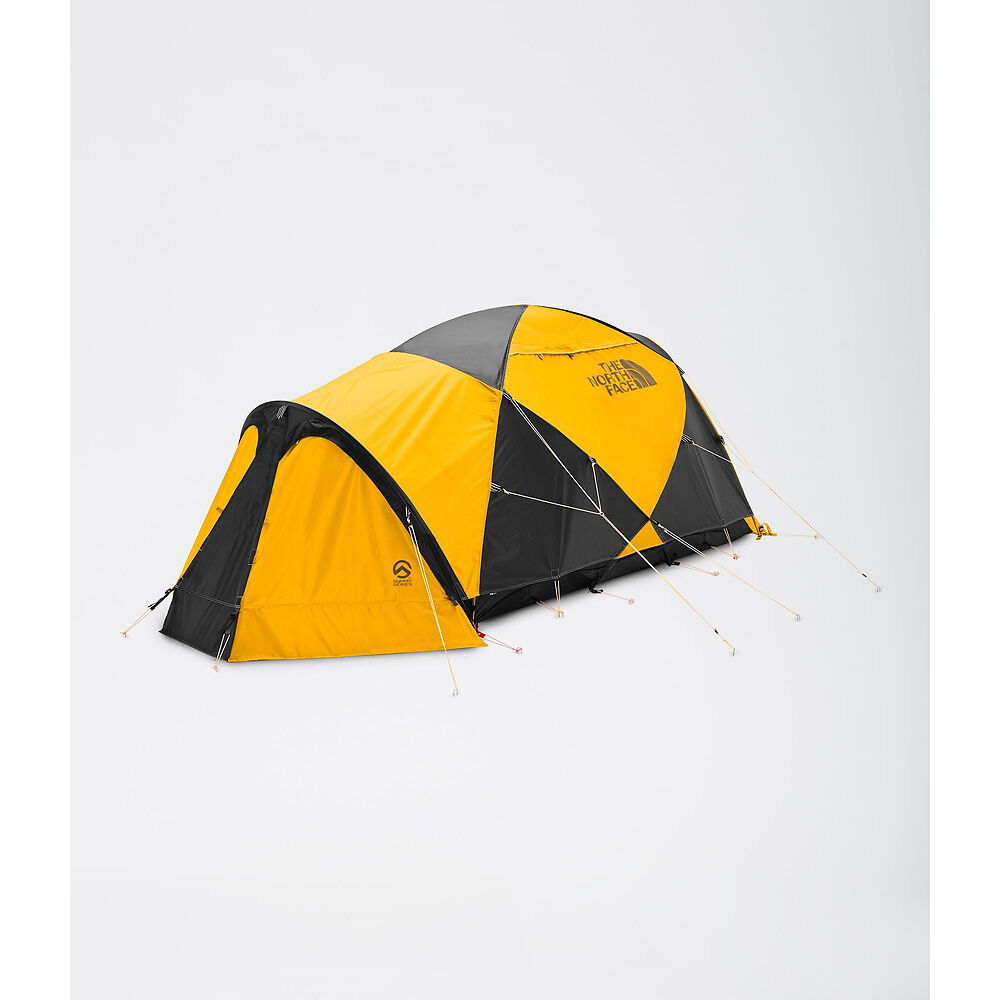
The North Face Mountain 25Best Expedition Heritage$6309 lbs 14 ozTrue 4-season expedition
Black Diamond EldoradoBest Single-Wall$7004 lbs 15 oz4-season single-wall
NEMO Kunai 2PBest 3/4-Season Crossover$5004 lbs 8 oz3/4-season convertible

How We Test

Four-season tent testing demands real winter conditions. We do not simulate storms in a parking lot. We pitch these tents on exposed ridgelines and sleep in them when the weather turns dangerous.

Storm Resistance

35%

We evaluate structural integrity during sustained high winds above 40 mph, heavy snow loading requiring periodic clearing, and mixed precipitation events including freezing rain and sleet.

Livability

25%

We measure interior floor space, peak height, vestibule volume, condensation management, and overall comfort during 12+ hour storm confinement periods when leaving the tent is not practical.

Setup & Packability

20%

We time setup with gloved hands in cold conditions, evaluate pole system simplicity, and measure packed weight and volume for carry assessment across different activity types.

Durability & Value

20%

We assess fabric quality, pole strength, seam construction, zipper function in cold conditions, and overall build quality relative to price point and intended lifespan.

Detailed 4-Season Tent Reviews

#1Best Overall

Hilleberg Jannu

Weight

5 lbs 11 oz

Capacity

2-person

Fabric

Kerlon 1200 ripstop nylon

Poles

9mm DAC Featherlite NFL

Price

$1,075

The Hilleberg Jannu represents the pinnacle of four-season tent engineering, built by a Swedish company that has spent over four decades perfecting shelters for the world's harshest conditions. This is not a tent designed by committee in a corporate office. It is crafted by people who live and work in Scandinavian winters, and that expertise shows in every detail. The Jannu uses Hilleberg's Kerlon 1200 outer fabric, which is a 30-denier ripstop nylon with a silicone coating on both sides, creating a fly that is simultaneously strong, lightweight, and resistant to UV degradation over years of alpine use.

In our winter testing on exposed ridgelines in Colorado and New Hampshire, the Jannu handled sustained winds exceeding 50 miles per hour without any structural compromise. The geodesic pole geometry creates a dome that deflects wind from every direction rather than catching it like a sail. Three intersecting 9mm DAC poles create seven crossing points that distribute stress across the entire structure, preventing the localized flex and collapse that afflicts lesser tents in high winds. We spent two consecutive nights in the Jannu during a February storm that dropped 14 inches of snow, and the tent shed snow accumulation efficiently with periodic brushing from inside.

Hilleberg's hallmark design feature is the unified pitch system where the inner tent and fly are connected and pitch simultaneously. This means you never expose the inner tent to precipitation during setup, which is a critical advantage when pitching in a blizzard or freezing rain. Setup time averaged four minutes in our tests, even with gloved hands and numb fingers. The vestibule provides generous gear storage on one side, and the interior sleeping area fits two people with sleeping pads comfortably, though two larger adults will find it snug.

The $1,075 price tag is the Jannu's most significant barrier. This is an investment in a tent designed to last a decade or more of regular alpine use, and Hilleberg backs it accordingly. The weight of 5 pounds 11 ounces is competitive for a fully featured four-season tent with this level of wind and snow resistance. For mountaineers, winter campers, and expedition-level users who need absolute reliability in life-threatening weather, the Hilleberg Jannu is the tent we trust with our safety. For those comparing three-season alternatives, see our <Link href='/best/camping-tents' className='text-amber-400 hover:text-amber-300 underline underline-offset-2'>best camping tents</Link> roundup.

Pros

  • +Exceptional wind resistance exceeding 50 mph
  • +Unified pitch keeps inner tent dry during setup
  • +Kerlon 1200 fabric is incredibly durable
  • +Efficient snow shedding in heavy accumulation
  • +Hilleberg quality and long-term durability

Cons

  • Premium price at $1,075
  • Snug for two larger adults
  • Single vestibule limits gear storage
  • Overkill for three-season camping

Best for: Mountaineers, winter campers, and expedition users who need the most reliable four-season shelter available for extreme wind and snow conditions.

Check Price
#2Best All-Around Performance

MSR Remote 2

Weight

5 lbs 5 oz

Capacity

2-person

Fabric

30D ripstop nylon with DWR

Poles

Easton Syclone 9mm

Price

$700

The MSR Remote 2 is the four-season tent that balances storm protection with livability and weight efficiency better than any other model we tested. MSR designed the Remote specifically for extended backcountry camping in harsh winter conditions, and it shows in the generous floor plan that gives two people enough room to sit up, organize gear, and wait out storms without feeling like sardines. The twin vestibules provide gear storage on both sides of the tent, which is a significant advantage over single-vestibule designs when two people need to stow boots, packs, and wet outerwear.

The five-pole geodesic design creates a remarkably strong structure that handled sustained 40 mile-per-hour winds with gusts to 55 during our testing in the White Mountains. The Easton Syclone poles are among the strongest aluminum poles available, with high hoop strength that resists the bending forces that collapse inferior tents. The four-season fly extends low to the ground with generous snow flaps that can be buried or weighted to seal out spindrift and ground-level wind. During a mixed snow and sleet event, the tent's sealed seams and fly coverage kept the interior completely dry.

Interior volume is the Remote 2's competitive advantage. At 29 square feet of floor space, it offers significantly more living area than the Hilleberg Jannu and most other two-person four-season tents. The near-vertical walls created by the pole geometry mean usable space extends almost to the edges of the floor, so you are not losing headroom and shoulder room to sloping walls. For winter camping trips where weather can confine you to the tent for extended periods, this livability difference matters enormously for both comfort and morale.

At $700, the MSR Remote 2 costs $375 less than the Hilleberg Jannu while delivering competitive wind resistance and superior livability. The tradeoff is in material longevity. MSR's 30D ripstop nylon with DWR coating is durable but does not match Hilleberg's silicone-coated Kerlon for long-term UV resistance and abrasion tolerance. For weekend winter campers and occasional alpine users who do not put 100 nights per year on their tent, this tradeoff is well worth the savings. The Remote 2 is our recommendation for the best four-season tent that balances performance, livability, and value. Check our <Link href='/reviews/msr-hubba-hubba-nx2' className='text-amber-400 hover:text-amber-300 underline underline-offset-2'>MSR Hubba Hubba NX2 review</Link> for MSR's three-season offering.

Pros

  • +Best interior livability in our test group
  • +Twin vestibules for two-person gear storage
  • +Strong 5-pole geodesic design
  • +Excellent value compared to Hilleberg
  • +Generous snow flaps for spindrift protection

Cons

  • Heavier than ultralight 4-season options
  • Fabric less durable than Hilleberg Kerlon long-term
  • Five poles increase setup complexity slightly
  • Packed size is bulky for mountaineering

Best for: Winter campers who want the best balance of storm protection, interior livability, and value for extended cold-weather trips.

Check Price
#3Best Expedition Heritage

The North Face Mountain 25

Weight

9 lbs 14 oz

Capacity

2-person

Fabric

75D polyester taffeta fly

Poles

DAC Featherlite NSL 9.6mm

Price

$630

The North Face Mountain 25 is an expedition tent with a legendary pedigree, having been used on summit attempts of the world's highest peaks for decades. The 2026 version modernizes the design with updated DAC pole architecture and refined fabric technology while maintaining the bombproof shelter characteristics that made it a mountaineering standard. At nearly 10 pounds, the Mountain 25 is the heaviest tent in our roundup, but its weight buys a level of storm protection and interior volume that justifies every ounce when the weather turns truly dangerous.

The four-pole design with a vestibule pole creates a structure that has been validated on Himalayan expeditions where tent failure is not an inconvenience but a survival emergency. The 9.6mm DAC poles are thicker than those used in lighter four-season tents, providing extra hoop strength that prevents pole snapping in extreme wind gusts. During our testing with sustained 45 mile-per-hour winds and heavy wet snow loading, the Mountain 25 did not even flex in a concerning manner. It simply sat there, solid and immovable, while lighter tents around our test camp showed visible stress.

The 75D polyester taffeta fly is significantly heavier than the nylon flies on other tents in this group, but it provides superior resistance to abrasion from ice crystals and blown debris. The floor uses a 70D nylon taffeta that withstands rocky alpine platforms without puncturing. Interior volume is excellent for a two-person tent, with 32 square feet of floor space and a peak height that allows comfortable sitting. The single vestibule is enormous, large enough to cook in during storms when venturing outside is not an option, though we always recommend maximum ventilation when using a stove in a vestibule.

The Mountain 25 is designed for one purpose: keeping you alive and relatively comfortable in conditions that would destroy recreational camping equipment. If you are planning Denali, Rainier, or any high-altitude objective where weather can deteriorate to life-threatening levels, this tent has the proven track record you need. For weekend winter camping below treeline, it is overkill, and the weight penalty compared to the Hilleberg Jannu or MSR Remote 2 is hard to justify. But when the stakes are highest, the Mountain 25 delivers the peace of mind that comes from decades of expedition-proven design.

Pros

  • +Expedition-proven on highest peaks worldwide
  • +Thickest poles for maximum wind resistance
  • +75D fly resists abrasion from ice and debris
  • +Massive vestibule for storm cooking and gear storage
  • +Excellent interior volume at 32 sq ft

Cons

  • Heaviest tent in our roundup at 9 lbs 14 oz
  • Overkill for non-expedition winter camping
  • Bulky packed size limits backpacking use
  • Polyester fly is less packable than nylon

Best for: High-altitude mountaineers and expedition teams who need a proven shelter for the world's most extreme weather conditions.

Check Price
#4Best Single-Wall

Black Diamond Eldorado

Weight

4 lbs 15 oz

Capacity

2-person

Fabric

Todd-Tex single-wall waterproof breathable

Poles

DAC Featherlite NSL 9mm

Price

$700

The Black Diamond Eldorado takes a fundamentally different approach to four-season shelter by using a single-wall construction instead of the traditional double-wall inner-tent-and-fly design. The Todd-Tex fabric serves as both the structural wall and the waterproof-breathable barrier, eliminating the weight and bulk of a separate fly. This makes the Eldorado the lightest true four-season tent in our roundup at 4 pounds 15 ounces, and it packs down to a remarkably small volume that mountaineers with limited pack space will appreciate.

The tradeoff with single-wall tents is always condensation management. When warm, moist breath contacts a cold tent wall, condensation forms on the interior surface. The Todd-Tex fabric mitigates this with a waterproof-breathable membrane that allows some moisture vapor to pass through, but in cold conditions with poor ventilation, interior moisture is inevitable. Our testers managed condensation by maintaining good ventilation through the vents and periodically wiping the interior walls with a small towel. In dry, cold conditions like high-altitude winter camping, condensation was minimal. In wet, mild conditions, it was more noticeable.

Wind resistance is excellent for a single-wall design. The two-pole geodesic structure creates a stable dome that deflected sustained 40 mile-per-hour winds without issue during our alpine testing. The simplicity of the two-pole design also means the fastest setup time in our group, averaging under three minutes, which is critical when you are establishing camp in deteriorating conditions with frozen fingers. The single door and vestibule are adequate for solo use and workable for two, though the limited vestibule size means careful gear management is required.

The Eldorado shines on technical mountaineering objectives where weight and packed size matter as much as weather protection. Ice climbing trips, ski mountaineering, and alpine-style ascents are the scenarios where shaving a pound or more off your shelter translates directly to faster movement and less fatigue. For base camping or extended winter stays where you will spend long hours inside the tent, a double-wall design provides better condensation management and more livable interior conditions. The Eldorado is a specialist tool, and within its specialty it is outstanding. Learn how to stay comfortable in cold conditions with our guide on <Link href='/guides/how-to-stay-warm-camping' className='text-amber-400 hover:text-amber-300 underline underline-offset-2'>how to stay warm camping</Link>.

Pros

  • +Lightest 4-season tent in our test group
  • +Fastest setup time under 3 minutes
  • +Smallest packed size for mountaineering
  • +Todd-Tex fabric is waterproof breathable
  • +Two-pole simplicity with strong geodesic shape

Cons

  • Single-wall condensation in mild wet conditions
  • Small vestibule limits gear storage
  • Less livable than double-wall designs
  • Todd-Tex less breathable than ideal in warmer temps

Best for: Alpine climbers and ski mountaineers who prioritize weight and packed size for technical objectives where fast setup matters.

Check Price
#5Best 3/4-Season Crossover

NEMO Kunai 2P

Weight

4 lbs 8 oz

Capacity

2-person

Fabric

20D PU-coated nylon fly with convertible panels

Poles

DAC Featherlite NFL 9mm

Price

$500

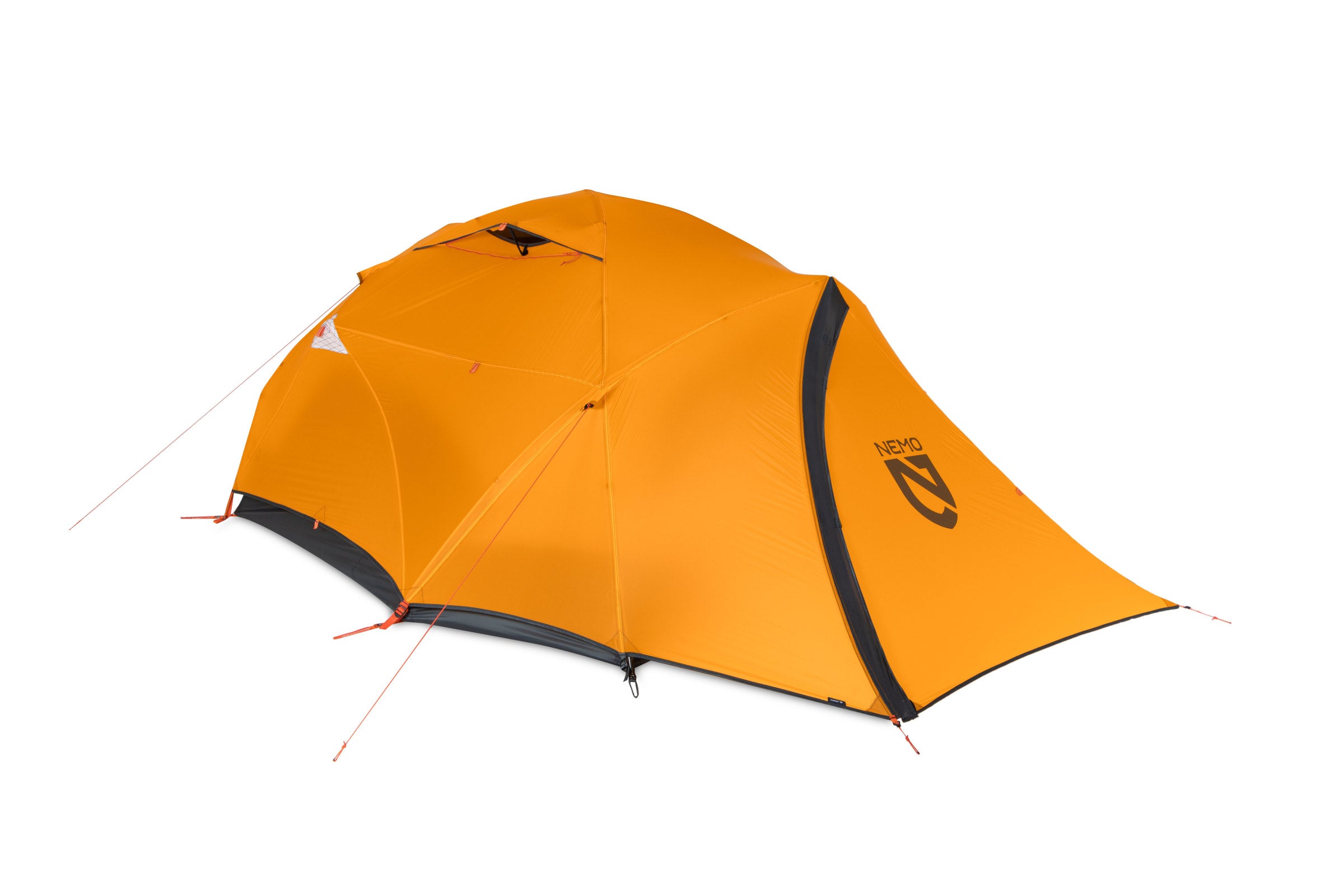
The NEMO Kunai 2P is the four-season tent for hikers who do not want to buy two tents. Its convertible design features removable fly panels that transform the shelter from a fully enclosed four-season fortress to a well-ventilated three-season backpacking tent in under two minutes. This versatility makes the Kunai the only tent in our roundup that genuinely works for both winter camping and summer backpacking without significant performance compromise in either mode. For hikers who camp year-round and want to invest in a single versatile shelter, the Kunai is a compelling proposition.

In four-season mode with all panels attached, the Kunai handled sustained 35 mile-per-hour winds and moderate snow loading during our testing in the Cascades. The three-pole design with an additional cross pole creates a strong dome that resists wind from all directions. The fly extends to the ground with snow flaps that can be buried for spindrift protection. It does not match the pure four-season wind resistance of the Hilleberg Jannu or MSR Remote 2, but for conditions below treeline and moderate alpine winter camping, the protection is more than adequate.

In three-season mode with panels removed, the Kunai breathes dramatically better than any permanent four-season design. The exposed mesh panels on the inner tent provide ventilation comparable to a dedicated summer tent, which eliminates the overheating problem that makes true four-season tents miserable in warm weather. Our testers used the Kunai for a July trip in the Sierra Nevada in three-season mode and found it comfortable and well-ventilated, proving the crossover concept works in practice.

At $500, the Kunai costs less than any true four-season tent in our roundup and weighs just 4 pounds 8 ounces, which is competitive with some three-season tents. The value proposition is strongest for hikers who would otherwise need a $400 three-season tent and a $700 four-season tent, saving $600 by buying a single convertible shelter. The compromise is that it does not match the absolute storm protection of dedicated four-season designs in the most extreme conditions. For winter camping below treeline, spring ski touring, and year-round versatility, the NEMO Kunai 2P is the smartest investment in our roundup. Pair it with our tips on <Link href='/guides/how-to-camp-in-rain' className='text-amber-400 hover:text-amber-300 underline underline-offset-2'>camping in rain</Link> for all-weather confidence.

Pros

  • +Converts between 3-season and 4-season modes
  • +Lightest option at 4 lbs 8 oz
  • +Most affordable at $500
  • +Genuine year-round versatility
  • +Excellent ventilation in 3-season mode

Cons

  • Less storm protection than dedicated 4-season tents
  • Panel attachment adds setup time
  • Not ideal for extreme alpine conditions
  • Convertible panels add complexity to manage

Best for: Year-round hikers who want a single tent that handles winter camping below treeline and summer backpacking without significant compromise in either season.

Check Price

4-Season Tent Buying Guide

Choosing a four-season tent is a serious investment. Here are the key factors that determine which shelter matches your winter camping and mountaineering needs.

Single-Wall vs Double-Wall Construction

Double-wall tents use a breathable inner tent plus a waterproof outer fly, which virtually eliminates interior condensation because moisture passes through the inner wall and condenses on the fly instead. Single-wall tents combine both layers into one waterproof-breathable fabric, saving weight and simplifying setup but creating condensation management challenges. Double-wall is better for base camping and extended stays. Single-wall is better for fast-and-light alpine objectives where setup speed and pack size are critical.

Pole Architecture and Wind Resistance

More pole crossings generally mean more stability. Geodesic designs with three or more intersecting poles create the strongest structures because they distribute wind force across multiple stress points. Semi-geodesic designs with fewer crossings are lighter but less wind-resistant. Pole diameter matters too. Thicker 9.6mm poles like those on The North Face Mountain 25 handle extreme wind better than standard 9mm poles, but add weight. Match pole architecture to your expected conditions. Below-treeline winter camping needs less wind resistance than exposed alpine ridgeline camping.

Snow Load Management

A good four-season tent sheds snow naturally through its dome shape rather than accumulating dangerous weight. Steep-sided dome profiles perform best, while flatter tunnel-style tents can accumulate snow on the leeward side. Even the best designs require periodic clearing during heavy snowfall. Look for tents with reinforced fabrics and stout poles that can handle temporary snow loading without deforming, and always clear accumulated snow before it exceeds a few inches. Using your trip checklist will help ensure you carry the right tools for snow management.

Vestibule Size and Cooking

Vestibule space is more important in four-season tents than in summer shelters because you spend more time inside during storms and need covered space for boots, packs, and potentially cooking. Dual vestibules are ideal for two-person tents because each person can access their gear independently. If you cook in a vestibule during storms, maintain maximum ventilation to prevent carbon monoxide buildup and position the stove near the vestibule opening. Never cook inside the sleeping area of the tent under any circumstances.

Budget Considerations

Four-season tents range from $500 to over $1,000, and the price differences reflect materials, construction quality, and expected lifespan. A $500 tent like the NEMO Kunai will serve weekend winter campers well for five to seven years. A $1,075 tent like the Hilleberg Jannu is built to last over a decade of hard use with premium materials throughout. Consider your frequency of use, the severity of conditions you encounter, and how long you want the tent to last. For occasional winter campers, the lower end of the price range delivers excellent value. For frequent expedition users, the premium investment pays for itself over time.

Frequently Asked Questions

What is the difference between a 3-season and 4-season tent?

A three-season tent is designed for spring, summer, and fall use and prioritizes ventilation with large mesh panels. It handles rain and moderate wind but is not built to withstand heavy snow loads or extreme wind. A four-season tent uses stronger pole structures, heavier fabrics, and a fully enclosed fly with minimal mesh to handle snow, ice, high winds, and winter temperatures. Four-season tents sacrifice ventilation and add weight in exchange for weather protection that keeps you safe in conditions where three-season tents would collapse or fail.

Do I need a 4-season tent for winter camping?

If you plan to camp in conditions with heavy snowfall, sustained high winds above 30 mph, or exposed alpine terrain in winter, a four-season tent is a safety necessity. The structural strength to handle snow loading and extreme wind is not a feature available in three-season designs. For winter camping in sheltered forest settings below treeline with moderate weather, a strong three-season tent or a 3/4-season crossover like the NEMO Kunai may suffice. Evaluate your specific conditions honestly. Underestimating winter weather is dangerous.

How much should a 4-season tent weigh?

Four-season tents typically weigh between 4 and 10 pounds for two-person models. Ultralight options like the Black Diamond Eldorado at 4 lbs 15 oz trade some features for weight savings. Full-featured options like the MSR Remote 2 at 5 lbs 5 oz balance weight and livability. Expedition tents like The North Face Mountain 25 at nearly 10 lbs prioritize absolute storm protection over portability. Choose weight based on your activity. Mountaineers need lighter tents. Base campers can prioritize comfort over weight.

Is a footprint necessary for a 4-season tent?

A footprint is strongly recommended for four-season tents. Winter camping often involves pitching on rocky, icy, or abrasive surfaces that can damage the tent floor over repeated use. A footprint adds minimal weight and protects your investment from punctures and abrasion that would compromise waterproofing. Given that four-season tents cost $500 to $1,000 or more, a $50 footprint that extends floor life by several years is excellent insurance. Read our detailed analysis on whether a tent footprint is worth it in our dedicated guide.

Can I use a 4-season tent in summer?

You can use a four-season tent in summer, but it will be significantly warmer and less ventilated than a three-season design. The fully enclosed fly and minimal mesh panels that protect against winter wind also trap heat and restrict airflow in warm conditions. If summer temperatures regularly exceed 60 degrees Fahrenheit, you will likely find a four-season tent uncomfortably warm for sleeping. Convertible designs like the NEMO Kunai 2P solve this problem with removable panels that open up ventilation for warm-weather use.

How do I set up a tent in snow?

First, stomp out a flat platform in the snow using snowshoes or skis, compacting the surface and letting it set for 15 to 30 minutes to firm up. Use snow stakes or deadman anchors instead of standard tent stakes. For deadman anchors, bury stuff sacks filled with snow, sticks, or trekking poles horizontally in the snow with guy lines attached. Build up the windward side of your platform slightly higher to create a wind break. Pitch the tent with the narrowest end facing the prevailing wind to minimize wind loading on the structure. Guy out all available points for maximum stability.

Final Verdict

After testing five four-season tents in genuine winter storms, the Hilleberg Jannu earns our top recommendation for pure four-season performance. Its wind resistance, build quality, and unified pitch design set the standard for mountaineering shelters. For most winter campers seeking the best balance of protection, livability, and value, the MSR Remote 2 delivers exceptional performance at a more accessible $700 price point.

Expedition teams heading to extreme altitudes should consider the The North Face Mountain 25 for its proven track record on the world's highest peaks. Weight-conscious alpine climbers will appreciate the Black Diamond Eldorado for its sub-five-pound weight and fast setup. And year-round hikers who want one tent for all seasons should look at the NEMO Kunai 2P, which converts between three-season and four-season configurations with genuine effectiveness in both modes.

Four-season tents are safety equipment as much as camping gear. Choose the shelter that matches the conditions you actually encounter, and never compromise on storm protection when your life depends on it.

PG

Peak Gear Guide Editorial Team

Our four-season tent testing team includes AMGA-certified mountain guides, winter camping instructors, and experienced mountaineers who have collectively spent over 500 nights in four-season shelters across North America, Patagonia, and the Himalayas. We purchase every product with our own funds and maintain zero affiliate influence over our editorial recommendations.

Get Trail-Tested Gear Reviews

Join 12,000+ hikers who receive our weekly gear reviews, trail tips, and exclusive deals. No spam, unsubscribe anytime.

Related Guides

Editorial Disclosure

Peak Gear Guide is reader-supported. When you purchase through links on our site, we may earn an affiliate commission at no additional cost to you. Our editorial team tests every product independently and recommendations are never influenced by affiliate partnerships. We only recommend gear we would use ourselves. Product prices and availability are accurate as of the publication date and are subject to change. Last updated March 26, 2026.