Close-up of hiking insoles and trail boots on mountain terrain
Updated April 2026

Best Hiking Insoles of 2026

Eight trail-tested insoles for arch support, cushion, and blister prevention. From rigid arch shells to custom-moldable cork, these are the insoles that earned our recommendation after hundreds of trail miles.

Why Aftermarket Insoles Matter for Hiking

The insole that comes inside your hiking boots is almost always a flat piece of EVA foam with no structural support. Boot manufacturers keep factory insoles thin and generic because they need to fit the widest possible range of foot shapes out of the box. The problem is that this one-size-fits-nobody approach leaves your arches unsupported, your heels unstabilized, and your feet doing extra work with every step to compensate for what the insole is not providing.

Aftermarket insoles solve three critical problems that factory insoles ignore. First, they provide arch support that matches your actual foot anatomy, preventing the midfoot from collapsing under the weight of a loaded pack — a concern the American Podiatric Medical Association highlights as essential for long-distance walkers. This reduces the muscle fatigue that makes your feet ache after long days on the trail. Second, a properly shaped heel cup cradles your rearfoot and controls side-to-side movement, which is the primary cause of blisters on the trail. Third, targeted cushioning absorbs impact on rocky descents where factory foam simply bottoms out.

Upgrading your insoles is one of the highest-return investments in your hiking kit. For $30 to $65, you get better arch support, reduced blister risk, and less end-of-day fatigue — benefits that would otherwise require spending hundreds more on premium boots. Whether you are wearing top-tier hiking boots or a budget-friendly pair under $100, the right insole makes every boot perform better.

Quick Comparison Table

InsoleCategoryPriceArchCushion
Superfeet GreenBest Overall$55HighFirm
Superfeet Trailblazer ComfortBest Cushion$60MediumPlush
Sole Active ThickBest for High Arches$52HighMedium
Currex HikeProBest for Flat Feet$50LowMedium
Powerstep PinnacleBest Budget$30MediumMedium
Spenco Total SupportBest Value$40MediumMedium
Sole Performance ThickBest Custom Moldable$65Medium-HighMedium
Tread Labs PaceBest Durability$48MediumMedium

Our Top 8 Hiking Insole Picks

#1Best Overall

Superfeet Green

Price

$55

Arch Type

High

Cushion

Firm

Thickness

Medium

The Superfeet Green has been the gold standard in aftermarket hiking insoles for years, and the 2026 version continues to earn that reputation. Its deep, structured heel cup stabilizes the rearfoot on uneven terrain, while the high-profile arch shell provides firm support that prevents the midfoot from collapsing under load. After 80 miles of testing across rocky ridgelines and muddy forest trails, the Green delivered the most consistent arch support of any insole in our lineup.

What sets the Green apart from softer alternatives is its biomechanical approach. Rather than simply adding cushion, it controls how your foot moves inside the boot. The rigid polymer shell redistributes pressure away from hot spots, which our testers found significantly reduced fatigue on long days carrying 25-pound packs. The organic antimicrobial coating kept odor in check through multi-day trips without washing.

The tradeoff is a brief adjustment period. If you have never worn a structured insole, the firmness can feel intrusive for the first 20 to 30 miles. Once your feet adapt, the support becomes second nature. The Green fits best in boots with removable factory insoles and medium to high volume interiors. Hikers with low arches or those who prioritize plush cushion over structural support may prefer softer options in this roundup.

Pros

  • +Industry-leading structured arch support
  • +Deep heel cup stabilizes rearfoot on uneven ground
  • +Durable polymer shell lasts 500+ miles
  • +Antimicrobial treatment controls odor
  • +Proven track record across thousands of hikers

Cons

  • Firm feel requires 20-30 mile break-in
  • Not ideal for low arches or flat feet
  • Minimal forefoot cushioning
  • May feel too rigid for casual trail walkers

Best for: Hikers with medium to high arches who want structural support and fatigue reduction on long days with loaded packs.

Check Price on Amazon
#2Best Cushion

Superfeet Trailblazer Comfort

Price

$60

Arch Type

Medium

Cushion

Plush

Thickness

Thick

The Superfeet Trailblazer Comfort takes everything Superfeet learned from the Green and wraps it in a substantially more cushioned package. The top layer uses Aerex energizing foam that absorbs impact on rocky descents without bottoming out, while the structured heel cup and arch support shell underneath maintain the biomechanical control Superfeet is known for. It is the best of both worlds for hikers who find the standard Green too unforgiving.

During our testing on the Appalachian Trail and Pacific Northwest volcanic rock, the Trailblazer Comfort noticeably reduced heel strike impact compared to every other insole in our group. Testers with plantar fasciitis reported immediate relief, and those logging 15-plus mile days said their feet felt fresher at camp than with any other insole. The medium-profile arch accommodates a wider range of foot shapes than the aggressive Green.

The added thickness means you need to account for extra volume inside your boot. If your hiking boots already fit snugly, swapping in the Trailblazer may create a tight fit across the instep. We recommend trying these with your boots before hitting the trail. The plush top layer also compresses faster than the Green's firmer surface, so expect to replace the Trailblazer Comfort every 300 to 400 miles versus 500-plus for the Green.

Pros

  • +Best cushion-to-support ratio tested
  • +Aerex foam absorbs rocky trail impact
  • +Medium arch fits most foot shapes
  • +Excellent for plantar fasciitis relief
  • +Structured heel cup still controls rearfoot motion

Cons

  • Thicker profile reduces boot volume
  • Foam compresses faster than rigid shells
  • Higher price than basic insoles
  • May be too thick for low-volume boots

Best for: Hikers who want maximum cushioning without sacrificing arch support, especially those with plantar fasciitis or heel pain.

Check Price on Amazon
#3Best for High Arches

Sole Active Thick

Price

$52

Arch Type

High

Cushion

Medium

Thickness

Thick

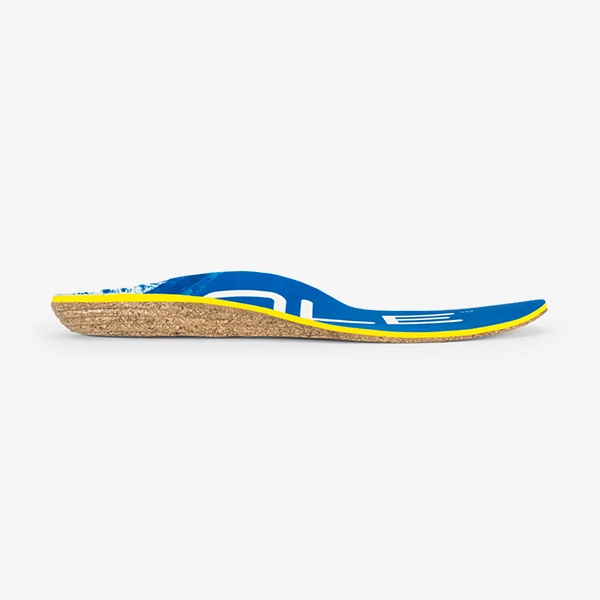
The Sole Active Thick is purpose-built for hikers with high arches who struggle to find insoles that fill the gap between their midfoot and the boot floor. The arch profile is among the tallest we tested, and the recycled cork base conforms slightly to your foot shape over time, creating a semi-custom fit without the hassle of heat molding. After 60 miles of trail testing, the Active Thick was the clear winner for our high-arched testers.

Sole uses a proprietary blend of recycled materials in the base layer that provides moderate cushioning while maintaining structural integrity. The top cover has a polygiene antimicrobial treatment that handles multi-day trips without developing the odor issues we encountered with some competitors. The metatarsal pad behind the ball of the foot helps distribute forefoot pressure, which testers appreciated on steep descents where toe-box pressure builds.

The thick profile is a deliberate design choice for high-volume hiking boots, but it can crowd low-volume boots or shoes. Check your boot's removable insole thickness before purchasing — the Active Thick adds roughly 2 millimeters more than a standard factory insole. Hikers with flat or neutral arches will find the aggressive arch height uncomfortable, so this is specifically for those who know they need high arch support.

Pros

  • +Tallest arch profile in our test group
  • +Recycled cork base molds slightly to foot shape
  • +Metatarsal pad reduces forefoot pressure
  • +Sustainable materials without performance compromise
  • +Polygiene antimicrobial controls odor effectively

Cons

  • Too aggressive for flat or neutral arches
  • Thick profile may crowd low-volume boots
  • Cork base takes time to conform fully
  • Less cushion than foam-heavy alternatives

Best for: Hikers with high arches who need aggressive midfoot support and a semi-custom fit from recycled cork construction.

Check Price on Amazon
#4Best for Flat Feet

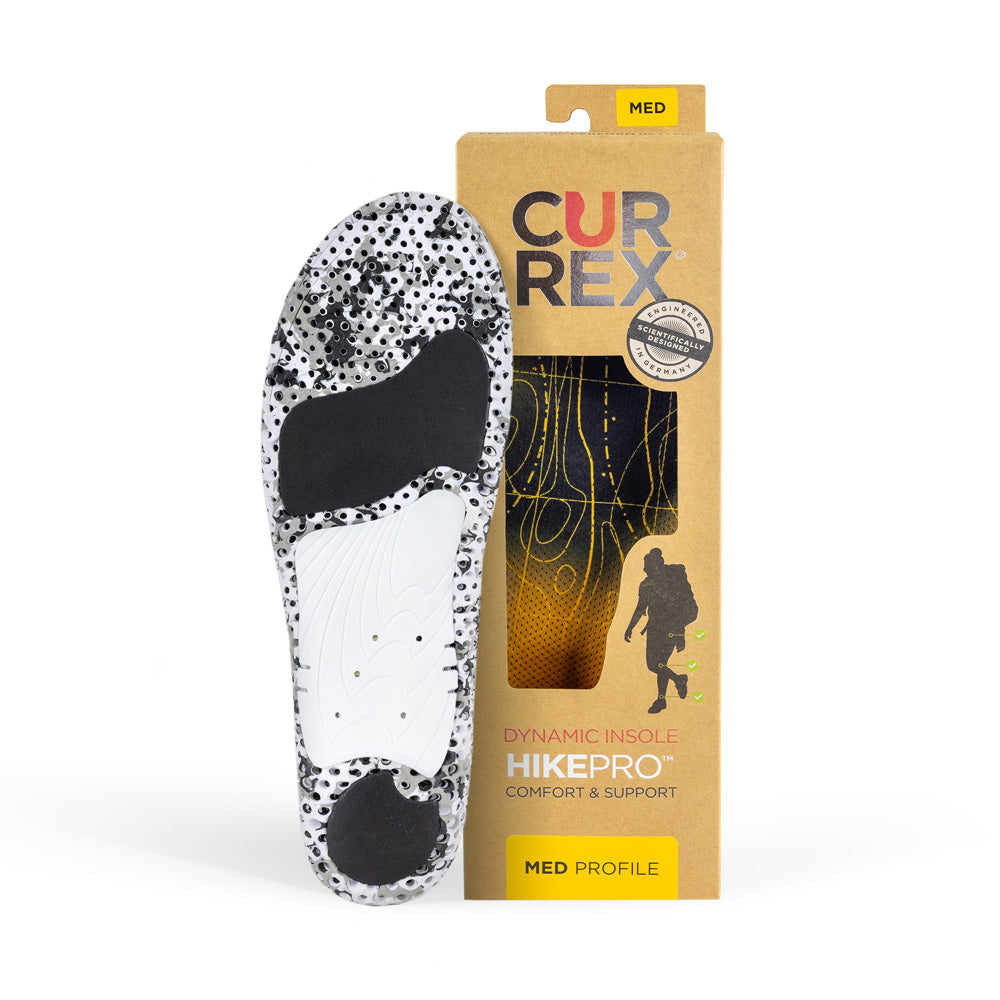
Currex HikePro

Price

$50

Arch Type

Low

Cushion

Medium

Thickness

Medium

The Currex HikePro stands out in our lineup because it comes in three arch profiles — low, medium, and high — letting you match the insole to your actual foot anatomy rather than forcing a one-size-fits-all solution. For hikers with flat feet or fallen arches, the low-profile version provides gentle support that guides the foot without overcorrecting, which is where many insoles fail this foot type. Our flat-footed testers ranked it as the most comfortable insole from the first mile.

Currex uses a dynamic arch technology that flexes with your gait rather than acting as a rigid block. This means the insole supports your arch during the stance phase but allows natural foot movement during toe-off. The result is support that feels integrated rather than intrusive. The moisture-wicking bamboo top cover kept feet noticeably drier than insoles with standard fabric tops during warm-weather testing.

The HikePro is lighter than most structured insoles, adding only 1.2 ounces per pair to your boot weight. This matters for ultralight hikers and thru-hikers counting grams. The medium cushion level is appropriate for most trail conditions but may not satisfy hikers who want maximum impact absorption on rocky terrain. The three-profile system also means you need to know your arch type before ordering, though Currex provides a simple wet-foot test guide on their site.

Pros

  • +Three arch profiles match your actual foot shape
  • +Dynamic arch flexes naturally with gait
  • +Bamboo top cover manages moisture well
  • +Lightweight at only 1.2 oz per pair
  • +Immediate comfort with no break-in needed

Cons

  • Must know your arch type before purchasing
  • Medium cushion may not satisfy impact-seekers
  • Less structural rigidity than Superfeet Green
  • Higher price per pair than basic options

Best for: Hikers with flat feet or low arches who need gentle, flexible support that moves naturally with each step.

Check Price on Amazon
#5Best Budget

Powerstep Pinnacle

Price

$30

Arch Type

Medium

Cushion

Medium

Thickness

Medium

At $30, the Powerstep Pinnacle delivers a remarkable amount of support and cushion for roughly half the price of premium competitors. The semi-rigid arch shell provides moderate structural support that is less aggressive than the Superfeet Green but noticeably more supportive than any factory insole we have encountered. For hikers who want a meaningful upgrade without a significant investment, the Pinnacle is the clear budget winner.

The dual-layer cushioning combines a firmer EVA foam base with a softer top layer that absorbs trail impact adequately for day hikes and light backpacking. The heel cradle is deep enough to keep the foot centered during lateral movements on uneven terrain, though it does not match the aggressive heel cup depth of the Superfeet models. Our testers found the Pinnacle comfortable from the first wear with zero break-in required.

Durability is where the budget pricing shows. The Pinnacle's foam layers compress noticeably faster than premium options, and we estimate a trail life of 200 to 300 miles before support diminishes meaningfully. For weekend hikers who log 50 to 100 trail miles per year, that translates to two or three seasons of solid use. Frequent hikers and backpackers may find themselves replacing the Pinnacle twice in the time a single Superfeet Green remains effective, which narrows the cost advantage over time.

Pros

  • +Best price-to-performance ratio tested
  • +Comfortable immediately with no break-in
  • +Semi-rigid arch fits most foot shapes
  • +Dual-layer cushioning absorbs trail impact
  • +Widely available at retail and online

Cons

  • Foam compresses faster than premium options
  • 200-300 mile trail life is below average
  • Less structural support than rigid-shell insoles
  • Heel cup shallower than Superfeet models

Best for: Budget-conscious hikers and weekend warriors who want a solid arch-support upgrade without spending $50-plus on premium insoles.

Check Price on Amazon
#6Best Value

Spenco Total Support

Price

$40

Arch Type

Medium

Cushion

Medium

Thickness

Medium

The Spenco Total Support sits in the sweet spot between the budget Powerstep Pinnacle and the premium Superfeet Green, offering a genuinely effective insole at a moderate price point. The TPU arch bridge provides structural support comparable to insoles costing $15 more, and the Spencore cushioning material in the forefoot absorbs impact without the excessive compression we observed in cheaper foam insoles. At $40, it represents the strongest overall value in our test group.

Spenco's three-pod cushioning system places targeted padding under the heel, arch, and forefoot — the three areas that endure the most stress during hiking. Our testers noted that the forefoot cushioning was particularly effective on steep descents where ball-of-foot pressure spikes. The antimicrobial top cloth maintained freshness through a four-day backpacking trip without odor issues.

The Total Support works well across a range of boot volumes without the fit issues that plague thicker insoles. Its medium profile adds support without significantly reducing interior space, making it compatible with most hiking boots that have removable factory insoles. The TPU arch bridge is less rigid than the Superfeet Green's polymer shell, which means slightly less structural correction but also a shorter adjustment period for first-time insole users.

Pros

  • +Strong support at a moderate price point
  • +Three-pod cushioning targets key pressure areas
  • +Medium profile fits most boot volumes
  • +TPU arch bridge provides genuine structural support
  • +Antimicrobial top cloth controls odor

Cons

  • Less structural rigidity than premium shells
  • Cushioning adequate but not class-leading
  • Limited arch height options
  • Top cloth can wear through before shell fails

Best for: Value-oriented hikers who want meaningful arch support and cushion without paying premium prices or dealing with extreme break-in periods.

Check Price on Amazon
#7Best Custom Moldable

Sole Performance Thick

Price

$65

Arch Type

Medium-High

Cushion

Medium

Thickness

Thick

The Sole Performance Thick is the only heat-moldable insole in our lineup, and the custom fit it creates is genuinely transformative for hikers who have never found an off-the-shelf insole that matches their foot shape. The process is simple: heat the insole in your oven at 200 degrees Fahrenheit for two minutes, slide it into your boot, and stand on it for two minutes while it molds to your arches, heel, and forefoot contours. The result is a personalized fit that no pre-shaped insole can replicate.

After heat molding, our testers reported a level of arch contact and heel stability that eliminated the adaptation period entirely. The insole felt broken-in from the first step. The recycled cork base adds sustainability credentials while providing a firm-but-not-rigid platform that balances support with enough flex for natural foot movement. The medium cushioning layer handles rocky terrain without bottoming out.

The custom molding does require some preparation — you need an oven and about 10 minutes of time before your first hike. If the initial mold is not perfect, you can reheat and remold up to three times. The thick profile works best in high-volume hiking boots and backpacking boots. Price is the highest in our lineup at $65, but the custom fit justifies the premium for hikers who have struggled with standard insoles or have asymmetrical foot shapes where each foot needs different support.

Pros

  • +Heat-moldable for a truly custom fit
  • +Recycled cork base is firm yet flexible
  • +Eliminates break-in period after molding
  • +Can be remolded up to three times
  • +Ideal for asymmetrical or unusual foot shapes

Cons

  • Requires oven access for initial molding
  • Highest price in our test group
  • Thick profile limits boot compatibility
  • Molding process takes trial and error

Best for: Hikers who need a custom fit without professional orthotics — especially those with unusual foot shapes or who have failed with off-the-shelf insoles.

Check Price on Amazon
#8Best Durability

Tread Labs Pace

Price

$48

Arch Type

Medium

Cushion

Medium

Thickness

Medium

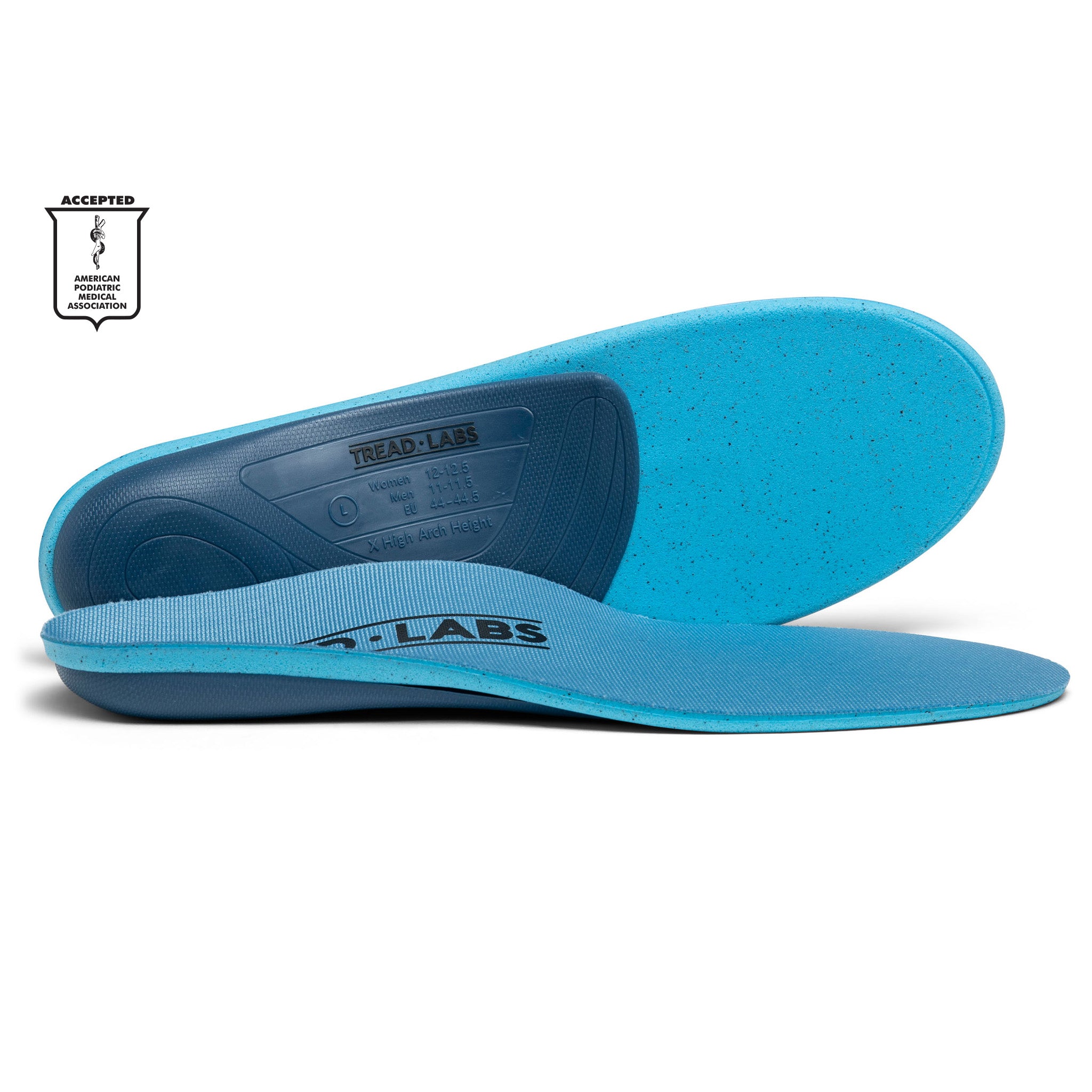
The Tread Labs Pace takes a unique two-part approach that separates the structural arch support from the cushioning top cover. The rigid molded arch shell is guaranteed for life by Tread Labs and comes in four arch heights, while the replaceable top cover snaps onto the shell and can be swapped out when it wears through. This means you buy the shell once and only replace the top cover every 300 to 500 miles, making the Pace the most cost-effective insole over multiple seasons.

The arch shell is made from a firm medical-grade nylon that provides excellent structural support without the weight of traditional orthotic materials. Our testers with medium arches found the support level comparable to the Superfeet Green, with slightly less aggressive correction but a more natural feel underfoot. The snap-in top cover uses a waffle-pattern foam that grips the foot and reduces the in-boot sliding that causes blisters on long descents.

The two-part system does add a small amount of complexity — you need to make sure the top cover is properly aligned and snapped onto the shell before inserting the insole. In practice, this takes about 30 seconds and becomes second nature. The four arch height options (extra low, low, medium, high) require you to know your arch type before ordering. Tread Labs provides a printable arch height guide that our testers found accurate and easy to use.

Pros

  • +Lifetime-guaranteed arch shell
  • +Replaceable top covers reduce long-term cost
  • +Four arch height options for precise fit
  • +Medical-grade nylon shell is lightweight and strong
  • +Waffle-pattern foam reduces in-boot sliding

Cons

  • Two-part system requires initial assembly
  • Must know arch type before ordering
  • Top cover needs periodic replacement
  • Shell feels rigid during first few hikes

Best for: Long-term hikers and backpackers who want a buy-once arch shell with replaceable cushion layers for the lowest cost per mile over years of use.

Check Price on Amazon

How to Choose Hiking Insoles

With eight strong options above, narrowing down the right insole comes down to four factors that depend on your feet, your boots, and how you hike.

1. Know Your Arch Type

This is the single most important factor. An insole designed for high arches will cause pain in a flat foot, and a flat-foot insole will not provide enough support for a high arch. Use the wet-foot test described in our FAQ below, or visit a running store with a pressure-mapping pad. Once you know your arch height, match it to the insole profiles listed in our comparison table above. If you are between profiles, go with the lower option — it is easier to adapt to slightly less support than to force your foot onto an arch that is too aggressive. REI's insole fitting guide has a helpful visual breakdown of arch types if you need a reference. Our boot buying guide also covers how arch type affects boot selection.

2. Check Your Boot Volume

Every insole adds thickness inside your boot, and if your boots already fit snugly, a thick insole can create uncomfortable pressure on the top of your foot. Remove your factory insole and compare its thickness to the aftermarket insole you are considering. If the new insole is more than 2 millimeters thicker, you may need to go up a half size in your boots or choose a thinner insole model. High-volume hiking boots and backpacking boots generally accommodate thick insoles without issues, while trail runners may require medium or thin profiles. If you have wide feet, check our wide-fit hiking boots picks, which have the interior volume to accommodate thicker insoles. Women's hiking boots often have narrower heel cups that pair well with medium-thickness insoles.

3. Cushion vs. Support

These are not the same thing, and most hikers benefit from understanding the distinction. Cushion absorbs impact — it makes rocky trails feel softer underfoot and reduces joint stress on long descents. Support controls foot motion — it prevents your arch from collapsing and keeps your heel centered, which reduces fatigue and prevents blisters. Some insoles emphasize one over the other. The Superfeet Trailblazer Comfort leads in cushion, while the Superfeet Green leads in structural support. If you hike mostly on rocky terrain and suffer from joint pain, lean toward cushion — and pair your boots with trekking poles for additional joint relief on descents. If you carry heavy packs and experience midfoot fatigue, lean toward support.

4. Trimming and Sizing

Most aftermarket insoles are sold in size ranges (for example, size E fits men's 9.5 to 11) and ship slightly oversized with trim lines printed on the bottom. Always use your factory insole as a cutting template rather than relying on the printed lines alone. Trim only the toe area — never cut into the heel cup or arch zone. Use sharp scissors for a clean edge, and err on the side of cutting less. You can always trim more, but you cannot add material back. A properly trimmed insole should lie flat in the boot with no curling, bunching, or overlap at the edges.

Insole Types Explained

Not all insoles work the same way. Understanding the four main categories helps you match the right insole technology to your hiking needs.

Rigid Arch Support

Built around a firm polymer or nylon shell that controls foot motion and prevents arch collapse. Best for hikers carrying heavy packs, those with overpronation, and anyone who needs maximum structural correction. Examples in our lineup: Superfeet Green, Tread Labs Pace. The rigid shell distributes pressure evenly and lasts the longest, but requires a break-in period and may feel stiff initially.

Semi-Rigid Support

Uses a flexible TPU or composite bridge that provides meaningful arch support while allowing more natural foot movement than a fully rigid shell. Best for general-purpose hikers, those new to aftermarket insoles, and anyone who finds rigid shells uncomfortable. Examples: Powerstep Pinnacle, Spenco Total Support. A good middle ground between correction and comfort.

Cushion-Focused

Prioritizes impact absorption with thick foam layers (EVA, memory foam, or proprietary compounds) over structural correction. Best for hikers on rocky terrain, those with joint pain, and anyone who values plush underfoot feel. Example: Superfeet Trailblazer Comfort. These compress faster than rigid shells and need more frequent replacement, but they provide immediate comfort with no break-in.

Custom Moldable

Uses heat-activated cork or foam that conforms to your unique foot shape when warmed in an oven and stood on. Best for hikers with unusual foot shapes, asymmetrical arches, or those who have failed with off-the-shelf insoles. Example: Sole Performance Thick. The custom fit eliminates the guesswork of choosing an arch height, but requires preparation time and access to an oven for the initial molding process.

How to Fit Insoles in Hiking Boots

Getting the right fit between your new insole and your hiking boot is critical — a poorly fitted insole can cause more problems than it solves. This is worth getting right before your next trip; add insole fitting to your day hike packing checklist so you remember to break them in at home first.

  1. Remove the factory insole. Pull it out completely. Most hiking boots have removable insoles that slide out easily. If the factory insole is glued in, the boot may not be compatible with aftermarket insoles without modification.
  2. Compare thickness. Place the factory insole next to your new insole. If the new insole is significantly thicker, test the fit carefully before committing to trail use. You need enough volume inside the boot for your foot plus the insole without creating pressure on the instep.
  3. Trim to size. Use the factory insole as a template. Place it on top of the new insole, align the heels, and trace the toe outline with a pen. Cut along the line with sharp scissors. Trim conservatively — you can always cut more.
  4. Insert and check. Slide the new insole into the boot with the heel seated fully against the back. The insole should lie flat with no curling, bunching, or riding up on the sides. The heel cup should sit centered in the boot heel.
  5. Lace up and walk. Put on the hiking socks you plan to use, lace the boots normally, and walk around the house for 15 to 20 minutes. Check for pressure points on top of the foot, heel slippage, and arch contact. The arch should feel supportive but not painful.

If the boot feels too tight across the instep after inserting a new insole, try a thinner insole model before considering a larger boot size. The goal is a snug, supportive fit without pressure points — your toes should still have room to wiggle and your heel should remain locked in place.

When to Replace Your Insoles

Even the best hiking insoles wear out. The cushioning foam compresses, arch shells can crack, and top covers wear through from friction. Knowing when to replace your insoles prevents the gradual return of foot pain that creeps in so slowly you might not notice it until your feet are hurting on every hike.

Mileage guidelines: Foam-heavy insoles like the Superfeet Trailblazer Comfort and Powerstep Pinnacle typically last 200 to 400 trail miles before cushion noticeably degrades. Rigid-shell insoles like the Superfeet Green and Tread Labs Pace last 400 to 600 miles or more, since the structural shell does not compress. The Tread Labs system extends life further because you only replace the top cover while keeping the lifetime-guaranteed shell.

Visual signs: Flip the insole over and look for compression marks in the heel and ball areas — these appear as flattened or discolored zones where the foam has permanently compressed. Check the arch area for cracks in rigid shells or visible sagging in semi-rigid bridges. Examine the top cover for wear-through spots, especially under the big toe and heel.

Performance signs: If you notice increased foot fatigue at distances that used to feel comfortable, the return of hot spots or blisters that the insole previously prevented, or a feeling that the boot interior is flatter than it used to be, your insoles have likely passed their effective life. Replace them before your next multi-day trip to avoid trail-day discomfort. If you are planning an ultralight backpacking trip, fresh insoles are especially important because lighter footwear offers less built-in cushion.

Frequently Asked Questions

Do I really need aftermarket insoles for hiking boots?

Yes — most factory insoles are flat, thin EVA foam with no structural support. They compress quickly and provide minimal arch support or heel stabilization. Aftermarket insoles improve comfort, reduce fatigue, prevent blisters caused by foot movement inside the boot, and can extend the life of your boots by keeping your foot properly aligned. If you hike more than a few times per year, aftermarket insoles are one of the highest-value upgrades you can make.

How do I know which arch height insole to buy?

The simplest method is the wet-foot test: wet the bottom of your foot, step onto a piece of brown paper or cardboard, and examine the print. If you see most of your midfoot (a wide band connecting heel and forefoot), you have flat or low arches. If you see a moderate curve inward, you have medium arches. If you see only your heel, ball, and toes with a very thin connecting band, you have high arches. Match this result to the insole's arch profile. Brands like Currex and Tread Labs offer multiple arch heights within the same model.

Should I trim insoles to fit my hiking boots?

Most aftermarket insoles come slightly oversized with trim-to-fit lines printed on the underside. Remove your factory insole, place it on top of the new insole as a template, and trim the new insole with sharp scissors along the toe area only. Never trim the heel — the heel cup is precision-molded for proper fit. Cut conservatively and test the fit before removing more material. The insole should lie flat without curling up at the edges.

How often should I replace hiking insoles?

Most insoles last 300 to 500 trail miles depending on your weight, terrain, and the insole construction. Signs it is time to replace include visible compression in the heel or arch area, reduced cushioning that you can feel underfoot, the insole no longer sitting flat in the boot, or the return of foot pain that the insole previously eliminated. Foam-based insoles compress faster than rigid-shell designs. If you hike 200 miles per year, plan to replace foam insoles annually and rigid-shell insoles every two to three years.

Can I use the same insoles in hiking boots and trail runners?

You can swap insoles between footwear if both pairs use the same size and have similar internal volumes. However, thick insoles designed for high-volume hiking boots may crowd a lower-volume trail runner, causing pressure on the top of your foot. If you plan to share insoles between shoes, choose a medium-thickness model and verify the fit in both pairs before hitting the trail. Some hikers keep a dedicated pair for each shoe to avoid the hassle of swapping.

Related Gear

Editorial Disclosure

Peak Gear Guide is reader-supported. When you purchase through links on our site, we may earn an affiliate commission at no additional cost to you. Our editorial team tests every product independently and recommendations are never influenced by affiliate partnerships. We only recommend gear we would use ourselves. Product prices and availability are accurate as of the publication date and are subject to change. Last updated April 13, 2026.