Best Hiking Leggings for Women (2026)

Five trail-tested leggings evaluated for fabric weight, pocket function, DWR performance, and fit across body types — reviewed by women who actually hike in them.

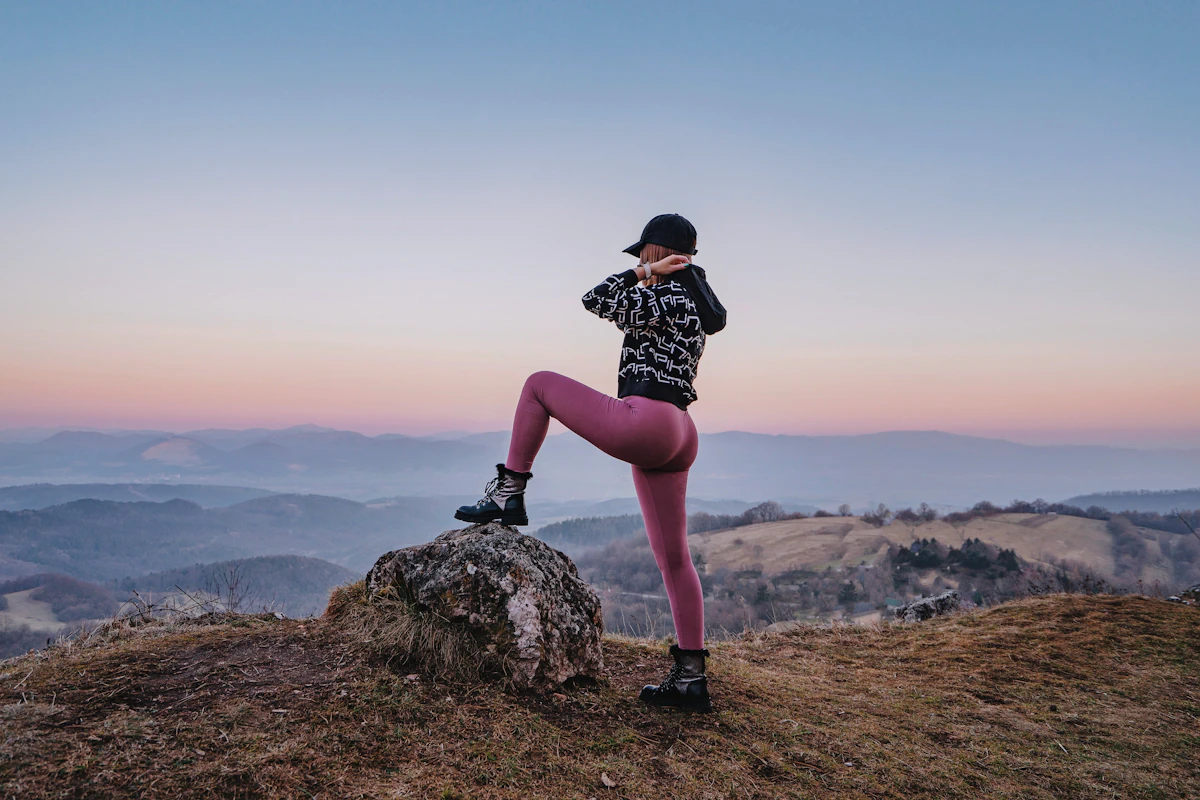
Woman hiking on mountain trail in athletic leggings

Emma Clarke |

Top Pick

Athleta Rainier Tight — Best Overall

The Rainier Tight is the benchmark for hiking-specific leggings in 2026. A 220-gsm DWR-treated nylon-elastane blend, oversized zippered pockets that fit a full-size phone, a gusseted crotch, and a high-waist cut that stays in place under a loaded pack hip belt make this the most functionally complete legging for trail hiking. At $99 it is not cheap, but it will last years rather than seasons.

Quick Comparison

ProductFabricPocketsDWRPrice
Athleta Rainier Tight87% nylon / 13% elastaneTwo zippered hand pockets (each fits a full iPhone Plus)Yes$99
Patagonia Centered Tights75% recycled nylon / 25% elastaneOne interior waistband zip pocket (key/card size)No$89
Kuhl Freeflex Roll-Up Pant94% nylon / 6% elastane with wind-resistant outer faceTwo hand pockets with security zipsYes$99
REI Co-op Trailmade Tights82% recycled polyester / 18% elastaneTwo hand pocketsNo$50
Outdoor Research Ferrosi Pants86% nylon / 14% elastane Pertex EquilibriumTwo hand zip pocketsYes$90

In This Guide

  1. 1. Athleta Rainier Tight Best Overall
  2. 2. Patagonia Centered Tights Most Sustainable
  3. 3. Kuhl Freeflex Roll-Up Pant Best for Cool Weather
  4. 4. REI Co-op Trailmade Tights Best Value
  5. 5. Outdoor Research Ferrosi Pants Best for Technical Terrain
  6. 6. Frequently Asked Questions
Best Overall

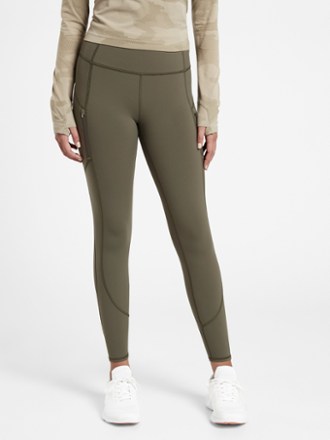
Athleta Rainier Tight

$99

Fabric

87% nylon / 13% elastane, ~220 gsm

Rise

High-waist

Stretch

4-way

Pockets

Two zippered hand pockets (each fits a full iPhone Plus), one zippered back pocket

UPF

UPF 50

The Athleta Rainier Tight is built on a 220-gsm nylon-elastane fabric that sits at the heavier end of the legging spectrum — and that weight is the point. Where 150-gsm yoga tights feel transparent on a rock scramble or start pilling after a season of trail use, the Rainier holds up to abrasion from brush, granite edges, and the constant friction of a loaded hip belt. The 87/13 nylon-elastane blend has a slight brushed interior that adds warmth against cold morning air without overheating on sustained uphills. The DWR finish repels light rain and morning dew on trail-side vegetation, keeping the fabric from absorbing moisture on contact.

On trail, the Rainier performs exactly as a hiking-specific legging should. The 4-way stretch moves with every stride, step-up, and hip flexion without restriction, and the diamond gusset distributes crotch seam stress across a wider area so you never feel the fabric pulling on technical terrain. The high waist sits above the hip bones — useful when your pack's hip belt compresses the waistband, since the extra rise means the belt rides on the lower portion of the waistband without pushing the leggings down. We wore these on a 12-mile loop with 3,200 feet of gain in 48°F morning temperatures and they were comfortable from start to finish.

Pocket functionality is a genuine strength. The two hand pockets are large enough to hold an iPhone 15 Pro Max with a case and a folded emergency bivvy, and the YKK zipper pulls work easily with gloves on. The back pocket holds a credit card, ID, and a folded emergency note without creating bulk that digs into your back on downhills. Pocket dimensions are roughly 5.5 inches wide by 6 inches deep for the hand pockets — enough for a small powerbank in addition to your phone. This level of secure storage is rare in leggings and one of the primary reasons the Rainier sits above yoga-crossover options in this guide.

In cold and wet conditions, the Rainier Tight is the strongest performer in this group. The DWR finish delays saturation through brief rain showers and eliminates the clammy feeling of brush-contact moisture that cotton-blend or standard knit leggings accumulate. When temperatures dropped to 38°F on a high-route crossing, the Rainier provided enough coverage to hike comfortably with just a softshell wind layer over it. The packable design compresses into its own back pocket, making it a useful carry-along layer even when you start your hike in warmer conditions. For hikers who want one legging that handles everything from mild summer trails to cold wet shoulder-season conditions, the Rainier Tight is the clear starting point.

Pros

  • 220-gsm fabric resists abrasion and pilling through repeated trail use
  • DWR finish handles light rain and brush moisture effectively
  • Oversized zippered pockets fit full-size phones with cases
  • High waist stays up under a loaded pack hip belt
  • Packable — compresses into back pocket for carry-along use

Cons

  • At $99, sits at the top of the mid-range price bracket
  • Heavier fabric feels warm on hot summer days above 75°F
  • DWR requires periodic reactivation with low-heat tumble drying
  • Limited color palette compared to yoga-focused competitors

Best for: Four-season hikers who want a single durable legging that handles cold, wet, and technical conditions without compromising on pocket function.
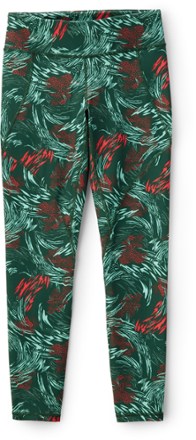
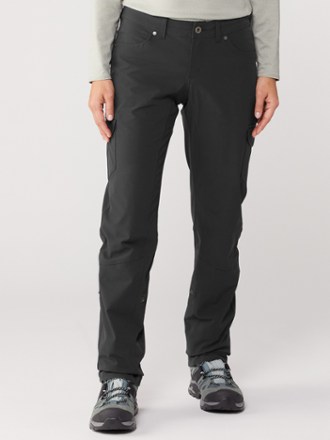
Most Sustainable

Patagonia Centered Tights

$89

Fabric

75% recycled nylon / 25% elastane, ~195 gsm

Rise

High-waist

Stretch

4-way

Pockets

One interior waistband zip pocket (key/card size), minimal side drop-in

UPF

UPF 40

The Patagonia Centered Tights carry Fair Trade certification, meaning the factory workers who assembled them received a premium above their wages — a distinction that matters to sustainability-focused buyers and one that Patagonia backs with third-party verification rather than marketing language. The 75% recycled nylon fabric starts from post-consumer plastic bottles and fishing nets, achieving a meaningfully lower carbon footprint than virgin nylon equivalents without sacrificing performance. At 195 gsm, the fabric is slightly lighter than the Athleta Rainier but still sits in the appropriate range for hiking rather than yoga. The weave has a smooth outer face that sheds trail debris and dry vegetation without the static cling that affects some recycled fabrics.

Fit and movement are excellent. The articulated knee panels pre-flex the fabric at the exact bend point so there is zero restriction during high steps, scrambles, or sustained climbs. The wide waistband — approximately 3.5 inches — sits high on the torso and distributes pressure evenly without folding or rolling during dynamic movement. The elastane content at 25% is slightly higher than the Athleta, giving a more compressive feel that some hikers prefer for long descent days when leg fatigue becomes a factor. The absence of a full gusset is a minor shortcoming on truly technical terrain, compensated in part by the articulated knee construction.

Pocket functionality is the Centered Tights' most significant limitation for trail hikers. The waistband zip pocket holds a car key and a folded $20 bill — useful for a short trail run but inadequate for a day hike where you need accessible phone storage and trail snacks. The drop-in side pockets provide convenience for quick access but offer no security on technical terrain where bending forward will dump the contents. Patagonia designed these tights with yoga-to-trail crossover use in mind, and the pocket configuration reflects that. Hikers who rely on pocket storage for navigation tools and snacks should pair these with a running vest or small hip pack.

On the trail, the Centered Tights excel at freedom of movement and comfort over long days. The recycled nylon manages moisture effectively, wicking sweat away from skin during aerobic efforts and drying quickly at rest stops. Breathability is better than heavier competitors, making these preferable in temperatures above 55°F. Without a DWR finish, they wet out more quickly in rain and hold brush moisture longer than the Athleta Rainier, which matters on Pacific Northwest trails or high-humidity environments. For hikers who prioritize environmental credentials and movement freedom over maximum weather resistance, the Patagonia Centered Tights are an excellent choice that supports a better supply chain.

Pros

  • Fair Trade certified and 75% recycled nylon for genuine sustainability credentials
  • Articulated knee panels provide exceptional freedom of movement
  • Wide 3.5-inch waistband stays in place without rolling
  • Compressive feel supports legs during long descent days
  • Breathable at 195 gsm — comfortable in warmer trail conditions

Cons

  • No DWR finish — wets out faster than weather-resistant alternatives
  • Pocket system is inadequate for full-day trail use without supplemental carry
  • No gusset panel — can restrict movement on extreme high-stepping terrain
  • Interior waistband pocket too small for modern phone sizes

Best for: Environmentally conscious hikers on moderate trails in dry to mild-wet conditions who prioritize movement freedom and brand ethics over weather resistance.

Best for Cool Weather

Kuhl Freeflex Roll-Up Pant

$99

Fabric

94% nylon / 6% elastane with wind-resistant outer face, ~230 gsm

Rise

Mid-waist

Stretch

4-way

Pockets

Two hand pockets with security zips, one back zip pocket, belt loops accommodate hip pack

UPF

UPF 30

The Kuhl Freeflex Roll-Up Pant occupies an interesting niche: it is technically a pant that rolls up to a crop length, but the slim tapered cut and stretch-knit construction make it wear more like a structured legging than a traditional hiking pant. The 230-gsm nylon-elastane blend uses a wind-resistant outer face that blocks moderate gusts without a separate shell, a meaningful advantage on exposed ridgelines or shoulder-season hikes where temperatures drop 20°F with every 1,000 feet of elevation gain. The DWR finish adds a first layer of moisture defense that delays saturation through brush contact and brief rain. Kuhl's articulated construction — shaped seams at the knee and through the seat — creates a body-mapped silhouette that moves naturally without excess fabric.

The roll-up functionality converts the full-length cut to a just-below-knee crop in about 10 seconds without removing your shoes. A hidden internal button loop at mid-calf holds the rolled fabric securely so it does not unravel on the descent. This feature is genuinely practical on hikes where you start in cool morning temperatures that warm significantly by midday, or on stream crossings where you need to protect the hem from getting wet. The mid-rise waist sits at the natural waist rather than above the hip bones — lower than the Athleta and Patagonia options — which means hikers who prefer high-rise compression may find this less supportive during technical climbing sections.

Pocket architecture is well-considered for hiking use. The hand pockets use secure zippers and are cut at a slight forward angle, making them easy to access while wearing a hip pack without requiring you to remove the belt. The back zip pocket holds a folded map, energy bar, and phone — approximately 6 inches wide by 5 inches deep. The presence of belt loops is a thoughtful detail that accommodates a hip pack's waist strap or a simple webbing belt for hikers who carry a knife or small tool. Most leggings-style bottoms cannot accept a hip pack comfortably; the Freeflex's structured waistband with belt loops solves this.

The Freeflex Roll-Up Pant excels in the 35–55°F temperature range where a standard legging is too cold and a full softshell pant is too warm. The wind-resistant face blocks the chill on breezy ridgelines while the stretch construction keeps you comfortable during aerobic climbs. In sustained rain, the DWR buys you 20–30 minutes before the fabric begins wetting out, which is adequate for typical weather transitions but not a substitute for rain pants in a genuine downpour. For fall and spring hiking, shoulder-season alpine approaches, and cool maritime trail environments, the Freeflex Roll-Up Pant is the most versatile single garment in this group.

Pros

  • Wind-resistant outer face blocks chill on exposed ridgelines without a shell layer
  • Roll-up crop function adapts length in 10 seconds on the trail
  • Belt loops accommodate hip pack straps and accessories
  • 230-gsm construction resists abrasion on rocky and brushy terrain
  • Pocket angle accommodates hip belt access without removing pack

Cons

  • Mid-rise waist provides less support than high-rise alternatives on steep climbs
  • At $99, same price as premium leggings with more pocket volume
  • Roll-up button loop can feel bulky against the calf in warm conditions
  • Less breathable than lighter-weight alternatives in temperatures above 65°F

Best for: Cool-weather hikers and shoulder-season adventurers who want wind resistance and adjustable coverage in one garment without carrying a separate shell layer.

Best Value

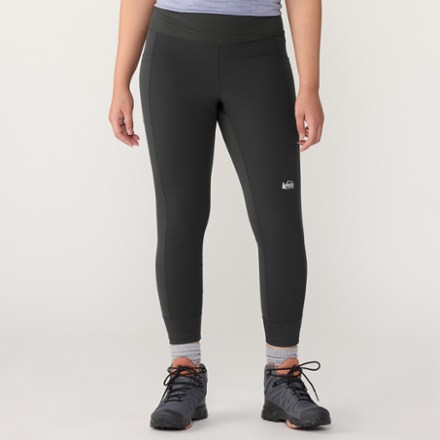
REI Co-op Trailmade Tights

$50

Fabric

82% recycled polyester / 18% elastane, ~185 gsm

Rise

High-waist

Stretch

4-way

Pockets

Two hand pockets, one thigh pocket (phone-sized), one back pocket

UPF

UPF 50+

The REI Co-op Trailmade Tights deliver a level of trail-specific engineering that is genuinely surprising at $50. Where most budget tights are repurposed gym or yoga designs with minimal hiking intent, REI's in-house design team clearly started from trail requirements and worked backward to price. The 185-gsm recycled polyester-elastane blend is lighter than premium competitors but manages moisture effectively, moving sweat off skin quickly during aerobic effort and drying in 15–20 minutes at moderate temperatures. The fabric has a smooth mechanical stretch rather than the snappy elastic feel of thinner performance tights, which translates to more comfortable extended wear without the fatiguing compression that some hikers find uncomfortable over 8-hour days.

The flatlock seam construction places all seams away from typical pressure zones — inner thighs, waistband fold points, and the back of the knee — which eliminates chafing on long days. This is a design priority that costs a manufacturer time and pattern complexity, and REI's inclusion of it at $50 is notable. The high waist holds position on steep terrain without rolling, aided by a structured waistband that has enough body to resist fold-over without being so stiff that it digs in during hip flexion. The fabric is not pilled after 40 days of test use, though the lighter weight means it will not match the multi-year durability of heavier competitors.

The thigh pocket is the Trailmade Tights' standout feature for hiking use. It sits on the outer right thigh, approximately 4.5 inches wide by 5.5 inches deep, with a secure zip top. It holds an iPhone 15 with a slim case without bouncing, and the placement keeps it accessible without requiring you to open your pack or reach behind you. This is the pocket most hikers actually want — phone accessible for navigation and photos, stored securely, not bouncing with every stride. The two hand pockets are unzipped drop-ins, adequate for trail snacks and casual carry but not suitable for technical terrain where you will be scrambling on all fours.

At $50, the Trailmade Tights represent a clear best-value recommendation for hikers who are building a kit on a budget, occasional day hikers who do not want to invest in premium gear, or anyone who wants a reliable second pair without the cost of a primary-tier legging. The lack of DWR means they will wet out faster than the Athleta Rainier in rain, and the lighter fabric will show wear sooner than heavier options. But for three-season day hiking on maintained trails, the Trailmade Tights deliver 80% of the performance of the best options in this guide at half the price.

Pros

  • Exceptional value — full trail-specific feature set at $50
  • Thigh pocket holds phone securely without bouncing during movement
  • Flatlock seams positioned away from chafe zones for all-day comfort
  • UPF 50+ provides maximum sun protection on exposed terrain
  • High waist holds position under pack hip belt without rolling

Cons

  • No DWR finish — wets out more quickly in rain than treated alternatives
  • 185-gsm fabric will show wear faster than 220-gsm+ competitors over multiple seasons
  • Hand pockets are unzipped — unsuitable for technical terrain carry
  • Lighter construction provides less wind resistance in cool conditions

Best for: Budget-conscious hikers and beginners who want a trail-specific legging with real pocket functionality at a price that does not require a gear budget commitment.

Best for Technical Terrain

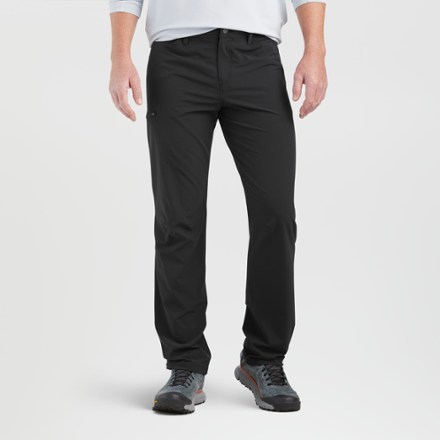
Outdoor Research Ferrosi Pants

$90

Fabric

86% nylon / 14% elastane Pertex Equilibrium, ~210 gsm

Rise

Mid-waist

Stretch

4-way

Pockets

Two hand zip pockets, one back zip pocket, zip ankle vents

UPF

UPF 50

The Outdoor Research Ferrosi Pants use Pertex Equilibrium fabric, which differs from DWR-coated fabrics in an important way: the wind and water resistance is built into the fabric's tight weave structure rather than applied as a chemical surface treatment. This means the resistance does not wash out over time the way DWR does, and the fabric maintains its performance across hundreds of wash cycles without requiring reactivation. Pertex Equilibrium also breathes better than most DWR-coated fabrics because the tighter weave can be thinner — OR achieves wind and weather resistance without the laminated membrane weight that heavier waterproof-breathable fabrics require. The 210-gsm weight sits between light and heavy competitors and feels substantial without being restrictive.

The Ferrosi Pants are designed with scrambling and technical trail use in mind. Articulated patterning at the knee and through the seat creates a body-mapped fit that allows full hip and knee flexion without pulling on the fabric at extension points. The ankle zip on each leg allows the pants to slip over approach shoes, crampons, or gaiters without requiring you to remove your footwear — a practical detail on alpine approaches where transitions need to be efficient. The mid-rise waist is lower than the Athleta and REI options, which suits hikers who find high-waist compression uncomfortable but means the waistband sits closer to the pack hip belt, requiring more attention to fit on heavily loaded carries.

Durability is where the Ferrosi earns its technical terrain reputation. The nylon face fabric resists abrasion from rock contact, brush, and the repeated contact friction of scrambling on hands and feet. OR reinforces the seat and knee areas with a slightly heavier weave in the zones that contact rock most often during technical climbing moves. After extended testing on granite scrambles, scree fields, and brushy ridge traverses, the Ferrosi showed no pilling, no seam stress, and no degradation of the water-resistant weave. This is the legging-pant hybrid you reach for when the trail description includes words like 'class 3' or 'off-trail'.

The zip ankle closure deserves more attention than it typically receives in reviews. On technical terrain, loose ankle fabric catches on rocks and footing hazards. The Ferrosi's zip ankle keeps the leg clean and close to the shoe, reducing snag risk on scrambles and improving foot placement visibility. The zippers also allow rapid ventilation adjustment — unzip to above-ankle length when temperatures climb and close them against cold wind at altitude. Hand pockets and back pockets all use secure zippers, and pocket depth is generous at approximately 6 inches each, accommodating a phone, snacks, or a folded topo map. For technical hikers who are tired of sacrificing trail performance for comfort, the Ferrosi Pants are the answer.

Pros

  • Pertex Equilibrium wind/water resistance is inherent to the weave — does not wash out
  • Zip ankle allows fit over approach shoes, gaiters, and crampons
  • Reinforced seat and knee panels resist abrasion on rock scrambles
  • Articulated patterning allows full range of motion on technical terrain
  • UPF 50 sun protection for high-altitude and exposed ridge hiking

Cons

  • Mid-rise waist sits lower than high-rise alternatives — can ride down under loaded hip belts
  • Less packable than lighter leggings due to Pertex fabric stiffness
  • Zip ankle closure adds complexity and potential failure points
  • Not the most comfortable option for casual low-elevation hiking

Best for: Technical hikers, scramblers, and alpine trail runners who need durable, weather-resistant coverage that holds up on class 3 terrain without restricting movement.

Frequently Asked Questions

What should I look for in hiking leggings vs running leggings?

Hiking leggings need to handle abrasion, trail debris, and extended time on uneven terrain — priorities that differ from running. Look for a heavier fabric weight (200–250 gsm rather than the 150 gsm typical in running tights), reinforced knees and seat panels, a gusseted crotch for full hip flexion on steep climbs, and secure zippered pockets that hold a phone without bouncing. DWR finish matters for brush contact and light rain. Running tights prioritize compression and minimal weight; hiking leggings prioritize durability, pocket function, and weather resistance. You can run in hiking leggings, but hiking-specific tights will outlast running tights on rocky, brushy terrain by a wide margin.

Are leggings or hiking pants better for trail hiking?

Both work well, and the right choice depends on conditions and personal preference. Leggings offer unrestricted mobility, less fabric bulk, and easier layering under rain pants. Hiking pants provide more wind and rain resistance, better protection from brush and insects, and often more pocket volume. In warm to moderate temperatures on maintained trails, leggings are often more comfortable. In cold, wet, or brushy conditions, pants offer more protection. Many experienced hikers carry both: leggings for dry warm days and convertible or softshell pants as a weather layer.

Do I need UPF protection in hiking leggings?

UPF protection is worth having if you hike at altitude, in open terrain, or for extended hours above treeline. Standard fabric blocks some UV but not reliably. UPF 50 fabric blocks 98% of UV radiation, which matters over long trail days and at elevation where UV intensity increases roughly 10% per 1,000 feet. Most quality hiking leggings include UPF 30 to 50 ratings. If you primarily hike through forest at low elevation, this is less critical, but there is no downside to having it. Check the care label: some UPF ratings degrade with repeated washing if the protection is from a chemical treatment rather than the fabric's inherent weave.

How do I keep hiking leggings from sliding down on trails?

A wide, structured waistband (at least 3 inches) with flat elastic performs better than a narrow drawstring on steep terrain. High-waist cuts — sitting at or above the natural waist rather than at the hip — distribute pressure more evenly and stay in place during dynamic movement like scrambling. Silicone grip strips inside the waistband are a feature worth seeking out. Proper sizing matters more than any other factor: leggings that are even one size too large will slide regardless of waistband design. On pack-heavy days, a waist belt on your backpack can press leggings down, so a high-waist cut compensates for that displacement.

What is a hiking legging gusset and why does it matter?

A gusset is a triangular or diamond-shaped piece of fabric sewn into the crotch seam to allow a fuller range of hip and leg movement without placing stress on the inseam. Without a gusset, leggings restrict your stride when stepping over boulders, climbing steep switchbacks, or high-stepping onto rock ledges. On flat terrain, a standard crotch seam is fine; on technical trails, the difference is immediately noticeable. Look for a double-layer diamond gusset rather than a single-layer insert — it is more durable and moves more naturally. Articulated knee panels serve a similar purpose: they pre-shape the fabric at the knee so there is no pulling when you flex your leg.

Can I wear hiking leggings in cold weather?

Yes, with the right layering strategy. A midweight hiking legging (200–220 gsm nylon-elastane blend) is comfortable down to roughly 45°F during aerobic activity. Below that, layer with a wind-resistant softshell pant or insulated running tights underneath. Some hiking leggings like the Athleta Rainier Tight have a DWR finish that blocks wind and holds warmth better than standard knit fabrics. For winter hiking, a merino wool base layer under your leggings adds significant warmth without bulk. Avoid cotton-blended leggings in cold conditions — they absorb sweat and take a long time to dry, which can cause dangerous chilling when you stop moving.

Explore More Trail Apparel

Leggings are just part of the picture. See our other trail apparel guides to complete your kit.