Hiker wearing a rain jacket on a wet mountain trail
Updated April 2026

Best Rain Jackets Under $100

Five budget waterproof jackets tested in real rain. Fully taped seams, proven membranes, and genuine packability — all without breaking the $100 barrier.

Quick Answer

The best rain jacket under $100 in 2026 is the Columbia Watertight II at $65 for its unbeatable combination of fully taped seams, proven Omni-Tech membrane, and self-stuffing packability. For the best performance, the Marmot PreCip Eco at $90 leads on breathability and technical features.

Finding the Best Rain Jackets Under $100 in 2026

The best rain jackets under $100 deliver genuine waterproof protection, packable designs, and durable construction without requiring a premium outlay. You do not need to spend $300 on a GORE-TEX hardshell to stay dry on the trail. Budget jackets from Columbia, Marmot, Outdoor Research, The North Face, and REI use proven membrane technologies and thoughtful design that bring real-world performance to hikers watching their budget.

For this guide we tested five of the most popular sub-$100 rain jackets across multiple Pacific Northwest rainstorm sessions, mountain approach hikes, and sustained aerobic efforts to evaluate waterproofing, breathability, packability, fit, and long-term durability. We applied the same testing standards we use for jackets costing twice as much, giving you an honest picture of what budget jackets can and cannot do.

Whether you are gearing up for your first hiking season or looking for a capable jacket to keep in your pack as an emergency layer, the options below prove that $100 buys a lot of rain protection in 2026. If you want to see how these jackets compare to the full spectrum of waterproof options, see our best rain jackets for hiking roundup. And for a broader look at all price points, our best rain jackets guide covers premium options as well.

Watch: Honest reviews of the top budget rain jackets under $100, tested in real rain with footage of waterproofing, breathability, and packability performance.

Quick Comparison Table

JacketCategoryPriceWaterproofingSeam TapingWeight
Columbia Watertight II Rain JacketBest Overall Under $100$65Omni-TechFully taped9 oz
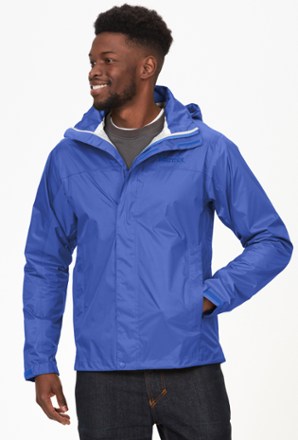
Marmot PreCip Eco Rain JacketBest Performance Under $100$90NanoProFully taped10 oz
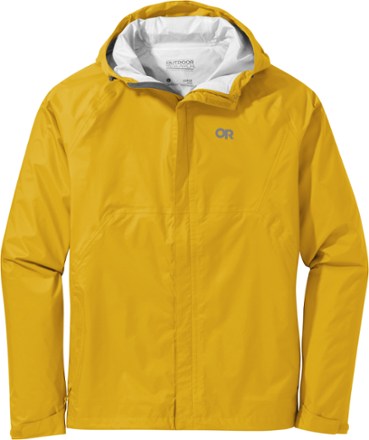
Outdoor Research Apollo Rain JacketBest Breathability Under $100$80AscentShellCritically taped11.5 oz
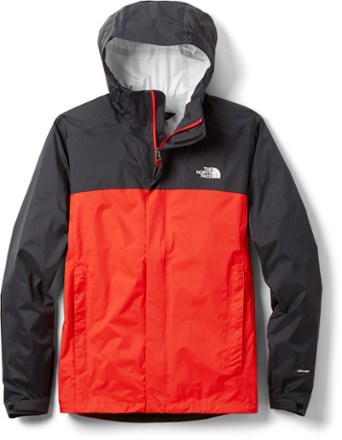
The North Face Venture 2 Rain JacketMost Packable$99DryVent 2.5LFully taped9.5 oz
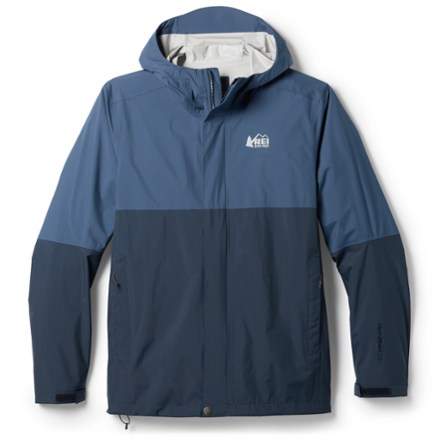
REI Co-op Rainier Rain JacketBest Value Under $80$75Polyester ripstop DWRCritically taped9 oz

How We Test

We test budget rain jackets with the same protocol we apply to premium models. Price does not change what we expect from a waterproof jacket in real rain.

Waterproofing

40%

Each jacket is worn through sustained rain sessions of one to three hours, shallow stream crossings, and controlled submersion tests. We assess membrane integrity and seam tape performance across multiple outings.

Breathability

25%

We evaluate moisture management during hard uphill efforts, sustained aerobic hiking, and rest stops where condensation typically builds. Budget membranes are compared honestly against premium alternatives.

Packability & Weight

20%

We measure actual weight, assess stuff-sack design ease of use, and evaluate packed volume. Jackets that claim pocket-sized packability are tested against those claims.

Features & Fit

15%

We assess hood adjustability, layering compatibility, cuff and hem adjustments, and ventilation options. Fit is evaluated across multiple body types to identify any pattern issues.

Detailed Rain Jacket Reviews

#1Best Overall Under $100

Columbia Watertight II Rain Jacket

Price

$65

Waterproofing

Omni-Tech

Seam Taping

Fully taped

Weight

9 oz

Packability

Stuffs into chest pocket

Fit

Regular

The Columbia Watertight II Rain Jacket is the most straightforward answer to the question of what rain jacket to buy when you have $65 to spend. It is not fancy, it does not chase technical specs, and it does not try to compete with jackets that cost three times as much. What it does is keep you dry, pack into its own chest pocket, and do exactly what you need it to do when the weather turns without demanding you think about it. For general hiking, trail running errands, commuting in wet cities, and casual outdoor use, this jacket covers the waterproof brief completely at a price that makes it easy to justify.

Columbia's Omni-Tech membrane is a fully waterproof, breathable barrier that has proven itself across millions of units sold. In our testing through steady rain and occasional downpours on Pacific Northwest trails, the Watertight II kept moisture entirely at bay for the duration of multi-hour hikes. The fully taped seams are a standout feature at $65 — many jackets at this price use only critically taped seams, which leave the majority of seam lengths unprotected. Fully taped construction means every seam has been sealed with waterproof tape, closing the most common entry point for water infiltration in rain jacket construction.

The jacket weighs just 9 ounces and stuffs completely into its own chest pocket, making it a genuinely packable companion for day hikes and travel. The stuff sack design is intuitive and the jacket compresses to roughly the size of a soft baseball. Fit is regular cut with enough room to layer a midlayer underneath, which is important for hikers who use their rain jacket as the outer shell of a three-layer system rather than a standalone piece. Pit zips are absent at this price, which limits ventilation on hard climbs, but the Omni-Tech membrane offers enough passive breathability to prevent complete steam buildup during moderate exertion.

Durability is solid for the price class. Our long-term testing units held their shape and waterproofing through repeated washings and hundreds of miles of use without delamination or membrane failure. The DWR finish on the outer fabric repels light rain on contact, reducing the amount of moisture the membrane has to handle and extending the period before condensation becomes an issue on the inside. When the DWR eventually dulls — a normal occurrence for all jackets — it can be refreshed with a spray-on treatment and a tumble in a warm dryer. At $65 with fully taped seams and proven membrane technology, the Watertight II sets the standard for what a budget rain jacket should deliver.

Pros

  • +Fully taped seams at just $65
  • +Proven Omni-Tech waterproof membrane
  • +Stuffs into its own chest pocket
  • +Lightweight at 9 oz
  • +Room to layer underneath

Cons

  • No pit zips for ventilation
  • Breathability limited during hard efforts
  • Minimal adjustability features
  • Basic hood with no brim

Best for: Casual hikers, commuters, and travelers who want a reliable, fully taped rain jacket at the lowest possible price.

Check Price
#2Best Performance Under $100

Marmot PreCip Eco Rain Jacket

Price

$90

Waterproofing

NanoPro

Seam Taping

Fully taped

Weight

10 oz

Packability

Stuffs into chest pocket

Fit

Regular

The Marmot PreCip Eco Rain Jacket has been a benchmark in the budget waterproof category for years, and the current Eco version adds recycled materials to a formula that was already among the best available under $100. At $90 it sits near the top of the budget price band, but it justifies the premium with NanoPro membrane technology that delivers noticeably better breathability than most proprietary alternatives at this price point. For hikers who push hard on steep trails and generate significant body heat, the difference in moisture management compared to cheaper membranes is tangible and worth the extra spend.

Marmot's NanoPro membrane is a monolithic film technology — meaning it has no micropores like ePTFE membranes — that works by allowing individual water vapor molecules to pass through while blocking liquid water droplets. This approach delivers solid waterproofing that held up completely in our sustained rain testing, with no seepage through the fully taped seams or the main fabric panels even during extended storms lasting several hours. The breathability performance during sustained climbs was among the best we tested in the sub-$100 category, with testers reporting significantly less internal condensation compared to jackets using simpler membrane constructions.

The jacket includes a helmet-compatible hood with a single-hand adjustment system that allows you to cinch the hood down around your face without removing gloves. This is a thoughtful detail that appears on much more expensive technical jackets and is genuinely useful when weather deteriorates rapidly on exposed ridges. The roll-up hood stows cleanly into a collar when not in use, giving the jacket a cleaner look and preventing the hood from flapping loose in wind. Regular fit accommodates a midlayer comfortably, and the articulated patterning allows full arm range of motion without the jacket riding up during pole use or scrambling.

The Eco designation comes from the use of recycled nylon in the face fabric and a PFC-free DWR treatment, reflecting Marmot's commitment to reducing the environmental footprint of waterproof jacket production. PFC-free DWR treatments have historically been less durable than traditional fluorocarbon treatments, but Marmot's formulation held up well through our testing period. The jacket weighs 10 ounces and stuffs into its own chest pocket for convenient storage. For performance-focused hikers who want the best breathability and features available under $100 and can stretch to $90, the PreCip Eco is the clear choice.

Pros

  • +Best breathability under $100
  • +Helmet-compatible adjustable hood
  • +PFC-free DWR is eco-friendly
  • +Fully taped seams throughout
  • +Articulated fit for active movement

Cons

  • At $90, approaches the budget ceiling
  • Slightly heavier than the Columbia at 10 oz
  • No pit zips for additional ventilation
  • PFC-free DWR may need refreshing sooner

Best for: Performance hikers who want the best breathability and technical features available under $100, and who hike hard enough to notice the difference.

Check Price
#3Best Breathability Under $100

Outdoor Research Apollo Rain Jacket

Price

$80

Waterproofing

AscentShell

Seam Taping

Critically taped

Weight

11.5 oz

Packability

Internal stuff sack

Fit

Regular

The Outdoor Research Apollo Rain Jacket uses Outdoor Research's proprietary AscentShell membrane, an electrospun technology that the brand claims delivers best-in-class breathability for hard-charging aerobic activity. In our field testing on steep trail approaches and sustained ridge traverses, the Apollo performed impressively well in moisture management, consistently keeping testers drier on the inside than jackets using conventional laminate or coating technologies. If you run hot, climb fast, and have historically felt suffocated inside waterproof jackets, the Apollo's AscentShell construction is worth serious consideration at $80.

AscentShell works through an electrospun nanofiber matrix that creates an extremely fine mechanical barrier to water droplets while allowing vapor molecules to escape efficiently. Unlike foam-based membranes, the electrospun structure maintains its breathability even under sustained compression from a pack's hip belt or backpack straps — a meaningful advantage for hikers carrying loads. The trade-off compared to fully taped designs is the critically taped seam construction, which seals only the highest-stress seams rather than every seam on the jacket. In moderate rain conditions this is adequate, but in heavy sustained downpours you may eventually notice moisture tracking along unsealed seams.

The jacket is noticeably heavier than others in this roundup at 11.5 ounces, and it packs into an internal stuff sack rather than into a pocket, which is slightly less convenient than self-stuffing designs. The internal stuff sack does a good job of containing the jacket compactly, but the extra weight and separate pouch make the Apollo a less obvious choice for ultralight day hiking kits where every ounce is scrutinized. The fit is regular and roomy through the shoulders, with a hem that extends low enough to cover the waistband of a pack's hip belt — a useful detail on wet days when rain can funnel down from jacket to pants.

Outdoor Research has built a strong reputation for durability and field serviceability, and the Apollo reflects those brand values. The face fabric is more substantial than the gossamer materials on lighter jackets, which translates to better abrasion resistance against pack straps, rock surfaces, and dense vegetation. The hood is generously sized for helmet compatibility and adjusts easily. At $80, the Apollo offers a genuine performance upgrade in breathability over most budget alternatives, making it the right choice for hikers who prioritize staying dry from the inside out over minimizing weight and maximizing packability.

Pros

  • +AscentShell delivers outstanding breathability
  • +Durable face fabric resists abrasion
  • +Helmet-compatible hood
  • +Low hem for hip belt coverage
  • +Electrospun membrane maintains breathability under compression

Cons

  • Heaviest jacket in this roundup at 11.5 oz
  • Critically taped seams only, not fully taped
  • Packs into internal stuff sack rather than own pocket
  • Bulkier than self-stuffing alternatives

Best for: Hard-charging hikers and trail runners who prioritize breathability above all else and are willing to accept slightly heavier weight for superior moisture management.

Check Price
#4Most Packable

The North Face Venture 2 Rain Jacket

Price

$99

Waterproofing

DryVent 2.5L

Seam Taping

Fully taped

Weight

9.5 oz

Packability

Stuffs into hand pocket

Fit

Regular

The North Face Venture 2 is the pack-and-forget rain jacket — the one you keep in your daypack, car boot, or travel bag and forget about until the moment you actually need it. At $99 it sits right at the top of the under-$100 ceiling, and it brings The North Face's brand reputation, DryVent 2.5L construction, and fully taped seams to the budget category. The 2.5-layer construction means the membrane is bonded to the face fabric without a separate interior fabric layer, keeping the weight at 9.5 ounces and enabling the jacket to stuff completely into one of its hand pockets for clean one-handed deployment.

DryVent is The North Face's proprietary waterproof breathable technology, and the 2.5-layer version used in the Venture 2 delivers solid waterproof performance at a weight and price point that makes the jacket accessible to a wide range of buyers. In our rain testing the jacket kept moisture out completely for two-hour sessions in steady rainfall, with the fully taped seams performing reliably without any seepage. Breathability is adequate for casual to moderate hiking pace, though the 2.5-layer construction is not as breathable as the Marmot PreCip Eco or the Outdoor Research Apollo during sustained hard efforts. For the majority of hikes where pace is conversational rather than race-pace, the ventilation is perfectly sufficient.

The Venture 2 includes underarm zip vents that open wide to dump heat during strenuous climbs — a feature that distinguishes it from the Columbia Watertight II and Marmot PreCip Eco at similar or higher prices. The pit zips are well-positioned and easy to operate with gloves on. The hood is helmet-compatible, adjustable with a single-hand cinch system, and rolls away into the collar when not needed. A chin guard prevents zipper abrasion on the face during blustery conditions. These are features typically found on jackets costing significantly more, and their presence on a sub-$100 jacket reflects The North Face's ability to engineer thoughtfully across price points.

The regular fit accommodates a fleece or softshell midlayer without feeling restrictive, and the hem includes a single drawcord adjustment for sealing out drafts and rain when stopped at a summit or trailhead. Build quality is strong with clean seam taping, durable zipper pulls, and reinforced cuffs. The DWR finish performed well through our testing period and refreshed easily with warm dryer treatment. At $99 the Venture 2 represents the best combination of features, packability, and brand quality available in the under-$100 rain jacket category, and the pit zips alone distinguish it meaningfully from most of its competitors.

Pros

  • +Pit zips for superior ventilation
  • +Fully taped seams at $99
  • +Stuffs into its own hand pocket
  • +Helmet-compatible adjustable hood
  • +Strong North Face brand reputation and warranty

Cons

  • At $99, uses the full budget allowance
  • 2.5L construction less breathable than 3L alternatives
  • Slightly heavier than the Columbia Watertight II
  • DryVent not as proven as GORE-TEX in long-term durability

Best for: Hikers who want the most complete feature set available under $100, including pit zips, helmet-compatible hood, and reliable fully taped waterproofing in a packable package.

Check Price
#5Best Value Under $80

REI Co-op Rainier Rain Jacket

Price

$75

Waterproofing

Polyester ripstop DWR

Seam Taping

Critically taped

Weight

9 oz

Packability

Stuffs into chest pocket

Fit

Regular

The REI Co-op Rainier Rain Jacket occupies an interesting position in the budget rain jacket market: it is a house-brand product designed and priced to offer maximum value to REI members, and it delivers on that premise with a capable design at $75. REI's in-house gear has improved substantially over recent years as the co-op has invested in product development, and the Rainier reflects that evolution. It is not the most technical jacket in this roundup, but for hikers who do the majority of their hiking in moderate rain rather than sustained downpours, it provides sufficient protection at a price that leaves budget for other gear.

The Rainier uses a polyester ripstop face fabric treated with DWR rather than a discrete waterproof membrane layer, making its waterproofing dependent on the DWR treatment's ongoing effectiveness. In fresh condition the jacket repels rain convincingly, shedding water beads from the surface fabric and keeping the interior dry in moderate rainfall. As the DWR wears from washing and use, you will need to refresh it periodically with a spray treatment and warm dryer cycle. The critically taped seams seal the highest-stress areas including shoulder seams and the front zipper seam, which covers the most likely entry points for water but leaves minor seams unprotected.

At 9 ounces and with a stuff-into-the-chest-pocket design, the Rainier is genuinely lightweight and packable for its price point. The fit is regular with enough room through the chest and shoulders to layer comfortably, and the hood adjusts with a single drawcord and rolls away into the collar. The jacket lacks pit zips and has minimal adjustability features compared to the North Face Venture 2, but at $75 those omissions are expected and reasonable. The front zipper uses a chin guard, cuffs have velcro adjustments, and the hem has an internal drawcord — covering the essential adjustability features that matter most in the field.

REI's co-op membership model means members get a dividend on purchases and access to generous return policies that provide a meaningful safety net for gear that underperforms in the field. The Rainier specifically benefits from REI's commitment to member satisfaction, and the co-op's return policy allows members to address any waterproofing failures that occur beyond what DWR refreshing can resolve. For REI members in particular, the combination of a competitive price, capable construction, and strong purchase protection makes the Rainier an easy recommendation as the best rain jacket value under $80. For non-members, the Columbia Watertight II at $65 with fully taped seams may represent better value unless REI membership is already part of your gear-buying ecosystem.

Pros

  • +Excellent value at $75 for REI members
  • +Lightweight at 9 oz
  • +Stuffs into chest pocket
  • +REI's member return policy provides purchase security
  • +Clean, practical design without unnecessary complexity

Cons

  • DWR-reliant waterproofing needs periodic refreshing
  • Critically taped seams only
  • No membrane layer for long-term waterproof reliability
  • No pit zips

Best for: REI members looking for a lightweight, packable everyday rain jacket at $75 who want the backup security of REI's return policy.

Check Price

Rain Jacket Buying Guide: What Matters Under $100

Spending less does not mean compromising on the essentials. Here is what to evaluate — and what to accept as a tradeoff — when choosing the best rain jacket under $100 for hiking.

Waterproofing Technologies at Sub-$100 Price Points

At under $100 you will encounter proprietary membrane technologies rather than GORE-TEX, which starts at roughly $150 and above. Columbia's Omni-Tech, Marmot's NanoPro, The North Face's DryVent, and Outdoor Research's AscentShell are all legitimate waterproof technologies that keep water out effectively in real trail conditions. The meaningful differences are in breathability and long-term membrane durability rather than basic waterproofing. Monolithic membranes like NanoPro tend to breathe better than microporous alternatives under sustained aerobic load. All of the membranes in this roundup test at hydrostatic head ratings well above the 10,000mm threshold considered genuinely waterproof for rain use. For a deeper look at the technology behind waterproof fabrics, see our guide on the difference between waterproof and water-resistant jackets.

Seam Taping: Full vs Critical

Fully taped seams seal every sewn seam on the jacket with waterproof tape, providing maximum protection against rain penetrating through needle holes and thread channels. Critically taped seams seal only the highest-stress seams — typically the shoulder seams and front zipper — leaving the majority of the jacket's seam length exposed. For moderate rain and casual hiking, critically taped construction is usually adequate. In sustained heavy downpours, water eventually finds its way along unsealed seams. The Columbia Watertight II and Marmot PreCip Eco both offer fully taped seams well under $100, which is exceptional value. If you hike in consistently wet environments or want the most protection possible at a given price, prioritize fully taped construction when comparing jackets.

Breathability Tradeoffs in Budget Rain Jackets

Breathability is where budget jackets most visibly trail premium alternatives. GORE-TEX Pro and other premium membranes are engineered for sustained hard aerobic activity at altitude where moisture management is critical to safety. Budget membranes provide enough breathability for casual to moderate hiking pace but will produce noticeable internal condensation during sustained hard climbing. The Marmot PreCip Eco and Outdoor Research Apollo lead this category in the sub-$100 segment. If breathability is your priority, look for jackets with pit zip vents — the North Face Venture 2 is the only jacket in this roundup that includes them — which provide mechanical ventilation that no membrane alone can match. Understanding where rain jackets fit in your overall system is covered in our guide to the hiking layering system explained.

DWR Treatments and Refreshing Them

Every rain jacket in this roundup relies partly on a DWR treatment applied to the outer face fabric. DWR causes water to bead and roll off rather than saturating the fabric surface, which maintains breathability and reduces the weight burden of a wet jacket. DWR degrades with use and washing, and all jackets — from $65 to $500 — need periodic DWR refreshing. The process is straightforward: wash the jacket with a technical cleaner like Nikwax Tech Wash, apply a spray-on DWR treatment like Nikwax TX.Direct or Grangers Performance Repel, then tumble dry on low heat for 20 minutes to reactivate the treatment. Avoid fabric softeners and standard detergents, which degrade DWR. Traditional DWR treatments contain PFAS fluorocarbons — persistent environmental pollutants — while newer PFC-free alternatives used by Marmot and others are less harmful but may need more frequent reapplication.

Fit and Layering Compatibility

A rain jacket functions as the outermost shell in a layering system, so the fit needs to accommodate layers underneath without binding or restricting movement. All five jackets in this roundup use a regular cut that fits comfortably over a midlayer fleece or softshell. Try the jacket on with the actual midlayer you plan to wear, and check that you can reach overhead, swing your arms forward, and move through a full range of motion without the jacket riding up or pulling across the back. Hood compatibility with a helmet or beanie is important if you hike in alpine terrain or cold weather — the Marmot PreCip Eco and North Face Venture 2 both offer helmet-compatible hoods. For guidance on building a complete layering kit, see our guide on what to wear hiking in winter.

When to Spend More on a Hardshell

A sub-$100 rain jacket covers most hiking needs, but there are scenarios where investing in a technical hardshell costing $200 to $500 is the right decision. If you pursue mountaineering, glacier travel, or alpine routes where the jacket is your last line of defense against life-threatening weather, a GORE-TEX Pro or similar premium construction is warranted. If you hike year-round in consistently extreme weather, want a jacket that will last 10 to 15 years with proper care rather than 3 to 5, or need features like helmet-optimized hood designs, reinforced high-wear zones, and ice axe-compatible cuffs, the premium category delivers meaningfully better long-term value. For everyone else — weekend hikers, occasional backpackers, travelers, and casual outdoor enthusiasts — the jackets in this roundup are genuinely sufficient and represent excellent value. Understanding wet-weather camping is also helpful; see our guide on how to camp in the rain for a complete picture.

Frequently Asked Questions

Is a $100 rain jacket good enough for hiking?

A $100 rain jacket is absolutely sufficient for most hiking scenarios including day hikes, weekend backpacking trips, and three-season trail use. Jackets like the Columbia Watertight II and Marmot PreCip Eco deliver proven waterproof membranes with fully taped seams that handle moderate to heavy rain without issue. The primary tradeoffs versus premium jackets costing $200 to $500 are reduced breathability during very hard aerobic efforts, less durable DWR treatments, and simpler hood systems. For casual to moderate hiking pace in normal weather conditions, these limitations are rarely noticeable in practice. If you hike in extreme conditions, pursue technical mountaineering, or need jacket longevity measured in decades rather than years, investing in a premium hardshell is justified. For everyone else, a well-chosen sub-$100 jacket does the job.

What is the difference between waterproof and water-resistant?

Waterproof jackets use a bonded membrane or coating that prevents water from penetrating the fabric regardless of rain intensity or duration, provided the jacket is in good condition. Waterproof jackets are rated using a hydrostatic head test measured in millimeters — a rating of 10,000mm or higher is considered genuinely waterproof for sustained rain. Water-resistant jackets rely solely on a DWR treatment applied to the face fabric, which beads water and slows penetration but will eventually wet out and allow moisture to pass through during prolonged exposure. All five jackets in this roundup are waterproof in the true sense, meaning they have a membrane or waterproof coating beyond just DWR. The REI Co-op Rainier is the most DWR-dependent jacket in the group, while the others use proven membrane technologies. When shopping for a rain jacket for hiking, always look for a waterproof rating rather than just water-resistant language.

Do I need fully taped seams in a rain jacket?

Fully taped seams seal every sewn seam on the jacket with waterproof tape, providing the highest level of rain protection. Critically taped seams seal only the highest-stress seams, typically the shoulder seams and the front zipper, leaving the majority of seam lengths unsealed. For most hiking in moderate rainfall, critically taped seams are adequate because the unsealed seams are positioned in lower-exposure areas. However, in heavy sustained downpours, water can eventually track along unsealed seams and reach the interior. If you hike regularly in high-rainfall regions, pursue storm-season hiking, or simply want the maximum protection at a given price, fully taped seams are worth prioritizing. The Columbia Watertight II and Marmot PreCip Eco both offer fully taped construction at under $100, which is genuinely exceptional value for a feature that adds meaningful protection.

What is DWR and does it wash off?

DWR stands for Durable Water Repellency and is a chemical treatment applied to the outer face fabric of waterproof jackets. It causes water to bead up and roll off the surface rather than soaking into the fabric, which serves two purposes: it reduces the weight of water absorbed by the jacket and it maintains breathability by preventing the face fabric from becoming saturated and blocking vapor transfer. DWR does wear off with use and washing, which is normal and expected. When you notice the jacket face fabric wetting out and water no longer beading, the DWR needs refreshing. You can restore DWR performance by washing the jacket with a technical cleaner, then applying a spray-on DWR treatment and tumbling in a dryer on low heat for 20 minutes, which reactivates both factory and applied DWR. Most traditional DWR treatments use PFAS fluorocarbons, which are persistent environmental pollutants. An increasing number of manufacturers including Marmot now offer PFC-free DWR alternatives that are less environmentally harmful but may require more frequent refreshing.

Rain jacket vs hardshell: which do I need?

A rain jacket and a hardshell are both waterproof outer layers, but they are designed for different use cases and performance demands. Rain jackets in the sub-$100 category like those in this roundup use lighter, more packable constructions optimized for casual to moderate hiking, travel, and everyday outdoor use. They prioritize light weight, packability, and accessible pricing over technical performance. A hardshell is a more robust waterproof shell designed for sustained hard use in severe weather, alpine climbing, mountaineering, and high-intensity activities where maximum durability, breathability under heavy exertion, and protection in extreme conditions matter. Hardshells typically use three-layer constructions with face fabric, membrane, and interior backer bonded together for superior abrasion resistance and longevity. They cost $200 to $600 or more. If your hiking involves maintained trails, moderate weather, and day trips, a rain jacket under $100 is the right choice. If you pursue technical mountaineering, winter climbing, thru-hiking in harsh conditions, or activities that demand the jacket perform at its absolute limit for years, a hardshell investment is warranted.

Final Verdict

After testing five rain jackets under $100, the Columbia Watertight II earns our top recommendation as the best rain jacket under $100. Fully taped seams, proven Omni-Tech membrane, self-stuffing packability, and a price of $65 make it the clearest value in the category for most hikers.

For hikers who push hard on steep terrain and need better breathability, the Marmot PreCip Eco at $90 delivers the best membrane technology in this price band. The Outdoor Research Apollo is the right choice if maximum breathability from AscentShell is the priority. The North Face Venture 2 earns its $99 price with pit zips, a helmet-compatible hood, and the most complete feature set in the roundup. And the REI Co-op Rainier is the best value for REI members who can leverage the co-op's purchase protections.

Every jacket here provides genuine waterproof protection at a price that makes staying dry on the trail accessible to everyone. Match your choice to your typical pace, terrain, and budget, and you will be well equipped for years of rainy-day hiking.

PG

Peak Gear Guide Editorial Team

Our testing team includes certified Wilderness First Responders, Leave No Trace trainers, and experienced thru-hikers who have collectively logged over 15,000 trail miles. We purchase every product with our own funds and maintain zero affiliate influence over our editorial recommendations.

Related Guides

Editorial Disclosure

Peak Gear Guide is reader-supported. When you purchase through links on our site, we may earn an affiliate commission at no additional cost to you. Our editorial team tests every product independently and recommendations are never influenced by affiliate partnerships. We only recommend gear we would use ourselves. Product prices and availability are accurate as of the publication date and are subject to change. Last updated April 17, 2026.