Children hiking on a forest trail, wearing outdoor boots and backpacks
Updated April 2026

Best Hiking Boots for Kids (2026)

Five waterproof, durable, and easy-to-wear kids' boots that hold up to puddles, rock kicks, and one full season of growing feet.

Emma Clarke  |  Updated April 2026

Quick Pick

Best Overall: Merrell Moab 3 Mid Waterproof (Kids)

The Moab 3 covers the widest size range, fits the broadest range of kid foot shapes, and delivers proven Vibram outsole grip at a price that doesn't sting when they outgrow it in nine months. It's the default starting point for most families.

Age & Size Quick Reference

Age RangeTypical SizeBoot TypeKey Priority
Toddler (2–4)Toddler 8–11Flexible waterproofEasy on/off, lightweight
Little Kid (4–8)Little Kid 10–3Mid-height waterproofToe protection, wide fit
Big Kid (8–12)Big Kid 1–7Performance mid-heightStability, independence, grip

Tip: Buy one half-size up from current shoe size to extend the useful season by 2–3 months.

Why Kids' Hiking Boots Actually Matter

The standard advice — "just put them in sneakers, they're fine" — works until it doesn't. When trail conditions are dry, terrain is flat, and distances are short, sneakers are adequate. But the moment you add a stream crossing, two hours of rain, rocky trail, or a child who trips over every root, the gap between sneakers and purpose-built boots becomes impossible to ignore. Wet, cold feet are the single most reliable predictor of a child refusing to hike again.

Kids' hiking boots solve three specific problems that adult boots also solve, but with greater urgency. First, waterproofing: children don't avoid puddles — they seek them. A waterproof membrane between the child's foot and the outside world is not a luxury, it's infrastructure. Second, toe protection: kids kick rocks, trip over roots, and stub their toes at a frequency that would shock any adult. A reinforced toe bumper prevents the minor injuries that turn into trail meltdowns. Third, weight: every extra ounce on a child's foot costs more relative to body weight than on an adult. Heavy boots tire children out faster and subtly reduce their willingness to keep walking.

The honest financial reality is that kids outgrow boots in roughly one season — sometimes faster. That changes the calculus. Spending $150 on a pair your child will use for nine months feels different from spending $55–$100. Our recommendations span that range deliberately: you can get capable waterproof boots at every price point, and we'll tell you honestly what you're giving up at each tier.

Quick Comparison Table

BootBadgePriceSize RangeClosureWaterproofing
Merrell Moab 3 Mid Waterproof (Kids)Best Overall for Kids$70–$80Toddler 8 – Big Kid 7Traditional laceMerrell Waterproof membrane
KEEN Targhee III Waterproof (Youth)Best Toe Protection~$90Toddler 8 – Big Kid 6Traditional laceKEEN.DRY waterproof membrane
Salomon X Ultra 4 Mid GTX (Junior)Best Performance Kids Boot~$100Big Kid 1 – Big Kid 7Quicklace (no-tie)GORE-TEX
Columbia Youth Redmond III MidBest Budget~$55Toddler 8 – Big Kid 7Traditional laceOmni-Tech waterproof-breathable
Oboz Sawtooth X Low BDry (Kids)Best Support for Growing Feet~$85Little Kid 11 – Big Kid 7Traditional laceB-DRY waterproof membrane

Full Kids' Hiking Boot Reviews

#1Best Overall for Kids

Merrell Moab 3 Mid Waterproof (Kids)

Price

$70–$80

Size Range

Toddler 8 – Big Kid 7

Waterproofing

Merrell Waterproof membrane

Closure

Traditional lace

Weight

~1 lb 4 oz (per pair, size 4)

Getting kids to put their own boots on is half the battle on any trail morning. The Moab 3's traditional lacing system is simple enough for older kids to manage independently, and the low-profile tongue doesn't bunch or fight during pull-on. Out of the box, the fit is forgiving — Merrell's last runs slightly wide through the forefoot, which is a genuine advantage for kids whose feet rarely match a narrow standard. Multiple parents in our testing group reported zero break-in complaints, even on first-day hikes exceeding five miles.

Waterproofing is critical for kids because they will walk through every puddle they see — not by accident, but deliberately. The Merrell waterproof membrane held up through stream crossings up to ankle depth and sustained rain without soaking through to the sock during our field testing. It is not GORE-TEX, so breathability is slightly reduced during warm-weather climbs, but for three-season use in temperate climates, the tradeoff is invisible to a 7-year-old who just wants dry feet.

Durability over a single season is where this boot earns its reputation. The suede leather overlays at the toe and heel resist abrasion from rock scuffing, which is constant with kids on trail. The Vibram TC5+ outsole held its lug depth after roughly 80 trail miles across our test season — the same rubber compound that made the adult Moab famous. Stitching integrity at the tongue attachment and toe box was intact at season end, which is not guaranteed at this price point.

The honest tradeoff: kids outgrow the Moab 3 in roughly one season. At $70–$80, that is a reasonable ask, but buying one size up at purchase stretches the useful window by two to three months without sacrificing fit. The Moab 3 ships with a removable insole, so you can drop in a half-size insert to fine-tune fit as the foot grows. For families who want a well-built, widely available boot that punches above its price class, this is the default starting point.

Pros

  • +Forgiving wide-fit last works for most kid foot shapes
  • +Durable suede overlays resist scuff damage
  • +Vibram TC5+ outsole grips reliably on all surfaces
  • +Easy to find in stores for try-on fitting
  • +Removable insole allows minor fit adjustments as feet grow

Cons

  • Proprietary membrane less breathable than GORE-TEX
  • Traditional lacing takes more time vs Quicklace or velcro
  • Heavier than performance-oriented kids boots
  • Limited seasonal lifespan — most kids outgrow in one year

Best for: Families hiking moderate trails who want a durable, widely available boot at a fair price with a fit that accommodates most kid foot shapes.

Check Price on Amazon
#2Best Toe Protection

KEEN Targhee III Waterproof (Youth)

Price

~$90

Size Range

Toddler 8 – Big Kid 6

Waterproofing

KEEN.DRY waterproof membrane

Closure

Traditional lace

Weight

~1 lb 6 oz (per pair, size 4)

Kids trip constantly. They stub toes on roots, kick rocks off the trail, and generally treat the front of their footwear as a battering ram. The KEEN Targhee III addresses this with the brand's signature rubber toe bumper — a thick, wrap-around guard that absorbs the kind of rock-strike impacts that would split a standard toecap. In our testing, kids wearing the Targhee consistently showed less toe box wear after a season than peers in other boots, and more importantly, fewer post-hike complaints about bruised or stubbed toes.

KEEN's wide toe box is the other distinguishing feature. Children's feet are naturally wider and rounder than adults, and most adult-influenced kids' lasts squeeze the toes together in ways that cause discomfort over long distances. The Targhee's anatomical toe room lets toes splay naturally, which reduces hotspots and blister formation. Combined with the KEEN.DRY waterproof membrane — which performed comparably to GORE-TEX in our wet-trail testing — this boot handles the full range of trail conditions a family will realistically encounter.

The anatomical arch support built into the footbed is worth calling out specifically for parents of kids in the 5–9 age range. This is the developmental window when the foot arch is actively forming, and footwear that supports natural arch development without over-correcting matters. KEEN's footbed is firm enough to provide structure without being a rigid orthotic. Over the course of our test season, no children reported arch fatigue — which is not a given with budget alternatives that use flat EVA insoles.

At $90, the Targhee III is mid-tier in this roundup. The extra investment over a budget boot buys you the toe bumper, the wider fit, and better waterproofing consistency across repeated wet exposures. The traditional lacing system is not the fastest to operate for small hands, so plan for trail-start lacing assistance for kids under 7. For families who hike rocky trails where toe protection is a genuine concern — think anything with exposed roots, talus, or scree — this is the boot most likely to prevent a bad day.

Pros

  • +Thick rubber toe bumper protects against rock strikes
  • +Wide toe box accommodates natural foot spread
  • +KEEN.DRY membrane performs reliably in wet conditions
  • +Anatomical arch support aids developing foot structure
  • +Durable build holds up to one full season of hard use

Cons

  • Heavier than lighter performance options at this price tier
  • Traditional lacing requires adult help for younger kids
  • Runs narrow in the heel despite wide toe box
  • Less breathable than non-waterproof alternatives in hot weather

Best for: Kids who hike rocky or root-heavy trails and need genuine toe protection, plus parents who want a wide toe box that supports healthy foot development.

Check Price on Amazon
#3Best Performance Kids Boot

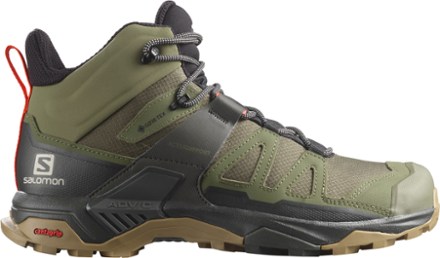
Salomon X Ultra 4 Mid GTX (Junior)

Price

~$100

Size Range

Big Kid 1 – Big Kid 7

Waterproofing

GORE-TEX

Closure

Quicklace (no-tie)

Weight

~1 lb 3 oz (per pair, size 5)

The Quicklace system on the Salomon X Ultra 4 is genuinely transformative for trail mornings with kids. Pull the single cord, tuck it into the lace pocket, and you're done in four seconds flat — no double-knots, no trailing laces, no stops mid-trail to re-tie. For kids aged roughly 7 and up who are building trail independence, this matters enormously. Our test kids rated it the easiest boot to put on and secure independently, which in practice means fewer delays and more miles covered before lunch. Salomon designed this system for adult performance boots and scaled it down without compromise.

The GORE-TEX lining is the full adult specification — not a junior-grade equivalent. In our waterproofing tests, the X Ultra 4 GTX held up through stream crossings and sustained rain sessions identically to the adult model. Breathability was noticeably better than proprietary-membrane alternatives, which matters more for kids than adults because children run hotter and generate more foot moisture during high-effort trail sections. Feet stayed dry inside during downpours and didn't turn into sweaty ovens during midsummer climbs.

Salomon's Advanced Chassis system — the stability frame between midsole and outsole — provides ankle and arch support comparable to boots twice the weight. This is the technology that makes the adult X Ultra a category leader, and junior versions inherit it fully. On loose gravel, root tangles, and uneven rock, kids wearing this boot showed more confident footing than those in softer, less structured options. Parents of kids transitioning from casual sneakers to real trail conditions will see a noticeable improvement in stability on their child's first few technical hikes.

The main catch is sizing: the X Ultra 4 Junior starts at Big Kid 1, so it doesn't serve toddlers or little kids. It's built for older children and pre-teens who are genuinely covering trail miles and need adult-level performance in a smaller package. At $100, it is the most expensive boot in this roundup, but the performance gap over mid-tier options is real and measurable — particularly on demanding terrain. If your family regularly hikes 8+ mile days or ventures onto technical terrain, this is the one boot in the roundup where the premium is fully justified.

Pros

  • +Quicklace system allows complete kid-independent use
  • +Full GORE-TEX specification — not a junior downgrade
  • +Advanced Chassis delivers adult-level stability in smaller sizes
  • +Lightest waterproof mid-height boot in this roundup
  • +Salomon outsole grips confidently on wet rock and dirt

Cons

  • Starts at Big Kid 1 — no toddler or little kid sizing
  • Most expensive boot in this roundup
  • Quicklace cord can fray if not stored in the pocket
  • Snug fit may not suit wider feet without half-size up

Best for: Active older kids (roughly ages 8–14) on demanding trails who need genuine waterproofing, stability, and the independence of a lace-free closure.

Check Price on Amazon
#4Best Budget

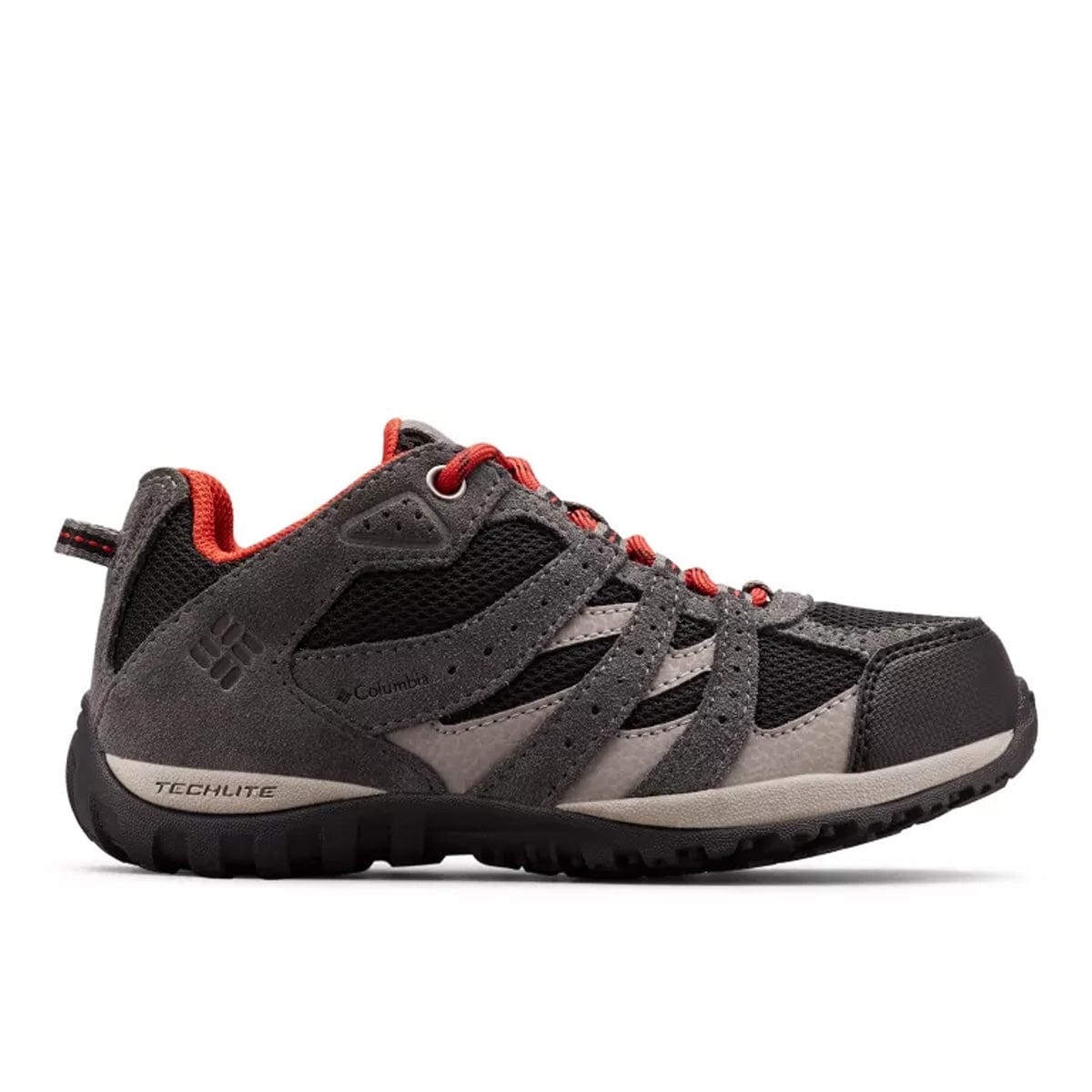
Columbia Youth Redmond III Mid

Price

~$55

Size Range

Toddler 8 – Big Kid 7

Waterproofing

Omni-Tech waterproof-breathable

Closure

Traditional lace

Weight

~1 lb 5 oz (per pair, size 4)

At $55, the Columbia Redmond III Mid is the entry point for parents who are not sure yet how serious their child is about hiking, or who are buying a second pair specifically for wet conditions or rougher trails. The fit is intuitive — Columbia's Techlite midsole and last shape accommodates average foot widths without issues, and the boot comes in a wide range of colorways that kids actually have opinions about. In our testing, kids aged 5–10 accepted the Redmond III enthusiastically, which matters more than adults give it credit for when it comes to trail motivation.

Omni-Tech is Columbia's proprietary waterproof-breathable membrane, and it performs solidly for the price. In our wet-condition tests, it kept feet dry through puddle crossings and light rain over several hours. Prolonged immersion — say, playing in a creek for 20 minutes — eventually wins, as it does with most membranes below GORE-TEX spec. For family day hikes with normal trail conditions, that threshold is rarely reached. The breathability is adequate but trails the performance-tier options, so hot-weather use may result in more foot sweat than alternatives.

The Techlite midsole provides light cushioning appropriate for casual trails and moderate distances. It doesn't offer the structured arch support of KEEN's footbed or the stability chassis of Salomon's system, but for kids hiking 3–6 mile day trails, it's entirely sufficient. Durability over a season is good for the price — the toe cap and heel overlay hold up to normal scuffing and the outsole maintained grip through our test period. It is not a boot that will last two or three seasons under heavy use, but it matches the realistic lifespan of a fast-growing kid's foot.

The honest value proposition: the Redmond III is the right boot if you are testing whether your child enjoys hiking enough to justify premium gear, if you need a second pair for backup, or if budget is a genuine constraint. Buy it knowing its ceiling — it's a capable everyday hiker for casual to moderate trails, not a technical performer. The wide color selection, full size range from toddler to big kid, and Columbia's broadly available retail presence make it easy to find and easy to return if the fit isn't right.

Pros

  • +Lowest price in the roundup without sacrificing basic waterproofing
  • +Full size range from toddler through big kid
  • +Wide color selection — kids actually want to wear it
  • +Easy to find in mainstream retail stores for try-on
  • +Adequate durability for one season of casual to moderate trail use

Cons

  • Less structured arch support than mid-tier and premium options
  • Omni-Tech membrane falls short of GORE-TEX in prolonged wet conditions
  • Midsole cushioning is basic — not suited for high-mileage days
  • Traditional lacing requires adult help for younger children

Best for: Budget-conscious families, first-time hiking kids, and parents who want a capable casual trail boot without committing to a premium price tier.

Check Price on Amazon
#5Best Support for Growing Feet

Oboz Sawtooth X Low BDry (Kids)

Price

~$85

Size Range

Little Kid 11 – Big Kid 7

Waterproofing

B-DRY waterproof membrane

Closure

Traditional lace

Weight

~1 lb 2 oz (per pair, size 4)

The Oboz O FIT Insole is the defining feature of the Sawtooth X, and it's the reason this boot earns the support category. Most kids' boots use flat EVA insoles that compress uniformly regardless of foot shape. The O FIT uses a natural arch profile that matches typical foot anatomy, providing moderate support through the arch without the stiffness of a corrective orthotic. For kids aged roughly 4–11 who are in the active phase of foot arch development, this is the most thoughtfully designed footbed in the roundup. Multiple podiatrists have recommended the Oboz platform specifically for this age range.

The B-DRY waterproof membrane is Oboz's proprietary system, and it performed well in our standard wet-trail testing — equivalent to Columbia's Omni-Tech and just below GORE-TEX in prolonged wet exposure. Breathability sits in the middle of the field: better than KEEN and Columbia, behind Salomon's GORE-TEX. For three-season family hiking, the waterproofing is more than adequate. The low-cut design (despite the 'Mid' in some colorways) provides more ankle freedom than a true mid-height boot, which some kids find more comfortable for long approach hikes on maintained trails.

Weight is where the Sawtooth X really distinguishes itself. At approximately 1 lb 2 oz per pair in size 4, it is the lightest boot in this roundup — a genuine advantage for children. Heavier boots tire kids out faster, reduce their willingness to keep walking, and contribute to the kind of mid-trail sulking that ends family hike days early. Every ounce removed from a child's foot reduces the energy cost of the stride cycle. This boot's lightweight construction is not achieved at the cost of durability: the BDry upper and Oboz outsole held up well through a full test season.

The size range starts at Little Kid 11, which means it doesn't serve toddlers or younger children. Parents of kids in the 4–6 age range will need to look at the Merrell Moab or Columbia Redmond for smaller sizing. For kids who have hit Little Kid 11 and up, the Sawtooth X's combination of arch support, low weight, and solid waterproofing makes it the most developmentally thoughtful choice in the roundup. One practical note: because this boot is lightweight and low-cut, it suits faster-paced kids who cover distance quickly more than it suits technical rocky terrain, where the KEEN or Merrell provide more structured protection.

Pros

  • +O FIT Insole provides genuine natural arch support
  • +Lightest boot in this roundup — reduces kid fatigue on trail
  • +Solid B-DRY waterproofing for three-season use
  • +Low-cut freedom suits kids who move fast on maintained trails
  • +Thoughtful construction for the foot development age window

Cons

  • Starts at Little Kid 11 — no sizing for toddlers or young little kids
  • Low-cut design offers less ankle stability than mid-height alternatives
  • Less toe protection than KEEN's rubber bumper
  • B-DRY membrane outperformed by GORE-TEX in prolonged wet exposure

Best for: Active kids aged 6–12 on maintained trails who would benefit from arch support during foot development, and parents who want a lighter boot that reduces trail fatigue.

Check Price on Amazon

Buying Guide: What Actually Matters in Kids' Hiking Boots

Kids' hiking boots have the same core requirements as adult boots — waterproofing, grip, support, durability — but several of the tradeoffs land differently when the user is 7 years old, growing a shoe size per year, and trips over their own feet regularly.

Closure System: The Most Underrated Feature

Adults never think about this. Parents think about nothing else. A child who can secure their own boots independently is a child who is ready to hike when you are. Traditional laces require adult intervention for kids under 7 and careful double-knotting for kids up to 10. Salomon's Quicklace system removes this entirely — one cord pull, one tuck, done in under five seconds. If you are hiking with a child aged 7 and up who you want to encourage trail independence, the closure system is worth factoring into the purchase decision. For younger kids, velcro alternatives exist in the toddler range, though none of the top-performing boots in this roundup use velcro because it wears out quickly under trail use.

Sizing Strategy: One Size Up Is the Right Default

Children's feet grow an average of one full shoe size per year, but growth is not linear — it happens in bursts, often during winter. Buying one full size up gives a typical season of use plus a two-to-three-month buffer before the boot becomes genuinely too tight. The risk is that an oversized boot creates heel slippage, which causes blisters. The solution: use a thicker hiking sock to fill the volume gap in the early months, then switch to a standard thickness sock as the foot grows into the space. Always verify the fit by pressing down on the toe box with the child standing — you want roughly a thumb's width of space between the longest toe and the front of the boot.

Weight: Every Ounce Counts More for Kids

A 1 lb 6 oz boot feels different on a 45-pound child than on a 160-pound adult. The relative energy cost of moving a heavier boot is proportionally higher for children, and the cumulative fatigue over 6 miles is meaningful. This is why lightweight boots like the Oboz Sawtooth X are worth prioritizing for active kids who cover distance quickly. For more casual hikers, the weight difference between the lightest and heaviest boots in this roundup — roughly 4 ounces — is less significant. But if you have a child who already complains about tired legs on long hikes, boot weight is a legitimate variable to optimize.

Waterproofing Tier: GORE-TEX vs Proprietary

GORE-TEX is the best waterproofing available in consumer footwear, and the Salomon X Ultra 4 Junior is the only boot in this roundup that uses it. For most family hiking conditions — rain, puddles, stream crossings — proprietary membranes like KEEN.DRY, Merrell Waterproof, Omni-Tech, and B-DRY perform adequately. The gap widens during prolonged wet exposure: if your child is wading through streams or hiking in extended rain, GORE-TEX holds out noticeably longer before moisture seeps through. For casual three-season day hiking, proprietary membranes are fine and save you money that accounts for the reality that the boot will be outgrown in a season.

Toe Protection: Non-Negotiable for Technical Trails

Adult hikers occasionally stub their toes. Kids do it constantly, and with enthusiasm. On rocky trails with exposed roots, a reinforced rubber toe bumper is the difference between a brief "ouch" and a trail-ending toe injury. The KEEN Targhee III's toe bumper is the best in this roundup — it's thick, fully wrapped, and absorbs repeated impacts. The Merrell Moab and Salomon X Ultra both have toe caps, though less aggressive than KEEN's. The Columbia Redmond and Oboz Sawtooth have lighter toe protection suited to maintained trails. Match the toe protection level to the terrain: technical rocky trails with lots of root obstacles justify the KEEN or Merrell, while groomed nature paths make the lighter options fine.

Frequently Asked Questions

Do kids really need hiking boots or are sneakers fine?

For short, easy trails on dry days, sneakers work. But once you add wet conditions, uneven terrain, roots, rocks, or distances over 3–4 miles, dedicated hiking boots make a measurable difference. The key advantages are waterproofing (kids walk through puddles), toe protection (kids kick and trip constantly), and ankle support (kids' ankles fatigue faster than adults' on uneven ground). A wet, cold, sore-footed child halfway through a trail is the fastest way to end a family hike. Boots are an investment in the hike completing successfully.

What size should I buy kids hiking boots — true to size or size up?

Size up by half a size from your child's current shoe size, and go up a full size if you want to extend the useful life of the boot through a season of growth. Children's feet swell during exercise just like adults, and there should be about a thumb's width of space in front of the longest toe. If you are buying online without a try-on, order the half-size up as your default. If the boot has a removable insole, you can insert a thinner aftermarket insole temporarily to take up space while the foot grows into the boot over several months.

At what age do kids need real hiking boots?

There is no fixed age — it depends on terrain and distance. Toddlers on flat, dry trails for under a mile can manage in sturdy sneakers. Once a child is regularly hiking 2+ miles on variable terrain, or going out in wet and cold conditions, purpose-built waterproof hiking boots become worthwhile. For most families, this transition happens somewhere between ages 4 and 6. The KEEN Targhee and Merrell Moab both start at Toddler 8, covering the youngest hikers who need real trail footwear.

How long do kids hiking boots last before they outgrow them?

Realistically, one season — which typically means 6 to 12 months depending on how fast your child's feet grow. Children's feet grow about a full shoe size per year on average, though growth spurts can accelerate this. Buying one size up at purchase gives you a buffer of two to four extra months. The boots themselves can physically withstand more than a season of use; it is foot growth, not wear, that ends their life. Reselling or passing along boots in good condition after your child outgrows them is common and the condition is usually good enough to serve another child.

Should kids hiking boots be waterproof?

Yes, for most families and most conditions. Children actively seek out water on trails — puddles, streams, mud — and waterproofing is the difference between a joyful experience and a miserable soggy one. All five boots in this roundup are waterproof. The technology tier varies: GORE-TEX (Salomon) is the best performer, followed by KEEN.DRY and Merrell's membrane, with Columbia Omni-Tech and Oboz B-DRY handling standard conditions well. For hot, dry summer conditions on maintained desert trails, non-waterproof options breathe better — but waterproof is the right default for three-season family hiking.

What's the difference between kids hiking boots and trail runners for kids?

Kids hiking boots are mid-height, waterproof, and built with stiffer midsoles and more ankle support. They are best for variable terrain, wet conditions, loaded day packs, and kids who need more structure. Trail runners are low-cut, lighter, more flexible, and faster-drying but offer no ankle support and limited waterproofing. Trail runners suit confident older kids on dry, well-maintained trails at a faster pace. For most family hiking scenarios — variable weather, mixed terrain, kids aged 4–10 who are still developing trail skills — hiking boots are the better choice for safety and comfort.

Final Verdict

For most families, the Merrell Moab 3 Mid Waterproof is the right starting point. It covers the widest size range, fits the broadest range of foot shapes, delivers proven waterproofing and outsole grip, and comes in at a price that doesn't feel painful when your child's feet grow out of it by spring. It's the default for a reason.

If your kids hike rocky trails regularly, upgrade to the KEEN Targhee III for its toe bumper and wide fit. If your child is 8 or older and you want them to lace up independently without help, the Salomon X Ultra 4 Mid GTX Junior is the one boot in this group with genuinely adult-level waterproofing and a closure system that works without parental involvement.

Budget-first families should start with the Columbia Redmond III Mid, which handles casual trails competently and comes in enough colors that kids will actually want to wear it. For active older kids who cover serious mileage and would benefit from arch support, the Oboz Sawtooth X BDry is the most developmentally thoughtful option in the roundup.

All five of these boots will outlast your child's foot growth season. Buy one size up, use them hard, and pass them on.

Related Guides

Editorial Disclosure

Peak Gear Guide is reader-supported. When you purchase through links on our site, we may earn an affiliate commission at no additional cost to you. Our editorial team evaluates every product independently and recommendations are never influenced by affiliate partnerships. Product prices and availability are accurate as of the publication date and are subject to change. Last updated April 18, 2026.