Woman hiking with a backpack on a mountain trail with panoramic valley views
Updated March 2026

Best Hiking Backpacks for Women

Five women-specific packs tested on loaded multi-day trips. From ultralight to heavy-load haulers, these backpacks fit the female frame and carry with confidence.

Quick Answer

The best hiking backpack for women in 2026 is the Osprey Aura AG 50 for its Anti-Gravity suspension that delivers unmatched comfort with a women-specific fit. For ultralight hikers, the REI Co-op Flash 55 Women's weighs just 2 lbs 10 oz at half the price.

Finding the Best Hiking Backpack for Women in 2026

The best hiking backpack for women fits the female frame with precision, distributes load weight efficiently, and provides the features you need without the bulk you do not. Women-specific backpacks are not simply smaller versions of men's packs. They feature shorter torso lengths, narrower shoulder harnesses, S-curved shoulder straps that route around the chest, and hip belts contoured for wider hips. These design differences translate into genuinely better comfort and weight distribution on the trail.

For our 2026 women's backpack roundup, we assembled a testing team of four experienced female hikers who carried each pack on loaded multi-day trips ranging from three to six days across the Cascades, Sierra Nevada, and Appalachian Trail. Each pack was loaded to its intended capacity range and evaluated on comfort under load, ventilation, organizational features, hip belt fit, and overall build quality. We also tested each pack with the men's equivalent models for direct comparison of the women-specific design differences.

Whether you are planning your first overnight backpacking trip using our 3-day backpacking checklist or upgrading from a pack that never quite fit right, this guide will help you find the backpack that matches your body, your carrying style, and your trail ambitions. Understanding how to pack a backpack properly is just as important as choosing the right one, so we cover packing technique in our buying guide below.

Watch: Side-by-side comparison of women's hiking backpacks tested on loaded multi-day trips with fit, ventilation, and comfort evaluations.

Quick Comparison Table

PackCategoryPriceWeightCapacity
Osprey Aura AG 50Best Overall$2804 lbs 2 oz50L
Gregory Jade 53Best Ventilation$2603 lbs 14 oz53L
Deuter Aircontact Lite 45+10 SLBest Load Carrier$2303 lbs 11 oz55L (45+10)
REI Co-op Flash 55 Women'sBest Ultralight$2002 lbs 10 oz55L
Granite Gear Blaze 60Best for Longer Trips$2403 lbs 4 oz60L

How We Test

Every pack is carried by female testers on real multi-day trips with realistic loads. We do not simulate backpacking. We do it.

Comfort Under Load

35%

Packs are loaded to 30 lbs and carried on 3+ day trips. We evaluate shoulder strap comfort, hip belt fit, load transfer efficiency, and overall fatigue at the end of 10+ mile days.

Ventilation

25%

We measure back sweat buildup during sustained 1,000+ foot climbs in warm conditions. Mesh-back designs are compared against foam-contact designs for real-world breathability differences.

Women-Specific Fit

25%

We assess how well each pack accommodates the female frame including torso length range, shoulder harness routing around the chest, and hip belt contouring across multiple body types.

Features & Durability

15%

We evaluate pocket organization, accessibility, compression system effectiveness, fabric durability, zipper quality, and overall build construction after weeks of trail use.

Detailed Backpack Reviews

#1Best Overall

Osprey Aura AG 50

Weight

4 lbs 2 oz

Capacity

50L

Frame

LightWire alloy peripheral frame

Suspension

Anti-Gravity suspended mesh back panel

Price

$280

The Osprey Aura AG 50 earns our top recommendation as the best hiking backpack for women in 2026 thanks to its revolutionary Anti-Gravity suspension system that distributes load weight across a suspended mesh back panel rather than pressing directly against your spine. The sensation is unlike any traditional backpack. The mesh creates an air gap between the pack body and your back that promotes continuous ventilation while simultaneously cradling the load in a way that makes 30-pound carries feel noticeably lighter than they should. Our female testers consistently ranked the Aura AG as the most comfortable pack in our entire test group.

Osprey designed the Aura AG specifically for the female frame, with a shorter torso range, narrower shoulder harness spacing, and contoured hip belt that accommodates wider hips without creating pressure points. The hip belt wraps the iliac crest securely and transfers weight to your legs with precision that generic unisex packs simply cannot match. During our three-day backpacking tests with loads between 25 and 35 pounds, testers reported minimal shoulder fatigue and zero hip belt hot spots, which is a testament to the women-specific engineering.

The 50-liter capacity hits the sweet spot for three-season weekend trips and can stretch to handle four-day outings if you pack efficiently. Organization is excellent, with a top-loading main compartment, J-zip front panel access for reaching gear buried at the bottom, dual side water bottle pockets, a large front stretch mesh pocket, and hip belt pockets sized for snacks and a smartphone. The sleeping bag compartment at the bottom has a removable divider for those who prefer a single large compartment. Trekking pole attachments, hydration sleeve compatibility, and external lash points round out the feature set.

The Aura AG 50 weighs 4 pounds 2 ounces, which is neither ultralight nor heavy for a fully featured 50-liter pack. Weight-conscious hikers who carry loads under 25 pounds may prefer a lighter frameless or minimal-frame alternative, but for typical backpacking loads the suspension system justifies every ounce. Osprey backs the Aura with their All Mighty Guarantee, which covers manufacturing defects for the lifetime of the product and is one of the best warranties in the outdoor industry. For most women who backpack with loads between 20 and 40 pounds, this is the pack that eliminates the discomfort equation from the trip planning process.

Pros

  • +Anti-Gravity suspension is exceptionally comfortable
  • +Women-specific fit with contoured hip belt
  • +Excellent ventilation from suspended mesh panel
  • +Versatile 50L capacity for weekend trips
  • +Osprey All Mighty lifetime warranty

Cons

  • Heavier than ultralight alternatives
  • Anti-Gravity mesh can snag on branches
  • Premium price at $280
  • Mesh back panel adds bulk when stored

Best for: Women who backpack with loads of 20 to 40 pounds and want the most comfortable suspension system available with a women-specific fit.

Check Price
#2Best Ventilation

Gregory Jade 53

Weight

3 lbs 14 oz

Capacity

53L

Frame

Custom wireframe with HDPE framesheet

Suspension

FreeFloat dynamic hipbelt with VersaFit

Price

$260

The Gregory Jade 53 takes a different approach to women's backpack comfort by focusing on the hip belt connection. Gregory's FreeFloat dynamic hip belt pivots independently from the pack body, following your natural hip movement as you walk rather than forcing a rigid connection. This means the hip belt stays centered on your hips during uphill lunges, rock step-ups, and the lateral sway of natural gait. For women who have experienced hip belt riding up or shifting during active hiking, this system is a revelation.

The VersaFit suspension allows tool-free torso length adjustment across a wide range, which makes the Jade 53 easier to dial in for different torso lengths without the guesswork of choosing between small, medium, and large frame sizes. Our testers with torso lengths from 14 to 18 inches all found a comfortable setting. The back panel uses a tensioned mesh design that provides ventilation comparable to the Osprey Aura AG, with a noticeable air channel between the pack body and your spine that reduces sweat buildup on hot climbs.

At 53 liters, the Jade offers three extra liters over the Osprey and a design that felt slightly roomier in practice thanks to the barrel-shaped main compartment. Top access, U-zip front panel access, side water bottle pockets, hip belt pockets, and a sleeping bag compartment with removable divider cover the organizational essentials. The front stretch mesh pocket is generously sized for stashing wet rain gear or items you need quick access to. Compression straps on both sides cinch the load tight for smaller carries.

The Jade 53 weighs 3 pounds 14 ounces, making it four ounces lighter than the Osprey Aura AG 50 while offering three more liters of capacity. Gregory's build quality is excellent, with durable nylon fabrics, reinforced stress points, and a hip belt that feels like it could handle years of regular use without developing the foam compression that plagues cheaper packs. The one area where it trails the Osprey is in overall load-carrying comfort for very heavy loads above 35 pounds, where the Aura's Anti-Gravity system distributes weight more evenly. For loads in the 20 to 35 pound range, the Jade 53 is a worthy competitor that many testers preferred for its dynamic hip belt feel.

Pros

  • +FreeFloat hip belt moves naturally with your gait
  • +VersaFit torso adjustment is easy and precise
  • +Excellent back panel ventilation
  • +Lighter than Osprey Aura AG at 3 lbs 14 oz
  • +Generous 53L capacity

Cons

  • Dynamic hip belt feels unusual at first
  • Less effective than Osprey for very heavy loads
  • Fewer external attachment points
  • Limited color options in 2026

Best for: Women who want a dynamic hip belt that moves with their body, excellent ventilation, and a lighter pack for loads between 20 and 35 pounds.

Check Price
#3Best Load Carrier

Deuter Aircontact Lite 45+10 SL

Weight

3 lbs 11 oz

Capacity

55L (45+10)

Frame

X-Frame aluminum stays

Suspension

Aircontact Lite back system with VariSlide

Price

$230

The Deuter Aircontact Lite 45+10 SL is the pack you reach for when comfort under a heavy load is the top priority. The SL designation stands for Slim Line, indicating Deuter's women-specific design with a shorter back length, narrower shoulder harness, and hip belt shaped for the female pelvis. The Aircontact back system uses body-contact foam padding that molds to your spine's natural curvature, creating a weight-distributing surface that keeps heavy loads stable and centered during technical trail sections where balance matters.

The 45+10 capacity designation means the main compartment holds 45 liters, with an expandable collar that adds 10 liters when opened. This flexibility is valuable because you can cinch the collar down for lighter weekend trips to maintain a compact profile, then expand it for longer outings that require extra food, warmer clothing, or additional gear. Our testers appreciated this versatility more than the fixed-volume designs of other packs in the roundup, finding it particularly useful for trips where gear requirements vary by season.

Deuter's VariSlide system allows torso length adjustment by repositioning the shoulder harness on a ladder system along the back panel. The adjustment is simple and secure, though it requires loosening and retightening hardware rather than the tool-free designs on the Gregory Jade. The X-Frame aluminum stays provide a rigid backbone that keeps the pack from sagging under heavy loads, transferring weight efficiently to the hip belt. During our 35-pound load tests, the Aircontact Lite delivered the most stable carry in the group, with minimal sway and excellent balance on uneven terrain.

At 3 pounds 11 ounces, the Aircontact Lite is the lightest fully featured load-carrying pack in our test group, which makes its heavy-load performance even more impressive. Organization includes a bottom sleeping bag compartment, internal hydration sleeve, hip belt pockets, side stretch pockets, and lash points for attaching gear externally. The one tradeoff compared to mesh-back designs like the Osprey and Gregory is ventilation. The body-contact foam padding creates a warm interface between the pack and your back, which means more sweat buildup during hot-weather climbing. For three-season use and particularly for cooler conditions, the Aircontact Lite is a superb choice.

Pros

  • +Best load stability for heavy carries
  • +Expandable 45+10L capacity is versatile
  • +Women-specific SL design
  • +Lightest full-frame pack at 3 lbs 11 oz
  • +Excellent value at $230

Cons

  • Less back ventilation than mesh designs
  • VariSlide adjustment requires tools
  • Body-contact foam traps heat on climbs
  • Fewer organizational pockets than Osprey

Best for: Women who carry heavier loads of 30 to 45 pounds, need expandable capacity for variable trip lengths, and prioritize load stability over back ventilation.

Check Price
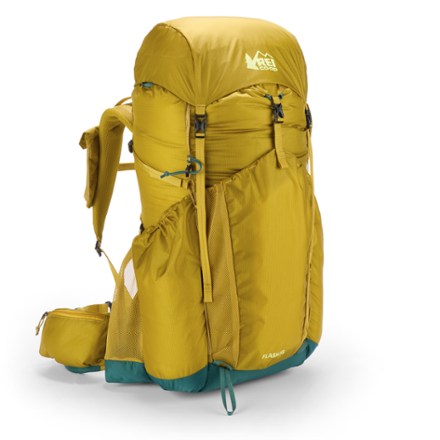
#4Best Ultralight

REI Co-op Flash 55 Women's

Weight

2 lbs 10 oz

Capacity

55L

Frame

Single aluminum stay with HDPE framesheet

Suspension

Tensioned mesh back panel

Price

$200

The REI Co-op Flash 55 Women's is the ultralight choice in our roundup, dropping to just 2 pounds 10 ounces while still offering a 55-liter capacity and a real suspension system with an aluminum stay and tensioned mesh back panel. For weight-conscious female hikers who want to shed pack weight without going fully frameless, the Flash 55 sits in the ideal middle ground between comfort and minimalism. It costs $80 less than the Osprey Aura AG and weighs over a pound and a half less, which makes it the best value for light-and-fast hikers. For a detailed look at this pack, see our <Link href='/reviews/rei-flash-55' className='text-amber-400 hover:text-amber-300 underline underline-offset-2'>full REI Flash 55 review</Link>.

The women's version features a shorter torso range, narrower shoulder straps, and a contoured hip belt designed for the female frame. The tensioned mesh back panel provides good ventilation by creating an air gap between the pack body and your back, though the gap is slightly smaller than what the Osprey Aura AG offers. Under loads of 20 to 28 pounds, the Flash 55 carried comfortably with adequate support. Above 30 pounds, the single aluminum stay and minimal padding began to show their limitations, with testers noting more pressure on the shoulders and less effective weight transfer to the hips.

REI maximizes capacity within the ultralight constraint through a roll-top closure that eliminates the weight of a traditional lid. The roll-top also makes the pack easy to compress for smaller loads, which is a practical advantage for hikers who use the same pack for two-day and four-day trips. A large front stretch mesh pocket, side water bottle pockets, and hip belt pockets provide essential organization without adding unnecessary weight. The pack body uses a lightweight 100D recycled ripstop nylon that is thinner than premium pack fabrics but has proven durable enough for regular trail use in our experience.

The Flash 55 is the pack that makes sense if your typical carry weight stays under 28 pounds and you are building a <Link href='/guides/backpacking-gear-checklist' className='text-amber-400 hover:text-amber-300 underline underline-offset-2'>lightweight backpacking kit</Link>. It pairs perfectly with modern ultralight tents, compact sleeping bags, and minimalist cooking systems. For heavier loads or hikers who prioritize plush comfort over weight savings, the Osprey Aura AG or Gregory Jade will be more comfortable choices. But if weight reduction is a priority, the Flash 55 delivers remarkable capability for a pack that weighs less than some people's tent.

Pros

  • +Ultralight at just 2 lbs 10 oz
  • +Excellent value at $200
  • +Roll-top closure is versatile and simple
  • +Good ventilation from mesh back panel
  • +55L capacity is generous for the weight

Cons

  • Less comfortable above 30 lbs
  • Thinner fabric requires more care
  • Single stay provides less rigidity
  • Minimal padding on shoulder straps

Best for: Weight-conscious female hikers who carry loads under 28 pounds and want the lightest practical backpack with real suspension.

Check Price
#5Best for Longer Trips

Granite Gear Blaze 60

Weight

3 lbs 4 oz

Capacity

60L

Frame

Dual aluminum stays with HDPE framesheet

Suspension

Re-Fit hip belt with Vapor Current back panel

Price

$240

The Granite Gear Blaze 60 is built for hikers who need capacity for extended trips of five days or more without carrying a pack that weighs as much as a small dog. At 3 pounds 4 ounces with a 60-liter capacity, the Blaze delivers the best volume-to-weight ratio in our roundup, giving you room for extra food, winter layers, or bulkier group gear while keeping pack weight remarkably low. Thru-hikers on the Appalachian Trail and Pacific Crest Trail have adopted the Blaze series for exactly this reason.

The Re-Fit hip belt is the standout feature. It uses a removable and adjustable design that allows you to reposition the belt independently from the pack body, finding the ideal placement on your hips regardless of your torso proportion. Our testers found this system more accommodating of different body shapes than fixed hip belt designs, and the foam padding is dense enough to handle heavy loads without compressing during multi-day carries. The shoulder harness uses a women-specific cut that sits comfortably without interfering with chest movement during active hiking.

The Vapor Current back panel combines foam padding with ventilation channels that direct airflow across your back. It is not as airy as fully suspended mesh designs, but it provides a good middle ground between ventilation and load stability. The dual aluminum stays and HDPE framesheet create a supportive structure that handles loads up to 45 pounds without sagging. Organization includes a roll-top main compartment, front and side pockets, hip belt pockets, and a lineloc compression system that cinches the load tight with minimal fuss.

Granite Gear uses a 100D high-tenacity nylon for the pack body and 210D nylon for the bottom panel, which provides a good balance of weight savings and abrasion resistance. The pack has a clean, streamlined aesthetic without the pocket overload found on some competitors. For hikers who plan trips of five to seven days, need to carry food for extended stretches between resupply points, or simply want extra room for comfort items, the Blaze 60 provides capacity that the 50 to 55 liter packs in our roundup cannot match. It is the pack for women who need to carry more without being weighed down by the pack itself.

Pros

  • +60L capacity for extended trips
  • +Excellent volume-to-weight ratio at 3 lbs 4 oz
  • +Re-Fit hip belt accommodates varied body shapes
  • +Handles heavy loads up to 45 lbs
  • +Durable high-tenacity nylon construction

Cons

  • Less ventilation than mesh-back designs
  • Roll-top-only access lacks panel loading
  • Not women-specific frame design
  • Less brand availability than Osprey or Gregory

Best for: Women planning extended trips of five or more days who need maximum capacity with minimum pack weight and versatile fit adjustability.

Check Price

Women's Hiking Backpack Buying Guide

Choosing the right backpack is one of the most important gear decisions for any female hiker. Here is what matters most when you are evaluating women-specific packs.

Why Women-Specific Design Matters

The average female torso is shorter than the average male torso, the shoulder width is narrower, and the hip structure is wider. Women-specific packs account for all three dimensions, positioning the hip belt at the correct height, routing shoulder straps around the chest without creating pressure, and distributing weight to leverage the female skeletal structure. A well-fitting women's pack reduces shoulder strain, prevents hip belt riding, and keeps the load centered for better balance. These are not marketing distinctions. They are biomechanical realities that affect comfort on every mile.

Choosing the Right Capacity

For weekend trips of two to three nights, a 45 to 55 liter pack covers most needs. For trips of four to seven nights or winter camping with bulkier gear, 55 to 65 liters is appropriate. Ultralight hikers with compact gear systems can manage with 35 to 45 liters even for multi-day trips. Check our backpacking gear checklist to inventory your actual gear volume before committing to a capacity. Buying too large leads to overpacking, while buying too small creates frustrating compression challenges.

Suspension Systems Explained

Suspended mesh back panels like the Osprey Anti-Gravity system create an air gap between the pack and your back for maximum ventilation but add weight and bulk. Body-contact foam systems like the Deuter Aircontact provide better load stability and weight transfer but trap more heat against your back. Tensioned mesh panels sit between these extremes. Choose mesh suspension if you hike in warm conditions and prioritize cool carry comfort. Choose body-contact foam if you carry heavy loads above 35 pounds and need maximum stability.

Hip Belt Fit Is Critical

The hip belt should sit on your iliac crest, the top of your hip bones, and carry 60 to 80 percent of the pack weight. A properly fitting hip belt wraps your hips completely with the buckle centered over your navel and an even gap on both sides of the closure. If the belt cannot close far enough, the hip belt is too small. If it overlaps significantly, it is too large. Many manufacturers offer interchangeable hip belt sizes to accommodate different hip measurements independent of torso size.

Weight vs Comfort Tradeoff

Lighter packs save energy on the trail but often sacrifice padding, frame rigidity, and suspension sophistication. The REI Flash 55 at 2 pounds 10 ounces is a joy to carry at 25 pounds but less comfortable at 35 pounds. The Osprey Aura AG at 4 pounds 2 ounces adds weight but carries heavier loads with dramatically better comfort. Match your pack choice to your typical load weight. If you consistently carry under 25 pounds, prioritize a lighter pack. If you carry over 30 pounds, invest in a heavier pack with better suspension.

Frequently Asked Questions

Do women really need a women-specific hiking backpack?

Women-specific hiking backpacks are designed with a shorter torso range, narrower and contoured shoulder harness, and hip belt shaped for the wider female pelvis. These differences improve fit and weight distribution for most women compared to unisex or men's packs. However, body proportions vary widely, and some women fit better in a men's or unisex pack. The best approach is to try both on in a store with weight in the pack. If a women's specific pack fits your torso length and hip shape better, it will be meaningfully more comfortable over long distances.

What size backpack do I need for a 3-day hike?

A 45 to 55 liter backpack is ideal for most three-day backpacking trips. This capacity fits a two-person tent or bivy, sleeping bag, sleeping pad, stove, food for three days, water filtration, rain gear, and a change of clothes with room to spare. Ultralight hikers with compact gear can manage with 40 liters, while those carrying bulkier gear or camping in cold conditions may need 55 to 60 liters. Avoid going too large, as excess space encourages overpacking and unused volume shifts the load unpredictably.

How do I measure my torso for a women's backpack?

To measure your torso length, stand straight and have someone place their hands on your hips with thumbs pointing toward your spine. The point where their thumbs meet the spine is your hip bone reference. Measure from this point up to the bony bump at the base of your neck where your spine meets your shoulders, which is the C7 vertebra. This distance in inches is your torso length. Most women fall between 14 and 18 inches. Match this measurement to the pack manufacturer's sizing chart, as ranges vary by brand.

How heavy should a loaded hiking backpack be?

A general guideline is that your loaded backpack should weigh no more than 20 percent of your body weight for comfortable hiking. For a 150-pound woman, that means a maximum of 30 pounds including the pack itself, all gear, food, and water. Experienced ultralight hikers aim for base weights under 12 pounds, which keeps total loaded weight around 18 to 22 pounds including food and water. Starting with a lighter pack weight and building up gradually is the safest approach for new backpackers.

What is the difference between top-loading and panel-loading backpacks?

Top-loading backpacks have a single large opening at the top, often with a drawstring closure and a lid. They are simpler, lighter, and more weather-resistant because there are fewer zippers. Panel-loading packs have a U-shaped or J-shaped zipper on the front panel that opens like a suitcase, giving you access to items at any depth without unpacking everything. Many modern packs combine both, with a top opening and a front panel zip. Panel access is particularly valuable for pulling out buried items like a sleeping bag or extra layer without dumping your entire pack on the ground.

How should I pack a women's hiking backpack for proper weight distribution?

Place heavy items like food, water, stove, and fuel in the middle of the pack close to your back, centered between your shoulder blades and hip belt. This keeps the center of gravity close to your body for optimal balance. Put lighter, bulky items like your sleeping bag at the bottom, and medium-weight items like clothing and rain gear around and above the heavy core. Frequently accessed items like snacks, sunscreen, map, and rain jacket go in the top lid and hip belt pockets. Keep the load balanced left to right and cinch compression straps to prevent contents from shifting during movement.

Final Verdict

After carrying five packs on loaded multi-day trips, the Osprey Aura AG 50 earns our top recommendation as the best hiking backpack for women in 2026. Its Anti-Gravity suspension system delivers unmatched comfort, and the women-specific fit is the best-executed design in our test group.

The Gregory Jade 53 is a close second with its dynamic FreeFloat hip belt and excellent ventilation. For heavy load carriers, the Deuter Aircontact Lite 45+10 SL provides the best stability at the lightest weight in its class. Budget-conscious ultralight hikers should look at the REI Co-op Flash 55 Women's, which delivers remarkable capability at an accessible price. And for extended trips, the Granite Gear Blaze 60 offers the capacity you need without excessive weight.

The right backpack is the one that fits your body and matches your carrying style. Visit an outdoor retailer, try packs on with weight, and walk around the store. Your back will thank you on every mile of trail ahead.

PG

Peak Gear Guide Editorial Team

Our women's backpack testing team includes certified Wilderness First Responders, experienced thru-hikers, and outdoor educators who have collectively logged over 10,000 trail miles with women-specific gear. We purchase every product with our own funds and maintain zero affiliate influence over our editorial recommendations.

Get Trail-Tested Gear Reviews

Join 12,000+ hikers who receive our weekly gear reviews, trail tips, and exclusive deals. No spam, unsubscribe anytime.

Related Guides

Editorial Disclosure

Peak Gear Guide is reader-supported. When you purchase through links on our site, we may earn an affiliate commission at no additional cost to you. Our editorial team tests every product independently and recommendations are never influenced by affiliate partnerships. We only recommend gear we would use ourselves. Product prices and availability are accurate as of the publication date and are subject to change. Last updated March 26, 2026.