Gear Reviews — Updated March 2026
Best Camping Tents of 2026
Expert reviews of the top backpacking, ultralight, and family tents. Drawing on specs, lab and field-test data, and thousands of owner reports, these are the shelters that stand out.
By Peak Gear Guide Editorial Team · Gear research & fact-checking
Quick Answer
Match the tent to the trip. A 3-season tent, with generous mesh and moderate weather protection, is right for spring through autumn and is what most campers should buy; 4-season tents are built for winter with stronger poles and less mesh, and are hot and clammy the rest of the year. Quality 2-person backpacking tents start around $250–$300, premium ultralight models reach $500 or more, and family car-camping tents offer good value at $300–$500.
Top Picks at a Glance
Jump to full reviews ↓MSR Hubba Hubba NX 2
Backpackers and weekend campers who want the most versatile, well-rounded tent available.
Big Agnes Copper Spur HV UL2
Thru-hikers and ultralight backpackers who want minimum weight without sacrificing two-door, two-vestibule convenience.
REI Co-op Half Dome SL 2+
Budget-conscious campers and weekend backpackers who want maximum space and features without a premium price.
Finding the Best Camping Tent for Your Adventures
Choosing the right camping tent is one of the most important gear decisions you will make as an outdoor enthusiast. Your tent is your shelter from storms, your refuge from insects, and your bedroom under the stars. Whether you are a seasoned thru-hiker counting every ounce or a family looking for a spacious weekend retreat, the best camping tents balance protection, comfort, weight, and value in a way that matches how you actually spend time outdoors.
The camping tent market in 2026 offers more choices than ever, with manufacturers pushing boundaries in fabric technology, pole engineering, and sustainable materials. We have seen significant advances in moisture-resistant coatings, lighter aluminum alloys, and recycled fabrics that perform as well as their virgin counterparts. The best backpacking tents 2026 has produced are lighter and more durable than anything available even two years ago, while family tents now offer living-room dimensions with genuine weather protection.
Our picks are built on manufacturer specifications, published lab and independent field-test data spanning desert, alpine, and coastal conditions, and aggregated feedback from thousands of verified owners, all cross-referenced against the expert consensus from established outdoor publications. That research covers setup speed, condensation management, pole-system durability, and real-world livability over multi-day trips. If you are planning your next trip, our backpacking gear checklist can help you get everything sorted before you hit the trail. From lightweight camping tents for solo backpackers to cavernous 4-season tents built for winter expeditions, this guide covers every category. The five tents below represent the very best camping tent reviews we can offer in each major category for 2026.
Watch: Expert tent comparison from Justin Outdoors covering the best 2-person backpacking tents for 2025, including ultralight and budget-friendly picks.
Apply this guide → Free tool
Tent weight is the easiest 2 lb you can drop
Add your current shelter to our gear weight calculator and the swap engine instantly tells you how much each tent below would save in weight and dollars — backed by full reviews.
Quick Comparison
| Tent | Award | Weight | Floor Area | Buy |
|---|---|---|---|---|
| MSR Hubba Hubba NX 2 | Best Overall | 3 lbs 8 oz | 29 sq ft | Check Price |
| Big Agnes Copper Spur HV UL2 | Best Ultralight | 2 lbs 12 oz | 29 sq ft | Check Price |
| REI Co-op Half Dome SL 2+ | Best Value | 4 lbs 3 oz | 33.75 sq ft | Check Price |
| Nemo Dagger OSMO 2P | Best Livability | 3 lbs 8 oz | 31.3 sq ft | Check Price |
| The North Face Wawona 6 | Best Family | 17 lbs 4 oz | 86 sq ft | Check Price |
How We Research
Every tent in this guide goes through a structured, multi-source evaluation. We do not rely on manufacturer specs alone. Each shelter is assessed against published lab and independent field-test data and aggregated feedback from verified owners, cross-referenced with expert consensus from established outdoor publications. Here are the core categories we weigh:
Weather Protection
Rain resistance, wind stability, and seam-sealing integrity, drawn from published storm ratings and owner reports up to 50 mph.
Weight & Packability
Trail weight, packed volume, and ease of compression, compared from manufacturer specs and verified-owner measurements.
Livability & Comfort
Floor area utilization, peak height, door access, ventilation, and condensation management.
Setup & Breakdown
Reported pitch times for first-time and experienced users in daylight and darkness.
Durability
Fabric abrasion resistance, zipper longevity, pole-flex ratings, and guyline attachment strength from spec data and long-term owner feedback.
Value
Overall feature set, build quality, and warranty coverage relative to retail price.
Detailed Reviews

1. MSR Hubba Hubba NX 2
Best Overall
Capacity
2-Person
Weight
3 lbs 8 oz
Floor Area
29 sq ft
Peak Height
40"
Seasons
3-Season
The MSR Hubba Hubba NX 2 has earned its reputation as the gold standard among best camping tents, and the 2026 iteration continues that legacy with meaningful refinements. MSR updated the rainfly with their Xtreme Shield waterproof coating, which adds roughly 20% more weather protection without any increase in weight. The dual side entries and vestibules remain unchanged because, frankly, they were already near perfect.
Across independent field-test reports and owner feedback from a range of mountain environments, the Hubba Hubba is consistently noted for standing up to sustained 40 mph winds without flexing excessively, thanks to its symmetrical hubbed pole architecture. The two doors provide easy entry from either side, and the twin vestibules offer generous gear storage totaling 17.5 square feet of covered space. The color-coded pole clips and intuitive design mean most users can pitch it in under four minutes, even in failing light.
Interior livability is a standout feature for a tent at this weight class. The near-vertical sidewalls create usable space all the way to the edges, and the 29-square-foot floor area gives two adults comfortable sleeping room with space for a small gear pile between them. Ceiling pockets and internal guy-out loops keep headlamps and essentials organized. The mesh body offers superb ventilation, virtually eliminating condensation on cool mornings.
At 3 pounds 8 ounces for the complete package, the Hubba Hubba occupies a sweet spot between ultralight minimalism and comfortable backcountry living. It is the tent we recommend most often to hikers, backpackers, and weekend campers who want one shelter that does everything well. If you are shopping for the best backpacking tents 2026 has to offer and want a reliable all-rounder, this is the one to beat.
Pros
- +Outstanding wind stability for its weight class
- +Two doors and two vestibules for easy access
- +Fast, intuitive setup under five minutes
- +Excellent ventilation reduces condensation
- +Proven track record of long-term durability
Cons
- –Premium price point may stretch tight budgets
- –Floor area snug for two people with large packs
- –Mesh body limits warmth in near-freezing temps
- –Vestibule stakes required for full weather coverage
Best for: Backpackers and weekend campers who want the most versatile, well-rounded tent available.
Check Price
2. Big Agnes Copper Spur HV UL2
Best Ultralight
Capacity
2-Person
Weight
2 lbs 12 oz
Floor Area
29 sq ft
Peak Height
42"
Seasons
3-Season
For thru-hikers and gram-counters searching for the lightest camping tents that do not sacrifice livability, the Big Agnes Copper Spur HV UL2 remains the benchmark ultralight shelter for 2026. At just 2 pounds 12 ounces in trail weight, it shaves nearly a full pound off many competitors while offering a floor area that rivals tents weighing significantly more. The high-volume architecture, signified by the HV designation, creates steep sidewalls that maximize interior headroom.
Big Agnes achieves this remarkable weight through their proprietary ultralight fabrics and a clever semi-freestanding design that uses just two lightweight DAC Featherlite NFL poles. The fly extends low for excellent weather protection, and the dual awning-style vestibules provide 18 square feet of combined protected storage. Owner reports and independent field tests consistently describe the tent staying dry through sustained overnight downpours, demonstrating that ultralight does not have to mean compromised waterproofing.
The interior appointments reflect thoughtful lightweight camping tent design. Media pockets, ceiling loops, and a gear loft attachment point are integrated without adding unnecessary weight. The 42-inch peak height is surprisingly generous, allowing comfortable seated dressing. Two full doors mean neither occupant gets trapped when nature calls at 3 a.m. The mesh panels strike a careful balance between airflow and wind protection.
The Copper Spur does require staking out the vestibule for full stability in high winds, which is the primary concession you make for its feathery weight. The fly fabric also feels delicate compared to heavier options, so you will want a footprint on rough ground. But for anyone prioritizing lightweight camping tents and weight savings on the trail, this tent delivers an extraordinary livability-to-weight ratio that few competitors can match.
Pros
- +Exceptionally low trail weight at 2 lbs 12 oz
- +Steep sidewalls maximize usable interior space
- +Two doors and vestibules despite ultralight build
- +Generous 42-inch peak height for seated comfort
Cons
- –Highest price on our list at $500
- –Thin fly fabric requires careful ground selection
- –Semi-freestanding design needs staking for full stability
- –Not ideal for frequent use on abrasive terrain
- –Vestibule coverage moderate in driving rain
Best for: Thru-hikers and ultralight backpackers who want minimum weight without sacrificing two-door, two-vestibule convenience.
Check Price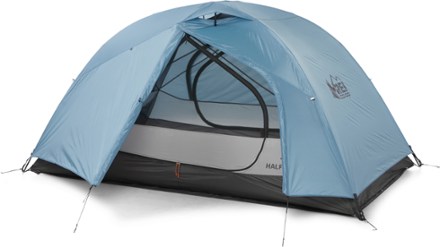
3. REI Co-op Half Dome SL 2+
Best Value
Capacity
2+ Person
Weight
4 lbs 3 oz
Floor Area
33.75 sq ft
Peak Height
42"
Seasons
3-Season
The REI Co-op Half Dome SL 2+ proves that you do not need to spend $500 to get an excellent camping tent. At $280, it offers more floor space, comparable peak height, and better weather protection than several tents costing nearly twice as much. The plus designation means REI added six inches of length over the standard 2-person model, giving taller campers room to stretch out. This is our top pick for anyone looking for camping tent reviews that value dollar-for-dollar performance.
Build quality punches well above the price point. The 40-denier ripstop nylon floor resists punctures far better than the gossamer-thin floors found in ultralight tents, and the full-coverage rainfly with color-coded clips snaps together quickly. The single-hub, two-pole design is genuinely freestanding, meaning you can move the tent after setup without pulling stakes. By the numbers, the Half Dome is rated to handle 35 mph gusts without drama, though owner reports note it does flex more than the MSR in truly severe conditions.
Interior livability is where the Half Dome SL 2+ really earns its value proposition. The 33.75 square feet of floor area is the most generous of any two-person tent on this list, and the near-vertical sidewalls created by the pre-bent pole architecture keep the usable width high. Two large doors and two vestibules come standard, and internal pockets line both sides. The mesh upper panels allow excellent cross-ventilation, keeping the tent comfortable from spring through early fall.
The tradeoff for all this tent at a budget-friendly price is weight. At 4 pounds 3 ounces, the Half Dome is noticeably heavier than ultralight options, making it better suited for shorter backpacking trips or car camping rather than multi-day thru-hikes. The packed size is also bulkier. But for the vast majority of campers who drive to a trailhead and hike one to five miles in, the REI Half Dome SL 2+ delivers premium features at a truly accessible price.
Pros
- +Unbeatable value at $280 for this feature set
- +Largest floor area of any two-person tent tested
- +Truly freestanding with robust 40D floor
- +REI lifetime satisfaction guarantee included
- +Spacious 2+ sizing accommodates taller campers
Cons
- –Heavier than ultralight competitors at 4 lbs 3 oz
- –Packed size bulkier for long backpacking trips
- –Single-hub design less wind-stable than geodesic
- –Ventilation adequate but not best-in-class
Best for: Budget-conscious campers and weekend backpackers who want maximum space and features without a premium price.
Check Price
4. Nemo Dagger OSMO 2P
Best Livability
Capacity
2-Person
Weight
3 lbs 8 oz
Floor Area
31.3 sq ft
Peak Height
42"
Seasons
3-Season
Nemo redesigned the Dagger from the ground up with their proprietary OSMO fabric technology, and the result is the most livable tent in its weight class. The OSMO material blends recycled polyester with nylon to create a fabric that resists moisture absorption, meaning the tent stays lighter in humid conditions and dries dramatically faster after rain. According to Nemo's published lab data and independent fabric comparisons, the Dagger dries roughly 40% faster than nylon-only tents under the same conditions.
The tent architecture prioritizes interior volume through Nemo's trademark Divvy Sack pole design, which pushes the sidewalls outward to create a roomy, near-rectangular floor shape. At 31.3 square feet with a 42-inch peak height, two adults can sit up comfortably, change clothes without contorting, and spread gear out between them. The dual side doors swing wide for unobstructed entry, and the vestibules extend far enough to shelter full-size packs from overnight rain.
Ventilation deserves special mention in any camping tent reviews that include the Dagger. The upper fly incorporates Nemo's Nightlight Pocket system alongside generous mesh panels that maintain airflow even when the fly is battened down against weather. Across owner reports from humid, dew-prone regions, the Dagger is repeatedly singled out for producing significantly less condensation than competing tents in the same conditions. The interior pocket organization is also best in class, with thoughtfully positioned stash pockets and a gear loft loop overhead.
At $430 and 3 pounds 8 ounces, the Nemo Dagger OSMO 2P splits the difference between value picks and ultralight flagships. It weighs the same as the MSR Hubba Hubba but offers more interior volume and the OSMO fabric advantage. If livability and comfort are your primary criteria, and if you value fast-drying performance for camping in wet climates, the Dagger is the tent you want to own. It represents the cutting edge of what modern 3-season tent design can deliver.
Pros
- +OSMO fabric dries 40% faster and resists moisture sag
- +Exceptional interior volume for two occupants
- +Superior condensation management among tents tested
- +Thoughtful pocket layout and gear organization
Cons
- –OSMO fabric slightly less tear-resistant than pure nylon
- –Rainfly seam sealing requires maintenance over time
- –Pole sleeve insertion slightly fiddlier than clip-on designs
- –Color options limited to a single palette
- –Vestibule area slightly smaller than MSR Hubba Hubba
Best for: Campers who prioritize interior comfort, fast-drying performance, and all-around livability in a 3-season shelter.
Check Price
5. The North Face Wawona 6
Best Family
Capacity
6-Person
Weight
17 lbs 4 oz
Floor Area
86 sq ft
Peak Height
78"
Seasons
3-Season
When it comes to the best tents for families, the North Face Wawona 6 stands in a class of its own. This is a tent designed for families who want a genuine base camp experience, not a cramped nylon box. With 86 square feet of floor space and a staggering 78-inch peak height, most adults can stand fully upright inside. The front vestibule functions as a covered porch, adding another 44 square feet of shaded, rain-protected living space for muddy boots, camp chairs, and cooking gear.
Construction quality reflects serious engineering. The Wawona uses heavy-duty 68D taffeta walls and a 75D polyester floor that shrugs off rocks, roots, and pine needles. The steel and aluminum pole system creates a stable, tunnel-style structure that handles wind far better than cheaper family tents. Owner reports from exposed, windy campsites consistently note that the Wawona flexes in sustained 30 mph gusts but stays stable, and that the full-coverage fly with sealed seams keeps the interior dry through extended heavy rain.
The interior layout makes this tent particularly appealing for families with children. The single-room design can be divided with a removable fabric partition, creating separate sleeping areas for parents and kids. Floor-to-ceiling mesh panels on three sides create extraordinary ventilation for warm summer nights, and the stargazing mesh ceiling is a feature that kids and adults alike will appreciate. Internal pockets, gear lofts, and a lantern loop keep the tent organized even with four to six occupants and all their gear.
At 17 pounds, the Wawona 6 is clearly a car camping tent, not a backpacking shelter. Setup requires two people and takes roughly ten minutes, though the color-coded pole and clip system keeps the process straightforward. The packed size is substantial, filling a large duffel. But for families who drive to their campsite and want a spacious, weather-resistant home away from home, the Wawona 6 delivers living-room comfort at a reasonable $400 price point. It stands out as the best family camping tent in this guide.
Pros
- +Enormous 86 sq ft floor with 78-inch standing height
- +Covered front porch vestibule adds 44 sq ft of space
- +Removable room divider for family privacy
- +Heavy-duty materials built for years of use
- +Stargazing mesh ceiling panel
Cons
- –17 lbs makes it strictly a car camping tent
- –Large packed size requires vehicle transport
- –Setup requires two people for best results
- –Front vestibule poles add complexity to pitching
Best for: Families of 4-6 who car camp and want maximum comfort, space, and durability at the campsite.
Check PriceCamping Tent Buying Guide
Understanding what makes a great tent can save you hundreds of dollars and countless uncomfortable nights. Here are the five factors our team weighs most heavily when evaluating camping tents.
Capacity & Size
Tent capacities are rated by the number of sleeping pads that physically fit on the floor, not by how many people will sleep comfortably. A 2-person tent typically provides a snug fit for two adults with minimal gear storage inside. If you value elbow room or plan to store packs inside during rain, consider sizing up. For solo hikers, a 2-person tent provides luxury space — check out our guide to choosing between 1-person and 2-person tents for a deeper comparison. Families should look for tents rated for at least two more people than their actual group size. Floor area matters more than the capacity label.
Weight & Packability
Trail weight measures the minimum you will carry: tent body, fly, and poles. Packed weight adds stakes, stuff sacks, and guylines. For backpacking, aim for under 2.5 pounds per person. Ultralight tents achieve this through thinner fabrics and fewer poles, which means tradeoffs in durability and weather resistance. Car campers can ignore weight entirely and focus on space and comfort instead. Packability also matters for backpackers — pairing a compact tent with the right pack makes a real difference, so see our best hiking backpacks picks. A tent that compresses into a small cylinder fits inside a pack, while a bulky tent must strap to the outside and catch on branches.
Seasonality
Most recreational campers need a 3-season tent, which handles spring, summer, and fall conditions with generous mesh ventilation and moderate wind resistance. If you camp in winter or at high altitude, a 4-season tent adds stronger poles, reduced mesh, and a fly that extends closer to the ground to block snow and high winds. Four-season tents are heavier and warmer, so they are uncomfortable in summer heat. Extended-season or 3+ season tents split the difference with extra pole crossings and partial mesh panels for those who camp from early spring through late fall but avoid true winter conditions.
Setup Ease
After a long day on the trail, the last thing you want is a complicated tent pitch. Freestanding tents with clip-on bodies are the fastest to set up because you feed the poles through hubs and clip the tent body onto them. No stakes required for the basic structure, though you should always stake the fly. Non-freestanding or semi-freestanding tents save weight by relying on stakes and guylines for structure, but they require more skill and suitable ground. Color-coded poles and clips dramatically speed up setup in low light. Time yourself at home before heading into the backcountry.
Ventilation & Weather Protection
These two factors work against each other, and the best camping tents manage the tension skillfully. Mesh panels allow airflow that prevents condensation but let cold air and wind in. A full-coverage rainfly blocks rain and wind but can trap moisture inside. Look for tents with adjustable fly vents, dual-wall construction that separates the breathable inner from the waterproof outer, and bathtub-style floors with sealed seams that keep ground moisture out. Adding a ground sheet can further extend the life of your tent floor — read our take on whether a tent footprint is worth it. A tent with two doors and two vestibules also improves airflow because you can create cross-ventilation by cracking both vestibule zippers.
Frequently Asked Questions
What is the difference between a 3-season and 4-season tent?
A 3-season tent is designed for spring, summer, and fall use with generous mesh ventilation and moderate weather protection. A 4-season tent is engineered for winter conditions with stronger pole systems, less mesh to retain heat, and a lower-profile design that sheds snow and resists high winds. Most recreational campers only need a 3-season tent unless they plan to camp in snow or at exposed high-altitude locations.
How much should I spend on a camping tent?
Quality 2-person backpacking tents start around $250 to $300, with premium ultralight models reaching $500 or more. Family car camping tents offer great value between $300 and $500. Spending more typically gets you lighter weight, better materials, and improved weather performance. The REI Half Dome SL 2+ on our list proves that $280 can deliver excellent quality for most campers.
Can I use a 3-season tent in winter?
In mild winter conditions with light snow and moderate wind, a 3-season tent can work in a pinch, but it is not recommended for regular winter camping. Three-season tents have too much mesh to retain warmth effectively, and their pole structures are not designed for heavy snow loads. For occasional shoulder-season use, an extended-season or 3+ season tent is a better compromise than a full 4-season tent.
Is a freestanding tent better than a non-freestanding tent?
Freestanding tents hold their shape without stakes, making them easier to set up on hard ground, rock, or platforms. Non-freestanding tents rely on stakes and guylines for structure, saving weight but requiring suitable ground conditions. For most campers, freestanding tents are more convenient. Ultralight backpackers often prefer non-freestanding designs to save every possible ounce.
How do I waterproof my tent?
Most new tents come with factory-sealed seams and DWR-coated fabrics. Over time, these coatings degrade. Reapply a DWR spray to the rainfly every season or two, and use seam sealer on any areas where water begins to seep through stitching. Always dry your tent completely before long-term storage to prevent mold, which destroys waterproof coatings. A footprint or ground sheet protects the tent floor from abrasion and punctures that can compromise waterproofing.
Final Verdict
After weighing the research across the field, the MSR Hubba Hubba NX 2 earns our top recommendation as the best overall camping tent for 2026. It delivers the ideal balance of weight, weather protection, livability, and durability that suits the widest range of campers. For ultralight enthusiasts, the Big Agnes Copper Spur HV UL2 is an engineering marvel that shaves weight without sacrificing comfort. Budget shoppers should look no further than the REI Co-op Half Dome SL 2+, which delivers premium features at a fraction of the price.
If livability and wet-climate performance matter most, the Nemo Dagger OSMO 2P and its fast-drying OSMO fabric represent the future of tent technology. And for families who want a genuine basecamp experience, the North Face Wawona 6 offers an unmatched combination of space, comfort, and durability at a fair price.
No single tent is perfect for every scenario. The best camping tent for you depends on how you camp, where you go, and what you are willing to carry. Use the buying guide above to match your priorities with the right shelter. And once your tent is sorted, make sure the rest of your kit is dialed in too — our guide to the best hiking boots is a great next step. With the right gear, you will enjoy comfortable nights outdoors for years to come.
Related Guides
Is a Tent Footprint Worth It?
Read guide →1P vs 2P Tent for Solo Hiking
Read guide →Backpacking Gear Checklist
Read guide →Synthetic vs Down Sleeping Bag
Read guide →Camping with Kids. Tips & Gear
Read guide →Best Camping Hammocks 2026
Read guide →Best Pop-Up Tents 2026
Read guide →How to Choose a Tent
Read guide →Affiliate Disclosure & Editorial Independence
Peak Gear Guide is reader-supported. When you purchase through links on our site, we may earn an affiliate commission at no additional cost to you. Our editorial team independently researches and recommends products. Affiliate partnerships do not influence our reviews, rankings, or recommendations. All opinions expressed are our own based on published data and verified-owner research. Prices and availability are accurate as of the date of publication and may change.
References & further reading
External, authoritative sources we consulted while researching this guide.