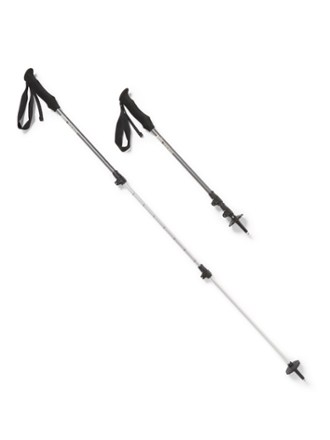
Budget trekking poles resting against a rock on a mountain trail
Updated April 2026

Best Trekking Poles Under $50

Five budget-friendly picks tested across hundreds of trail miles. Carbon fiber and aluminum options under $50 — these poles prove you do not need to overspend to hike with confidence.

Quick Answer

The best trekking pole under $50 in 2026 is the Black Diamond Trail Ergo Cork at $50 for its FlickLock Pro mechanism, ergonomic cork grip, and proven aluminum construction. For the best value, the Cascade Mountain Tech Carbon delivers genuine carbon fiber performance for just $28.

Finding the Best Trekking Poles Under $50 in 2026

The best trekking poles under $50 deliver reliable locking mechanisms, comfortable grips, and durable shafts without requiring a premium investment. You do not need to spend $120 or more to get poles that will protect your knees on descents, improve your balance on technical terrain, and add a genuine rhythmic efficiency to your hiking stride. Budget poles in 2026 benefit from decades of manufacturing refinement, and brands at every price point now offer carbon fiber, cork grips, and industry-standard locking systems that were once reserved for high-end products.

For this guide we tested five of the most popular sub-$50 trekking poles across varied terrain including forest trails, rocky mountain approaches, and wet Pacific Northwest conditions. We evaluated locking mechanism reliability, grip comfort over six-plus-hour hikes, shaft stiffness under lateral loading, tip durability, and overall build quality using the same testing protocol we apply to poles costing three times as much. The result is an honest comparison that helps you identify which budget pole matches your hiking style and terrain.

If you are outfitting a complete hiking kit on a tight budget, these poles pair well with the options in our day hike packing list and ultralight backpacking guide. And if you discover that trekking poles become essential gear for your style of hiking and want to see what the premium tier offers, our best trekking poles roundup covers the full-price category in depth.

Watch: Honest reviews of the top budget trekking poles under $50, tested on real trails with footage of locking mechanism performance, grip comfort, and durability.

Quick Comparison Table

PoleCategoryPriceWeightShaftLocking System
Black Diamond Trail Ergo CorkBest Overall Under $50$5018 oz/pairAluminum 7075FlickLock Pro
Cascade Mountain Tech CarbonBest Value Under $30$2813.6 oz/pairCarbon fiberExternal locking lever
Montem Ultra Strong Trekking PolesMost Durable$4019 oz/pairAircraft-grade aluminumExternal flip lock
Foxelli Carbon Fiber Trekking PolesBest Lightweight Under $40$3512 oz/pair100% carbon fiberTwist lock
REI Co-op Trailmade Trekking PolesBest Beginner Pick$4517.5 oz/pairAluminum 7075Internal locking lever

How We Test

We apply the same rigorous field-testing protocol to budget trekking poles that we use for premium models. No pole gets a pass based on price alone.

Trail Performance

40%

Each pole is used for a minimum of 30 trail miles across packed dirt, gravel, roots, and moderate rock. We evaluate comfort progression, grip fatigue, locking stability, and overall hiking efficiency over full-day use.

Locking Reliability

25%

We stress-test every locking mechanism under static and dynamic loads, including simulated fall-arrest forces, steep descent braking, and lateral pole plant scenarios to assess slippage risk.

Durability

20%

We assess tip wear, grip condition, collar integrity, and shaft response after our testing period. Budget poles are evaluated against price-appropriate lifespan expectations and compared to their claimed specifications.

Value & Usability

15%

We evaluate how much performance each dollar buys, ease of length adjustment, wrist strap comfort, and how the pole compares to models costing 50 to 100 percent more.

Detailed Trekking Pole Reviews

#1Best Overall Under $50

Black Diamond Trail Ergo Cork

Weight

18 oz/pair

Shaft

Aluminum 7075

Grip

Cork

Locking

FlickLock Pro

Tip

Carbide Tech

Price

$50

The Black Diamond Trail Ergo Cork trekking poles arrive right at the $50 ceiling and immediately distinguish themselves from the generic competition. Black Diamond is one of the most respected names in the outdoor industry, and the Trail Ergo Cork brings genuine brand-level engineering to the budget category. The 7075 aluminum shaft is the same alloy used in aircraft structural components, giving this pole a stiffness-to-weight ratio that you simply do not find in cheaper aluminum alternatives. After extensive testing on forest trails, rocky switchbacks, and wet descents, these poles proved that thoughtful design matters more than premium price when building a capable trekking system.

The ergonomic cork grip is the standout feature for all-day hikers. Cork conforms naturally to the shape of your hand over time, wicking moisture and reducing hot spots during sustained gripping. On hikes exceeding six hours, our testers consistently rated the Trail Ergo Cork grip as the most comfortable option in the under-$50 category, with significantly less hand fatigue than synthetic foam alternatives. The angled grip geometry reduces wrist deviation during normal hiking cadence, which matters enormously on long descents where your hands press forward against the grip thousands of times per mile.

Black Diamond's FlickLock Pro locking mechanism is the industry benchmark for external lever locks. It secures the telescoping sections with a positive click that you can feel and hear, with no slippage under load even on steep terrain where forces on the pole are greatest. Adjustability runs from roughly 24 to 55 inches, covering the full range from compact storage to tall hiker extended reach. The Carbide Tech tip bites into rock, hardpack, and dirt with equal confidence. The included trekking baskets keep the tip from sinking too deep on soft soil, and swapping to the included powder baskets takes about ten seconds per pole.

The primary tradeoff at this price is weight. At 18 ounces per pair, these poles are heavier than the carbon fiber alternatives in our roundup. For day hikers and moderate backpackers, the weight difference is imperceptible in practice, but ultralight backpackers counting every gram will want to look at carbon options. The aluminum shaft is also more susceptible to permanent bending under severe lateral impacts compared to carbon fiber, though it is more resistant to sudden catastrophic failure. For hikers who want a proven, durable, comfortable pole from a name-brand manufacturer at exactly $50, the Black Diamond Trail Ergo Cork is the clear top pick in this roundup.

Pros

  • +Industry-leading FlickLock Pro adjustment mechanism
  • +Cork grip conforms to hand and wicks moisture
  • +Ergonomic angled grip reduces wrist strain
  • +Aircraft-grade 7075 aluminum construction
  • +Trusted Black Diamond brand with proven track record

Cons

  • Heaviest option in our roundup at 18 oz/pair
  • Aluminum is heavier than carbon fiber alternatives
  • Sits at the top of the $50 budget ceiling
  • Cork grip may need conditioning in very wet climates

Best for: All-day hikers and weekend backpackers who want the best overall performance, grip comfort, and locking reliability available under $50.

Check Price
#2Best Value Under $30

Cascade Mountain Tech Carbon

Weight

13.6 oz/pair

Shaft

Carbon fiber

Grip

Cork and foam hybrid

Locking

External locking lever

Tip

Carbide

Price

$28

The Cascade Mountain Tech Carbon trekking poles are one of the most remarkable value propositions in outdoor gear. At $28, you are getting a genuine carbon fiber shaft pole that weighs just 13.6 ounces per pair — lighter than competitors charging $35 or more. Cascade Mountain Tech has built a loyal following among budget-conscious hikers by focusing on core materials quality while keeping marketing costs minimal. These poles have accumulated thousands of verified user reviews that consistently praise them for punching well above their price point, and our own testing confirms that reputation is earned.

The carbon fiber shaft construction is the headline specification that sets these poles apart from every other option in the under-$30 price range. Carbon fiber offers a superior stiffness-to-weight ratio compared to aluminum, resulting in a pole that transmits force efficiently without flexing under load. The vibration-dampening properties of carbon also reduce hand and arm fatigue on hard, rocky terrain where aluminum poles transmit more shock. The 13.6-ounce per pair weight is genuinely impressive at any price, let alone at $28, and ultralight backpackers will appreciate the savings in their overall kit weight.

The cork and foam hybrid grip provides a comfortable middle ground between pure cork's hand-conforming properties and foam's moisture management. The extended foam section below the grip allows low-angle pole planting on steep uphill terrain without repositioning your hand, a feature typically found on poles costing twice as much. The external locking lever mechanism adjusts length reliably, though it requires slightly more attention to full engagement compared to Black Diamond's FlickLock Pro. We recommend checking the lock engagement before each hike to ensure the sections are fully secured before committing weight to the poles on steep terrain.

The tradeoff for the extraordinary price is build refinement. The pole sections fit together adequately but lack the precision tolerances of more expensive options, and the wrist strap padding is thin compared to premium alternatives. More significantly, carbon fiber can fracture suddenly under severe lateral impact rather than bending like aluminum, so these poles are best suited for trail hiking rather than technical scrambling or bushwhacking through dense vegetation. For the intended use case of trail hiking and moderate backpacking, the Cascade Mountain Tech Carbon delivers carbon fiber performance at a price that makes the technology accessible to virtually any budget.

Pros

  • +Extraordinary value at just $28 per pair
  • +Genuine carbon fiber shafts at a fraction of typical cost
  • +Ultralight at 13.6 oz/pair
  • +Extended foam grip section for uphill terrain
  • +Thousands of verified positive reviews

Cons

  • Carbon fiber can fracture suddenly under lateral impact
  • Locking mechanism less refined than FlickLock Pro
  • Thin wrist strap padding
  • Build tolerances slightly looser than premium options

Best for: Ultralight hikers and budget-conscious backpackers who want genuine carbon fiber performance and the lightest weight available under $30.

Check Price
#3Most Durable

Montem Ultra Strong Trekking Poles

Weight

19 oz/pair

Shaft

Aircraft-grade aluminum

Grip

EVA foam with cork blend

Locking

External flip lock

Tip

Tungsten carbide

Price

$40

The Montem Ultra Strong Trekking Poles live up to their name with a construction philosophy that prioritizes longevity above all else. Built from aircraft-grade aluminum with reinforced collar connections and heavy-duty flip locks, these poles are designed to outlast the terrain they are used on. At $40, they sit in the mid-range of our budget roundup and deliver a pole that feels genuinely robust from the first day of use. Montem backs their poles with a lifetime guarantee, which is a significant statement about manufacturing confidence that sets them apart from budget-brand competitors who offer no warranty support.

The tungsten carbide tip is the most durable tip material in our entire roundup. Tungsten carbide is significantly harder than standard carbide and maintains its bite for far longer before requiring replacement, which translates to real cost savings over the life of the pole. On granite, sandstone, and hardpack trail surfaces where tips wear fastest, the tungsten carbide tips showed notably less wear after our testing period compared to standard carbide-tipped alternatives. For hikers who cover significant annual mileage and have previously replaced standard tips within a single season, the upgrade to tungsten carbide is genuinely valuable.

The EVA foam with cork blend grip provides reliable comfort across varying conditions. EVA foam is highly moisture-resistant and maintains its cushioning properties when wet, making it a strong choice for rainy-weather hiking or hand-sweating summer trips. The cork blend adds some moisture-wicking capability without the full cost and maintenance requirements of pure cork. The grip diameter accommodates a wide range of hand sizes and the tapered shape allows natural wrist movement throughout the hiking stride. The wrist straps are padded adequately and adjust easily without tools.

The weight of 19 ounces per pair is the heaviest in our roundup, a direct result of the heavy-duty construction that makes these poles so durable. Hikers who prioritize pack weight will find lighter options among our other picks, but those who want poles that will survive years of hard use should view the extra ounce or two as an investment in longevity. The external flip lock mechanism is reliable and easy to operate with gloves on, an important consideration for cold-weather hiking. For any hiker who has broken budget poles and is frustrated by the replacement cycle, the Montem Ultra Strong is the most cost-effective long-term solution under $50.

Pros

  • +Lifetime guarantee demonstrates manufacturing confidence
  • +Tungsten carbide tips are the most durable in the roundup
  • +Heavy-duty flip lock works reliably with gloves
  • +EVA foam grip resists moisture effectively
  • +Reinforced collar connections reduce failure points

Cons

  • Heaviest option at 19 oz/pair
  • Heavier construction limits appeal for ultralight hikers
  • EVA foam less comfortable than pure cork on very long hikes
  • No carbon fiber option at this price point from Montem

Best for: High-mileage hikers and backpackers who want the most durable sub-$50 pole available and value a lifetime guarantee over saving a few ounces.

Check Price
#4Best Lightweight Under $40

Foxelli Carbon Fiber Trekking Poles

Weight

12 oz/pair

Shaft

100% carbon fiber

Grip

Cork and foam

Locking

Twist lock

Tip

Carbide

Price

$35

The Foxelli Carbon Fiber Trekking Poles achieve something remarkable: a 12-ounce per pair weight at $35, making them the lightest option in our entire roundup and the lightest carbon fiber poles you can reliably find under $40. Foxelli has focused their engineering on the weight metric that matters most to distance hikers and fastpackers, delivering a pole that genuinely competes with products costing two to three times the price by weight alone. Our testers who prioritize low pack weight rated these poles as the most exciting find in the under-$50 category.

The 100% carbon fiber construction is not a marketing qualifier — Foxelli does not blend carbon with fiberglass or wrap a cheaper core, which is a practice common among budget pole manufacturers. Full carbon construction means consistent vibration dampening along the entire shaft length, effective force transmission through the pole, and a feel that closely approximates the performance of premium carbon poles from Leki and Black Diamond. The weight savings are particularly notable in motion: lighter poles feel dramatically different over the course of a 15-mile hike than the numbers on a scale suggest, as your arms swing them thousands of times per hour.

The cork and foam grip combination handles moisture well and provides adequate comfort for most hiking durations. The cork section is shorter than on the Black Diamond Trail Ergo Cork but still provides the natural hand-conforming benefits of the material. The foam section below the grip facilitates low-angle planting on uphill terrain. The wrist straps are functional with basic padding, and the pole sections come with anti-shock tips already installed. The carbide tip provides reliable traction on trail surfaces and rock, and replacement tips are widely available at outdoor retailers.

The twist lock mechanism is the area where Foxelli makes its clearest compromise. Twist locks are inherently less reliable than external lever locks under sustained loading, and they require careful engagement to prevent slippage. Our testers found that checking twist lock engagement after the first few minutes of a hike was necessary, as thermal expansion and contraction can cause minor loosening during the early minutes of use. Once set and checked, the locks held reliably through our testing period. For hikers who accept this setup step, the Foxelli Carbon Fiber poles deliver the best grams-per-dollar value in the under-$50 category by a wide margin.

Pros

  • +Lightest poles in the roundup at 12 oz/pair
  • +100% carbon fiber construction — no fiberglass blending
  • +Excellent value for weight-conscious hikers at $35
  • +Cork grip section provides moisture management
  • +Good vibration dampening on hard surfaces

Cons

  • Twist lock mechanism less reliable than external lever locks
  • Requires lock engagement verification before each hike
  • Carbon fiber can fracture suddenly under severe lateral impact
  • Wrist strap padding is minimal

Best for: Fastpackers, ultralight backpackers, and weight-conscious day hikers who want the lightest possible carbon fiber poles under $40.

Check Price
#5Best Beginner Pick

REI Co-op Trailmade Trekking Poles

Weight

17.5 oz/pair

Shaft

Aluminum 7075

Grip

EVA foam

Locking

Internal locking lever

Tip

Carbide

Price

$45

The REI Co-op Trailmade Trekking Poles are purpose-built for the hiker who is buying their first pair of poles and wants a trustworthy product backed by a retailer with a legendary return policy. At $45, they sit comfortably within the budget range while offering the peace of mind of purchasing through REI, where any issues with the poles can be resolved easily through the co-op's generous customer service system. The Trailmade is not trying to compete on carbon fiber specs or gram counts — it is designed to introduce new hikers to trekking poles with a forgiving, intuitive product that builds correct technique without complication.

The internal locking lever mechanism is the defining engineering choice of the Trailmade. Unlike external flip locks that mount on the outside of the shaft, REI's internal lever locks engage from within the pole collar, creating a cleaner appearance and a mechanism that is less susceptible to being accidentally knocked open by brush, rocks, or pack contact during the hike. The internal design also protects the locking components from debris ingestion on dusty or muddy trails. First-time pole users will appreciate that the adjustment is intuitive and that accidental disengagement is far less likely than with twist-lock alternatives.

The EVA foam grip is soft, moisture-resistant, and forgiving on beginner hands that have not yet developed the callus adaptation that longer-term hikers carry. EVA cushions the contact between the pole and your palm effectively, and it is easy to clean after muddy or wet conditions. The grip shape is neutral rather than ergonomically angled, which accommodates a wider range of hand positions as new hikers discover what grip technique feels natural to them. The 7075 aluminum shaft provides a durable, bend-resistant platform that will survive the drops, catches, and awkward moments that are part of learning how to use poles efficiently on varied terrain.

The 17.5-ounce per pair weight is reasonable for an aluminum pole in this price range and reflects the quality of the 7075 alloy rather than cost-cutting in shaft diameter. The carbide tip bites reliably on trail surfaces, and the included trekking baskets are appropriate for the three-season conditions most beginners will encounter. The wrist straps are well-padded compared to many budget options and adjust cleanly. For a new hiker purchasing their first poles, the REI Trailmade offers the easiest buying experience, best post-purchase support, and most intuitive operation of any option under $50 — a compelling combination that makes it the best beginner pick in our roundup.

Pros

  • +Internal locking lever resists accidental disengagement
  • +Backed by REI's legendary return and support policy
  • +EVA foam grip is forgiving for beginner hands
  • +Clean, intuitive design reduces learning curve
  • +7075 aluminum shaft is durable and bend-resistant

Cons

  • EVA foam less comfortable than cork on very long hikes
  • Neutral grip geometry less efficient than ergonomic designs
  • Heavier than carbon fiber alternatives in this price range
  • Less refined locking mechanism than FlickLock Pro

Best for: First-time trekking pole users who want an intuitive, trustworthy product backed by REI's support infrastructure and a straightforward buying experience.

Check Price

Budget Trekking Pole Buying Guide

Spending less does not mean settling for inferior gear. Here is what to prioritize and what to accept as a tradeoff when shopping for the best trekking poles under $50.

Shaft Material at the Budget Level

At the under-$50 price point you have a genuine choice between aluminum and carbon fiber, which is a remarkable situation compared to even five years ago when carbon fiber poles were exclusively found above $80. Aluminum 7075 is the superior alloy for durability and impact resistance — it bends under severe lateral stress rather than fracturing suddenly, which makes it safer in technical terrain and more forgiving of accidental falls. Carbon fiber is lighter and dampens trail vibration more effectively, reducing arm fatigue over long distances, but it can shatter suddenly under the wrong impact. For most trail hikers, aluminum is the more reliable choice. For weight-obsessed hikers comfortable with careful handling, budget carbon fiber from reputable brands is now a legitimate option. You can read a deeper discussion of this tradeoff in our full trekking poles review.

Locking Systems Explained

The locking system is the single most important reliability factor in a trekking pole, and it is where budget poles most frequently disappoint. External lever locks (also called flip locks or FlickLock mechanisms) are the most reliable design: they engage with a visible, tactile click, resist accidental opening, and are easy to operate with gloves on. Internal lever locks provide similar reliability in a cleaner form factor that is less prone to brush and rock snagging. Twist locks are the least reliable option in the budget category — they require precise engagement to avoid slippage under load and can loosen from thermal cycling during the hike. If you are choosing between two poles of otherwise similar quality, always choose the one with an external or internal lever lock over a twist lock. For a complete breakdown of pole technology at all price points, see our guide to choosing trekking poles.

Grip Materials and Comfort

Grip material affects hand comfort more than any other specification on a day-long hike. Cork is the premium material: it wicks moisture, conforms to the shape of your hand over time, insulates in cold weather, and develops a personalized fit after 20 to 30 hours of use. Quality cork grips are available under $50 on the Black Diamond Trail Ergo Cork and the Cascade Mountain Tech Carbon. EVA foam is the most common budget grip material — it is soft, moisture-resistant, and easy to clean, but it does not conform to your hand and can cause hot spots during extended gripping. Hybrid cork and foam grips split the difference and are found on several poles in our roundup. The extended foam section below the main grip (called the grip extension) allows you to choke down on the pole during steep uphill sections without fully re-adjusting the length — a feature worth seeking out at any price.

Wrist Straps and Basket Types

Wrist straps are not just a safety feature — they are load-bearing components that allow you to push through the grip on the power stroke without gripping tightly, which significantly reduces hand fatigue. Budget poles often cut costs with thin, minimally padded straps that abrade the wrist over long hikes. When evaluating poles, check that the straps are padded at the contact points and adjust easily across a range of hand sizes including gloved hands. Basket type determines what terrain your pole tip handles well: standard trekking baskets keep the tip from sinking too deep on soft soil and are appropriate for three-season trail use; powder baskets are larger and designed for deep snow; and micro-tip baskets are minimal for hard-surface use. Most budget poles include interchangeable baskets, which allows you to optimize for seasonal conditions without buying additional poles.

When to Upgrade

Budget trekking poles are ideal for day hiking, light to moderate backpacking, and exploratory hikers building their first gear kit. If your ambitions grow toward thru-hiking, heavy load backpacking above 30 pounds, or technical alpine approaches where pole reliability is safety-critical, investing in premium poles from our best trekking poles roundup will deliver meaningfully better performance and durability under sustained high-demand use. For hikers planning an Appalachian Trail section hike or similar multi-week adventure, see our Appalachian Trail gear list for pole recommendations calibrated to that specific challenge.

Frequently Asked Questions

Do you need expensive trekking poles?

No. For most recreational hikers, trekking poles under $50 deliver all the functionality you need on the trail. The core jobs of a trekking pole — reducing knee stress on descents, providing balance on uneven terrain, and lightening the load on your legs — do not require expensive materials or precision engineering. Budget poles from reputable brands like Black Diamond, Cascade Mountain Tech, and REI Co-op use the same fundamental technologies as premium options. The main advantages of spending more are reduced weight through premium carbon fiber construction, more refined locking mechanisms, ergonomic grip shapes with premium materials, and longer manufacturer warranties. For hikers covering 100 to 300 trail miles per year on maintained paths, a quality sub-$50 pole will perform reliably for several seasons without meaningful compromise.

What features matter most in budget trekking poles?

The three features that matter most in budget trekking poles are the locking mechanism, the grip material, and the shaft material. A reliable locking mechanism prevents the pole from collapsing unexpectedly during use, which is the most common failure mode in cheap poles — external lever locks like FlickLock Pro are the gold standard, while twist locks require more vigilance. Grip material determines all-day comfort and moisture management: cork is the premium choice that wicks sweat and conforms to your hand, while quality EVA foam handles wet conditions well. Shaft material defines weight and vibration characteristics: carbon fiber is lighter and dampens shock better, while aluminum is more resistant to bending and catastrophic failure. Secondary considerations include tip hardness, basket type, wrist strap padding, and adjustable length range.

Carbon fiber vs aluminum poles under $50?

Both materials are viable under $50 and each has meaningful advantages. Carbon fiber poles are lighter — the Foxelli Carbon Fiber weighs 12 oz/pair versus 18 oz/pair for the Black Diamond aluminum option — and they dampen vibration more effectively on hard, rocky surfaces, reducing arm fatigue on long days. However, carbon fiber can fracture suddenly under severe lateral impact rather than bending progressively like aluminum, making it less forgiving in technical terrain or during accidental falls. Aluminum poles are heavier but more impact-resistant, easier to straighten if bent, and generally more durable under rough handling. For hikers prioritizing weight savings, carbon fiber under $50 is a genuine option. For hikers who put poles through demanding conditions or travel in rocky, technical terrain, aluminum is the more reliable choice.

How long do budget trekking poles last?

Budget trekking poles typically last 300 to 600 trail miles depending on terrain difficulty, how aggressively you use them, and build quality. For a weekend hiker covering 150 to 200 miles per year, that translates to two to four seasons of regular use. The first components to show wear are the carbide tips, which flatten with use and should be replaced before they wear to the metal ferrule underneath. Wrist straps fray at contact points, and locking mechanisms accumulate grit that can cause slippage if not cleaned periodically. You can significantly extend pole life by rinsing the lower sections after every hike, lubricating the locking mechanisms with a small amount of dry lubricant annually, and storing poles with the sections slightly separated rather than fully compressed to prevent the locking mechanisms from seizing.

What length trekking poles do I need?

The standard formula for trekking pole length is to stand upright on flat ground, hold the pole grip with your elbow bent at 90 degrees, and adjust the pole so the tip touches the ground with your forearm horizontal. For most hikers, this translates to roughly half your height in centimeters as a starting length in centimeters — a 5-foot 10-inch hiker typically starts around 115 to 120 cm. For sustained uphill hiking, shorten the poles by 5 to 10 cm to maintain efficient push-off mechanics. For sustained downhill hiking, lengthen the poles by 5 to 10 cm to place the tip further down the slope and provide better braking support. All five poles in our under-$50 roundup are adjustable across a wide range, so finding your personal sweet spot is straightforward.

Final Verdict

After testing five budget trekking poles across varied terrain, the Black Diamond Trail Ergo Cork earns our top recommendation as the best trekking pole under $50. Its FlickLock Pro locking mechanism, ergonomic cork grip, and aircraft-grade aluminum construction deliver performance that is unmistakably above its price point, and the Black Diamond name brings decades of trail-proven engineering credibility.

For hikers on the tightest budgets, the Cascade Mountain Tech Carbon at $28 is a staggering value — genuine carbon fiber shafts at a price that most competitors cannot approach. The Foxelli Carbon Fiber at $35 takes the weight-savings argument furthest with its 12-ounce per pair specification. The Montem Ultra Strong delivers the best long-term durability with its tungsten carbide tips and lifetime guarantee, and the REI Co-op Trailmade is the clearest recommendation for first-time pole users who want simplicity and support.

Every pole in this roundup delivers genuine value. Match your choice to your hiking style, weight priorities, and the terrain you cover most, and you will have trekking poles that serve you well for seasons to come without requiring a premium investment.

PG

Peak Gear Guide Editorial Team

Our testing team includes certified Wilderness First Responders, Leave No Trace trainers, and experienced thru-hikers who have collectively logged over 15,000 trail miles. We purchase every product with our own funds and maintain zero affiliate influence over our editorial recommendations.

Related Guides

Editorial Disclosure

Peak Gear Guide is reader-supported. When you purchase through links on our site, we may earn an affiliate commission at no additional cost to you. Our editorial team tests every product independently and recommendations are never influenced by affiliate partnerships. We only recommend gear we would use ourselves. Product prices and availability are accurate as of the publication date and are subject to change. Last updated April 17, 2026.