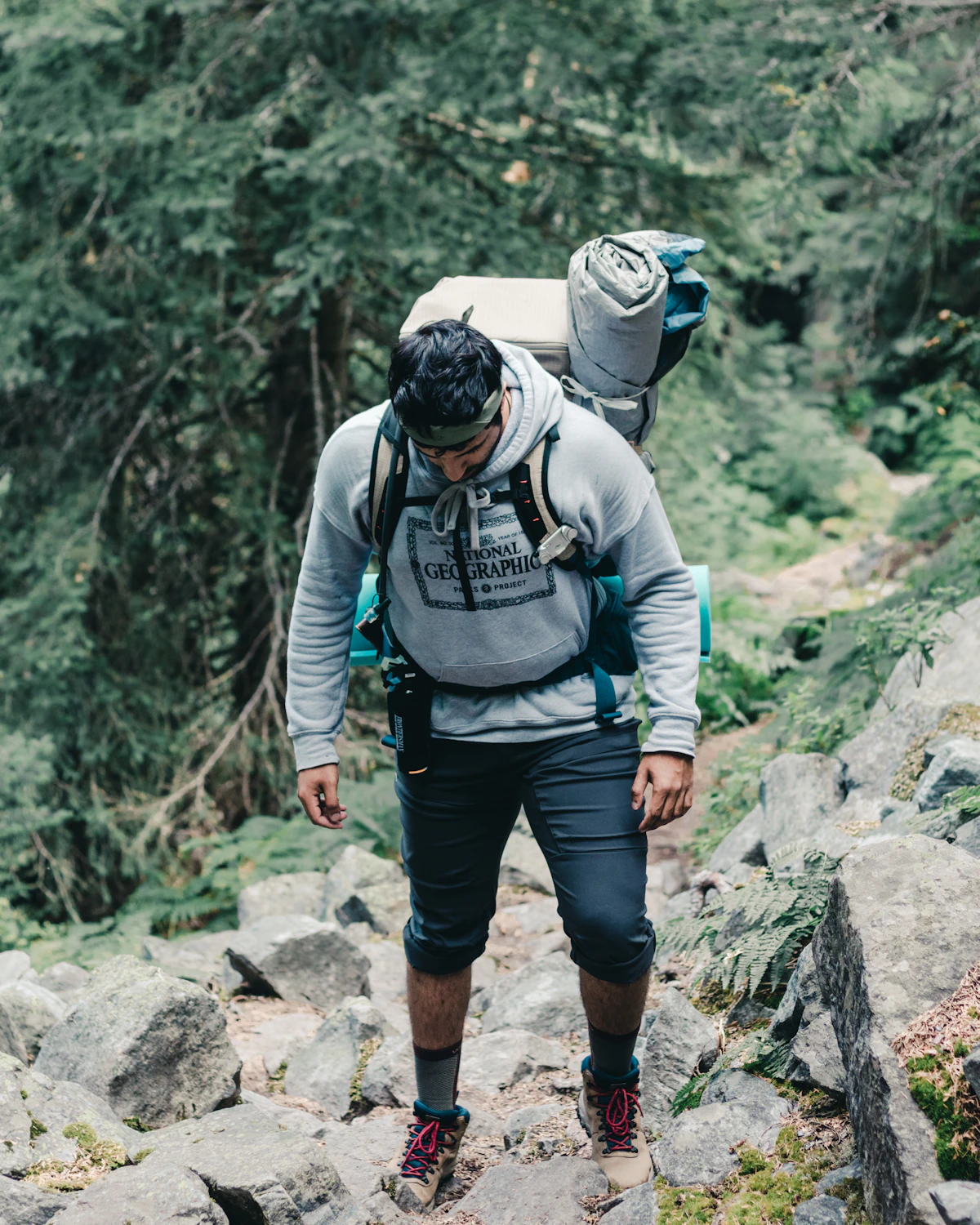
Ask any experienced hiker what they would upgrade first and the answer is almost never the backpack or the tent. It is what they are wearing. The right hiking outfit keeps you comfortable across a 30-degree temperature swing from a cold morning start to a sun-blasted ridgeline at noon and back down into a windy valley by evening. The wrong outfit turns a manageable day into a miserable one — or, in serious conditions, a dangerous one.
Knowing what to wear hiking is not about buying the most expensive gear on the rack. It is about understanding how clothing works as a system — how layers interact, which fabrics perform under stress, and why the same shirt that feels perfect in July can put you at risk in October. Once you understand the logic, you can dress correctly for any trail, any season, and any budget.
This guide covers the complete hiking clothes guide from the ground up: the 3-layer system that forms the foundation, season-by-season outfit breakdowns, footwear and sock choices, accessories, common mistakes, and the brands that consistently deliver on trail. Whether you are heading out on your first day hike or building a system for year-round backpacking, everything you need is here.
Watch: REI's complete guide to the 3-layer hiking system — base, mid, and shell explained in under 10 minutes.
The 3-Layer System Explained
Every experienced hiker builds their outfit around the same core framework: base layer, mid layer, and shell. This is not marketing language from outdoor brands, it is a functional system developed over decades of mountain use that solves a specific problem: your body generates wildly different amounts of heat and moisture depending on your effort level, and the weather can change faster than you can change clothes. Layers let you adjust without stopping.
Base Layer. Moisture Management
The base layer sits directly against your skin and has one critical job: move sweat away from your body. When you are working hard on an uphill stretch, you can produce over a liter of sweat per hour. If that moisture stays against your skin, it pulls heat away through evaporation and conduction, the exact mechanism behind hypothermia in cool conditions and chafing in warm ones. A good base layer wicks that moisture to its outer surface where it can evaporate without cooling your skin directly.
Merino wool is the gold standard for base layers. It regulates temperature across a wide range, resists odor for days, and continues to insulate even when damp. Synthetic base layers — typically polyester blends — dry faster and cost less, but develop odor quickly and feel clammy in stop-and-go conditions. For multi-day trips, merino wins. For single day hikes where you will wash it that night, synthetic is perfectly fine.
Fit matters as much as fabric. A base layer should be snug but not compressive. Air gaps between the fabric and your skin reduce wicking efficiency. If you can pinch more than an inch of excess material, size down. The Smartwool Merino 150 Base Layer is the benchmark lightweight merino option — 150-weight is versatile across spring through fall. Check our best base layers for hiking guide for top picks at every price point.
Mid Layer. Insulation
The mid layer traps warm air close to your body. It sits over the base layer and under the shell, acting as your primary source of warmth when you stop moving or when temperatures drop. The most common mid layer options are fleece, synthetic insulated jackets, and down jackets — each with distinct strengths.
Fleece is the workhorse choice for active hikers. It breathes well during moderate effort, dries quickly when wet, and retains warmth even when damp. A 200-weight fleece is the most versatile option for 3-season use. Lightweight fleece (100-weight) works as a warm-weather evening layer or as an active insulation piece during cold-weather movement.
Synthetic insulated jackets — like those using PrimaLoft or Climashield — offer better warmth-to-weight than fleece and compress smaller. They are ideal when you need serious warmth in a packable format. Unlike down, they retain almost all of their insulating value when wet, which makes them the preferred mid layer for damp climates or high-output activities where sweat saturation is likely.
Down jackets provide the best warmth-to-weight ratio of any insulation available. A quality 800-fill-power down jacket weighing 10 ounces can keep you warm in conditions that would require 18 ounces of synthetic. The trade-off is that down loses nearly all insulating ability when wet. Treat it as a camp layer or a cold-weather mid layer that stays protected under a waterproof shell.
Shell Layer. Weather Protection
The outer shell is your defense against rain, wind, and snow. It is the layer most hikers debate the most because good shells are expensive and bad ones create more problems than they solve. The key distinction is between hardshells and softshells.
A hardshell rain jacket is fully waterproof and windproof. Modern options using Gore-Tex, eVent, or proprietary membranes can weigh as little as 6 ounces and pack to the size of a fist. For any hike where rain is possible — which is most hikes , a hardshell belongs in your pack. Period. Check our best rain jackets and best rain jackets for hiking guides for current top performers.
A softshell is water-resistant (not waterproof), highly breathable, and stretchy. It excels in cool, dry, windy conditions where a hardshell would trap too much moisture. Many experienced hikers use a softshell as their primary outer layer 80 percent of the time and only reach for the hardshell when actual precipitation arrives. For a reliable, affordable hardshell, the Marmot PreCip Eco jacket is the most recommended entry-level waterproof shell for hiking — fully seam-taped, 100% recycled materials, and under $150.
Spring Hiking Outfit
Spring is the most unpredictable season to dress for on trail. Mornings can start near freezing at elevation, afternoons can push into the 60s or 70s, and rain showers can appear with little warning. The operative word for spring is versatility, you need layers you can add and remove quickly without breaking stride.
Start with a lightweight merino or synthetic base layer , a 150-weight merino tee or a fast-drying polyester crew. Over that, carry a lightweight fleece or thin synthetic insulated jacket that you can tie around your waist when the sun comes out. Your shell layer should be a packable waterproof rain jacket with pit zips for ventilation. Spring rain tends to be intermittent, so breathability matters as much as waterproofing.
For bottoms, lightweight hiking pants with some stretch are the safest choice in spring. Convertible pants, the kind with zip-off legs — are genuinely useful this time of year because the temperature delta between morning and afternoon can be significant. Pair them with a mid-weight merino hiking sock for insulation and moisture management during the cool start.
Do not forget a lightweight beanie and thin gloves for early morning starts. They weigh almost nothing and the difference between having them and not having them at 6 AM on a 38-degree trailhead is enormous. A buff or neck gaiter adds another ounce of insurance that pays for itself repeatedly in spring conditions.
Summer Hiking Outfit
Summer hiking is where people most often underdress, not in terms of warmth, but in terms of sun protection. Heat management and UV defense are your two priorities. The instinct is to wear as little as possible, but experienced desert and alpine hikers know that lightweight long sleeves often outperform tank tops and shorts in sustained heat.
Your base layer in summer is typically just a lightweight, loose-fitting shirt in a light color. UPF-rated sun shirts are worth the investment if you hike in exposed terrain regularly, they block 98 percent of UV radiation and breathe as well as a standard hiking tee. Synthetic fabrics with mesh ventilation panels are ideal. Merino works here too, especially for multi-day trips where odor control matters, but it dries noticeably slower than synthetic in very hot conditions.
You still need a rain shell in summer. Afternoon thunderstorms are routine in mountain environments from June through September, and getting caught above treeline in a storm without waterproof protection is one of the most common ways hikers get into trouble. A sub-8-ounce emergency shell takes up almost no space and can save your day, or your life.
For bottoms, lightweight hiking shorts are the default for most summer trails. Choose a 7-to-9-inch inseam with built-in stretch and a gusseted crotch for freedom of movement on scrambles and high steps. If you are hiking through brush, tall grass, or tick-prone areas, lightweight pants offer better protection. Pair everything with thin, moisture-wicking hiking socks — merino-blend or synthetic — to prevent blisters in the heat.
Sun protection accessories are non-negotiable in summer: a wide-brim hat or cap with a neck flap, quality sunglasses with UV400 protection, and sunscreen on any exposed skin. Dehydration and heat exhaustion are far more common than most hikers realize, and proper clothing is your first line of defense.
Fall Hiking Outfit
Fall is many hikers' favorite season — cool temperatures, fewer bugs, and spectacular foliage. It is also the season where the consequences of poor clothing choices escalate. A warm October afternoon at the trailhead can translate to near-freezing conditions at a windswept summit, and daylight hours are shrinking, which means getting caught out late is more likely and more consequential.
The full 3-layer system comes into play here. Start with a mid-weight merino base layer — 200-weight is the sweet spot for fall. Your mid layer should be a substantial fleece or a lightweight synthetic insulated jacket. Many hikers find that a 200-weight fleece works best during active hiking because it breathes well during exertion, while a synthetic puffy goes in the pack as a summit or rest-stop layer.
Your shell needs to handle real weather. Fall storms are often colder and longer-lasting than summer afternoon showers, and the combination of rain and wind at 40 degrees is genuinely dangerous. A full-featured waterproof jacket with a hood, sealed seams, and adequate length to cover your waist is the right call. This is not the season for a minimalist emergency poncho. If your current rain jacket is aging, review our best rain jackets for hiking for reliable options.
Pants should be full-length, with some wind resistance and a DWR treatment for light rain. Softshell hiking pants are excellent in fall — they block wind, resist light precipitation, stretch with your movement, and dry quickly if they get damp. Pair them with a mid-weight merino hiking sock. Carry a warm hat, wind-resistant gloves, and a neck gaiter in your lid pocket. These items weigh ounces and are the difference between comfort and suffering on a breezy fall summit.
Winter Hiking Outfit
Winter hiking demands the most from your clothing system, and it is where mistakes become genuinely dangerous. The core challenge is managing the extreme swing between high exertion and complete stillness. While climbing, you generate enormous heat and sweat. The moment you stop — at a viewpoint, during a snack break, or when the wind picks up, that sweat starts pulling heat out of your body rapidly. Your layering system needs to handle both states without you getting soaked or frozen.
Base layer:Use a mid-weight or heavyweight merino base layer (200 to 250 weight) as your foundation. Merino's ability to regulate temperature and resist odor across multiple days makes it the clear winner for winter use. Avoid cotton in all forms, a cotton base layer in winter conditions is a genuine safety hazard.
Mid layer: You often need two mid layers in winter. An active insulation piece — like a thin fleece or grid-fleece hoody — goes on over the base layer for movement. A heavier insulation piece, a synthetic puffy or down jacket — goes over that for rest stops and summits. The active piece stays on while hiking; the heavy piece comes out of the pack when you stop. This two-mid-layer approach gives you far more temperature range than any single mid layer can provide.
Shell: A fully waterproof, windproof hardshell is required. In winter, wind chill is the primary threat, a 20-degree day with 25 mph wind feels like minus 5. Your shell must block wind completely and resist snow and sleet. Consider a shell with a helmet-compatible hood if you are in terrain where you might use a climbing helmet. Pit zips are especially valuable in winter because they let you dump heat on climbs without removing the shell.
Bottoms: Insulated softshell pants or standard softshell pants over a base layer tight are the most common winter hiking bottom setups. Waterproof hardshell pants or rain pants should be in your pack for storm conditions. Full-length side zips let you put them on over boots without removing crampons or snowshoes.
Winter accessories are not optional. Insulated gloves or mittens (carry both — liners for hiking, insulated mittens for stops), a warm fleece or wool beanie, a balaclava or buff for face and neck protection, and gaiters to keep snow out of your boots. If you are using hiking boots rather than dedicated winter boots, gaiters are especially important for keeping snow from entering through the collar.
Seasonal Outfit Comparison
| Layer | Spring | Summer | Fall | Winter |
|---|---|---|---|---|
| Base Layer | Lightweight merino or synthetic tee | UPF sun shirt or light synthetic tee | Mid-weight merino (200wt) | Mid/heavyweight merino (200-250wt) |
| Mid Layer | Light fleece or thin synthetic puffy | Optional — wind shirt for ridgelines | 200wt fleece + packable synthetic puffy | Grid fleece + insulated puffy (2 layers) |
| Shell | Packable rain jacket with pit zips | Ultralight emergency shell (sub-8 oz) | Full-featured waterproof jacket | Waterproof/windproof hardshell |
| Bottoms | Lightweight pants or convertibles | Hiking shorts (7-9" inseam) | Softshell pants with DWR | Softshell pants + base layer tights |
| Socks | Mid-weight merino blend | Lightweight merino or synthetic | Mid-weight merino blend | Heavyweight merino cushion |
| Accessories | Light beanie, thin gloves, buff | Wide-brim hat, sunglasses, sunscreen | Warm hat, wind gloves, neck gaiter | Insulated mittens, balaclava, gaiters |
Hiking Bottoms: Pants vs Shorts vs Convertibles
The pants-versus-shorts debate generates more opinions in hiking forums than almost any other clothing topic. The honest answer is that it depends on conditions, terrain, and personal preference, but there are some objective guidelines worth following.
Hiking pants are the most versatile option for 3-season use. They protect against sun, brush, insects, and light precipitation. Look for pants made from nylon or nylon-spandex blends with 4-way stretch, a gusseted crotch, and a DWR (durable water repellent) finish. Articulated knees improve mobility on steep terrain. Avoid anything that feels stiff or restrictive — modern hiking pants should feel almost as free as shorts.
Hiking shorts are the default for hot-weather hiking on well-maintained trails. Choose a pair with a built-in brief liner if you dislike extra underwear layers, and make sure the inseam is long enough to prevent chafing on your inner thigh. Seven to nine inches is the most common range. Shorter inseams allow more airflow but offer less protection.
Convertible pants — the kind with zip-off legs that transform into shorts — get mocked by gear purists but remain genuinely useful for spring and fall hiking where morning and afternoon temperatures differ by 20 or more degrees. The conversion zippers add a small amount of weight and create a slightly less clean look, but the functional convenience is real. If you can only bring one pair of bottoms on a trip that spans a wide temperature range, convertibles are the smart pick.
Regardless of which style you choose, avoid cotton entirely. Cotton hiking pants absorb sweat and rain, take hours to dry, and create friction against wet skin that leads to chafing. Nylon dries in a fraction of the time and performs better in every measurable way on trail.
Hiking Socks: The Most Underrated Gear Choice
Socks do more work per ounce than any other piece of hiking clothing. They manage moisture between your foot and boot, provide cushioning on impact, reduce friction that causes blisters, and regulate temperature across an enormous range. Most hikers who complain about foot problems — blisters, hot spots, cold toes — are wearing the wrong socks, not the wrong boots.
Merino wool hiking socks are the standard recommendation and for good reason. Merino regulates temperature effectively in both warm and cold conditions, naturally resists odor (critical on multi-day trips), wicks moisture well, and provides a soft, non-irritating feel against skin. Darn Tough, Smartwool, and Icebreaker are the brands that consistently lead in this category. Our best hiking socks guide has the full rundown, and our hiking socks review covers detailed field testing.
Synthetic hiking socks dry faster than merino and are typically less expensive. They work well for single-day hikes in warm conditions where fast drying is the top priority. The downsides are rapid odor buildup and a slightly less effective temperature regulation range. For multi-day backcountry trips, most experienced hikers prefer merino.
Fit is critical. A hiking sock should fit snugly with no bunching or excess material anywhere — especially in the heel and toe box. Bunched fabric creates pressure points that become blisters within miles. The sock height should extend above the collar of your boot to prevent rubbing against skin. Crew length is the most versatile choice for most boots and trail runners. Quarter-length works fine with low-cut trail shoes in summer.
One sock tip that makes an outsized difference: always try on hiking socks with the boots you plan to wear. A sock that fits perfectly barefoot may create a tight spot inside a boot, and a sock that feels loose on its own may bunch inside a roomier shoe. The boot-sock system is what matters, not either piece in isolation.
Hiking Footwear: When to Wear What
Footwear is a deep topic, we have a full guide to choosing hiking boots that covers fit, support, and terrain matching in detail. But the quick version for the purposes of your hiking outfit is this: your footwear should match the difficulty of the terrain, the weight of your pack, and the conditions underfoot.
Trail runners are appropriate for day hikes on maintained trails with light loads (under 20 pounds). They are lighter, more breathable, and require no break-in. Most thru-hikers now use trail runners for these reasons.
Mid-cut hiking boots are the right call for moderate terrain, backpacking loads above 25 pounds, or conditions where ankle support matters — rocky trails, wet roots, loose scree. They provide stability that trail runners cannot match in technical terrain. The Salomon X Ultra 4 Mid GTX is the most consistently recommended mid-cut boot across skill levels. GORE-TEX waterproofing, Salomon's Contagrip sole, and a secure fit on technical terrain. See our best hiking boots and best hiking boots for women for current recommendations.
Mountaineering boots are for winter conditions, crampon-compatible terrain, and sustained snow travel. They are heavy, stiff, and overkill for anything less than serious alpine conditions.
Regardless of footwear choice, break in new boots or shoes before any significant hike. Even modern footwear benefits from 30 to 50 miles of wear before a multi-day trip. And always, always pair your footwear with appropriate socks, the footwear-sock combination is what determines comfort and blister risk, not either piece alone.
Hiking Accessories That Matter
Accessories are the easiest category to overlook and the one that makes the biggest difference in marginal conditions, the 10-degree window where you are not quite comfortable but not quite cold enough to add a full layer. Smart accessory choices fill those gaps without adding meaningful weight.
Hats: In warm weather, a wide-brimmed sun hat or a baseball cap with a neck flap protects against UV exposure on your face, ears, and neck. In cool weather, a lightweight merino or fleece beanie retains heat that escapes rapidly from your head. Most experienced hikers carry both on shoulder-season trips.
Gloves: Lightweight liner gloves (merino or synthetic) weigh under 2 ounces and handle morning chill, breezy ridgelines, and rain. For winter, add insulated waterproof gloves or mittens over your liners. Mittens are warmer than gloves at the same weight because your fingers share heat, but they sacrifice dexterity. Carry both for serious winter outings.
Gaiters: Low gaiters (trail gaiters) keep debris out of your shoes on dusty or sandy trails. Full-length gaiters are essential for winter hiking and snowshoeing — they seal the gap between your pant cuffs and boot tops, keeping snow, water, and mud from entering your footwear. If you have ever spent a winter hike with wet feet because snow packed into your boot collar, you understand the value.
Sunglasses: Not optional for any exposed hiking. Choose lenses with UV400 protection and a wraparound design that blocks light from the sides. Polarized lenses reduce glare on water and snow. On snow-covered routes, glacier glasses with side shields are necessary to prevent snow blindness. Carry a retainer strap so you do not lose them on a scramble.
Buff / Neck Gaiter: A single piece of tubular merino or synthetic fabric that works as a neck warmer, headband, dust mask, sun guard, and emergency hat. It weighs about an ounce and belongs in your pack on every hike in every season. It is the highest-utility accessory in hiking.
Common Hiking Clothing Mistakes
After years of researching gear and talking with hikers at every experience level, these are the clothing mistakes we see most frequently, and the ones most likely to ruin a trip.
Wearing Cotton
Cotton absorbs moisture readily, dries extremely slowly, and loses all insulating value when wet. A cotton t-shirt that gets soaked with sweat on a summer hike can chill you dangerously if the temperature drops or wind picks up. The old mountaineering saying about cotton exists for a reason. Replace every piece of cotton in your hiking wardrobe with merino, polyester, or nylon. This applies to underwear, socks, t-shirts, and especially jeans — which are the single worst garment you can wear on a trail.
Overdressing at the Trailhead
Starting a hike in all your layers because you feel cold at the parking lot is one of the fastest ways to overheat and soak your base layer in sweat within the first 20 minutes. The rule of thumb is to feel slightly cold when you start walking — within 10 minutes of sustained effort, your body heat will bring you to a comfortable temperature. If you start comfortable, you will be too hot within a mile. Carry your mid layer in your hand or pack for the first uphill stretch and add it when you stop or the terrain levels out.
Ignoring the Weather Forecast
Dressing for the trailhead temperature without checking the summit forecast or the hourly outlook is a recipe for problems. Mountain weather can differ by 20 degrees and 30 mph of wind between the parking lot and the high point. Always check the forecast for your specific elevation and time window, and pack layers that cover the worst-case scenario, not just the average. If you are planning a full-day outing, check our day hike packing list to make sure nothing gets left behind.
Skipping the Rain Layer
The most common version of this mistake: leaving the rain jacket in the car because the sky looks clear. Afternoon storms develop rapidly in mountain environments, and a 20-minute downpour with no rain protection at elevation can lower your core temperature to the point where hypothermia becomes a real risk — even in summer. A lightweight rain shell weighs under half a pound and packs into a pocket. There is no justifiable reason to leave it behind on any hike where you will be more than an hour from the trailhead.
Neglecting Sun Protection
UV exposure increases approximately 10 to 12 percent for every 1,000 feet of elevation gain. A hiker at 10,000 feet receives significantly more UV radiation than the same person at sea level. Snow and water reflect UV rays, compounding exposure. Sunburn at altitude is not just uncomfortable , it is a cumulative health risk. Wear UPF-rated clothing, a hat, and sunglasses, and reapply sunscreen every two hours on exposed skin.
Buying Cheap Socks
A $40 pair of Darn Tough merino hiking socks will outlast ten pairs of $5 cotton-blend socks from a department store and prevent the blisters that those cheap socks cause. Socks are the one category where spending more has the clearest and most immediate return. If you are going to invest in one single upgrade to your hiking wardrobe, make it your socks.
Our Recommended Brands: Budget to Premium
Not every hiker needs premium gear, and not every premium piece justifies its price. Here is how we think about brands across the spectrum, based on years of field testing and reader feedback.
Budget-Friendly (Under $50 per piece)
REI Co-op. Their in-house line covers base layers, hiking pants, rain jackets, and fleece at prices that undercut most competitors by 30 to 50 percent. Quality is genuinely good for the price, especially the Sahara hiking pants and Trailsmith fleece.
Columbia. Columbia's Silver Ridge line of hiking shirts and pants offers solid UPF protection and reasonable durability at entry-level prices. Their Omni-Tech rain jackets are decent budget options for occasional use.
32 Degrees. For base layers specifically, 32 Degrees offers lightweight synthetic options that perform respectably at a fraction of the cost of merino. Not a long-term solution for serious hikers, but excellent for trying the layering system without a major investment.
Mid-Range ($50 to $150 per piece)
Smartwool. Merino base layers and hiking socks that balance quality and price well. Their Classic Merino tees and PhD hiking socks are among the most popular choices in the category for good reason.
Outdoor Research. Strong across shells, gloves, gaiters, and sun protection. The Helium rain jacket is one of the lightest and most packable waterproof shells on the market at a mid-range price. Their ActiveIce sun hoodies are excellent for summer hiking.
Prana / Kuhl. Both brands excel at hiking pants and shorts with excellent fit, stretch, and durability. Prana's Stretch Zion line and Kuhl's Renegade series have earned devoted followings among regular hikers for their combination of comfort and trail performance.
Premium ($150 and above per piece)
Arc'teryx. The benchmark for technical outerwear. Their Gore-Tex shells, softshell pants, and synthetic insulation pieces are best-in-class for fit, durability, and performance. The premium is significant, but the longevity and function justify it for serious, frequent hikers.
Patagonia. Outstanding mid layers (the R1 fleece is legendary), excellent base layers (Capilene line), and strong environmental ethics if that factors into your purchasing decisions. Their Torrentshell rain jacket is one of the best mid-price shells available.
Icebreaker. Premium merino base layers and mid layers that are among the best in the world for temperature regulation and odor resistance. Their 260 Tech line is a staple for winter hiking and multi-day backpacking.
Darn Tough. The gold standard for hiking socks. Lifetime warranty, Vermont manufacturing, and a fit and durability profile that no other brand consistently matches. If you buy one premium item for hiking, make it Darn Tough socks.
The Bottom Line: Build a System, Not a Wardrobe
Knowing what to wear hiking comes down to understanding one principle: your clothing is a system, and each piece has a job. The base layer manages moisture. The mid layer retains heat. The shell blocks weather. Everything else — socks, hats, gloves, gaiters — fills specific gaps that those three layers leave open. When you build your hiking wardrobe around this framework, you can dress correctly for any trail in any season by mixing and matching the same core pieces.
You do not need to buy everything at once. Start with a quality base layer and a packable rain shell, those two pieces make the biggest immediate difference. Add a mid layer and proper socks next. Over time, fill in the accessories and season-specific pieces as your hiking ambitions grow.
Ditch all cotton — merino or synthetic for every layer against your skin
Start slightly cold at the trailhead, you will warm up within 10 minutes
Always carry a rain shell, even when the forecast looks clear
Invest in quality socks before upgrading anything else
Check the forecast for your summit elevation, not just the trailhead
Layer for removal, it is easier to take off than to add what you left behind
Planning a trip? Our backpacking gear checklist and day hike packing list cover everything beyond clothing — shelter, food, navigation, and safety essentials for any outing.


