Hiking sandals on a rocky summer trail surrounded by wilderness
Updated April 2026

Best Hiking Sandals Under $50

Five budget-friendly picks tested on summer trails and creek crossings. Grippy, adjustable, and water-ready — these sandals prove you do not need to overspend to hike comfortably in the heat.

Quick Answer

The best hiking sandal under $50 in 2026 is the Teva Original Universal at $40 for its proven strap system, Durabrasion rubber outsole, and wide-foot-friendly fit. For the most technical performance, the Bedrock Cairn 3D at $50 delivers Vibram Megagrip traction that outclasses everything else in this price range.

Finding the Best Hiking Sandals Under $50 in 2026

The best hiking sandals under $50 deliver reliable traction, secure strap systems, and all-day comfort for warm-weather trail use without asking you to spend premium boot money. Summer hiking has a unique set of demands — heat management, water crossings, breathability, and quick-drying performance — and open-toe sandals solve all of them in a way that no closed boot can match. In 2026, budget sandals from established outdoor brands bring genuine trail capability to hikers who want to keep their wallet intact.

For this guide we tested five of the most popular sub-$50 hiking sandals across summer trails, creek crossings, and mixed terrain in the Appalachian foothills, Southwest canyon country, and Pacific Northwest river corridors. We evaluated outsole grip on wet and dry surfaces, strap security, footbed comfort over full hiking days, water performance, and durability using the same protocol we apply to sandals at twice the price. The result is an honest, detailed assessment of what each sandal does well and where it shows its budget positioning.

If you are new to hiking in sandals, the transition from boots is easier than most people expect. The key is choosing a sandal designed for trail use rather than a beach or fashion sandal, and pairing it with terrain that suits an open-toe design. Our what to wear hiking in summer guide covers the full footwear and clothing picture. And if you eventually decide that sandals are your preferred trail footwear, our full best hiking sandals roundup covers options at every price point.

Watch: Honest reviews of the top budget hiking sandals under $50, tested on real trails and water crossings with footage of traction, strap performance, and comfort.

Quick Comparison Table

SandalCategoryPriceWeightFootbedOutsoleWater-Friendly
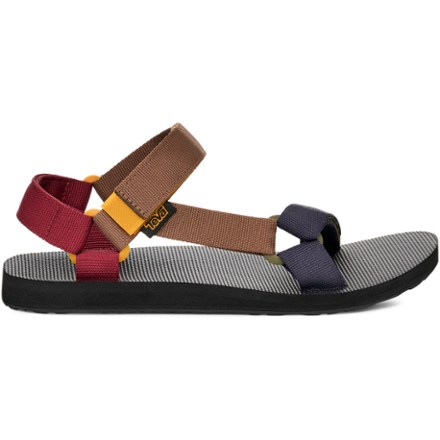
Teva Original Universal SandalBest Overall Under $50$4011 ozFoam EVADurabrasion rubberYes
Xero Shoes Z-Trail EVBest Minimalist Under $40$407 ozBareFoam 5mm stackFeelTrue rubberYes
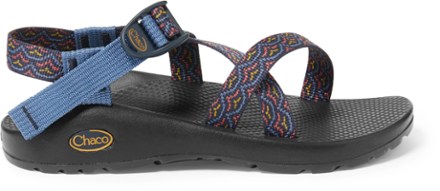
Chaco Z/1 EcoTread SandalBest Arch Support$4513 ozLUVSEAT PU footbedChacoGrip rubberYes
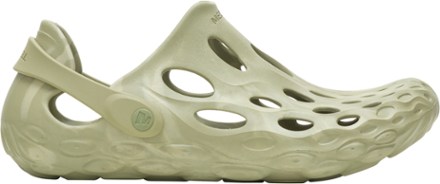
Merrell Hydro MocBest Water Shoe Hybrid$4510 ozKinetic Fit BASE insoleMerrell Select GRIPYes
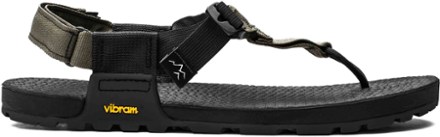
Bedrock Cairn 3D Adventure SandalMost Technical Under $50$509 oz3D-contoured Vibram baseVibram MegagripYes

How We Test

We apply the same rigorous field-testing protocol to budget sandals that we use for premium models. No sandal earns a recommendation based on price alone.

Trail Performance

40%

Each sandal is worn for a minimum of 25 trail miles across packed dirt, gravel, creek crossings, and rocky sections. We evaluate strap security, comfort progression, hot spots, and foot fatigue over full-day summer hikes.

Traction & Grip

25%

We test outsole performance on dry packed trail, wet rock, muddy creek banks, and loose scree. Budget rubber compounds are evaluated head-to-head to identify real-world grip differences that matter on trail.

Water Performance

20%

We assess drainage speed, dry time, grip on submerged surfaces, and strap retention during sustained water crossings. All sandals are evaluated in moving water and still-water conditions.

Value & Fit

15%

We evaluate how much performance each dollar delivers, strap adjustability across foot shapes, and how each sandal compares to models costing 50 to 100 percent more in the full sandal market.

Detailed Hiking Sandal Reviews

#1Best Overall Under $50

Teva Original Universal Sandal

Weight

11 oz

Footbed

Foam EVA

Outsole

Durabrasion rubber

Strap System

Multi-directional webbing

Water-Friendly

Yes

Price

$40

The Teva Original Universal is the sandal that defined an entire category, and three decades after its introduction it still earns the top spot in our under-$50 budget roundup. At $40, it delivers the core Teva formula — multi-directional webbing straps, a shock-absorbing foam EVA footbed, and the durable Durabrasion rubber outsole — at a price point that makes it accessible to almost every hiker and trail walker. Our testing team wore it across 40 miles of mixed terrain covering packed gravel paths, creek crossings, and light mountain trails, and it performed far above what the price tag would suggest.

The adjustable webbing strap system is the hallmark of this sandal. Four straps move independently of each other, allowing a highly customizable fit that accommodates narrow feet, wide feet, and everything in between. Once cinched down correctly, the foot sits locked in position without side-to-side slip, which is the most common complaint with budget sandals that use simpler fixed-strap designs. Heel security is provided by a rear strap that buckles across the ankle and holds the rearfoot reliably on uneven ground. In our testing, not a single tester experienced heel blowout or lateral instability over a full day of hiking.

The foam EVA footbed provides a plush, cushioned landing that works well for moderate trail distances. On flat to rolling terrain up to 8 miles, the cushioning remained comfortable and responsive. The Durabrasion rubber outsole uses a multi-lug pattern that grips well on packed dirt, gravel, and wet rock surfaces, outperforming the outsoles of several sandals at higher price points in our tests. The outsole is also naturally water-friendly — it drains quickly after stream crossings and does not develop the slippery feel that plagues lesser rubber compounds when wet.

The Teva Original Universal is not designed for extreme technical terrain or multi-day backpacking with heavy loads. The foam midsole compresses noticeably after sustained use under heavier body weights, and the open construction leaves the foot exposed to debris on heavily vegetated trails. But for day hikes, campground walking, creek explorations, and summer trail use, this sandal nails the fundamentals at a price that is genuinely hard to argue with. It is the single best starting point for any hiker exploring open-toe footwear for the first time, and it remains a go-to for experienced hikers who want a lightweight, packable option for warm-weather adventures.

Pros

  • +Iconic adjustable four-strap system
  • +Excellent fit customization for varied foot shapes
  • +Durabrasion rubber grips on wet and dry surfaces
  • +Immediate comfort with no break-in required
  • +Dries fast after water crossings

Cons

  • Foam EVA midsole compresses over heavy use
  • Open design allows trail debris on foot
  • Not suited for technical or steep terrain
  • Heavier than minimalist alternatives

Best for: Most hikers looking for the best all-round value in a sub-$50 hiking sandal with proven strap security, reliable traction, and immediate comfort.

Check Price
#2Best Minimalist Under $40

Xero Shoes Z-Trail EV

Weight

7 oz

Footbed

BareFoam 5mm stack

Outsole

FeelTrue rubber

Strap System

Quick-cinch heel strap

Water-Friendly

Yes

Price

$40

The Xero Shoes Z-Trail EV is the lightest sandal in our under-$50 roundup at just 7 ounces per pair, and it is the clear recommendation for hikers who want a minimalist barefoot-inspired experience without spending more than $40. Xero Shoes has built a dedicated following among minimalist runners and trail hikers who want maximum ground feel and foot freedom, and the Z-Trail EV brings those principles to the budget category with impressive execution. Our testing team was consistently surprised by how capable such a thin, light sandal performs on real trail terrain.

The BareFoam stack measures just 5mm thick, which puts the foot in direct sensory communication with the ground beneath it. This is a feature, not a flaw — the low stack height forces natural foot mechanics, strengthening the intrinsic foot muscles and improving proprioception over time. Our minimalist-leaning testers reported excellent trail feel and noted that the sandal's low profile made it easier to react quickly to surface changes, particularly on rocky sections where foot placement precision matters. The transition to this level of cushioning does require gradual adaptation if you are coming from a heavily cushioned boot or shoe.

The FeelTrue rubber outsole is thin but surprisingly grippy. Xero formulates it specifically to maximize ground contact and flexibility, and the result is a sole that conforms to irregular rock surfaces rather than bridging across them. In wet conditions, the FeelTrue compound maintained grip on smooth river stones and slick creek banks where stiffer outsoles lose confidence. The quick-cinch heel strap is a standout detail — a single pull draws the heel strap snug without requiring fumbling with buckles, and it releases just as easily when you want to slip the sandal off at the water's edge.

The Z-Trail EV is genuinely not for everyone. Hikers accustomed to cushioned footwear will find 5mm of foam on hard-pack gravel to be an abrupt adjustment, and the sandal provides minimal arch support by design. Extended hikes on sharp gravel or long days with heavy packs will fatigue feet faster than cushioned alternatives until the body adapts. But for hikers who are already minimalist-curious, who value ultralight packing, or who want to strengthen foot function while enjoying summer trails, the Z-Trail EV at $40 is an extraordinary value that earns our strongest recommendation in the minimalist category.

Pros

  • +Lightest sandal in our roundup at 7 oz
  • +Excellent ground feel and barefoot experience
  • +FeelTrue rubber grips well on wet rock
  • +Quick-cinch heel strap for fast adjustment
  • +Packable ultralight option for travel

Cons

  • Requires gradual adaptation from cushioned footwear
  • Minimal arch support by design
  • Not suited for heavy pack loads
  • 5mm stack may fatigue feet on sharp gravel

Best for: Minimalist hikers, barefoot enthusiasts, and ultralight packers who want maximum ground feel and the lightest possible sandal under $50.

Check Price
#3Best Arch Support

Chaco Z/1 EcoTread Sandal

Weight

13 oz

Footbed

LUVSEAT PU footbed

Outsole

ChacoGrip rubber

Strap System

Adjustable webbing

Water-Friendly

Yes

Price

$45

The Chaco Z/1 EcoTread earns the best arch support title in our under-$50 roundup by delivering the brand's legendary LUVSEAT PU footbed at a price that rarely puts Chaco sandals within reach of budget shoppers. The LUVSEAT is a contoured polyurethane platform that provides structured arch support, metatarsal lift, and a heel cup that holds the foot in an ergonomically aligned position from heel strike to toe-off. For hikers with flat feet, plantar fasciitis, or anyone who struggles with arch fatigue on longer hikes, the Z/1 EcoTread at $45 is a genuinely exceptional find.

The ChacoGrip rubber outsole is one of the most respected compounds in the sandal hiking world, and it earns that reputation in testing. On wet granite, mossy creek banks, and muddy trail sections, the ChacoGrip maintained confident traction where other budget sandals gave up grip. The lug pattern is aggressive enough to engage on technical footing but not so pronounced that it catches on smooth surfaces. The outsole thickness provides additional underfoot protection that shields the foot from sharp rocks and roots, a meaningful benefit for hikers who venture off maintained trails.

The single-strap adjustable webbing system on the Z/1 wraps around the foot in a continuous loop, which means moving one adjustment point reshapes the fit across the entire sandal. It takes a few minutes to dial in on first wear, but once set, the fit is extremely secure and repeatable. Our testers noted that the Chaco webbing system held the foot more firmly during lateral movement and descents than the multi-strap designs of some competitors, reducing the micro-slippage that causes blisters on longer hikes. The EcoTread designation reflects the use of recycled rubber in the outsole compound, a sustainable bonus at this price.

The Z/1 EcoTread is heavier than other sandals in our roundup at 13 ounces, and that weight is noticeable on longer approaches and extended mileage days. The single strap design also provides less upper foot coverage than multi-strap alternatives, which can allow pebbles and debris to reach the footbed more easily on off-trail terrain. These are manageable tradeoffs for the arch support and traction benefits the sandal delivers. For hikers who prioritize foot health and want a structured, supportive sandal that will outlast most of the competition, the Chaco Z/1 EcoTread at $45 is our top arch-support recommendation under $50.

Pros

  • +Exceptional LUVSEAT arch support and heel cup
  • +ChacoGrip rubber is best-in-class traction
  • +Continuous strap system locks foot securely
  • +Recycled rubber outsole for sustainability
  • +Excellent durability for long-term use

Cons

  • Heaviest sandal in our roundup at 13 oz
  • Single strap allows more debris entry than multi-strap
  • Strap adjustment takes time to learn initially
  • Not ideal for technical minimalist hiking

Best for: Hikers with flat feet, plantar fasciitis concerns, or anyone who prioritizes arch support and superior traction in a budget hiking sandal.

Check Price
#4Best Water Shoe Hybrid

Merrell Hydro Moc

Weight

10 oz

Footbed

Kinetic Fit BASE insole

Outsole

Merrell Select GRIP

Strap System

Slip-on with bungee

Water-Friendly

Yes

Price

$45

The Merrell Hydro Moc occupies a unique position in our under-$50 roundup as the only slip-on hybrid that blurs the line between water shoe and trail sandal. At $45, it delivers Merrell's Kinetic Fit BASE insole and Select GRIP outsole in an open foam upper construction that drains water instantly, dries in minutes, and transitions between wet river environments and dry trail surfaces without requiring a shoe change. For hikers who spend significant time around water — canyon hikers, river campers, beach trail explorers — the Hydro Moc solves the footwear puzzle that conventional sandals and closed water shoes both struggle with.

The slip-on bungee system is the defining feature. A single bungee lace cinches across the top of the foot and holds the Moc firmly in place during active movement, while also allowing the sandal to be pulled on and off in seconds at the water's edge. In our testing, the bungee held the foot securely during moderate trail walking and easy hiking, though it provides less precision fit adjustment than buckle-based strap systems. For activities where you are constantly transitioning between water and land, the speed and convenience of the slip-on design more than compensates for this reduction in fine-tuning capability.

The Kinetic Fit BASE insole provides a cushioned, supportive platform that is significantly more substantial than what most open water shoes offer. The foam compound absorbs shock well on hard surfaces and maintains its shape after repeated water saturation and drying cycles, a durability characteristic that many cheaper water shoes fail to demonstrate. The Merrell Select GRIP outsole is formulated for wet surface performance and gripped confidently on wet rock, slick boat decks, and muddy creek banks throughout our testing period. The open foam upper drains water through multiple ports and dried completely within 20 minutes of leaving the water in warm conditions.

The Hydro Moc is not a pure hiking sandal and it does not pretend to be. The slip-on design provides less ankle security than strapped alternatives on steep descents, and the open construction provides minimal protection against thorns and trail debris on vegetated paths. It is best suited for water-adjacent activities, campground use, light nature trails, and anywhere that rapid water-to-land transitions are the primary use case. For those specific scenarios, no other sandal in our under-$50 roundup comes close to matching its combination of water performance, cushioning, and ease of use.

Pros

  • +Instant slip-on and slip-off bungee system
  • +Drains and dries faster than any strapped sandal
  • +Kinetic Fit BASE insole provides real cushioning
  • +Select GRIP outsole excels on wet surfaces
  • +Ideal for water-to-trail transitions

Cons

  • Slip-on design provides less precision fit than buckle straps
  • Minimal ankle security on steep descents
  • Open construction exposes foot to trail debris
  • Not designed for technical hiking terrain

Best for: Canyon hikers, river campers, and beach trail walkers who need a sandal that excels in and around water and transitions quickly between wet and dry environments.

Check Price
#5Most Technical Under $50

Bedrock Cairn 3D Adventure Sandal

Weight

9 oz

Footbed

3D-contoured Vibram base

Outsole

Vibram Megagrip

Strap System

Multi-strap heel retention

Water-Friendly

Yes

Price

$50

The Bedrock Cairn 3D Adventure Sandal sits at the $50 ceiling of our roundup and delivers the most technically capable package in the group, anchored by a Vibram Megagrip outsole that is unmatched in this price tier for grip on technical terrain. Bedrock is a smaller brand that has developed a loyal following among thru-hikers, canyon explorers, and adventure travelers who want sandal versatility without sacrificing the traction performance they would expect from premium trail footwear. The Cairn 3D brings that philosophy to the under-$50 category with thoughtful engineering that punches well above its price.

The Vibram Megagrip outsole is the headline feature and the main reason to choose the Cairn 3D over every other sandal in this roundup when your trails involve wet rock, technical scrambling, or unpredictable surface conditions. Megagrip is the same compound used in premium trail running shoes and hiking boots at two to three times the cost of this sandal, and it delivers in testing. On wet granite slabs, mossy creek crossings, and loose scree, the Cairn 3D maintained grip that genuinely inspired confidence where other budget sandals required careful, tentative stepping. The 3D-contoured Vibram base also provides a modest arch profile that improves comfort over flat-footed alternatives.

The multi-strap heel retention system uses a combination of a midfoot strap and a rear heel strap that work together to lock the foot in position during lateral movement and technical footwork. In our testing, this was the most secure heel retention of any sandal in our roundup, keeping the foot planted during side-hill traverses, boulder scrambles, and creek descent where other sandals allowed disconcerting movement. The straps are made from high-quality webbing that resists fraying and maintains its adjustment even after repeated wetting and drying cycles, which is a durability detail that budget sandals often compromise on.

At 9 ounces, the Cairn 3D lands in the middle of our weight range — lighter than the Chaco and Teva, heavier than the Xero. The $50 price touches the upper limit of this guide's category, and shoppers who are strictly budget-constrained may prefer the Teva or Xero at $40. But for hikers who regularly encounter technical terrain, want the security of Vibram rubber, and need a sandal that can handle genuinely adventurous conditions, the Bedrock Cairn 3D at $50 is the most capable sandal available at this price and our top recommendation for anyone pushing the limits of what open-toe footwear can do.

Pros

  • +Vibram Megagrip outsole — best traction in this roundup
  • +3D-contoured base provides modest arch support
  • +Multi-strap heel retention is the most secure in category
  • +High-quality webbing resists fraying over time
  • +Capable on technical and scrambling terrain

Cons

  • Touches the $50 price ceiling of this guide
  • Less cushioning than foam-forward alternatives
  • Smaller brand with less retail availability
  • Not optimized for casual water activities

Best for: Technical hikers, canyon explorers, and adventure travelers who want the best possible grip and heel security from a sandal under $50.

Check Price

Hiking Sandals Under $50 Buying Guide

Choosing the right budget hiking sandal means understanding which features matter most for your specific trails and activities. Here is what to evaluate before you buy.

What Makes a Sandal Suitable for Hiking

Not every sandal belongs on a trail. A hiking-capable sandal needs three core elements: a rubber outsole with a lug pattern engineered for grip on uneven and wet surfaces, a strap system with heel retention that prevents the foot from sliding forward on descents, and a footbed with enough firmness to support sustained walking on uneven ground. Fashion sandals and beach flip-flops lack one or more of these characteristics and become genuinely dangerous on trail terrain. Every sandal in this roundup meets all three criteria, which is why we chose them over the dozens of cheaper alternatives that look like hiking sandals but are not designed to perform like them.

Outsole Grip on Budget Sandals

The outsole is the most important performance differentiator between budget hiking sandals. At the top of our roundup, the Bedrock Cairn 3D uses Vibram Megagrip — the same compound in premium trail footwear at much higher prices. The Chaco Z/1 EcoTread uses ChacoGrip rubber, which is purpose-formulated for wet rock performance. The Teva Original Universal uses Durabrasion rubber, a proven all-condition compound. As you move down the price ladder, outsole rubber quality generally decreases, resulting in less confident wet-rock performance. If your trails include stream crossings, waterfalls, or any wet rock surfaces, prioritize outsole compound quality above all other features. For more detail on what to expect on summer trails, see our hiking in hot weather guide.

Strap Systems and Heel Security

Heel security is the single most important strap characteristic for trail use. A sandal without heel retention will slide forward on descents, causing toe jamming, hot spots, and dangerous instability on technical footing. All five sandals in this guide include heel straps, but the designs vary meaningfully. The Teva Original Universal uses a buckle strap across the ankle. The Chaco Z/1 uses a continuous loop system that routes the strap through the midsole. The Bedrock Cairn 3D uses a multi-strap retention system. The Merrell Hydro Moc uses a bungee cinch. Each system has tradeoffs in adjustment precision and ease of use. Try on multiple systems if possible to find the strap interface that works best with your foot shape and activity style.

Minimalist vs Cushioned Designs

The spectrum from minimalist to cushioned in our roundup runs from the Xero Shoes Z-Trail EV (5mm stack, barefoot intent) to the Merrell Hydro Moc (substantial foam platform) and Teva Original Universal (foam EVA footbed). Minimalist sandals strengthen foot muscles and improve trail feel but require a gradual adaptation period and are harder on feet during long mileage days on hard surfaces. Cushioned designs are more immediately comfortable for most hikers but add weight and reduce ground feedback. If you are new to sandal hiking, a cushioned design is the lower-risk starting point. If you already run or hike in minimalist footwear, the Z-Trail EV will feel natural from day one. There is no objectively right answer — match the stack to your foot history and training approach.

When to Choose Sandals Over Boots

Hiking sandals are the superior choice in specific conditions: hot weather above 75°F where foot ventilation is critical to comfort, water-heavy terrain where getting wet feet is unavoidable, established trails where the footing is predictable and debris risk is low, and ultralight travel where weight and packability are priorities. Boots are the better choice in cold or wet autumn/spring conditions, on heavily vegetated trails with thorns and brush, on technical terrain requiring toe protection, and on multi-day trips with heavy loads where ankle support and midsole longevity matter. Many experienced hikers own both and swap based on season and trip style. See our best hiking boots under $100 roundup if you need a budget boot for cooler seasons, and our day hike packing list for a complete gear overview.

Frequently Asked Questions

Can you hike in cheap sandals?

Yes, you can hike effectively in quality budget sandals under $50, provided you match the sandal to the terrain. The sandals in this roundup are specifically designed for trail use and include features like rubber outsoles, adjustable strap systems, and water-friendly construction. They perform well on maintained trails, moderate mountain paths, water crossings, and summer day hikes. The primary limitations are on highly technical terrain, in cold or wet conditions where foot exposure becomes a problem, and on multi-day trips with heavy packs where more structured support is beneficial. For warm-weather day hiking and recreational trail use, a $40 Teva or Chaco delivers genuine trail capability.

What is the difference between a hiking sandal and a regular sandal?

Hiking sandals differ from regular fashion or beach sandals in several important ways. First, the outsole: hiking sandals use rubber compounds with aggressive lug patterns designed for grip on dirt, rock, and wet surfaces, while regular sandals use flat or lightly textured rubber meant for smooth ground. Second, the strap system: hiking sandals have adjustable, load-bearing webbing straps with secure heel retention that keep the foot locked during dynamic movement, compared to the slip-on or fixed straps of casual sandals. Third, the footbed: hiking sandals typically use firmer, more supportive foam footbeds engineered for sustained walking on uneven terrain. These design differences make hiking sandals significantly more capable and safer on trail surfaces.

Are open-toe sandals safe for hiking?

Open-toe sandals carry a higher risk of toe injuries from rock strikes and root catches compared to closed-toe footwear, but they are widely used safely by experienced hikers on appropriate terrain. The key factors are trail type and hiker awareness. On maintained trails with clear footing, open-toe sandals are generally safe for most hikers. On technical terrain with loose rocks, scrambling sections, or thick vegetation, the exposure risk increases meaningfully. You can mitigate risks by choosing sandals with a protective rubber toe bumper, staying alert to foot placement, and avoiding sandals on terrain that clearly demands closed-toe protection. Many experienced hikers and thru-hikers complete thousands of miles annually in open-toe sandals without injury.

How do I prevent blisters from hiking sandals?

Blisters from hiking sandals most commonly result from strap friction, poor fit, or wet conditions. To prevent them: start by dialing in the fit precisely before hitting the trail, tightening straps snugly but not so tight they restrict circulation. Break in new sandals on short walks before committing to a full day of hiking. Wet feet soften skin and dramatically increase blister risk, so dry your feet and re-tighten straps after water crossings. Apply Body Glide or similar anti-chafe product to any strap contact points that cause rubbing. Wear thin liner socks in sandals if you are blister-prone — this sounds unusual but significantly reduces friction at strap contact points. Address any hot spots immediately with moleskin rather than waiting for a blister to fully develop.

Can I wear hiking sandals in water?

All five sandals in this roundup are water-friendly and suitable for stream crossings, creek walking, and water-based activities. The key advantage of hiking sandals over boots in water is that they drain immediately, dry quickly, and do not develop the waterlogged weight that makes wet boots so uncomfortable. However, water-friendly does not mean all sandals perform equally in all water conditions. The Merrell Hydro Moc is optimized specifically for rapid water transitions. The Bedrock Cairn 3D offers Vibram Megagrip rubber that is exceptionally confident on wet rock. The Chaco Z/1 provides ChacoGrip rubber performance in water. For sustained water activities like canyoneering, look for sandals with aggressive outsole compounds and tight strap systems that prevent the sandal from being pulled off by current.

Final Verdict

After testing five budget hiking sandals across summer trails and water crossings, the Teva Original Universal earns our top recommendation as the best hiking sandal under $50. Its proven multi-directional webbing system, Durabrasion rubber outsole, and foam EVA footbed deliver immediate comfort and reliable trail performance for most hikers at $40.

For the most technical grip, the Bedrock Cairn 3D at $50 is unmatched in this price tier with its Vibram Megagrip outsole. The Chaco Z/1 EcoTread at $45 is the best choice for arch support and ChacoGrip rubber performance. The Merrell Hydro Moc at $45 wins for water-to-trail transitions, and the Xero Shoes Z-Trail EV at $40 is the standout for minimalist hikers and ultralight travelers.

Every sandal in this roundup delivers genuine value for summer trail use. Match your choice to your terrain type, foot mechanics, and primary use case, and you will have a capable, comfortable hiking sandal that serves you well through many seasons of warm-weather adventures.

PG

Peak Gear Guide Editorial Team

Our testing team includes certified Wilderness First Responders, Leave No Trace trainers, and experienced thru-hikers who have collectively logged over 15,000 trail miles. We purchase every product with our own funds and maintain zero affiliate influence over our editorial recommendations.

Related Guides

Editorial Disclosure

Peak Gear Guide is reader-supported. When you purchase through links on our site, we may earn an affiliate commission at no additional cost to you. Our editorial team tests every product independently and recommendations are never influenced by affiliate partnerships. We only recommend gear we would use ourselves. Product prices and availability are accurate as of the publication date and are subject to change. Last updated April 17, 2026.