Camping stove boiling water at a mountain campsite with golden sunrise light
Updated March 2026

Best Camping Stoves of 2026

Five field-tested picks after 30+ backcountry meals. From ultralight gram-counters to integrated boil machines, these stoves earned our recommendation.

Quick Answer

The best camping stove for most backpackers in 2026 is the Jetboil Flash for its unmatched boil speed and fuel efficiency. For ultralight hikers who want simmer control and cookware flexibility, the MSR PocketRocket Deluxe weighs just 2.9 oz and costs only $70.

Finding the Best Camping Stove in 2026

The best camping stove turns your backcountry campsite into a functional kitchen, providing hot meals and warm drinks that make the difference between an enjoyable trip and a miserable one. Whether you are boiling water for a quick freeze-dried dinner after a long day on the trail or simmering a proper backcountry curry for a group of friends, the stove you carry determines your cooking capabilities, your pack weight, and your fuel budget for the entire trip.

For our 2026 camping stove roundup, we tested five of the most popular models across 30 backcountry meals in conditions ranging from calm summer evenings in the Sierra Nevada to windy autumn mornings above treeline in Colorado. We measured boil times, fuel consumption, wind resistance, simmer control, and real-world usability during actual cooking sessions. Every stove was used with its intended cookware setup and evaluated against the needs of the hikers who are most likely to carry it. If you are building your first backpacking gear kit, the stove is one of the most important decisions you will make.

This year the market continues to bifurcate into two camps: integrated systems that prioritize speed and efficiency, and standalone burners that offer versatility and lighter weight. Both approaches have merit, and the best choice depends entirely on how you cook in the backcountry. Our detailed reviews below will help you understand the tradeoffs so you can choose the stove that matches your cooking style, your trip length, and your budget.

Watch: Side-by-side comparison of the best backpacking stoves for 2026 with boil tests, weight checks, and field cooking demos.

Quick Comparison Table

StoveCategoryPriceWeightBoil Time (1L)
Jetboil FlashBest Overall$11513.1 oz100 sec (1L)
MSR PocketRocket DeluxeBest Simmer Control$702.9 oz210 sec (1L)
Soto WindMasterBest Wind Resistance$802.6 oz240 sec (1L)
Snow Peak LiteMaxBest Premium Build$651.9 oz270 sec (1L)
BRS-3000T UltralightBest Budget$200.9 oz300 sec (1L)

How We Test

Every stove in our roundup undergoes a structured testing protocol that goes beyond manufacturer spec sheets. We cook real meals in real conditions to reveal how these stoves actually perform when you need them most.

Boil Speed

30%

We time multiple one-liter boil tests at sea level and at altitude, using standardized water temperature and ambient conditions. Each stove is tested at least six times to calculate a reliable average.

Fuel Efficiency

25%

We weigh fuel canisters before and after standardized boil cycles to calculate grams of fuel consumed per liter boiled. Integrated systems with heat exchangers typically outperform standalone burners.

Wind Resistance

25%

We test each stove with a controlled crosswind using a floor fan at 15 mph. Stoves are evaluated both with and without windscreens to measure real-world degradation in performance.

Usability & Weight

20%

We evaluate ignition reliability, flame control precision, pot stability, pack size, and total system weight including required accessories like windscreens and lighters.

Detailed Camping Stove Reviews

#1Best Overall

Jetboil Flash

Weight

13.1 oz

Boil Time

100 sec (1L)

Fuel Type

Isobutane-propane canister

Ignition

Piezo push-button

Price

$115

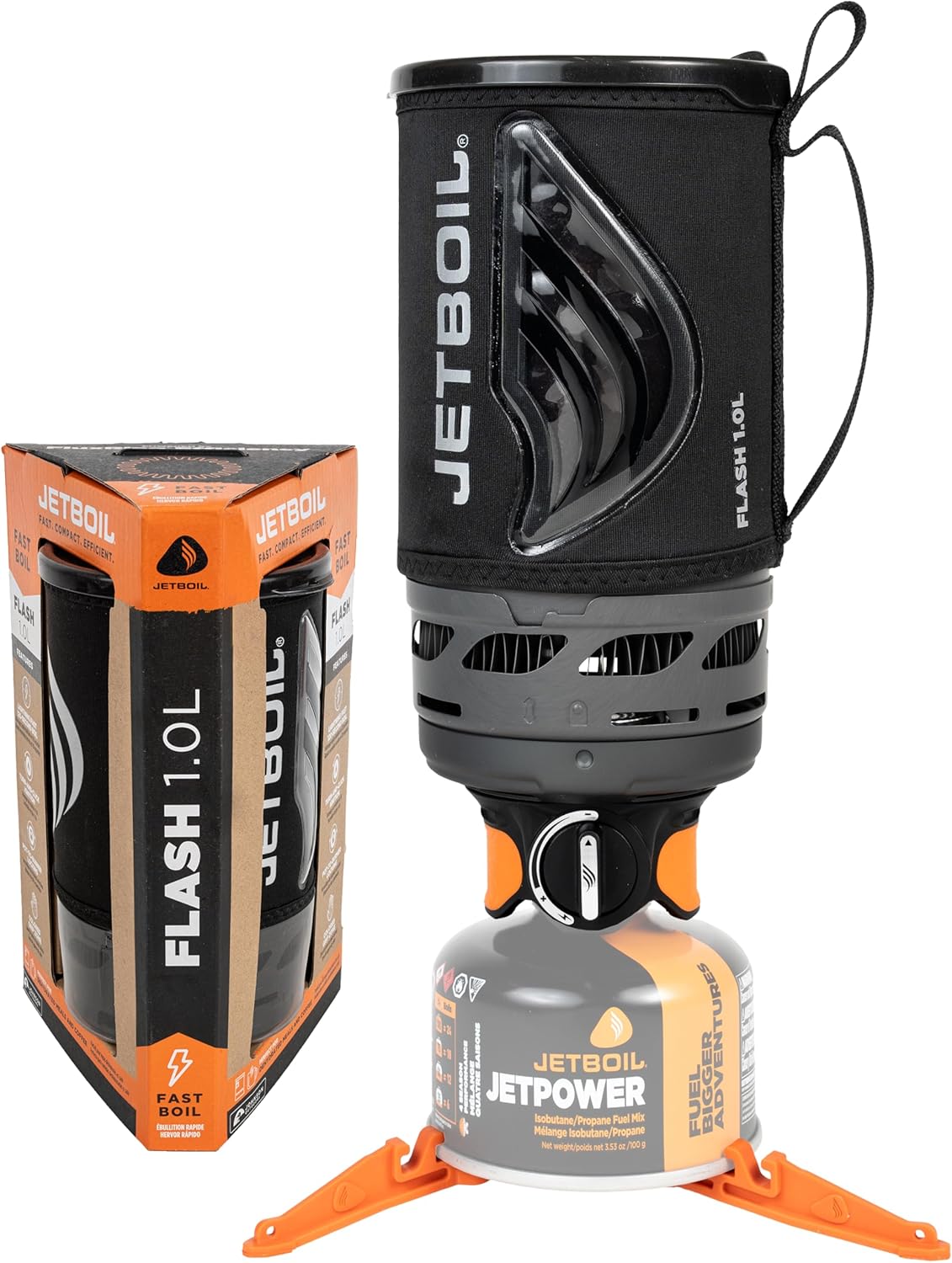
The Jetboil Flash has been the benchmark integrated camping stove for over a decade, and the 2026 version continues to set the standard for fast boil times and foolproof operation. In our field tests across three different elevations, the Flash consistently brought one liter of water to a rolling boil in around 100 seconds, which is roughly 40 percent faster than standalone burner-and-pot setups. For hikers whose backcountry cooking revolves around boiling water for freeze-dried meals, instant coffee, and oatmeal, this speed advantage compounds into meaningful time savings across a multi-day trip.

The integrated FluxRing heat exchanger on the bottom of the cooking cup is what makes the Flash so efficient. By channeling flame across a wider surface area, it extracts more energy from the fuel and wastes less heat to the surrounding air. This translates to fuel savings as well. During our testing we averaged 12 liters of boiled water per 100-gram fuel canister, which is enough for approximately six days of two-person cooking when you are primarily rehydrating meals. That fuel efficiency matters both for weight-conscious hikers and for anyone trying to minimize the number of canisters they carry.

Setup is dead simple. The cooking cup clicks onto the burner, the piezo igniter lights the flame on the first press in most conditions, and the neoprene cozy keeps the cup insulated so you can handle it without burning your hands. The translucent window strip on the cozy changes color to indicate water temperature, a small but genuinely useful feature when you are cooking in low light. The entire system nests compactly with room for a 100-gram fuel canister inside the cup.

The main limitation of the Flash is versatility. It excels at boiling water but is not designed for simmering sauces, frying, or any cooking that requires precise flame control. The integrated cup also means you cannot use a wider pan or pot without purchasing a separate pot support accessory. If your backcountry menu goes beyond boil-and-pour meals, you will want a standalone burner. But for the majority of backpackers who prioritize speed, simplicity, and fuel efficiency, the Jetboil Flash remains the best camping stove you can buy in 2026.

Pros

  • +Fastest boil time in our test group
  • +Exceptional fuel efficiency with FluxRing
  • +Reliable piezo ignition in most conditions
  • +Compact nested storage with canister inside
  • +Color-changing heat indicator on cozy

Cons

  • No simmer control for actual cooking
  • Limited to integrated cup without adapter
  • Heavier than ultralight standalone burners
  • Wind performance average without windscreen

Best for: Backpackers who primarily boil water for freeze-dried meals and want the fastest, most fuel-efficient system available.

Check Price
#2Best Simmer Control

MSR PocketRocket Deluxe

Weight

2.9 oz

Boil Time

210 sec (1L)

Fuel Type

Isobutane-propane canister

Ignition

Piezo push-button

Price

$70

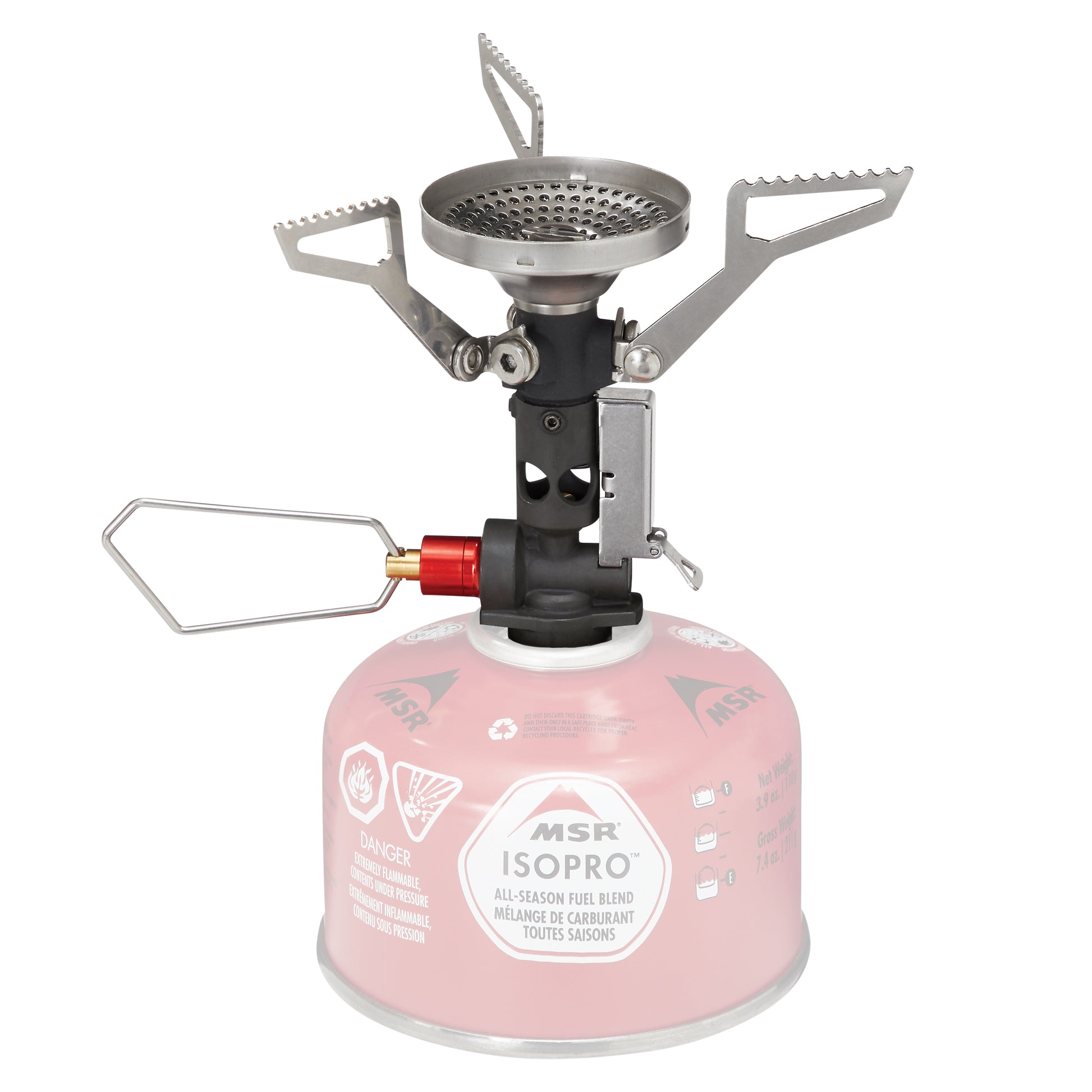
The MSR PocketRocket Deluxe is the stove that earned legendary status among backpackers for doing one thing exceptionally well: providing a reliable, lightweight flame that pairs with whatever pot or pan you bring. At just 2.9 ounces, it is the lightest stove in our roundup by a wide margin, and its compact folding design takes up less space than a deck of playing cards. For hikers who want maximum cooking flexibility without carrying extra weight, the PocketRocket Deluxe is the answer.

What separates the Deluxe from the standard PocketRocket is the pressure regulator that maintains consistent flame output as the fuel canister empties and as temperatures drop. In our cold-weather tests down to 25 degrees Fahrenheit, the Deluxe maintained a usable flame while unregulated stoves sputtered and lost output. The precise valve also delivers genuine simmer capability, which means you can cook pasta, rice, sauces, and anything else that requires holding a low heat without scorching. This is a meaningful upgrade for backpackers whose trail menus go beyond boil-and-pour meals.

Boil time is slower than integrated systems like the Jetboil Flash, clocking in around three and a half minutes for one liter in our tests. That is the tradeoff for versatility. You can set any pot up to about two liters on the fold-out support arms, which gives you flexibility to cook for one, two, or even three people depending on your cookware. The arms are sturdy enough to hold a full pot steadily, and the broad base provides good stability on flat surfaces, though you will want to use a canister stand on uneven ground.

Wind is the PocketRocket Deluxe's weakness. The open flame is exposed on all sides, and even a moderate breeze dramatically increases boil time and fuel consumption. A lightweight foil windscreen is essential gear when cooking with this stove in any environment that is not perfectly sheltered. MSR includes a plastic carrying case that protects the folded stove and igniter mechanism during transport. At $70, the PocketRocket Deluxe offers the best ratio of weight savings to cooking performance of any stove we tested.

Pros

  • +Ultralight at only 2.9 ounces
  • +Excellent simmer control for real cooking
  • +Pressure regulator for cold-weather reliability
  • +Compatible with any standard pot or pan
  • +Affordable price point

Cons

  • Very susceptible to wind without windscreen
  • Slower boil time than integrated systems
  • No integrated pot or heat exchanger
  • Support arms can wobble with large pots

Best for: Weight-conscious backpackers who want real cooking versatility with simmer control and the freedom to use their own cookware.

Check Price
#3Best Wind Resistance

Soto WindMaster

Weight

2.6 oz

Boil Time

240 sec (1L)

Fuel Type

Isobutane-propane canister

Ignition

Piezo push-button

Price

$80

The Soto WindMaster solves the biggest problem with lightweight canister stoves: wind. Its concave burner head creates a recessed flame pocket that shields the fire from crosswinds without requiring a separate windscreen. In our controlled wind tests using a floor fan to simulate 15 mile-per-hour gusts, the WindMaster boiled water only 30 seconds slower than in calm conditions, while competing stoves lost 50 to 100 percent of their efficiency in the same wind. On exposed ridgelines and open campsites where wind is a constant companion, this advantage is transformative.

The micro-regulator technology maintains consistent output across a wide range of temperatures and canister pressures. Like the MSR PocketRocket Deluxe, this means reliable performance in cold weather and consistent cooking behavior whether your canister is full or nearly empty. Simmer control is good but not quite as precise as the MSR. You can hold a low flame for gentle cooking, but the lowest setting sometimes flickers out in gusty conditions. For the vast majority of backcountry cooking tasks, the flame control is more than adequate.

At 2.6 ounces with the included 3-flex pot support, the WindMaster is the lightest stove in our entire roundup. The 3-flex support accommodates pots from 400ml mugs up to 1.5-liter cookware, and the trio of flexible arms grip pot bottoms securely. Soto also sells a 4-flex support separately for larger pots, which is worth the small investment if you cook for two. The piezo ignition worked reliably through our entire testing period, including at elevation above 10,000 feet where some igniter mechanisms become unreliable.

The WindMaster packs down to roughly the size of your fist and stores easily inside most cookpots. Build quality is excellent, with tight tolerances on the valve and burner head that inspire confidence in long-term durability. The one area where it trails the competition is raw boil speed. At roughly four minutes per liter in calm conditions, it is noticeably slower than the Jetboil Flash and a touch slower than the PocketRocket Deluxe. But if you regularly camp in windy environments, the WindMaster's wind resistance alone justifies choosing it over faster alternatives that lose their efficiency the moment a breeze picks up.

Pros

  • +Outstanding wind resistance without a windscreen
  • +Lightest stove in the roundup at 2.6 oz
  • +Micro-regulator for cold-weather performance
  • +Reliable piezo ignition at altitude
  • +Compact and durable construction

Cons

  • Slower boil time than integrated systems
  • Simmer can flicker in heavy gusts
  • 3-flex support limits max pot size
  • Higher price than MSR PocketRocket Deluxe

Best for: Hikers who frequently camp in exposed, windy environments and want a stove that performs reliably without fussing with windscreens.

Check Price
#4Best Premium Build

Snow Peak LiteMax

Weight

1.9 oz

Boil Time

270 sec (1L)

Fuel Type

Isobutane-propane canister

Ignition

Manual (no piezo)

Price

$65

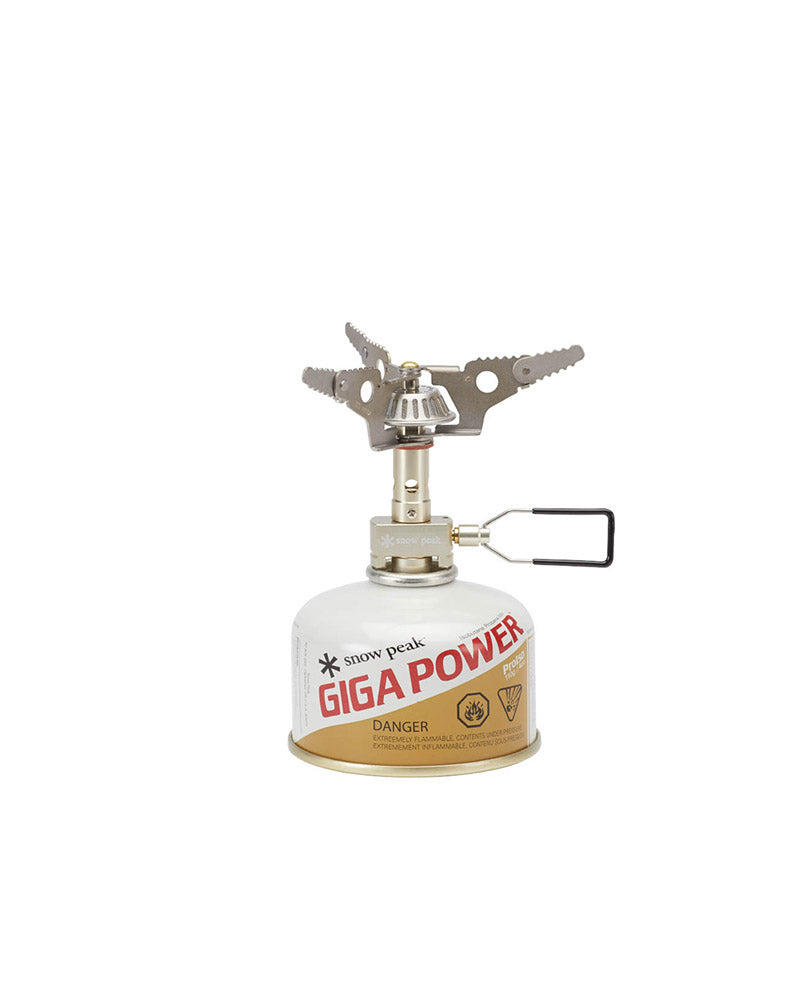
The Snow Peak LiteMax is the kind of gear that makes minimalists smile. Weighing just 1.9 ounces, it is the lightest functional backpacking stove on the market and a masterclass in Japanese engineering precision. Every gram has been considered, from the titanium construction to the thin-but-sturdy pot supports to the compact folding mechanism that reduces the entire stove to a size smaller than a tennis ball. For ultralight purists who agonize over every ounce in their pack, the LiteMax is the stove that removes weight guilt from cooking.

Performance is respectable for such a minimal design. Boil times averaged around four and a half minutes per liter in our tests, which is slower than bulkier stoves but perfectly acceptable for solo cooking. The flame spreads well across the burner head, creating a relatively even heat distribution that works fine for both boiling water and gentle simmering. The valve provides smooth flame adjustment, though the lack of a pressure regulator means output decreases as the canister runs low and in colder temperatures below freezing.

Snow Peak intentionally omits the piezo igniter to save weight, which means you need to carry a lighter or matches as a backup. For ultralight hikers, this is a non-issue since you should always carry a backup fire-starting method anyway. The three pot supports fold out to accommodate pots up to about 1.5 liters comfortably, though the narrow stance means extra care is needed when cooking with wide, flat pans. A canister stand is recommended for stability, especially on uneven terrain.

The titanium construction is the standout feature beyond weight savings. It is virtually indestructible under normal use, resists corrosion completely, and will outlast half a dozen aluminum stoves before showing any wear. Snow Peak backs this with a lifetime warranty that reflects their confidence in the build quality. At $65, the LiteMax sits at a surprisingly accessible price point for titanium gear, making it an excellent value proposition for hikers who want to invest in a stove that will last decades of trail use.

Pros

  • +Lightest stove available at 1.9 ounces
  • +Titanium construction is virtually indestructible
  • +Smooth flame control for simmering
  • +Compact folding design packs tiny
  • +Lifetime warranty from Snow Peak

Cons

  • No piezo igniter requires separate lighter
  • No pressure regulator for cold weather
  • Narrow pot supports limit stability
  • Poor wind resistance without a windscreen

Best for: Ultralight backpackers and thru-hikers who count every gram and want the lightest possible stove built from premium materials.

Check Price
#5Best Budget

BRS-3000T Ultralight

Weight

0.9 oz

Boil Time

300 sec (1L)

Fuel Type

Isobutane-propane canister

Ignition

Manual (no piezo)

Price

$20

The BRS-3000T has become something of a legend in the ultralight community, and at $20 it is the stove that proves you do not need to spend three figures to cook a hot meal in the backcountry. Weighing less than one ounce, it is absurdly light, fitting in the palm of your hand with room to spare. Thru-hikers on the Appalachian Trail and Pacific Crest Trail have racked up thousands of miles with this stove, and its combination of minimal weight and minimal cost makes it the entry point for anyone building a lightweight cooking kit on a budget.

Performance is exactly what you would expect from a sub-one-ounce stove. Boil times hover around five minutes per liter, which is the slowest in our test group but still perfectly functional for rehydrating freeze-dried meals and making hot drinks. The flame is concentrated in a narrow column, creating a hot spot in the center of your pot. This means uneven heating for anything beyond boiling water, so simmering and actual cooking require constant stirring and attention. For the boil-water-and-pour workflow that most backpackers follow, this limitation is acceptable.

The three folding pot supports are the most common concern with the BRS-3000T. They are thin and flex noticeably under a full pot, which creates a tippy feeling that requires careful placement on a level surface. We strongly recommend using a canister stabilizer accessory, which adds negligible weight and transforms the stability from nerve-wracking to manageable. The valve provides basic flame adjustment but lacks the precision of more expensive stoves. Wind performance is poor, and a lightweight foil windscreen is essential equipment when cooking with this stove anywhere other than a sheltered forest campsite.

Durability is the question mark with the BRS-3000T. The alloy construction is lighter than titanium alternatives but more susceptible to wear over time. Some long-term users report the pot supports loosening after several hundred uses, and the valve can develop a slight leak after years of heavy use. For weekend warriors and occasional backpackers, the BRS-3000T will last for years without issue. For thru-hikers putting daily miles on their stove, it may need replacement every one to two years. At $20, replacement is painless. This stove's value proposition is hard to argue with for anyone who wants to try ultralight cooking without financial commitment.

Pros

  • +Incredibly affordable at just $20
  • +Sub-one-ounce weight is unmatched
  • +Small enough to fit anywhere in your pack
  • +Functional for basic boiling tasks
  • +Proven on thousands of thru-hiker miles

Cons

  • Tippy pot supports require careful setup
  • Concentrated flame creates hot spots
  • Poor wind resistance without windscreen
  • Durability concerns with heavy long-term use

Best for: Budget hikers, thru-hikers counting every gram and every dollar, and anyone who wants a backup stove that weighs almost nothing.

Check Price

Camping Stove Buying Guide

Choosing the right camping stove means understanding how the core design differences translate into real-world cooking performance. Here are the five factors that matter most when selecting a stove for your backcountry kit.

Integrated vs Standalone Systems

Integrated stove systems bundle the burner and pot together with a heat exchanger for maximum fuel efficiency and boil speed. They are the best choice if your cooking is limited to boiling water for freeze-dried meals, coffee, and oatmeal. Standalone burners are just the flame source, giving you freedom to pair them with any pot, pan, or cookware. They weigh less, cost less, and offer genuine cooking versatility including simmer control for dishes beyond boil-and-pour. If your backcountry menu includes anything that requires controlled heat, a standalone burner is the right choice.

Fuel Types and Efficiency

Isobutane-propane canisters are the dominant fuel type for backpacking stoves because they are clean, easy to use, and available at virtually every outdoor retailer. They perform well in temperatures above 20 degrees Fahrenheit and at elevations below 15,000 feet. Liquid fuel stoves that burn white gas are better for extreme cold, international travel where canisters are unavailable, and expedition-length trips where fuel resupply is limited. Alcohol stoves are the simplest and cheapest option but offer poor boil times and no flame control. For most backpackers building a day hike or weekend kit, canister stoves are the right choice.

Wind Resistance

Wind is the single biggest enemy of backcountry cooking efficiency. A moderate breeze can double your boil time and fuel consumption, turning a five-minute meal into a fifteen-minute ordeal. Some stoves, like the Soto WindMaster, solve this with recessed burner heads that shield the flame. Others require a separate lightweight foil windscreen positioned around the stove and pot. Never wrap a windscreen around a canister stove in a way that traps heat against the fuel canister, as this creates an explosion risk. Position windscreens to block lateral wind while allowing heat to rise away from the canister.

Weight Considerations

Stove weight matters, but total cooking system weight matters more. A one-ounce stove that requires a separate windscreen, lighter, and pot adds up quickly when you account for all the accessories. Integrated systems like the Jetboil Flash weigh more as a unit but include everything you need in a single package. When comparing stoves, add up the complete system weight including fuel canister, cookware, windscreen, and ignition source. For thru-hikers and family campers, the weight calculus is very different, so match your priority to your trip style.

Ignition and Reliability

Piezo igniters built into stoves like the Jetboil Flash and MSR PocketRocket Deluxe add convenience but are not infallible. They can fail at high altitude, in wet conditions, and after extended use. Always carry a mini lighter or waterproof matches as a backup regardless of whether your stove has a built-in igniter. Stoves without piezo igniters, like the Snow Peak LiteMax and BRS-3000T, save a fraction of an ounce by omitting this feature, which is a reasonable tradeoff if you always carry a lighter anyway. Clean your water filter after every trip and carry purification tablets as a backup, just as you would with your hiking water filter.

Frequently Asked Questions

What type of camping stove is best for backpacking?

Canister stoves that burn isobutane-propane fuel are the best choice for most backpackers. They are lightweight, compact, require no priming or maintenance, and offer instant flame control. Integrated systems like the Jetboil Flash are ideal if you primarily boil water for freeze-dried meals. Standalone burners like the MSR PocketRocket Deluxe or Soto WindMaster offer more versatility for actual cooking. Liquid fuel stoves are better for international travel and extreme cold but are heavier and more complex to operate.

How long does a camping stove fuel canister last?

A standard 100-gram isobutane-propane canister provides approximately 60 minutes of burn time, which is enough to boil roughly 10 to 12 liters of water depending on your stove's efficiency. For a solo backpacker cooking two meals per day of freeze-dried food, a 100-gram canister lasts approximately four to five days. A 230-gram canister extends that to roughly eight to twelve days. Factors that reduce efficiency include wind, cold temperatures, altitude, and using a stove without a windscreen.

Can you use a camping stove inside a tent?

You should never use a camping stove inside a sealed tent due to the risk of carbon monoxide poisoning and fire. The combustion process depletes oxygen and produces carbon monoxide, which can be lethal in an enclosed space within minutes. Some vestibule-cooking setups exist, but they require the vestibule to be well-ventilated with the main tent body sealed. Even in a vestibule, the risk of tent fabric ignition is significant. Cook outside your tent or under a tarp with open sides whenever possible.

Do camping stoves work at high altitude?

Canister stoves work at high altitude but with reduced efficiency. The lower air pressure at elevation means less oxygen for combustion, which results in a weaker flame and slower boil times. Above 10,000 feet, expect boil times to increase by 20 to 30 percent compared to sea-level performance. Stoves with pressure regulators, like the MSR PocketRocket Deluxe and Soto WindMaster, handle altitude better because they maintain consistent fuel output regardless of canister pressure. Liquid fuel stoves generally outperform canister stoves above 15,000 feet.

How do I dispose of empty camping stove canisters?

Empty isobutane-propane canisters should be fully depressurized before disposal. Run the stove until no fuel remains, then use a canister puncture tool like the Jetboil CrunchIt to safely puncture the empty canister and release any residual pressure. Once punctured, the canister can be recycled as scrap metal at most recycling centers. Never puncture a canister that still contains fuel, and never throw pressurized canisters in a campfire or regular trash. Some outdoor retailers also accept empty canisters for recycling.

What is the difference between integrated and standalone stoves?

Integrated stove systems like the Jetboil Flash combine the burner and cooking pot into a single unit with a heat exchanger that maximizes fuel efficiency and boil speed. They excel at boiling water quickly but offer limited cooking versatility because you are locked into the included pot. Standalone burners like the MSR PocketRocket Deluxe and Soto WindMaster are just the burner unit, allowing you to use any pot, pan, or cookware you choose. They are lighter, more versatile, and cheaper, but less fuel-efficient and slower at boiling water than integrated systems.

Final Verdict

After cooking 30 backcountry meals across five stoves in varied conditions, the Jetboil Flash earns our top recommendation as the best camping stove of 2026. Its combination of blazing boil speed, exceptional fuel efficiency, and foolproof operation makes it the right choice for the majority of backpackers who build their meals around boiling water.

For hikers who want real cooking versatility at minimal weight, the MSR PocketRocket Deluxe delivers excellent simmer control and works with any cookware for just $70 and 2.9 ounces. If wind is your primary nemesis, the Soto WindMaster provides consistent performance in conditions that cripple other stoves.

Ultralight purists will appreciate the Snow Peak LiteMax for its premium titanium build and sub-two-ounce weight, while budget-conscious hikers and thru-hikers can get on trail for just $20 with the surprisingly capable BRS-3000T. Match your stove choice to your cooking style, and you will eat well on every trip.

PG

Peak Gear Guide Editorial Team

Our testing team includes certified Wilderness First Responders, Leave No Trace trainers, and experienced thru-hikers who have collectively logged over 15,000 trail miles. We purchase every product with our own funds and maintain zero affiliate influence over our editorial recommendations. Our stove testing protocol includes standardized boil tests, field cooking sessions, and long-term durability evaluations.

Get Trail-Tested Gear Reviews

Join 12,000+ hikers who receive our weekly gear reviews, trail tips, and exclusive deals. No spam, unsubscribe anytime.

Related Guides

Editorial Disclosure

Peak Gear Guide is reader-supported. When you purchase through links on our site, we may earn an affiliate commission at no additional cost to you. Our editorial team tests every product independently and recommendations are never influenced by affiliate partnerships. We only recommend gear we would use ourselves. Product prices and availability are accurate as of the publication date and are subject to change. Last updated March 26, 2026.