Runner in cold winter conditions on a snowy trail
Updated April 2026

Best Winter Running Gear 2026

A complete cold-weather kit: top picks for running jackets, base layers, thermal tights, gloves, and headwear — all tested in real winter conditions.

The best winter running gear in 2026 starts with the Brooks Notch Thermal Hoodie as your outer layer. Combine it with the Patagonia Capilene Thermal Weight base layer, The North Face Paramount Hybrid tights, Smartwool Merino Run gloves, and a Buff CoolNet UV Half Balaclava for a complete kit that handles temperatures as low as 15°F.

Quick Answer: Our Top 5 Picks by Category

  1. 1. Brooks Notch Thermal Hoodie — Best Running Jacket ($180)
  2. 2. Patagonia Capilene Thermal Weight Crew — Best Base Layer ($99)
  3. 3. The North Face Paramount Hybrid High-Rise Tight — Best Thermal Tights ($130)
  4. 4. Smartwool Merino Run Cold Weather Gloves — Best Running Gloves ($50)
  5. 5. Buff CoolNet UV Half Balaclava — Best Headwear ($20)

The Best Winter Running Gear for Cold-Weather Training in 2026

Running through winter is harder on your gear than on your body. The sweat-chill cycle — getting soaked in moisture during effort and then freezing when you slow down — is the primary enemy of winter training, and stopping it requires purpose-built technical fabric in every layer. The difference between the right kit and the wrong kit is the difference between consistent training through January and a season lost to cold, clammy misery.

We tested complete cold-weather running systems across temperatures from 10°F to 40°F, evaluating each piece across warm-up periods, sustained aerobic effort, recovery intervals, and post-run cool down. Our focus was on how each item performed at the transitions between effort levels — the moments when gear most commonly fails winter runners.

This article covers one top pick per gear category: jacket, base layer, tights, gloves, and headwear. Together, they form a complete kit that handles the 15°F to 40°F temperature range covering most of winter training in North America. For trail-specific cold weather running, pair with our recommended trail running shoes and merino hiking socks for complete foot protection.

Quick Comparison Table

Gear ItemCategoryPriceWeightKey Technology
Brooks Notch Thermal HoodieRunning Jacket$1809.5 ozBrooks Notch thermal shell, wind-resistant front panels
Patagonia Capilene Thermal Weight CrewBase Layer$997.1 ozCapilene thermal grid fleece, recycled polyester
The North Face Paramount Hybrid High-Rise TightRunning Tights$1307.8 ozParamount hybrid knit, targeted warmth zones, FlashDry
Smartwool Merino Run Cold Weather GlovesGloves$502.4 ozMerino wool blend, touchscreen-compatible fingertips
Buff CoolNet UV Half BalaclavaHeadwear$201.2 ozCoolNet UV fabric, 95% UV protection, multi-wear

How We Test

Each piece of winter running gear is evaluated across the full range of conditions and effort levels that winter running produces, with particular attention to performance at the transitions between cold starts and warm sustained effort.

Cold Protection

40%

We evaluate warmth at standing starts, during warm-up, and in the wind-exposed high-effort portions of runs. We test down to 10°F to establish the lower temperature threshold of each item.

Breathability & Moisture

30%

We run sustained hill repeats and tempo intervals in each piece and assess moisture accumulation, clamminess, and how quickly the item recovers from saturation during recovery intervals.

Fit While Running

20%

We assess how each item moves with running gait — sleeve length through arm swing, waistband stability, seam placement against skin — over runs up to two hours.

Value

10%

We compare performance against purchase price within each gear category and against competitors at similar price points to establish value for money.

Detailed Winter Running Gear Reviews

#1Best Running Jacket

Brooks Notch Thermal Hoodie

Category

Running Jacket

Weight

9.5 oz

Price

$180

Key Technology

Brooks Notch thermal shell, wind-resistant front panels

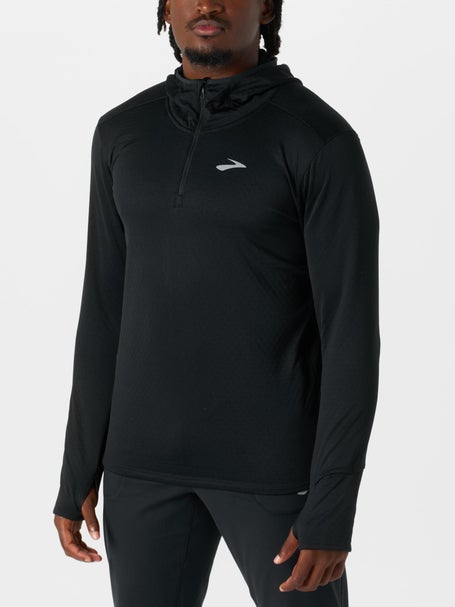
The Brooks Notch Thermal Hoodie is built around a single performance principle: keep you moving in cold weather without creating the sweat-chill cycle that ends winter runs early. The Notch thermal shell fabric is a brushed-interior knit that traps body heat during warm-up, then evacuates moisture as your effort intensifies. Wind-resistant panels across the chest and shoulders block the cold air that hits you hardest during running — the front of your torso and upper arms — while the back panels use a lighter, more breathable fabric to release heat during sustained effort. This asymmetric construction is the right approach for running, where your front face is into the wind and your back generates the most heat.

The integrated hoodie is the feature that elevates the Notch above competing thermal jackets. A low-profile hood that stays put during running — not flapping, not falling back — adds meaningful cold protection for the neck and head without the bulk of a separate headwear layer. It fits cleanly under a beanie when temperatures drop below the jacket's lower threshold. The fit is athletic without being restrictive: you get full range of arm motion during stride without the jacket bunching or riding up during long runs.

Two zippered hand pockets sit above the hip seam at a height that doesn't interfere with running form or waistband placement for shorts and tights. The main zipper has a garage at the top to prevent chin chafe during long efforts — a detail that separates running-specific jackets from adapted casual wear. Reflective elements on the chest and back improve visibility during pre-dawn and post-sunset winter runs when daylight is limited. Brooks' manufacturing quality is consistent throughout: even seams, reliable hardware, and stitching that holds up across hundreds of wash cycles.

At $180, the Notch Thermal Hoodie is the premium thermal jacket choice, priced above base models but below the $250+ range of waterproof softshell alternatives. The trade-off is that it handles temperatures from about 15°F to 45°F effectively but is not a waterproof option — in sustained precipitation, you need a waterproof shell over it. For cold, dry training days that represent the majority of winter running conditions, the Notch is the most capable thermal jacket we tested. Pair it with our recommended trail running shoes for complete cold-weather trail performance.

Pros

  • +Asymmetric wind-resistant front panels target cold exposure correctly
  • +Integrated low-profile hood stays put during running
  • +Brushed interior traps warmth during warm-up, releases moisture during effort
  • +Chin garage on zipper prevents chafe on long runs
  • +Reflective details for low-light visibility

Cons

  • Not waterproof — requires shell in sustained rain
  • Premium price at $180
  • Runs slightly slim for broader shoulders
  • Hood adds bulk when not needed in mild conditions

Best for: Runners who train year-round in cold, dry conditions and need a single thermal jacket that handles the full range of winter training temperatures.

Check Price
#2Best Base Layer

Patagonia Capilene Thermal Weight Crew

Category

Base Layer

Weight

7.1 oz

Price

$99

Key Technology

Capilene thermal grid fleece, recycled polyester

The Patagonia Capilene Thermal Weight Crew is the base layer that closes the gap between going cold at the start of a winter run and overheating by mile two. Its grid fleece construction — a pattern of raised squares that creates air pockets against your skin — provides meaningful warmth during the first cold minutes while the raised grid channels moisture away from your skin once your effort generates heat. This is the thermal management problem that matters most in winter running base layers: the fabric needs to work at rest and at effort, and most base layers optimize for one condition at the expense of the other.

The Thermal Weight classification in Patagonia's Capilene lineup positions this between the lighter Midweight (better for aerobic activity in marginal cold) and the heavier Air Hoody (better for stop-start activity or stationary cold). For running specifically, the Thermal Weight is the right choice in temperatures from about 15°F to 35°F. In those conditions, it provides enough warmth at the start of a run that you're not miserable before your effort builds, and enough breathability that you're not soaked in sweat 20 minutes in. Below 15°F, add a light mid-layer over it.

The crew neck sits high enough to provide neck warmth without the restriction of a full mock neck. Flatlock seams throughout eliminate the chafe points that standard seams create at the shoulders and sides during long runs — a non-negotiable detail for any base layer worn against skin during sustained activity. The fabric uses recycled polyester throughout and is treated with Polygiene permanent odor control, extending the wearable life between washes during heavy training blocks.

At $99, the Capilene Thermal Weight is priced at the mid-premium level for base layers. Cheaper alternatives exist, but they consistently sacrifice either moisture management or warmth — the two variables that matter most for winter running. Patagonia's construction quality and the proven Capilene performance record justify the price for runners who train seriously through the winter months. It layers cleanly under the Brooks Notch Thermal Hoodie and any of our recommended fleece jackets when temperatures require a third layer.

Pros

  • +Grid fleece construction manages warmth and moisture simultaneously
  • +Thermal Weight classification hits the ideal running temperature range
  • +Flatlock seams eliminate chafe during long efforts
  • +Polygiene odor control extends wearable life between washes
  • +Recycled polyester construction

Cons

  • Not the right weight for temperatures above 35°F
  • Crew neck less versatile than zip-neck alternatives
  • Premium price for a base layer at $99
  • Requires careful washing to maintain grid structure

Best for: Runners training in temperatures from 15°F to 35°F who need a base layer that handles both cold starts and warm effort without saturating or overheating.

Check Price
#3Best Thermal Tights

The North Face Paramount Hybrid High-Rise Tight

Category

Running Tights

Weight

7.8 oz

Price

$130

Key Technology

Paramount hybrid knit, targeted warmth zones, FlashDry

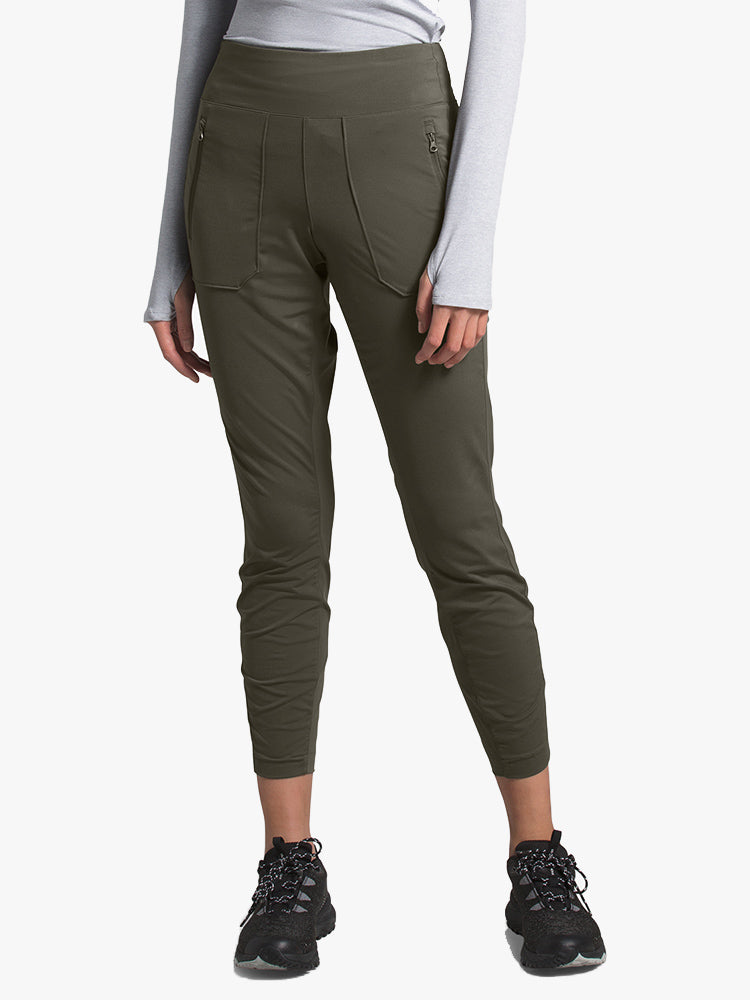
The North Face Paramount Hybrid High-Rise Tight is built on a zoned construction principle that addresses the thermal mismatch problem in running tights: your thighs generate substantial heat during effort while your shins and knees receive direct cold-air exposure. The Paramount uses a heavier Paramount hybrid knit on the shin and knee panels — where cold air impact is highest — and a lighter FlashDry fabric on the thigh panels that breathes during effort-generated heat. The result is a tight that keeps your lower legs warm without creating the overheating at the thighs that affects uniform-weight thermal tights.

The high-rise waistband is a functional feature, not a fashion choice. It provides core coverage that prevents the gap between jacket hem and waistband that exposes your lower back in cold conditions — a common pain point for runners during winter training. The waistband has a flat, non-binding construction that doesn't roll or dig during the full range of running motion, and it sits high enough to stay in place without constant adjustment. Two side hip pockets and one waistband pocket cover the storage needs for keys, phone, and nutrition during longer winter runs.

Reflective details on the lower legs and ankles improve visibility from low angles — the position of car headlights and cyclist lights — during early morning and evening winter runs when you are most likely to share roads with vehicles. The compression level is moderate: enough to provide muscle support and improve proprioception on uncertain footing, but not so aggressive that stride length or turnover are restricted. The fabric is quick-drying, recovering from sweat saturation during run-walk intervals faster than heavier thermal fabrics.

At $130, the Paramount Hybrid represents the mid-premium tier of running tights. The zoned construction and hybrid fabric use justify the price over single-fabric alternatives for runners who log serious winter miles. The combination of targeted warmth, reflectivity, and storage makes this the most complete thermal running tight in our test group. Combine with our tested merino hiking socks for full lower-body cold-weather coverage.

Pros

  • +Zoned construction targets warmth where cold air impact is highest
  • +High-rise waistband eliminates the back-gap cold exposure problem
  • +Reflective ankle/lower-leg detailing improves low-angle vehicle visibility
  • +Three-pocket configuration for long-run storage
  • +FlashDry panels on high-output thigh areas prevent overheating

Cons

  • Premium price at $130 for tights
  • High-rise cut may not suit all runners' preferences
  • Moderate compression only — not for post-run recovery use
  • Zoned fabric creates visible texture difference between panels

Best for: Runners who train seriously through winter and need thermal tights with targeted warmth, high-rise coverage, and visibility features for cold-weather road and trail running.

Check Price
#4Best Running Gloves

Smartwool Merino Run Cold Weather Gloves

Category

Gloves

Weight

2.4 oz

Price

$50

Key Technology

Merino wool blend, touchscreen-compatible fingertips

The Smartwool Merino Run Cold Weather Gloves solve the central challenge of winter running handwear: synthetic gloves either trap sweat and cause a chill-back effect or they fail to provide enough warmth at low temperatures. Merino wool's natural temperature regulation handles the varying effort levels of a run without the sweat-accumulation problem that synthetic gloves struggle with. The Merino Run blend uses a high-percentage merino content that provides genuine warmth down to about 20°F while wicking moisture during sustained aerobic effort. After two hours in the cold, your hands stay comfortable in these gloves in a way that comparable synthetic running gloves rarely achieve.

The fit is snug without being restrictive — important for running gloves, which need to stay in place during arm swing without bunching in the palm or creating friction at the wrist transition. Smartwool's construction keeps the seam placement away from high-contact areas, and the elastic cuff sits under your jacket sleeve without creating a pressure point. The gloves taper correctly through the fingers, which matters for maintaining dexterity while wearing them: adjusting headphones, operating a GPS watch, or managing nutrition packaging all remain possible without removing the gloves.

Touchscreen-compatible fingertips on the thumb and index finger work reliably with smartphone screens — a detail that sounds minor until you've stopped to check a GPS route in -5°F weather and had to remove your gloves to operate your phone. The touchscreen coating holds up through extended use and washing better than the conductive thread approach used by some competitors. Reflective logos on the back of the hand add low-light visibility.

At $50, the Merino Run gloves are priced competitively with quality synthetic running gloves and provide meaningfully better temperature regulation. They handle the 20°F to 40°F range most effectively. Below 20°F, adding a thin liner glove or switching to a shell mitt system provides the additional warmth needed. The merino content also means these gloves remain wearable on back-to-back days without the odor that accumulates in synthetic gloves after a single sweaty run. A worthy upgrade if you've struggled with cold or clammy hands during winter training.

Pros

  • +Merino wool blend regulates temperature across varying effort levels
  • +Snug fit prevents bunching during arm swing
  • +Reliable touchscreen-compatible thumb and index finger
  • +Natural odor resistance for multi-day wearability
  • +Reflective logos for low-light visibility

Cons

  • Not adequate below 20°F without liner gloves
  • Not waterproof — wet conditions require a shell over them
  • Merino requires gentler washing care
  • No wrist cinch for securing fit in gusty conditions

Best for: Runners who train regularly in cold weather and need gloves that manage moisture across varying effort levels without the sweat-chill cycle of synthetic alternatives.

Check Price
#5Best Headwear

Buff CoolNet UV Half Balaclava

Category

Headwear

Weight

1.2 oz

Price

$20

Key Technology

CoolNet UV fabric, 95% UV protection, multi-wear

The Buff CoolNet UV Half Balaclava is the most versatile piece of cold-weather running headwear available at any price point. At 1.2 ounces, it covers the face, nose, and chin — the highest frostbite-risk areas during cold-weather running — while the half-balaclava design leaves the top of the head open for a beanie or helmet without any adjustment required. The CoolNet UV fabric is a fine-gauge polyester blend that provides wind blocking without the heat buildup that heavyweight baclava fabrics create during aerobic effort. It breathes enough to prevent the fogging that makes traditional face coverings frustrating during sustained running.

The multi-wear functionality is Buff's signature feature: the same tube of fabric can be worn as a half balaclava, a neck gaiter, a headband, a wrist wrap, or a beanie depending on how you fold and position it. For winter running specifically, the half balaclava and neck gaiter configurations are the most useful. When you overheat during the middle miles of a run, pulling the face cover down to a neck gaiter takes three seconds without stopping. This adjustability means a single Buff covers the temperature range from 15°F full-balaclava cold down to 45°F neck-gaiter cool in a single piece of gear.

CoolNet UV fabric provides 95% UV protection — a secondary benefit that becomes relevant on bright winter days with snow cover, where UV reflection significantly increases exposure. The fabric is moisture-wicking and quick-drying, recovering from condensation and sweat within minutes of effort changes. The seamless construction eliminates the pressure points and chafe that seamed headwear creates after hours of wearing against the face.

At $20, the Buff CoolNet UV Half Balaclava is the best-value piece of winter running gear in our test group — and arguably in any gear category for outdoor winter activity. Its combination of face protection, breathability, and multi-configuration adaptability outperforms dedicated headwear items that cost five times as much. Every winter runner should have at least one in their kit. Pair with the Smartwool Merino Run gloves and the Brooks Notch Thermal Hoodie for a complete cold-weather upper body system.

Pros

  • +Half-balaclava covers the highest frostbite-risk face areas
  • +CoolNet UV fabric breathes during aerobic effort without fogging
  • +Multi-wear configurations adapt from full face cover to neck gaiter in seconds
  • +95% UV protection for snow-cover winter runs
  • +Exceptional value at $20

Cons

  • Not warm enough as standalone headwear below 15°F without a beanie
  • Thin fabric provides minimal insulation alone
  • Multiple wear configurations require some learning to execute quickly
  • No ear coverage — needs beanie pairing in extreme cold

Best for: All winter runners who need adaptable face and neck coverage that adjusts quickly between configurations as effort level and temperature change during a run.

Check Price

Winter Running Gear Buying Guide

Building an effective winter running kit requires understanding how each gear category contributes to temperature management, and how the pieces interact as a system.

Layering for Running vs. Hiking

Running generates two to three times the body heat of hiking at the same temperature. A layer that feels comfortable at the start of a run will cause overheating within 10–15 minutes of sustained aerobic effort. For this reason, running layers need to prioritize breathability more aggressively than hiking layers at the same temperature. The standard hiking advice to “start cold” applies even more strongly to running: if you're comfortable standing at the trailhead, you're likely overdressed for the first mile. Build your kit around fabrics that manage moisture actively rather than simply blocking cold.

The Two-Layer vs. Three-Layer System

Most winter running conditions from 20°F to 40°F are best handled with two layers: a thermal base layer and a thermal outer jacket. Adding a mid-layer in this temperature range typically creates too much insulation for sustained running effort. Drop below 20°F, or if wind chill is severe, a lightweight merino or synthetic mid-layer between base and outer shell becomes valuable. Below the waist, a single pair of quality thermal tights handles most conditions down to 10°F — the legs generate enough heat during running to warm thin tights effectively in a way that upper body layering cannot replicate.

Protecting Your Extremities First

In cold conditions, your body prioritizes core temperature over extremity circulation, making hands, feet, ears, and face the first areas to suffer in inadequate gear. Invest in quality gloves and headwear before upgrading your jacket — a $180 jacket with cheap gloves will leave you with numb hands. The Buff half balaclava at $20 and the Smartwool gloves at $50 together cost less than most thermal jackets and provide disproportionate comfort improvement in temperatures below 30°F. Refer to our fleece jacket guide if you need a versatile outer layer that doubles for hiking use.

Visibility in Winter Conditions

Winter means shorter daylight hours, meaning most runners log miles in low-light conditions. Reflective elements on your outer layer and tights are functional safety features, not marketing additions. When evaluating winter running gear, check for retroreflective panels on the chest, back, and lower legs — the areas most visible to oncoming and overtaking traffic. Bright color choices (amber, neon yellow, red) supplement but do not replace retroreflective materials, which are far more effective in headlight conditions than color alone.

Frequently Asked Questions

What temperature is too cold to run outside?

Most runners can safely train outdoors down to around -20°F (-29°C) with proper layering, though the practical threshold varies based on wind chill, humidity, and individual cold tolerance. The danger zone is wind chills below -18°F (-28°C), where exposed skin can experience frostbite in under 30 minutes. Between 0°F and 20°F (-18°C to -7°C), a quality thermal jacket, tights, gloves, and balaclava keep most runners comfortable. Above 20°F, standard cold-weather running gear handles conditions well for most people. The key variable is wind: a calm 10°F day is far more manageable than a windy 25°F day.

How do I layer for winter running?

A two-layer system covers most winter running conditions: a moisture-wicking base layer against the skin and a thermal outer layer that blocks wind. Start with a lightweight merino or synthetic base layer — Patagonia Capilene Thermal Weight or equivalent — that moves moisture away from your skin during hard efforts. Over it, add a thermal running jacket with wind-blocking panels on the chest and shoulders. Below the waist, a single layer of quality thermal tights handles most conditions down to about 15°F. Below 15°F, add a lightweight thermal base layer under the tights. Always protect your extremities with gloves and a hat or balaclava, as hands and head are the first areas to signal dangerous cold.

Are regular hiking tights good for winter running?

Hiking tights and running tights are engineered differently and are not interchangeable for performance use. Running-specific thermal tights like The North Face Paramount Hybrid use compressive fabrics that support muscles during impact, have reflective elements for low-light visibility, and are cut with a forward lean in mind to prevent bunching during stride. Hiking tights tend to be looser, less compressive, and lack the articulated patterning that running requires. For casual jogging on flat terrain, hiking tights work adequately. For sustained training in cold conditions, dedicated running tights improve performance and comfort meaningfully.

What should I wear on my head for winter running?

The choice between a beanie and a balaclava depends on temperature and wind. Above 25°F in calm conditions, a lightweight merino or synthetic running beanie is typically sufficient. Below 25°F or in sustained wind, a half balaclava like the Buff CoolNet UV Half Balaclava adds critical coverage for the face, nose, and chin where frostbite risk is highest. Full balaclavas are rarely needed for running since the aerobic effort generates substantial head and neck warmth. The half balaclava pulls down to a neck gaiter when you overheat, making it more versatile than either a beanie alone or a full balaclava for most running conditions.

How do I prevent my hands from going numb while running in the cold?

Hand numbness during cold-weather running is caused by blood being redirected to core muscles, leaving the fingers with reduced circulation. Running-specific gloves like the Smartwool Merino Run Cold Weather Gloves solve this better than general winter gloves because they maintain a close fit that doesn't bunch or gap during arm swing, and the merino content regulates temperature to prevent the sweat-then-freeze cycle that general gloves struggle with. Layering thin liner gloves under a shell mitt is the most versatile cold system for temperatures below 20°F. Keep gloves accessible during runs — stuffing a warmer pair in your jacket pocket lets you switch when needed without stopping.

Should I wear compression tights for winter running?

Light-to-moderate compression in thermal running tights provides real benefits for winter running: it improves proprioception on uncertain footing like packed snow or ice, supports muscles during the longer ground contact times that cold conditions create, and helps retain warmth by keeping the fabric close to the body. The compression in quality running tights like The North Face Paramount Hybrid is designed specifically for running biomechanics, providing support without restricting stride length. Very high compression tights intended for post-race recovery are too restrictive for active running and are not appropriate for training use.

Final Verdict

The complete winter running kit that performed best across our testing is the Brooks Notch Thermal Hoodie over a Patagonia Capilene Thermal Weight Crew, paired with The North Face Paramount Hybrid Tights, Smartwool Merino Run Gloves, and a Buff CoolNet UV Half Balaclava. This system covers the 15°F to 40°F range that represents the majority of North American winter training conditions.

If budget requires prioritizing, start with the Buff balaclava ($20) and Smartwool gloves ($50) — extremity protection delivers the highest comfort return per dollar spent in cold conditions. Add the tights next, then the base layer, then the jacket as budget allows. Each piece of this kit performs well individually and they work together as a system engineered around the same thermal management principles.

Related Guides

Related Videos

Get Trail-Tested Gear Advice

Join 12,000+ hikers and runners who receive our weekly gear reviews, trail tips, and exclusive deals. No spam, unsubscribe anytime.

PG

Peak Gear Guide Editorial Team

Our editorial team includes certified wilderness guides, gear industry veterans, and obsessive backcountry enthusiasts who collectively log over 1,000 trail nights each year. Every product we recommend is tested in real conditions by people who depend on their gear.

Editorial Disclosure

Peak Gear Guide is reader-supported. When you purchase through links on our site, we may earn an affiliate commission at no additional cost to you. Last updated April 6, 2026.