Quick Answer

A trail-ready dog needs six things: the Ruffwear Front Range harness ($60), the Ruffwear Approach pack ($60 on sale) loaded to 10–15% of body weight per Treeline Review, Grip Trex boots for hot or sharp ground, a packable bowl, a waist-worn Roamer leash (6 ft where rules apply), and the AMK Trail Dogfirst aid kit — about $280–$335 all-in at July 2026 prices.

This is a kit roundup, not six versions of the same product: one verified pick per category, chosen from manufacturer specifications, REI Co-op's staff-picks dog gear guide, and Treeline Review's field-tested dog pack rankings. Every price below was re-checked against manufacturer and retailer listings in July 2026.

Quick Answer: The 6-Item Dog Trail Kit

  1. 1.Ruffwear Front Range HarnessBest Harness ($60)
  2. 2.Ruffwear Approach PackBest Dog Pack ($60 sale / $100 list)
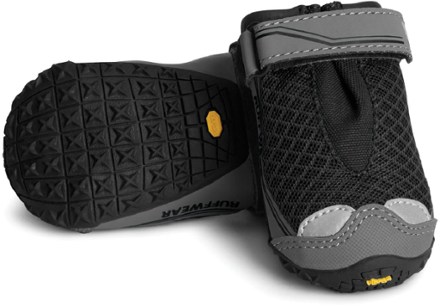
  3. 3.Ruffwear Grip Trex Boots (pair)Best Boots ($40–$50 per pair)
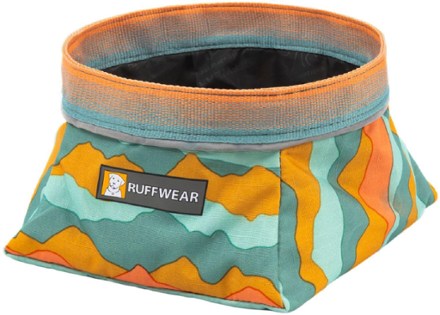
  4. 4.Ruffwear Quencher Packable BowlBest Bowl ($25)
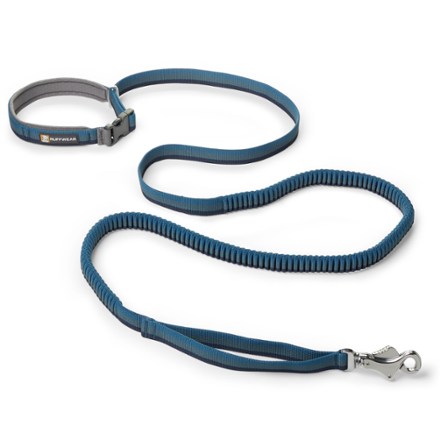
  5. 5.Ruffwear Roamer Bungee LeashBest Leash ($50)
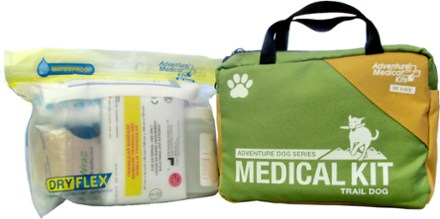
  6. 6.Adventure Medical Kits Trail DogBest First-Aid Kit ($38)

Why a Dog Trail Kit (Not Just a Leash)

Most "dog hiking gear" problems on trail trace back to one of four gaps: no way for the dog to drink, no protection when the ground turns hot or sharp, no plan for a cut paw or an embedded tick miles from the car, and a collar-and-retractable setup that fights both the dog and the leash rules. The fix is a small, deliberate kit — six items, one per job — that adds roughly two to three pounds split between your pack and the dog's own saddlebags.

You'll notice one brand appears four times in this roundup. That isn't sponsorship — it's convergence. REI's staff-picks guide to dog hiking gear leads with the Ruffwear Front Range harness and a Ruffwear waist-worn bungee leash, and Treeline Review's field testers (updated November 2025) named the Ruffwear Approach their best overall dog pack after six years of testing. Where a cheaper alternative genuinely does the same job — the $12 Dexas silicone cup versus the $25 Quencher bowl — we say so in the review.

This page covers the dog's gear. For trail training, etiquette, conditioning schedules, and a printable checklist, see our full hiking with dogs guide. Your own feet matter too — a dog that pulls downhill punishes bad ankles, so pair this kit with proper hiking boots for yourself, and carry a human first aid kit alongside the dog-specific one.

Quick Comparison Table

ItemCategoryPriceSizesKey SpecBuy
Ruffwear Front Range HarnessBest Harness$60XXS–L/XL (13–42″ girth)4-point adjust, 2 leash attachment pointsCheck Price
Ruffwear Approach PackBest Dog Pack$60 sale / $100 listXS–L/XL (17–42″ girth), 5–21 L5-point adjustable saddlebag day packCheck Price
Ruffwear Grip Trex Boots (pair)Best Boots$40–$50 per pair8 widths, 1.5–3.25″ pawsVibram non-marking lug outsoleCheck Price
Ruffwear Quencher Packable BowlBest Bowl$25One size, 1 L (4.2 cups)4,000 mm waterproof liner, packs to pocket sizeCheck Price
Ruffwear Roamer Bungee LeashBest Leash$505.5–7′ or 7.3–11′ lengthsStretch webbing, waist-wearable to 48″Check Price
Adventure Medical Kits Trail DogBest First-Aid Kit$38One size (7.5 × 5.3 × 1.5″)Tick forceps + dog-specific first aid manualCheck Price

The Dog-Kit Table: What Each Item Does

This is the table most dog gear roundups skip: what job each piece does, the sizes it actually comes in, its listed weight, and the one specification that decides whether it works — the harness's adjustment points, the pack's percent-of-bodyweight load rule, the boots' sole type. Dog gear is sized by chest girth and paw width, not by breed, so the sizes column is what to match against your own measurements.

ItemWhat It's ForSizes AvailableListed WeightPrice (verified)Key Spec
Front Range HarnessControl + leash attachment without collar strainXXS–L/XL, 13–42″ chest girth6.4 oz (REI spec)$59.99–$604 adjustment points; back V-ring + front chest clip for pullers
Approach Dog PackDog carries own water, kibble, and bowlXS–L/XL; 5 L / 10 L / 13 L / 21 L0.73–1.3 lb by size$59.99 sale ($99.99 list)5-point fit; load ≤25% of body weight incl. pack (Ruffwear) — most dogs 10–15% (Treeline Review)
Grip Trex BootsPaw protection on hot, sharp, or frozen ground8 widths, 1.5–3.25″ (sold in pairs)≈1.6 oz per boot$39.99–$50 per pairVibram non-marking lug outsole; break-in period per Ruffwear
Quencher Packable BowlThe only way trail water gets into the dogOne size — 1 L (4.2 cups), 5.5″ openingNot published (folds flat)$24.994,000 mm waterproof liner; packs to pocket size
Roamer Bungee LeashHands-free control on leash-required trails5.5–7′ or 7.3–11′Not published$49.99Stretch webbing; waist-wearable to 48″; traffic handle
AMK Trail Dog KitPaw cuts, ticks, sprains far from the trailheadOne size, 7.5 × 5.3 × 1.5″12 oz$37.99Tick forceps, cohesive bandage, triangular bandage, dog first aid manual

Specifications and prices verified against manufacturer listings (ruffwear.com, adventuremedicalkits.com) and REI in July 2026. "Not published" means the manufacturer lists no weight for that item. Pack-load guidance attributed to Ruffwear's Approach Pack fit notes and Treeline Review's dog pack field tests (updated November 18, 2025).

Before You Take Your Dog Hiking

Gear is the easy part. These four rules — each from a source that publishes actual numbers, not forum lore — are what keep the day safe. And one line up front: for your dog's specific health, weight-carrying ability, and heat tolerance, check with your veterinarian — this page is gear guidance, not veterinary advice.

1. Know the trail rules before you drive

The National Park Service bans pets from most national park trails and all backcountry in many parks; where dogs are allowed, NPS requires a leash no longer than 6 feet. Its B.A.R.K. Ranger program spells out the standard: Bag waste, Always leash, Respect wildlife, Know where you can go. National forests, BLM land, and most state parks are far more permissive — leashed dogs are generally welcome on trails. Check the specific land manager's page, and note the 6-foot rule when choosing between leash lengths.

2. The pack-weight rule: start at 10%, not 25%

Ruffwear's official guidance for the Approach Pack caps the load at 25% of the dog's body weight including the pack itself, with lighter loads for dogs new to carrying. Treeline Review's testers (updated November 2025) are more conservative: most dogs do best carrying 10–15% of body weight, and only extremely well-conditioned dogs approach 25%. Translation for a 50-lb dog: start around 5–7 lbs — water, kibble, bowl — and build over multiple hikes. Puppies whose growth plates haven't closed, seniors, and dogs with joint issues should carry less or nothing; ask your vet.

3. Paws and heat: the 10-second hand test

The AKC's paw-safety guidance (updated March 2026) cites Journal of the American Medical Association data showing asphalt reaching 135°F when air temperature is just 86°F, and recommends a simple check: press your palm to the surface for 10 seconds — if you can't hold it, your dog can't walk on it. PetMD's summer paw-care guidance adds the practical fixes: hike early morning or evening, favor dirt and grass over pavement and slickrock, and use booties when hot or abrasive surfaces are unavoidable. That is the actual case for the Grip Trex — not fashion, burn prevention.

4. Water math for dogs

PetMD's veterinarian-reviewed baseline is roughly 1 ounce of water per pound of body weight per day — and explicitly more when a dog is hot or exercising, because panting and salivation dump moisture fast. Budget at least half the daily baseline for a half-day hike in mild weather (a 50-lb dog: ~25 oz), and double it in heat. Offer water every 30–45 minutes instead of waiting for flagging or heavy panting, and carry the dog's water — streams run dry, and the pathogens that make backpackers sick affect dogs too. The Approach Pack's saddlebags exist for exactly this cargo.
Detailed Dog Hiking Gear Reviews

#1Best Harness

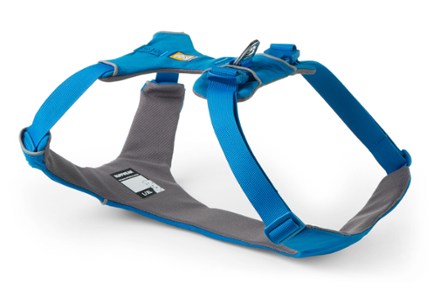
Ruffwear Front Range Harness

$60

Listed Weight

6.4 oz (REI-listed)

Sizes

XXS–L/XL (13–42″ girth)

Key Spec

4-point adjust, 2 leash attachment points

Best For

Everyday walks + trail days

Verified Price (July 2026)

$60

Pros

  • +Padded everyday harness that REI staff pick for hiking — 300-denier ripstop with foam padding
  • +Two leash points: aluminum V-ring on the back, reinforced chest webbing to redirect pullers
  • +Five sizes cover 13-inch terrier chests up to 42-inch large breeds, with four points of adjustment

Cons

  • No lift handle on the back for boosting dogs over rocks or ledges
  • Price climbed from $44.95 to $59.99 with the 2025 refresh

Verdict: The Front Range is the default trail harness for a reason: REI's staff-picks dog gear guide calls it light enough for everyday wear and burly enough for the backcountry, and its two leash points handle both relaxed walking and leash-pulling training. At $59.99–$60 (Ruffwear and REI, July 2026) it anchors the kit.

Check Price on Amazon
#2Best Dog Pack

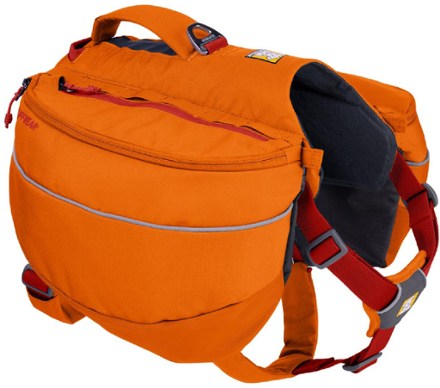
Ruffwear Approach Pack

$60 sale / $100 list

Listed Weight

0.7–1.3 lb by size

Sizes

XS–L/XL (17–42″ girth), 5–21 L

Key Spec

5-point adjustable saddlebag day pack

Best For

Day hikes and light overnights

Verified Price (July 2026)

$60 sale / $100 list

Pros

  • +Treeline Review's Best Overall dog backpack (updated November 2025) after six years of field testing
  • +Five points of adjustment and weight-forward saddlebags with stabilizers that stop the bags flopping
  • +Four sizes from 5 L (XS) to 21 L (L/XL), so the pack scales from beagles to shepherds

Cons

  • You have to lift one of your dog's front legs through it to put it on — Treeline's main gripe
  • Both colorways were out of stock on Ruffwear's own site at our July 2026 check; Amazon and Chewy still list it

Verdict: If your dog carries their own water and kibble, this is the pack the testers keep landing on. Ruffwear listed it at $59.99 (40% off its $99.99 list) in July 2026 — a genuine deal if you catch it in stock. For multi-day loads, its big sibling, the Ruffwear Palisades ($149.99), adds removable saddlebags and two 1 L hydration bladders.

Check Price on Amazon
#3Best Boots

Ruffwear Grip Trex Boots (pair)

$40–$50 per pair

Listed Weight

≈1.6 oz per boot

Sizes

8 widths, 1.5–3.25″ paws

Key Spec

Vibram non-marking lug outsole

Best For

Hot rock, sharp scree, packed snow

Verified Price (July 2026)

$40–$50 per pair

Pros

  • +Vibram lug outsole — the same sole brand as human hiking boots — grips rock and protects from heat and sharp talus
  • +Sold in pairs (a full set of four runs $80–$100) so you can size front paws bigger than rear, which Ruffwear notes is common
  • +Breathable woven mesh upper keeps grit out without cooking paws

Cons

  • Almost every dog high-steps or freezes in boots at first — Ruffwear's own guidance calls for a break-in period and a closure re-check 15 minutes into activity
  • Sizing is unforgiving: measure the widest part of each weighted paw, and size down when between sizes

Verdict: Boots are the most situational item in the kit — skip them for soft forest trails, pack them for lava rock, scree, snow, or any surface that fails the AKC's 10-second hand test. The Grip Trex is the standard: $49.99 a pair direct from Ruffwear, seen at $39.99 at pet retailers, July 2026.

Check Price on Amazon
#4Best Bowl

Ruffwear Quencher Packable Bowl

$25

Listed Weight

Not published (folds flat)

Sizes

One size, 1 L (4.2 cups)

Key Spec

4,000 mm waterproof liner, packs to pocket size

Best For

Water and food breaks on the move

Verified Price (July 2026)

$25

Pros

  • +Waterproof 210-denier liner (4,000 mm rating) holds a full liter of water or a day's kibble
  • +Folds flat into a pocket, hip-belt pouch, or the dog's own pack
  • +Fabric construction is silent in a pack — no clanking metal bowl

Cons

  • $24.99 is steep for a fabric bowl — the Dexas Popware collapsible silicone travel cup does the job for around $12
  • One-size 1 L bowl is more than a toy breed needs to carry

Verdict: Dogs can't drink from your bottle, and PetMD's vet-reviewed guidance says they need roughly an ounce of water per pound of body weight per day — more while working. A packable bowl is how that water actually gets into the dog. The Quencher ($24.99, July 2026) is the durable pick; budget silicone cups work too.

Check Price on Amazon
#5Best Leash

Ruffwear Roamer Bungee Leash

$50

Listed Weight

Not published

Sizes

5.5–7′ or 7.3–11′ lengths

Key Spec

Stretch webbing, waist-wearable to 48″

Best For

Hands-free hiking on leash-rule trails

Verified Price (July 2026)

$50

Pros

  • +Wears around the waist (up to 48-inch waists) for hands-free hiking with trekking poles — the leash style REI staff pick for trail running and hiking
  • +Wavelength stretch webbing absorbs lunges instead of yanking your shoulder or the dog's spine
  • +Traffic handle near the clip gives instant close control at trailheads and passings

Cons

  • Buy the 5.5–7 ft version for parks: the 7.3–11 ft size stretches past the 6-foot leash limit that NPS and many trail systems enforce
  • Bungee stretch takes practice for dogs trained to heel on a static lead

Verdict: Since leashes are legally required on most managed trails, the question is only which leash hikes best. A stretch-webbing, waist-worn leash keeps both hands on your trekking poles and smooths out squirrel lunges. The Roamer runs $49.99 (Ruffwear, July 2026) in two lengths — take the shorter one for regulated trails.

Check Price on Amazon
#6Best First-Aid Kit

Adventure Medical Kits Trail Dog

$38

Listed Weight

12 oz

Sizes

One size (7.5 × 5.3 × 1.5″)

Key Spec

Tick forceps + dog-specific first aid manual

Best For

Paw cuts, ticks, sprains on trail

Verified Price (July 2026)

$38

Pros

  • +Dog-specific kit: splinter/tick remover forceps, gauze, cohesive bandage that sticks to itself instead of fur, saline, antibiotic ointment
  • +Includes a pet first aid manual with dog-injury instructions, and a triangular bandage the manual shows doubling as an improvised muzzle — hurt dogs may snap while being treated
  • +12 oz and 7.5 by 5.3 inches, so it actually gets packed instead of left in the car

Cons

  • No medications — add your dog's own meds and your vet's phone number
  • Overlaps with a human kit; if you already carry a full first aid kit, you may only need the dog-specific additions

Verdict: Paw pad cuts and ticks are the two most common trail problems for dogs, and a human kit handles neither well. The Trail Dog kit was $37.99 direct from Adventure Medical Kits at our July 2026 check. Kurgo's 50-piece dog first aid kit is the common alternative at pet retailers.

Check Price on Amazon

How to Choose Dog Hiking Gear

Five decisions determine whether this kit works on trail or ends up returned. All of them come down to measuring your actual dog rather than shopping by breed name.

1. Size by girth, not by breed

Harnesses and packs are sized by chest girth — the circumference around the widest part of the ribcage, just behind the front legs. A "medium dog" can span three harness sizes depending on build. Measure with a soft tape, match it to the size chart (Front Range: 13–42 inches across five sizes; Approach: 17–42 inches across four), then do the two-finger check under every strap once it's on. A harness that rotates sideways under leash pressure is too loose; one that chafes behind the elbows on descents is too tight.

2. Boots: measure paws under load, and budget for a break-in

Ruffwear's fitting guidance is specific: measure the widest part of the paw while the dog is standing and bearing weight, measure all four paws because fronts often run larger than rears, and size down if between sizes. Boots are sold in pairs for exactly that reason. Then accept the honesty clause — Ruffwear's own break-in guide says dog boots need an adjustment period like human footwear, and advises re-cinching closures about 15 minutes into activity. Short indoor sessions with treats, then neighborhood walks, then trail. A dog meeting boots for the first time at a hot trailhead will fight them.

3. Condition the pack like a training program

Nobody hands a new backpacker a 40-lb pack on day one, and the same applies with fur. Start with the empty pack around the house, then short walks, then add weight in increments toward the Treeline Review working range of 10–15% of body weight — always below Ruffwear's hard ceiling of 25% including the pack. Load both saddlebags evenly, or the pack lists to one side and chafes. Soft cargo (collapsible bowl, kibble in a bag, soft flasks) rides better than hard bottles against a dog's ribs.

4. Leash: match the length to the rules, then to the terrain

If your trails enforce the common 6-foot limit — all national parks that allow dogs, and many state and regional systems — the long 7.3–11 ft Roamer is the wrong buy no matter how nice the stretch feels; take the 5.5–7 ft version. Waist-worn beats hand-held on real terrain because it frees both hands for trekking poles and scrambles, and stretch webbing smooths out lunges. The traffic handle near the clip is the underrated spec: it gives instant two-foot control for horse packers, other dogs, and crowded trailheads.

5. First aid: dog-specific beats improvised

The two failures of using a human kit on a dog: standard adhesive bandages don't stick to fur (you need cohesive wrap that sticks to itself), and nothing in a human kit removes an embedded tick cleanly. A dog kit adds tick forceps, a triangular bandage that can double as an improvised muzzle — because even sweet dogs may snap while being treated, as AMK's included manual covers — and dog-specific instructions. Pack it next to your human camping first aid kit, and write your vet's number inside the lid.

Frequently Asked Questions

How much weight can a dog carry in a backpack?

Field testers at Treeline Review (updated November 2025) put the realistic range at 10 to 15 percent of body weight for most dogs, with only extremely well-conditioned dogs working up toward 25 percent. Ruffwear's own Approach Pack guidance sets 25 percent — including the weight of the pack itself — as the ceiling, and recommends starting lighter for dogs new to packs. In practice: a 50-lb dog starts around 5 to 7 lbs and builds gradually over several hikes. Age, joints, breed, and fitness all change the math, so confirm a carrying plan with your veterinarian before loading up a puppy, a senior dog, or any dog with orthopedic history.

Does my dog need boots for hiking?

Not for every trail — healthy paw pads handle ordinary dirt and forest trails fine. Boots earn their place on hot rock and pavement, sharp talus and scree, lava rock, packed snow, and post-injury hikes. For heat, the AKC (article updated March 2026) recommends a simple hand test: hold your palm on the ground for 10 seconds, and if you can't, it's too hot for bare paws — citing JAMA data showing asphalt can hit 135°F when the air is only 86°F. One honesty note: nearly all dogs walk strangely in boots at first. Ruffwear's own fitting guidance calls for a break-in period and re-checking the closures about 15 minutes into activity, so practice at home before trusting boots on a big day.

How much water should I bring for a dog on a hike?

PetMD's veterinarian-reviewed guidance puts a dog's baseline need at roughly 1 ounce of water per pound of body weight per day, and notes dogs need more than that when they are hot or exercising because panting and salivation drain water fast. A practical trail rule: for a half-day hike in mild weather, carry at least half the daily baseline just for the dog — about 25 oz for a 50-lb dog — and double that in heat. Offer water every 30 to 45 minutes rather than waiting for heavy panting, and carry it rather than counting on streams, which can run dry and can carry the same pathogens that make humans sick.

Are dogs allowed on hiking trails?

It depends on who manages the land. The National Park Service allows pets in most developed areas but bans them from the majority of national park trails and backcountry; where pets are allowed, NPS rules require a leash no longer than 6 feet. Its B.A.R.K. Ranger program summarizes the rules: Bag your pet's waste, Always leash your pet, Respect wildlife, Know where you can go. National forests, BLM land, and most state parks are far more dog-friendly, generally allowing leashed dogs on trails. Always check the specific park or forest page before driving out — and note that a 6-foot leash limit rules out the long 11-foot version of some hiking leashes.

What size dog harness do I need?

Harnesses are sized by chest girth, not by breed or weight. Measure around the widest part of your dog's ribcage, just behind the front legs. The Ruffwear Front Range, for example, spans five sizes from XXS (13–17 inch girth) to L/XL (32–42 inch girth), so almost any dog from a small terrier to a large shepherd fits somewhere in the run. After fitting, use the two-finger check: you should be able to slide two fingers under any strap, and the harness shouldn't rotate around the body or chafe behind the elbows on a long descent.

What should be in a dog first aid kit?

The core of a trail kit for dogs: tick/splinter remover forceps, gauze dressings, a self-adhering (cohesive) bandage that sticks to itself rather than fur, a triangular bandage, antiseptic or saline for flushing wounds, antibiotic ointment, and a dog-specific first aid reference. The Adventure Medical Kits Trail Dog kit covers that list in a 12 oz pouch, including a triangular bandage its manual shows doubling as an improvised muzzle — even gentle dogs may snap when they are hurt and being handled. Add your own items: your vet's phone number, any medications your dog takes, and paperwork like vaccination records for multi-day trips.

Related Guides

PG

Peak Gear Guide Editorial Team

Published July 6, 2026

The Peak Gear Guide editorial team builds every recommendation from manufacturer specifications, published independent lab and field tests, and aggregated verified-owner reviews — cross-checking the numbers before we publish, and updating our picks as new gear and test data appear.

References & further reading

External, authoritative sources we consulted while researching this guide. Specifications and pricing verified against manufacturer and retailer listings in July 2026.

Editorial Disclosure

Peak Gear Guide is reader-supported. When you purchase through links on our site, we may earn an affiliate commission at no additional cost to you. Our recommendations are built from manufacturer specs, published test data, and verified-owner reviews, and are never influenced by affiliate partnerships. We only recommend gear we would use ourselves. Product prices and availability are accurate as of the last update and are subject to change. Published July 6, 2026.

Browse All Gear Categories

Every Peak Gear Guide roundup, organized by category. Research-vetted picks with transparent comparisons across 100+ gear types.

Big 4 — Shelter, Sleep, Pack, Stove

Footwear

Apparel & Layering

Packs & Carry

Camp Comfort

Cooking & Food

Tech & Navigation

Trekking Poles & Accessories

Sleep — Specialty

Tents — Specialty

By Fit & Foot Shape

Budget Picks

Water & Adventure