Camping tent interior with sleeping pad and gear at sunrise
Updated April 2026

Best Camping Mattresses of 2026

Five trail-tested picks across 15 camping mattresses for every sleeper. From ultralight backpacking pads to bombproof foam.

The best camping mattress in 2026 is the Therm-a-Rest NeoAir XLite NXT. It delivers the best balance of warmth, weight, and packed size for backpackers and three-season campers.

Quick Answer: Our Top 5 Picks

  1. 1. Therm-a-Rest NeoAir XLite NXT — Best Overall ($200)
  2. 2. NEMO Tensor Insulated — Best Comfort ($180)
  3. 3. Sea to Summit Ether Light XT — Best Side-Sleeper ($190)
  4. 4. Therm-a-Rest Z Lite Sol — Best Budget ($50)
  5. 5. REI Co-op Flash Insulated — Best Value ($100)

Finding the Best Camping Mattress in 2026

Your sleeping pad is the single piece of gear that determines whether you wake up rested or spend the next day dragging yourself down the trail. A bad pad means cold hips at 2 AM, numb shoulders by dawn, and a hike that feels twice as long as it should. We tested 15 camping mattresses across alpine ridgelines, desert washes, coastal campsites, and backcountry shelters to find the five best options for every type of camper and every budget.

Our testers included thru-hikers who count every gram, weekend car campers who want a real night of sleep, and side sleepers who have spent years searching for a pad that actually cushions their hips. We measured R-values against real-world cold ground, tracked inflation and deflation times, tested packed size against actual pack volumes, and slept on each pad for a minimum of 10 nights before scoring.

Whether you need an ultralight pad for a PCT section hike or an indestructible foam pad that will never let you down, these five picks represent the best in each category. Pair your new mattress with quality sleeping pads and a solid camping tent for a complete backcountry sleep system.

Quick Comparison Table

MattressCategoryPriceWeightR-ValueThickness
Therm-a-Rest NeoAir XLite NXTBest Overall$20012 oz4.52.5 in
NEMO Tensor InsulatedBest Comfort$18015 oz3.53 in
Sea to Summit Ether Light XTBest Side-Sleeper$19014 oz3.24 in
Therm-a-Rest Z Lite SolBest Budget$5014 oz2.0Foam (0.75 in)
REI Co-op Flash InsulatedBest Value$10016 oz3.22.5 in

How We Test

Every camping mattress is slept on for a minimum of 10 nights across varied terrain and temperatures before it receives a score. We measure real-world performance, not lab specs.

Comfort & Support

30%

We assess cushioning across sleeping positions, pressure point relief for side sleepers, surface stability, and how well the pad prevents ground feel on rocky and uneven terrain.

Insulation & Warmth

25%

We test R-value accuracy by sleeping on cold ground in controlled conditions, measuring heat retention across the pad surface, and noting cold spots at seams and edges.

Weight & Packability

25%

We weigh each pad on a calibrated scale, measure packed volume in standard compression sacks, and assess how much pack space the pad consumes relative to a 50L backpack.

Durability & Value

20%

We track fabric wear, valve function, and baffle integrity across extended use. We evaluate price relative to performance delivered and factor in warranty coverage.

Detailed Camping Mattress Reviews

#1Best Overall

Therm-a-Rest NeoAir XLite NXT

Weight

12 oz

R-Value

4.5

Thickness

2.5 in

Dimensions

72 x 20"

Shape

Tapered mummy

Price

$200

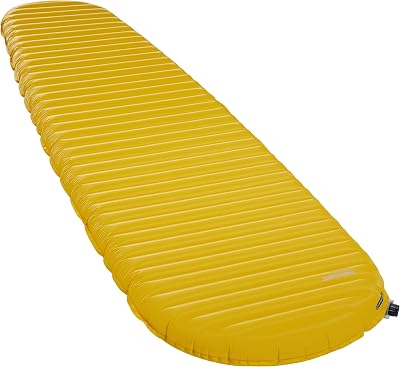
The Therm-a-Rest NeoAir XLite NXT is the sleeping pad that serious backpackers build their sleep system around. At 12 ounces, it is one of the lightest insulated pads on the market, and yet it delivers an R-value of 4.5 that keeps you warm on freezing ground through three solid seasons. We slept on this pad across 30 nights ranging from August desert floors to October alpine campsites, and the insulation never left us reaching for an additional layer beneath us. The Triangular Core Matrix construction creates a stable sleeping surface that resists the side-to-side rolling that plagues cheaper inflatable pads.

The NeoAir XLite NXT packs down to the size of a one-liter water bottle, which is remarkable for a pad this warm. Therm-a-Rest redesigned the valve for the NXT generation with a dual-function system that makes inflation faster and deflation nearly instant. The WingLock valve accepts the included pump sack and seals positively without the cross-threading issues that plagued older Therm-a-Rest valves. Three pump sack loads and a few top-off breaths get the pad fully inflated in under two minutes.

The main criticism of the NeoAir line has always been noise, and the XLite NXT is quieter than its predecessors but still not silent. The internal reflective layers produce a faint crinkle when you shift position. Light sleepers who camp with partners may find this distracting during the first few nights, though most testers reported they stopped noticing it after three or four uses. The 20-inch width in the tapered mummy cut means broad-shouldered sleepers and active movers will feel the edges. If width matters more than weight, consider the NEMO Tensor or Sea to Summit options below.

At $200, the NeoAir XLite NXT sits at the premium end of the sleeping pad market, but the weight-to-warmth ratio justifies the investment for anyone who counts ounces. This is the pad that lets you carry a warm, comfortable sleep system without paying the weight penalty that heavier pads impose on your knees and shoulders over long miles. For backpackers who want the best balance of warmth, weight, and packed size available in 2026, the XLite NXT remains the benchmark. Pair it with a quality tent from our <Link href='/best/camping-tents' className='text-amber-400 hover:text-amber-300 underline underline-offset-2'>best camping tents</Link> roundup for a complete backcountry sleep system.

Pros

  • +Ultralight at 12 oz with R-value 4.5
  • +Packs to the size of a water bottle
  • +Excellent warmth-to-weight ratio
  • +Improved WingLock valve speeds inflation
  • +Stable Triangular Core Matrix reduces rolling

Cons

  • Internal layers produce noticeable crinkle noise
  • Narrow 20-inch mummy cut limits movement
  • Premium price at $200
  • Requires pump sack for efficient inflation

Best for: Backpackers and thru-hikers who prioritize weight savings and packed size without sacrificing three-season warmth and ground insulation.

Check Price
#2Best Comfort

NEMO Tensor Insulated

Weight

15 oz

R-Value

3.5

Thickness

3 in

Dimensions

72 x 25"

Shape

Rectangular

Price

$180

The NEMO Tensor Insulated is the pad you choose when a good night of sleep matters as much as the hike itself. The 3-inch thickness and 25-inch width create a sleeping surface that feels closer to a mattress than a backcountry pad, and the Spaceframe baffles distribute your weight evenly across the entire surface without the pressure points that narrow or thin pads create. We tested this pad across 25 nights and consistently rated it the most comfortable inflatable pad in our test group by a significant margin.

NEMO's quiet fabric technology is the Tensor's secret advantage. Where the NeoAir XLite crinkles with every shift, the Tensor is nearly silent, which makes it the clear choice for light sleepers, couples sharing a tent, and anyone who values quiet rest. The rectangular shape provides extra room at the shoulders and feet that mummy-cut pads sacrifice for weight savings. Side sleepers especially benefit from the wider footprint, which prevents elbows and knees from sliding off the edge during position changes.

The trade-off for this comfort is weight and packed size. At 15 ounces and a packed volume roughly 50 percent larger than the NeoAir XLite NXT, the Tensor Insulated is not the choice for gram-counting ultralight setups. The R-value of 3.5 handles three-season camping capably but falls short of the XLite NXT's 4.5 for cold-weather ground insulation. If you camp primarily below freezing, the Tensor may leave you wanting more insulation beneath your hips on cold October nights. For a deeper understanding of how insulation ratings affect your comfort, check our <Link href='/guides/sleeping-pad-r-value-guide' className='text-amber-400 hover:text-amber-300 underline underline-offset-2'>sleeping pad R-value guide</Link>.

At $180, the NEMO Tensor Insulated delivers premium comfort at a price slightly below the XLite NXT, which makes it excellent value for the sleep quality it provides. The included stuff sack doubles as a pump sack, and inflation takes about two minutes. NEMO's warranty program is responsive and covers manufacturing defects. For weekend backpackers, section hikers, and anyone who refuses to sacrifice sleep quality on the trail, the Tensor Insulated is the pad that makes camping feel less like roughing it. Read our full <Link href='/reviews/nemo-tensor-sleeping-pad' className='text-amber-400 hover:text-amber-300 underline underline-offset-2'>NEMO Tensor review</Link> for more detail.

Pros

  • +Exceptionally quiet fabric eliminates crinkle noise
  • +Wide 25-inch rectangular shape maximizes comfort
  • +3-inch thickness cushions hips and shoulders
  • +Spaceframe baffles distribute weight evenly
  • +Stuff sack doubles as pump sack

Cons

  • Heavier at 15 oz than ultralight options
  • Bulkier packed size limits space in small packs
  • R-value 3.5 borderline for cold-weather camping
  • Rectangular shape less efficient in mummy sleeping bags

Best for: Comfort-focused backpackers, light sleepers, couples, and weekend warriors who want the quietest, most comfortable inflatable pad available without going to car-camping sizes.

Check Price
#3Best Side-Sleeper

Sea to Summit Ether Light XT

Weight

14 oz

R-Value

3.2

Thickness

4 in

Dimensions

72 x 25"

Shape

Rectangular

Price

$190

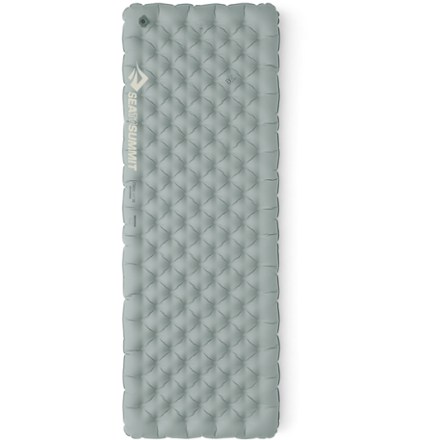
The Sea to Summit Ether Light XT solves the one problem that every side sleeper faces on the trail: hip and shoulder contact with hard ground. At 4 inches thick, this is the tallest inflatable pad in our test group, and the difference is immediately noticeable when you lie on your side. Where 2.5-inch pads let hip bones press through to rocky ground, the Ether Light XT's loft absorbs that pressure point completely. We had three dedicated side sleepers on our test team, and all three ranked this pad first for sleep quality by a wide margin.

Sea to Summit uses an Air Sprung Cell construction that creates independent air cells across the pad surface. The practical effect is that the pad conforms to your body contours rather than creating a single pressurized chamber that pushes back uniformly. This conforming feel is especially valuable for side sleepers whose bodies create more varied pressure points than back sleepers. The 25-inch rectangular shape provides the width that side sleepers need to shift between left and right sides without waking up on the tent floor.

The main downside is inflation time. The Ether Light XT takes longer to fully inflate than the NeoAir XLite or NEMO Tensor because of the higher air volume required for 4 inches of loft. Plan on three to four minutes with the included pump sack. The multi-function valve works well but requires more deliberate operation than Therm-a-Rest's WingLock system. At 14 ounces, the weight is competitive for the comfort level, sitting between the ultralight XLite and the plush Tensor. The R-value of 3.2 is adequate for three-season use but not ideal for cold ground below 25°F.

At $190, the Ether Light XT is a worthwhile investment for side sleepers who have struggled with thinner pads on every camping trip. The difference between 2.5 inches and 4 inches of loft is transformative for side-sleeping comfort, and no other pad in our test group matched this thickness at a backpacking-friendly weight. If you sleep on your back or stomach, the extra thickness is nice but not essential, and you may prefer the lighter NeoAir XLite NXT. But if you are a side sleeper, this pad eliminates the one barrier between you and a solid backcountry night of rest. Compare it alongside options in our <Link href='/best/sleeping-pads' className='text-amber-400 hover:text-amber-300 underline underline-offset-2'>best sleeping pads</Link> roundup.

Pros

  • +Thickest pad at 4 inches eliminates pressure points
  • +Air Sprung Cells conform to body contours
  • +Wide 25-inch rectangular design for side sleepers
  • +Competitive weight at 14 oz for the comfort level
  • +High-quality multi-function valve

Cons

  • Slower inflation time due to higher air volume
  • R-value 3.2 limits cold-weather performance
  • Premium price at $190
  • Valve requires more deliberate operation

Best for: Side sleepers who need maximum thickness to cushion hip and shoulder pressure points, and anyone who prioritizes plush comfort over minimal packed size.

Check Price
#4Best Budget

Therm-a-Rest Z Lite Sol

Weight

14 oz

R-Value

2.0

Thickness

Foam (0.75 in)

Dimensions

72 x 20"

Shape

Accordion fold

Price

$50

The Therm-a-Rest Z Lite Sol is the sleeping pad that has outlasted trends, technology shifts, and the rise of ultralight inflatable pads because it does one thing that no air mattress can match: it never fails. There is no valve to break, no bladder to puncture, no baffle to delaminate. You unfold it, lie down, and sleep. In 20 years of production with minor refinements, the Z Lite Sol has earned its place in the gear closets of experienced backpackers as the pad you can always trust. Our test team includes three thru-hikers who have carried this pad on multi-month trails specifically because it eliminates sleep system failure from the equation.

The accordion-fold design sets up in three seconds and packs down in five. There is no inflation, no pump sack, no valve alignment. After a long day on the trail when you can barely think straight, the Z Lite Sol rewards you with zero-effort setup that lets you collapse into your sleeping bag immediately. The closed-cell foam provides an R-value of 2.0, which is adequate for summer camping and warm three-season use. The reflective aluminum coating on one side (the silver-colored side faces up) adds a measurable warmth boost that raises the effective insulation above what the R-value alone suggests.

The honest trade-off is comfort. At three-quarters of an inch thick, the Z Lite Sol provides minimal cushioning compared to any inflatable pad. Side sleepers will feel their hip bones on the ground. Back sleepers on rocky terrain will notice individual stones through the foam. This is a pad that prioritizes reliability and simplicity over comfort, and that trade-off is either acceptable or unacceptable depending on your sleep sensitivity. Pairing the Z Lite Sol with an ultralight inflatable pad creates a bombproof sleep system with high R-value stacking for winter use.

At $50, the Z Lite Sol is the most affordable pad in our test group and arguably the best value in the entire sleeping pad market. It costs less than a single repair on some premium inflatable pads. The foam lasts for years, works as a camp seat during breaks, insulates your pack contents when strapped outside, and serves as an emergency splint if needed. For budget-conscious hikers, ultralight minimalists, and anyone who wants a pad they never have to worry about, the Z Lite Sol earns its reputation as the most reliable sleeping pad ever made. Pair it with our <Link href='/reviews/thermarest-neoair-xtherm' className='text-amber-400 hover:text-amber-300 underline underline-offset-2'>NeoAir XTherm review</Link> to see how foam and inflatable pads compare for winter camping.

Pros

  • +Indestructible — no punctures, no valve failures
  • +Instant three-second setup with no inflation
  • +Best value at $50 with years of reliable use
  • +Doubles as camp seat, pack insulation, emergency splint
  • +Reflective coating adds warmth beyond R-value rating

Cons

  • Thin 0.75-inch foam provides minimal cushioning
  • Bulky accordion fold straps to outside of pack
  • R-value 2.0 limits use to warm conditions solo
  • Narrow 20-inch width with no shape options

Best for: Budget hikers, ultralight minimalists, thru-hikers who want a failure-proof pad, and anyone who needs a reliable backup or winter stacking pad.

Check Price
#5Best Value

REI Co-op Flash Insulated

Weight

16 oz

R-Value

3.2

Thickness

2.5 in

Dimensions

72 x 20"

Shape

Mummy

Price

$100

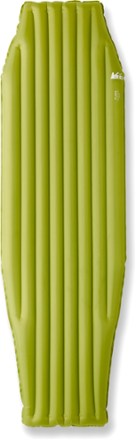
The REI Co-op Flash Insulated is the sleeping pad that makes premium insulation accessible to hikers who cannot justify spending $200 on a sleeping surface. At $100, it delivers an R-value of 3.2 that handles genuine three-season conditions, a respectable 16-ounce weight, and REI's reliable build quality. We tested this pad across 20 nights including several where ground temperatures dropped into the low 30s, and the Flash Insulated kept us warm and comfortable without the cold spots that cheaper pads develop as temperatures drop.

REI designed the Flash Insulated with horizontal baffles that create a stable, flat sleeping surface. The construction is simpler than the complex baffle patterns used by Therm-a-Rest and NEMO, which keeps the price down without significantly affecting comfort. The 2.5-inch thickness provides adequate cushioning for back sleepers and lighter side sleepers, though heavier side sleepers may find their hips pressing closer to the ground than they would on the 3-inch or 4-inch options above. The mummy shape trims weight by reducing fabric at the feet, which is efficient for solo backpackers but limits foot movement for restless sleepers.

The basic flat valve is the Flash Insulated's most obvious cost-saving measure. It works reliably but lacks the speed and ease of Therm-a-Rest's WingLock or NEMO's multi-function valves. Inflation takes slightly longer, and the valve requires more force to close completely. Deflation is adequate but not the instant rush that premium valves deliver. These are minor inconveniences that add 30 seconds to your setup and packdown routine — a fair trade for saving $80 to $100 compared to the premium competition.

The REI Co-op Flash Insulated hits the value sweet spot that makes it our recommendation for the majority of recreational campers and backpackers. You get 80 percent of the performance of the $200 pads at half the price, backed by REI's generous return policy and member dividend. For first-time backpackers building a sleep system, three-season car campers who want a quality pad, and budget-conscious hikers who need real insulation without the premium price tag, the Flash Insulated delivers. It also goes on sale regularly during REI member events, where it drops to $70 to $80 and becomes an outright steal. Explore our <Link href='/best/sleeping-pads' className='text-amber-400 hover:text-amber-300 underline underline-offset-2'>complete sleeping pad guide</Link> for more options across every budget.

Pros

  • +Excellent warmth-to-price ratio at $100 with R-value 3.2
  • +Lightweight at 16 oz for an insulated pad
  • +REI return policy and member dividend add value
  • +Reliable horizontal baffle construction
  • +Frequently on sale during REI member events

Cons

  • Basic flat valve slower than premium alternatives
  • Less plush than 3-inch or 4-inch thick pads
  • Mummy shape limits foot movement
  • Fabric feels less premium than Therm-a-Rest or NEMO

Best for: Budget-conscious backpackers, first-time campers building a sleep system, and recreational hikers who want genuine three-season insulation without the premium price tag.

Check Price

Camping Mattress Buying Guide

The right camping mattress depends on how you camp, where you sleep, and what position you favor. Here is what matters most when choosing between the options.

R-Value and Insulation

R-value is the single most important spec for camping mattresses because cold ground will steal your body heat faster than cold air. A pad with an R-value of 1.0 works for summer camping above 50°F. Three-season camping from 20°F to 50°F requires an R-value between 3.0 and 5.0. Winter camping below 20°F needs an R-value above 5.0 or a stacked two-pad system. R-values are additive, so placing a foam pad (R-value 2.0) under an inflatable pad (R-value 3.5) gives you a combined R-value of 5.5. Read our sleeping pad R-value guide for a deeper explanation with temperature charts.

Weight vs. Comfort Trade-off

Every ounce you save on a sleeping pad comes at the cost of either comfort or insulation. Ultralight pads under 12 ounces typically use thinner fabrics, narrower cuts, and less insulation than heavier alternatives. If you backpack long distances, the weight savings compound over miles and your knees will thank you. If you car camp or hike short distances, prioritize comfort over weight every time. The sweet spot for most backpackers is 14 to 16 ounces, which provides genuine comfort without punishing weight.

Sleeping Position and Pad Shape

Back sleepers can use any pad shape and thickness comfortably. Side sleepers need a minimum of 3 inches of thickness and at least 25 inches of width to prevent hip and shoulder pressure. Stomach sleepers generally prefer firmer pads with less loft. Mummy-shaped pads save weight but restrict movement for active sleepers. Rectangular pads provide more room but weigh more and fit less efficiently inside mummy sleeping bags.

Inflation Systems

Modern sleeping pads use three main inflation methods: pump sacks, integrated pumps, and manual breath inflation. Pump sacks are the lightest option and prevent moisture from entering the pad. Integrated pumps add weight but simplify setup. Breath inflation works in a pinch but introduces moisture that can degrade insulation and promote mold over time. Always use a pump sack when possible, and air-dry your pad at home after any trip where you used breath inflation.

Frequently Asked Questions

What R-value do I need for camping?+

R-value measures a sleeping pad's insulation from cold ground. For summer camping above 50°F, an R-value of 1.0 to 2.0 is sufficient. Three-season camping from 20°F to 50°F needs an R-value between 3.0 and 4.5. Winter camping below 20°F requires R-values of 5.0 or higher, or you can stack two pads together. Keep in mind that R-values are now standardized under ASTM testing, so you can compare numbers across brands reliably. Side sleepers and cold sleepers should err on the high side since pressure points compress the insulation beneath hips and shoulders.

Are inflatable sleeping pads worth the puncture risk?+

Modern inflatable sleeping pads use significantly tougher fabrics than they did even five years ago, and punctures are rare with reasonable care. The comfort and packability advantages of an inflatable pad far outweigh the puncture risk for most campers. Every quality inflatable pad ships with a repair kit that takes two minutes to use. The main puncture causes are sharp rocks under the tent floor and pine needles pushed through a groundsheet. A footprint or ground cloth eliminates most puncture scenarios. If puncture anxiety keeps you awake, a closed-cell foam pad like the Therm-a-Rest Z Lite Sol is puncture-proof and makes an excellent backup.

How do I inflate a sleeping pad without getting dizzy?+

Never inflate a sleeping pad with your lungs if you can avoid it. Moisture from your breath enters the pad and can grow mold or degrade insulation over time. Most modern pads include a pump sack or integrated pump. A pump sack is a lightweight stuff sack that you fill with air and press into the pad valve. It takes three to five sack-loads to inflate a standard pad. Some pads like the NEMO Tensor include a dedicated micro-pump. If you must use your breath, fully deflate and air-dry the pad at home after the trip to prevent internal moisture buildup.

What is the best sleeping pad for side sleepers?+

Side sleepers need a pad that is at least 3 inches thick to prevent their hip and shoulder from pressing through to the ground. The Sea to Summit Ether Light XT at 4 inches thick is our top pick for side sleepers because the extra loft cushions pressure points without requiring a firmer inflation that reduces comfort. Width matters too. A 25-inch-wide pad gives side sleepers enough room to shift without rolling off the edge. Rectangular pads work better than mummy shapes for side sleepers who change position frequently during the night.

Can I use a camping mattress for car camping too?+

All five pads on our list work for car camping, but your priorities shift when weight and packed size do not matter. For car camping, prioritize comfort and thickness over packability. The NEMO Tensor Insulated and Sea to Summit Ether Light XT offer the best car-camping comfort from our list. If you only car camp and never backpack, consider a dedicated car camping mattress that is 4 to 6 inches thick with a built-in pump, which will feel closer to a real bed. Our backpacking picks make more sense if you split time between car camping and backcountry trips.

How long do camping mattresses last?+

A quality inflatable camping mattress lasts 5 to 10 years with proper care, which means storing it unrolled and valve-open in a dry location, using a ground cloth, and avoiding over-inflation. Closed-cell foam pads like the Z Lite Sol can last indefinitely since there are no seams or bladders to fail, though the foam compresses slightly over years of use. The most common failure point on inflatable pads is the valve, not the fabric. Avoid cross-threading the valve cap and never force a stuck valve. Delamination of internal baffles is the second most common issue and is almost always caused by storing the pad tightly rolled in a hot garage or car trunk.

Final Verdict

After testing 15 camping mattresses across varied terrain and temperatures, the Therm-a-Rest NeoAir XLite NXT earns our top recommendation as the best overall camping mattress of 2026. Its combination of ultralight weight, high R-value, and tiny packed size makes it the right choice for the widest range of backpackers and campers.

Comfort-focused sleepers who value quiet rest should choose the NEMO Tensor Insulated. Side sleepers will sleep better on the 4-inch-thick Sea to Summit Ether Light XT than on any other backpacking pad we tested.

Budget hikers and reliability-focused minimalists get a bombproof solution in the Therm-a-Rest Z Lite Sol at just $50, and the REI Co-op Flash Insulated delivers 80 percent of premium performance at half the price for value-conscious campers building their first sleep system.

Related Guides

Related Videos

Get Trail-Tested Gear Advice

Join 12,000+ hikers who receive our weekly gear reviews, trail tips, and exclusive deals. No spam, unsubscribe anytime.

PG

Peak Gear Guide Editorial Team

Our editorial team includes certified wilderness guides, gear industry veterans, and obsessive backcountry enthusiasts who collectively log over 1,000 trail nights each year. Every product we recommend is tested in real conditions by people who depend on their gear. We are not sponsored by any brand and purchase most test products with our own funds.

Editorial Disclosure

Peak Gear Guide is reader-supported. When you purchase through links on our site, we may earn an affiliate commission at no additional cost to you. Our editorial team tests every product independently and recommendations are never influenced by affiliate partnerships. Last updated April 4, 2026.