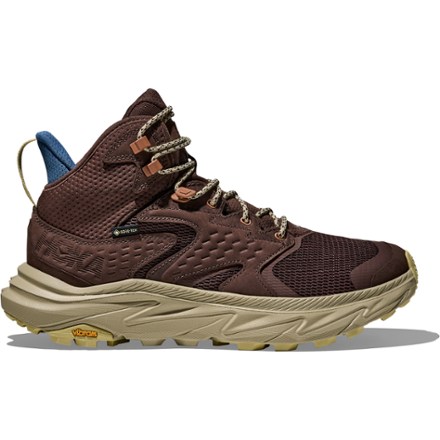
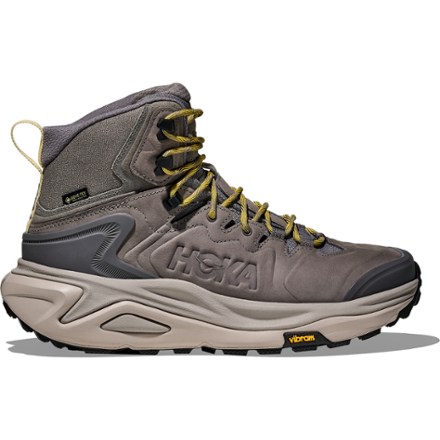
HOKA Kaha 3 GTX
~2 lb 7 oz (pair, men's 9, per RunRepeat)
GORE-TEX Invisible Fit + waterproof nubuck
Waterproof nubuck leather / recycled mesh
High-stack CMEVA, rockered — 41.9 mm heel / 30.4 mm forefoot (RunRepeat)
Vibram Megagrip, multi-directional lugs
Structured footbed over PU sockliner — moderate contour, removable
Maximal; ~11.5 mm effective drop (RunRepeat stack measurements)
The HOKA Kaha 3 GTX tops this guide because it delivers the single quality podiatric sources most consistently recommend for high arches — cushioning — in a larger dose than any other hiking boot in its class. The American Podiatric Medical Association advises people with high arches toward cushioned footwear with a softer midsole, because a rigid, high-arched foot rolls inward too little to absorb shock on its own. The Kaha 3's numbers are the point: RunRepeat's lab teardown measured a 41.9 mm heel and 30.4 mm forefoot stack, among the tallest in the hiking category. That is roughly 10 mm more foam under the heel than a conventional boot like the Merrell Moab 3, and for a supinating foot that lands hard on its outer heel edge, each of those millimeters is impact the ball and heel don't take directly.
The forefoot number matters as much as the heel number for this foot type. Cleveland Clinic identifies the ball of the foot as one of the two pressure hotspots with pes cavus (the high arch bridges over the midfoot, so load concentrates fore and aft), and 30.4 mm of forefoot stack is the deepest forefoot cushion in this roundup by a wide margin. Owners with metatarsal pain frequently single the Kaha line out for exactly this reason. The rockered geometry rolls the foot forward through toe-off rather than asking the (already rigid) high arch to flex, which reviewers describe as reducing forefoot strain on long descents.
On the arch itself, honesty is required: the Kaha 3's stock footbed is a structured but moderately contoured insole over a PU sockliner: it does not fill a genuinely high arch. What it does offer is a removable footbed (confirmed in RunRepeat's teardown), so a Superfeet High Arch or SOLE insole drops in cleanly, turning the Kaha 3 into what Backpacker's footwear advice describes as the ideal setup: a boot chosen for fit, cushioning, and traction, with the arch work delegated to an insole shaped for your foot. The GORE-TEX Invisible Fit membrane and gold-rated waterproof nubuck upper handle sustained rain, and the Vibram Megagrip outsole is a proven performer on wet rock and roots.
The trade-offs are price and feel. At $240 (current on hoka.com and REI as of July 2026), it is the most expensive boot here, and the tall platform takes a few miles of adjustment. Some hikers coming from low-stack boots initially find the ride disconnected on narrow, technical trails, and the low collar version reviewed here offers less mechanical ankle containment than a traditional mid. But for high-arched hikers whose main complaints are outer-heel impact, tired forefeet, and leg fatigue from unabsorbed shock, this is the most complete cushioning platform currently sold, and the removable footbed keeps the insole path open.
Pros
- ✓Tallest cushioning stack in class — 41.9 mm heel / 30.4 mm forefoot per RunRepeat
- ✓Deep forefoot cushion protects the ball of the foot, a pes cavus pressure point
- ✓Rocker geometry reduces flex demand on a rigid, high-arched midfoot
- ✓Removable footbed accepts high-arch insoles or custom orthotics
- ✓GORE-TEX Invisible Fit + Vibram Megagrip — proven wet-weather package
Cons
- ✗Most expensive boot in this guide at $240
- ✗Stock footbed has only moderate arch contour; the arch fill comes from your insole
- ✗Tall stack takes adjustment on narrow, off-camber trails
- ✗Heavier than the Salomon by about half a pound per pair
Best for: High-arched hikers whose priority is maximum shock absorption for outer-heel landings and forefoot pressure, especially on long days and hard-packed descents.
Check Price on Amazon →