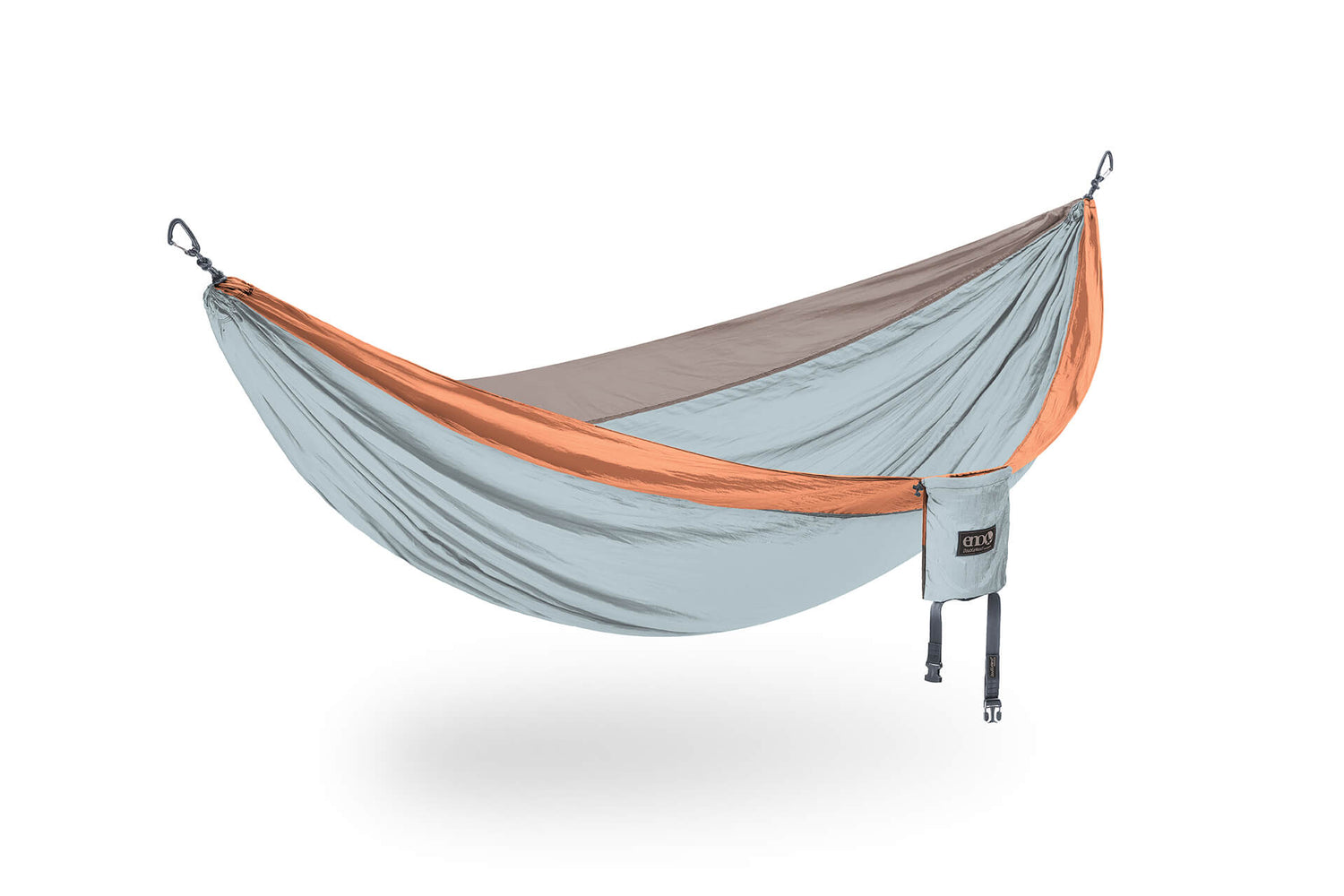
ENO DoubleNest hammock in forest
Camping Hammock2026 Review

ENO DoubleNest Hammock Review

Quick Verdict

The ENO DoubleNest is the hammock most hikers and campers actually need. It's not the lightest option, but it's the most versatile — wide enough for two people, bomber nylon construction, and a setup so simple that anyone can do it in minutes. At $80, it's the benchmark for value in portable hammocks.

8.9

out of 10

Price

$80

Weight

19 oz (539 g)

Capacity

400 lbs (2 people)

Packed Size

5 x 5 inches

The Go-To Hammock for Good Reason

ENO (Eagles Nest Outfitters) built their reputation on portable hammocks before the category was mainstream, and the DoubleNest is the product that established them. After more than a decade on the market, it remains the default recommendation for hikers and campers who want a hammock without overthinking it.

The DoubleNest is wide — 9.5 feet long and 6 feet wide — which sets it apart from single hammocks in the same weight class. Solo, that extra width lets you lie diagonally, which is the key to sleeping flat without the banana-shaped curvature that causes back pain. With two people, it's genuinely functional rather than a novelty. At a trail or camp gathering, it becomes the shared rest spot that people gravitate toward.

At 19 oz, the DoubleNest isn't ultralight by backpacking standards. Dedicated ultralight hammocks (like the ENO SingleNest or Kammock Roo Single) come in under 12 oz. But the DoubleNest's weight is reasonable for car camping, day hiking rest stops, and casual overnight trips where the extra width and capacity matter more than grams saved.

19 oz
Packed Weight
400 lbs
Weight Capacity
< 5 min
Setup Time

Key Specifications

Dimensions (hanging)9.5 ft x 6 ft (2.9 m x 1.8 m)
Packed Size5 x 5 inches (integrated stuff sack)
Weight19 oz (539 g)
Weight Capacity400 lbs (two people)
Material70D High-Tenacity Nylon Taffeta
HardwareAluminum wiregate carabiner (x2)
Suspension IncludedNo — straps sold separately
Color Options20+
Country of ManufactureUSA
Price$80 (hammock only)

Material, Construction, and Durability

The 70D high-tenacity nylon taffeta is ENO's material choice across their hammock line. It's not the lightest nylon possible — some ultralight hammocks use 30D or 40D — but the heavier weave resists tearing from branches and repeated use significantly better. After three seasons of regular use including wet conditions, UV exposure, and regular washings, the material shows minimal degradation.

The aluminum wiregate carabiners are functional and lightweight. They're not load-rated for climbing, but ENO's internal testing supports the 400 lb rating for the hammock system. The rope loops at each end are the weak point most people worry about, but in practice these hold up well. The most common failure mode in any hammock is the suspension system (straps/cords attaching to trees), not the hammock itself.

One important note: the DoubleNest comes with carabiners but no tree straps. ENO sells Atlas straps ($30) or Slap straps ($25) separately. This is worth knowing before purchase — budget for the straps, or pick up a compatible third-party suspension system. Tree straps are also better for tree bark protection than rope attachments.

⚠️

Straps Sold Separately

The DoubleNest includes carabiners but no tree straps. Budget an extra $25-30 for ENO Atlas Straps or Slap Straps — they are required to hang the hammock and protect tree bark from rope damage.

Setup and Ease of Use

Setup time with straps in place is genuinely under 5 minutes, and more like 2–3 minutes once you've done it a few times. Wrap the strap around the tree, clip the carabiner to the strap loop, adjust the hang angle, repeat on the other side. The integrated stuff sack at each end means the hammock feeds out of the sack and the sack becomes the storage bag when packed — a clean design that eliminates the "where did the bag go" problem.

The recommended hang angle is 30 degrees from horizontal — flatter than most beginners set up. A common mistake is hanging the hammock too tightly between trees, which creates excessive banana curve and puts stress on the attachment points. When hung at the correct angle with 12–15 feet between trees, the DoubleNest lies remarkably flat, especially diagonally.

💡

Perfect Hang Angle

Aim for 30 degrees from horizontal with 12-15 feet between trees. Most beginners hang too tight, creating banana-shaped curvature. A looser hang lets you lie diagonally and sleep nearly flat — the key to all-night comfort.

Comfort and Sleeping Quality

For rest stops and afternoon lounging, the DoubleNest is immediately comfortable. For overnight sleeping, technique matters more than the hammock itself. Lying diagonally at a slight angle across the center solves the curvature problem and results in a flat, supportive sleeping surface. Most complaints about hammock sleeping discomfort come from setup angle, not hammock quality.

Cold weather use requires an underquilt or sleeping pad — the DoubleNest provides no insulation, and convective heat loss from below is significant below 55°F. The NEMO Tensor Insulated can be used inside the hammock as a torso pad, though a dedicated underquilt is more comfortable for true cold-weather use.

Pros and Cons

Pros

  • Wide enough for two people or comfortable solo diagonal sleep
  • Integrated stuff sack — no separate bag to lose
  • Sets up in under 5 minutes with straps
  • 400 lb weight capacity — robust for heavy users
  • Durable 70D nylon resists tears and UV
  • ENO Lifetime Warranty covers manufacturing defects
  • 20+ color options

Cons

  • Tree straps not included — sold separately ($25–30)
  • 19 oz is heavy for ultralight backpacking
  • No insulation — underquilt required for cold weather
  • Requires trees spaced 10–15 feet apart
  • Not a good rain shelter without a separate tarp

Value and Who Should Buy This

At $80 (hammock only), the DoubleNest is competitively priced for a double hammock with this quality level. Add $25–30 for ENO straps and your total investment is around $110 for a complete, ready-to-hang system that should last a decade. That's excellent value compared to tents in the same price tier.

Buy it if: You car camp, day hike, go to festivals, or want a grab-and-go hammock for any outdoor activity where trees exist. The DoubleNest also makes a compelling hammock-camping option for backpackers willing to carry 19 oz in exchange for sleeping off the ground.

Consider alternatives if: You're building an ultralight kit. The ENO SingleNest ($60, 16 oz) or Kammock Roo Single ($119, 9.4 oz) are lighter options. If you plan to sleep in the hammock regularly in cold weather, look at purpose-built system hammocks with integrated insulation like the Kammock Mantis UL.

The DoubleNest pairs well with a good headlamp like the Petzl Actik Core for evening camp reading, and it fits easily into the lid pocket of most large hiking packs including the Gregory Baltoro 65.

Ratings Breakdown

Comfort9/10
Setup Ease9.5/10
Packability8.5/10
Build Quality9/10
Versatility8.8/10
Value9.2/10
Overall Score8.9/10

Final Verdict

The ENO DoubleNest earns its reputation as the default hammock recommendation. It's durable, wide, and sets up faster than most camping gear. The 19 oz weight and the need for separate straps are minor objections — factored into the $80 price, it's one of the best-value pieces of outdoor gear available.

If you don't own a hammock yet, the DoubleNest is the right starting point. Buy it, get the ENO Atlas straps, and use it for every outdoor activity you do — it will quickly become the gear you wonder how you lived without.

Weather Resistance

The DoubleNest is made from nylon that sheds light moisture, but it is not a rain shelter on its own. In drizzle or a brief shower, the fabric will wet out and water will pass through within minutes. Hammock camping in rain requires a separate rain fly or tarp suspended above the hammock — ENO's ProFly ($60) and Guardian Bug Net ($60) are purpose-built accessories, or any ridgeline-rigged tarp with enough coverage will work. Set the tarp first, then hang the hammock under it; trying to rig a tarp over an occupied hammock in the rain is a recipe for frustration.

In lightning or sustained high wind, the hammock setup itself becomes a risk. Trees are poor shelter during electrical storms, and a suspended hammock puts you at elevation between two anchor points. In severe weather, take down the hammock and seek solid shelter. For typical three-season camping with passing showers, a properly rigged tarp makes the DoubleNest a comfortable wet-weather sleep system — just account for the tarp's additional weight and setup time when planning your kit.

Who Should Buy the ENO DoubleNest

Weekend Festival Campers

If you do music festivals, car camping trips, or beach weekends, the DoubleNest is the single best piece of hang-out gear you can own. It weighs under a pound and a quarter, fits in a daypack, and turns any two trees into a rest spot. The 400 lb capacity and double-wide design mean it becomes a social hub wherever you set it up.

Ultralight Backpackers Who Sleep Off the Ground

For backpackers committed to hammock camping, the DoubleNest offers the most comfortable sleep surface in its price range. At 19 oz it's not the lightest option, but the diagonal sleeping position it enables is more comfortable than most sub-12 oz singles. Pair it with a lightweight underquilt and a 4-season tarp for a complete, capable system.

Car Campers and Day Trippers

Weight is irrelevant if you're driving to the trailhead or campsite. The DoubleNest delivers premium comfort without any weight penalty that matters, and its durability means it will outlast a decade of weekend use. It's the kind of gear that earns a permanent spot in your car kit.

Alternatives to the ENO DoubleNest

Kammock Roo Single ($119, 9.4 oz)

The Roo Single is half the weight of the DoubleNest and made from stronger 40D nylon. It's the better choice for weight-conscious solo backpackers. Trade-off: it's a single hammock only, and the narrower profile makes diagonal sleeping less forgiving. The Kammock suspension system (Python Straps) is excellent and sold separately.

Grand Trunk Ultralight Single ($50, 9.9 oz)

The Grand Trunk Ultralight is a budget-friendly ultralight option that comes with carabiners and daisy-chain straps included — addressing the DoubleNest's biggest value-for-money critique. At under $50 all-in, it's the strongest price-performance option for solo campers. Build quality is good but not at ENO's level.

Wise Owl Outfitters Hammock ($30–45)

Wise Owl is the entry-level alternative for campers who want to try hammock camping before investing more. It comes with tree straps included and weighs around 17–19 oz depending on the model. Quality is noticeably below ENO, but it's a reasonable starting point. Upgrade to the DoubleNest once you're committed to the hobby.

Frequently Asked Questions

Does the ENO DoubleNest come with tree straps?

No. The DoubleNest includes aluminum wiregate carabiners but no tree straps. ENO sells Atlas Straps ($30) and Slap Straps ($25) separately. Budget for them — they're required to hang the hammock and protect tree bark.

How much weight can the ENO DoubleNest hold?

The ENO DoubleNest is rated for 400 lbs, making it suitable for two average-sized adults. The limiting factor in practice is typically the suspension system you use, not the hammock body itself.

Can I sleep in the ENO DoubleNest without a sleeping pad or underquilt?

In warm weather (above 60°F), yes. Below that, you'll lose significant body heat through the bottom of the hammock via convection. An underquilt or a sleeping pad laid inside the hammock is necessary for comfortable sleep in cooler conditions.

What is the best hang angle for the ENO DoubleNest?

The ideal hang angle is 30 degrees from horizontal. Most beginners hang hammocks too tight, which creates excessive curvature and puts strain on the attachment points. A looser hang with 12–15 feet between anchor trees allows you to lie diagonally and sleep nearly flat.

Is the ENO DoubleNest good for backpacking?

It's doable but not ideal for weight-conscious backpackers. At 19 oz it's heavier than ultralight single hammocks like the ENO SingleNest (16 oz) or Kammock Roo Single (9.4 oz). It's best suited for car camping, day hikes, festivals, and casual overnights where the extra width and capacity are worth the weight.

What suspension straps do I need for the ENO DoubleNest?

The ENO DoubleNest ships without straps — they are sold separately. ENO's Atlas Straps are the most popular pairing: 1.5 inches wide, 9 feet long, and LNT-width compliant. Each strap has loops spaced along its length for easy length adjustment without knots. For a lighter option, ENO's Helios Straps weigh 2.5 oz per pair. Third-party options like Kammock Python Straps and Dutchware suspension systems are popular with hammock campers who want more precise hang adjustment. Always use straps at least 1 inch wide and wrap trees loosely — tight narrow lines cause cambium damage that can kill trees over time.

Ready to set up camp anywhere there are trees?

The ENO DoubleNest is available on Amazon and REI with multiple color options.

Affiliate Disclosure: Peak Gear Guide participates in the Amazon Associates program. If you purchase through our links, we may earn a small commission at no extra cost to you. This does not influence our reviews or recommendations.