Side Sleeper Sleeping Pad Guide
5 Best Sleeping Pads for Side Sleepers: 2026 Picks
The thickness, width, and quietness specs that actually matter when you sleep on your side, and 5 pads that prevent hip and shoulder pressure points.
By Peak Gear Guide Editorial Team · Gear research & fact-checking
Quick answer
For the plushest side-sleep comfort, the Therm-a-Rest NeoLoft (4.6 in thick, R-4.7, ~$250) cradles hips and shoulders best. For the best balance of comfort and weight, the NEMO Tensor All-Season (3.5 in, R-5.4, 15.4 oz, ~$230) adds four-season warmth and the quietest fabric in the category. Both beat thin ultralight pads that let your hip bottom out.
What Side Sleepers Need in a Sleeping Pad
Side sleepers need 3 inches of cushion minimum (3.5 is the sweet spot, 4+ is plush) to prevent hip and shoulder pressure points, plus a baffle design that resists sinking and a quiet outer fabric for restless sleep. Thickness and baffle geometry matter more than raw R-value or weight for side-sleep comfort. The Sea to Summit Ether Light XR and Therm-a-Rest NeoLoft are the plushest options; the NEMO Tensor All-Season wins on tent-floor quietness (and now four-season warmth); the Therm-a-Rest NeoAir XLite NXT wins on weight.
Most "best sleeping pad" lists ignore that side sleepers have fundamentally different needs than back sleepers. Your hip alone can carry 40-60% of your body weight when lying on your side — standard 2-inch pads let your hip and shoulder bottom out against the ground, causing pressure-point pain after 2-3 hours. This guide focuses on the specific specs that solve that problem, and the 5 pads that actually deliver. For the underlying R-value math that applies to all pads, see our sleeping pad R-value guide.
#Quick Picks at a Glance
- 1.Best overall: Sea to Summit Ether Light XR Insulated ($199) — 3.9 in thick, R-4.1, 16.6 oz
- 2.Best wide: Big Agnes Insulated Q-Core Deluxe ($200) — 3.5 in thick, R-4.3, 20 oz, 25 in wide
- 3.Quietest & four-season: NEMO Tensor All-Season ($230) — 3.5 in thick, R-5.4, 15.4 oz
- 4.Best ultralight: Therm-a-Rest NeoAir XLite NXT ($210) — 3 in thick, R-4.5, 13.6 oz
- 5.Cold-weather: Exped Ultra 6.5R ($200) — 3.5 in thick, R-6.9, ~15.5 oz
The 4 Specs That Actually Matter for Side Sleepers
1. Thickness (most important)
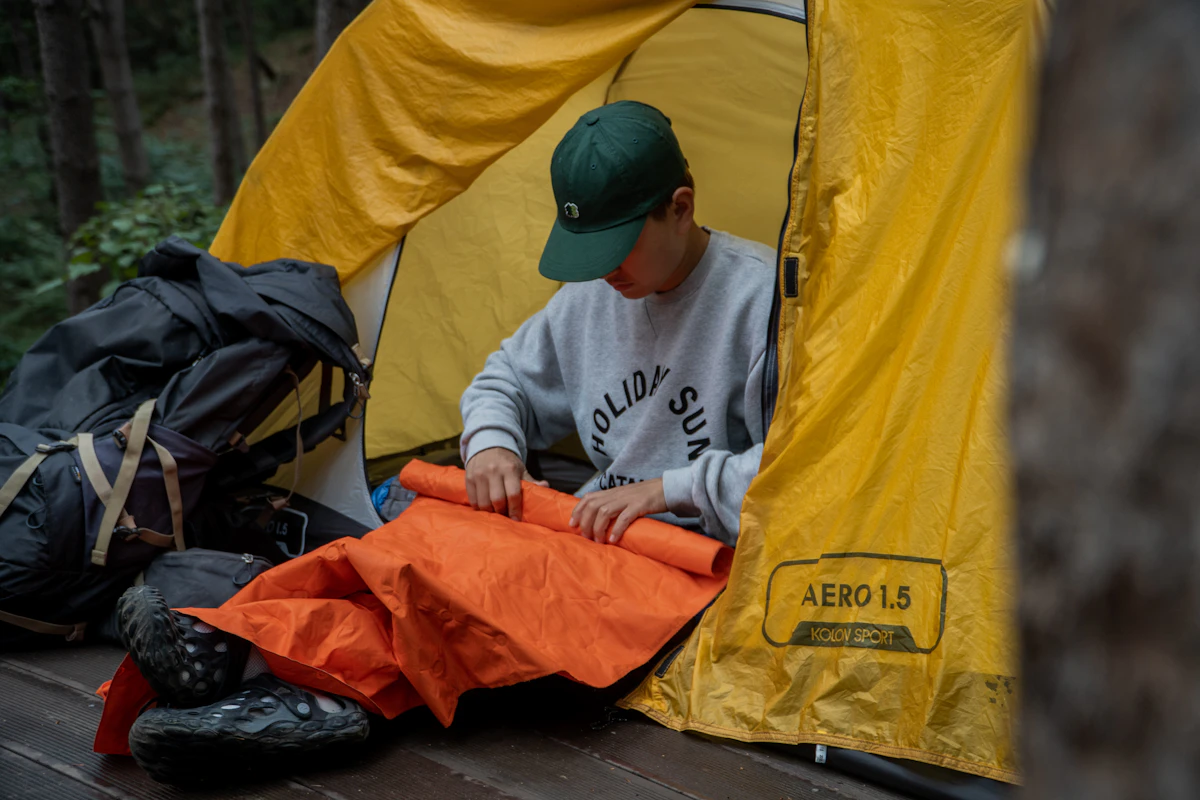
3 inches minimum, 4 inches ideal. Below 3 inches, hip and shoulder pressure points form within 2-3 hours. The 3-inch threshold is where bone-to-ground contact stops happening for most adults.
2. Internal baffle design
Dimpled Air Sprung Cells (Sea to Summit Ether Light XR) and grid-reinforced horizontal baffles (NEMO Tensor All-Season's Spaceframe) distribute pressure better than plain tube-style designs. Avoid pads with long horizontal tubes and no grid — they let your hip sink straight to the ground.
3. Quiet fabric
Side sleepers shift positions several times per night. Crinkly pads (older Therm-a-Rest NeoAir, generic budget pads) wake up tent partners. Reviewers rate the NEMO Tensor All-Season and Sea to Summit Ether Light XR among the quietest options.
4. Width (especially for restless sleepers)
Standard pads are 20 inches wide. Wide pads (25 inches) give you 2.5 extra inches per side — crucial when you change positions at night and don't want your shoulder rolling onto cold ground. The Big Agnes Q-Core Deluxe Wide is the standout.
The Side-Sleeper Geometry Table
Generic "best pad" lists compare weight and R-value and stop there. For side sleepers the two specs that decide whether your hip and shoulder stay off the ground are thickness and baffle geometry — so this table puts them side by side. Thickness figures are manufacturer specs; R-values are the ASTM F3340 standardized ratings each brand publishes; baffle descriptions follow the manufacturers and independent reviews at OutdoorGearLab, CleverHiker and Adventure Alan.
| Pad | Thickness | Baffle geometry | Width | R-value (ASTM) | Weight |
|---|---|---|---|---|---|
| Sea to Summit Ether Light XR | 3.9 in | Dimpled Air Sprung Cells (peaks & valleys) | 21.2 in | 4.1 | 16.6 oz |
| Big Agnes Insulated Q-Core Deluxe (Wide) | 3.5 in | Horizontal chambers, larger outer rails | 25 in | 4.3 | 20 oz |
| NEMO Tensor All-Season | 3.5 in | Horizontal + perpendicular grid (Spaceframe) | 20 in | 5.4 | 15.4 oz |
| Therm-a-Rest NeoAir XLite NXT | 3.0 in | Horizontal (Triangular Core Matrix) | 20 in | 4.5 | 13.6 oz |
| Exped Ultra 6.5R | 3.5 in | Vertical baffles + Comfort Cradle rails | 20.5 in | 6.9 | ~15.5 oz |
| Therm-a-Rest NeoLoft (plush benchmark) | 4.6 in | Multi-tier horizontal + raised perimeter | 22 in | 4.7 | 25.3 oz |
The decision rule
- 3 in = practical minimum. Below this, the downside hip and shoulder can compress the pad to the ground and form pressure points.
- 3.5 in = sweet spot. Enough loft to keep bones off the ground for most adults without the wobble taller pads can introduce.
- 4 in+ = plush. Best for heavier sleepers, those with hip or shoulder issues, or anyone prioritizing comfort over pack weight.
- Baffle type shapes support. Dimpled cells (Ether Light XR) and grid-reinforced horizontal baffles (Tensor All-Season's Spaceframe) create peaks and valleys that disperse hip and shoulder load; vertical baffles with raised side rails (Exped Ultra 6.5R) keep you centered. Plain long horizontal tubes with no grid are the weakest for side sleepers because the hip can sink between them.
Thickness and R-value: manufacturer specs and published ASTM F3340 ratings. Baffle behavior for side sleeping per OutdoorGearLab, CleverHiker and Adventure Alan reviews (dates in References below).
What Changed in 2026
The side-sleeper shortlist shifted meaningfully over the past year as brands refreshed their flagship pads. The headline updates:
- Sea to Summit replaced the Ether Light XT with the XR. The new XR runs 3.9 in thick and raises the R-value to 4.1 (from the XT's 3.2), and Adventure Alan's review calls it warmer, quieter, lighter and more packable at the same price.
- NEMO's Tensor line went all-season. The Tensor All-Season replaced the old Tensor Insulated and jumped to an ASTM R-value of 5.4 at 3.5 in and about 15.4 oz — turning the category's quietest pad into a genuine four-season option (OutdoorGearLab, tested).
- Therm-a-Rest launched the NeoLoft — the plushest pad it has made. At 4.6 in thick with a raised perimeter chamber, reviewers at OutdoorGearLab and Backpacker single it out for side sleepers who want mattress-like comfort (R-4.7, ~25 oz).
- Exped refreshed the Ultra 6.5R with Synmat Plus. GearJunkie reports the 2026 update boosts warmth (R-6.9) while cutting the crinkle noise older Exped pads were known for, keeping its warmth-to-weight lead.
- The NeoAir XLite NXT stayed the ultralight benchmark. Specs held at 3 in and R-4.5; Therm-a-Rest reports the NXT generation cut pad noise roughly 83 percent versus older NeoAirs, though it is still less plush than the thicker options above.
At a glance
Tap any name to jump to the detailed review.
| Pad | Tag | Thickness | Buy |
|---|---|---|---|
| Sea to Summit Ether Light XR Insulated | Best Overall for Side Sleepers | 3.9 in | Check Price |
| Big Agnes Insulated Q-Core Deluxe | Best Wide Pad | 3.5 in | Check Price |
| NEMO Tensor All-Season | Quietest on Tent Floors | 3.5 in | Check Price |
| Therm-a-Rest NeoAir XLite NXT | Best Ultralight | 3 in | Check Price |
| Exped Ultra 6.5R | Best Cold-Weather Option | 3.5 in | Check Price |
Sea to Summit Ether Light XR Insulated
Best Overall for Side SleepersThickness
3.9 in
R-value
4.1
Weight
16.6 oz
Width
21.2 in
Noise
Very quiet
Price
Best for: Side sleepers who want deep, pressure-dispersing loft without a weight penalty
The Ether Light XR replaced the older XT in 2025 and is one of the most side-sleeper-focused pads on the market. Sea to Summit specs it at 3.9 inches of Air Sprung Cell loft, and Adventure Alan's review credits the deep surface ridges and valleys of those dimpled cells with dispersing hip and shoulder pressure rather than letting the bones sink to a horizontal tube. The R-value climbed to 4.1 (from the XT's 3.2), which reviewers describe as warmer, quieter, lighter and more packable than the pad it replaced, at the same price. The main tradeoff is the roughly 21-inch standard width, which can feel narrow for active sleepers; the wide version adds coverage for a few extra ounces.
Big Agnes Insulated Q-Core Deluxe
Best Wide PadThickness
3.5 in
R-value
4.3
Weight
20 oz
Width
25 in (wide)
Noise
Quiet
Price
Best for: Larger users, restless sleepers, and anyone who switches sides multiple times per night
The Insulated Q-Core Deluxe in the 25-inch wide size is one of the most generous pads in the side-sleeper category. Those 5 extra inches over a standard 20-inch pad cut the shoulder-roll-off-the-edge problem when you change positions at night, and Big Agnes builds larger outer chambers that cradle you toward the middle. It runs 3.5 inches thick — the sweet-spot depth for side sleepers — and its R-value is independently verified at 4.3, comfortable for three-season use into cool shoulder season. The 20-ounce weight is heavier than ultralight competitors but reasonable for users over 200 pounds or anyone who has found narrower pads frustrating.
NEMO Tensor All-Season
Quietest on Tent FloorsThickness
3.5 in
R-value
5.4
Weight
15.4 oz
Width
20 in
Noise
Quietest in the category
Price
Best for: Side sleepers with a tent partner who also want four-season warmth in one pad
The Tensor All-Season replaced the older Tensor Insulated and solves a problem most side-sleeper lists ignore: noise. Reviewers at OutdoorGearLab and CleverHiker single out its face fabric as among the quietest available, so a tent partner is less likely to wake when you turn. It now runs 3.5 inches thick — right in the side-sleeper sweet spot — and its Spaceframe baffles (horizontal chambers reinforced by a perpendicular grid) keep the hip from sinking to the ground, which OutdoorGearLab specifically notes when side sleeping. The headline change is warmth: the ASTM R-value jumped to 5.4, taking it from a three-season pad to a genuine four-season one at essentially the same weight.
Therm-a-Rest NeoAir XLite NXT
Best UltralightThickness
3 in
R-value
4.5
Weight
13.6 oz
Width
20 in
Noise
Moderate (improved over older NeoAirs)
Price
Best for: Side-sleeping ultralight backpackers and thru-hikers
The lightest pad in this list — Therm-a-Rest lists the regular at 13 oz and OutdoorGearLab measured 13.6 oz — and warm for the weight at R-4.5. The NXT generation reworked the infamous NeoAir crinkle; Therm-a-Rest states pad noise dropped about 83 percent, though it is still louder than the Tensor or Ether Light. At 3 inches it sits right at the side-sleeper minimum, so it is less plush than the thicker Ether Light XR or NeoLoft, but the weight savings are real for thru-hikers. The reflective ThermaCapture and Triangular Core Matrix layers deliver warmth that punches above the pad's weight class. Best suited to side sleepers who prioritize pack weight over maximum cushion.
Exped Ultra 6.5R
Best Cold-Weather OptionThickness
3.5 in
R-value
6.9
Weight
15.5 oz (Medium)
Width
20.5 in
Noise
Quiet
Price
Best for: Side sleepers extending into shoulder season and full winter conditions
Exped's Ultra 6.5R pairs serious cold-weather warmth with side-sleeper-friendly loft. Exped rates it at R-value 6.9, enough for full winter use, yet the Medium size is specced around 12.5 to 15.5 ounces depending on size. Its 3.5 inches of vertical-baffle loft, paired with Exped's raised Comfort Cradle side rails, keeps hips and shoulders off cold ground while holding you centered on the pad. GearJunkie's review highlights the new Synmat Plus construction — recycled microfiber backed by reflective films — for boosting warmth while cutting the crinkle noise older Exped pads were known for. The included Schnozzel pump bag fills the pad with dry air and skips the lung-burning inflation routine on cold mornings. For side sleepers who push into shoulder season and winter, the warmth-to-comfort balance is hard to beat.
Setup Tips Specifically for Side Sleepers
- Don't over-inflate. Side sleepers need a slightly softer pad than back sleepers — the surface should give about 1/2 inch when you press it firmly with your palm. Rock-firm pads create harder pressure points, not softer ones.
- Top off air before bed in cold weather. Air contracts as overnight temperatures drop. A pad inflated at 70°F will feel underinflated at 40°F. Add 5-10 quick puffs right before getting in your bag.
- Use a pillow to support your top arm. Side sleepers often wake up with shoulder pain not from pad thickness but from arm position. A small pillow or stuff sack under your top arm prevents shoulder rotation.
- If your pad still feels hard, stack a foam pad underneath. A $40 closed-cell foam pad (like the Therm-a-Rest Z Lite Sol) under your air pad adds R-2 of warmth AND extra cushion. See our foam vs air comparison for the stacking strategy details.
Frequently Asked Questions
What sleeping pad thickness do side sleepers need?+
Why do I get hip and shoulder pain on a sleeping pad?+
Are wide sleeping pads better for side sleepers?+
Should side sleepers use foam or air sleeping pads?+
How do I stop my air sleeping pad from feeling unstable?+
What's the quietest sleeping pad for side sleepers?+
How thick should a sleeping pad be for side sleeping?+
Are vertical or horizontal baffles better for side sleepers?+
Do side sleepers need a wider sleeping pad?+
Related Sleeping Pad Guides
Sleeping Pad R-Value Guide
Match pad warmth to camping temperatures, the chart that applies to side sleepers and back sleepers alike.
Foam vs Air Sleeping Pads
Why side sleepers need air pads, not foam, and the stacking strategy that gives you both.
Best Backpacking Sleeping Pads
Weight-focused picks for thru-hiking — overlap with side sleeper recommendations.
NEMO Tensor All-Season Review
Deep-dive review of the quietest pad in the side-sleeper category.
References & further reading
External, authoritative sources consulted for the specs and side-sleeper analysis in this guide. R-values follow the ASTM F3340 standardized test; thickness and weight figures are manufacturer specs; comfort and baffle behavior draw on independent published tests. Sources reviewed July 2026.
- ASTM International — F3340-18, Standard Test Method for Sleeping Pad R-value
- OutdoorGearLab — NEMO Tensor All-Season review (published Aug 23, 2024): 3.5 in, R-5.4, Spaceframe baffles, side-sleeper support
- Adventure Alan — Sea to Summit Ether Light XR review (updated Feb 11, 2025): 3.9 in, R-4.1, Air Sprung Cells disperse hip/shoulder pressure
- OutdoorGearLab — Therm-a-Rest NeoLoft review (published Nov 11, 2025): 4.6 in, R-4.7, plushest pad for side sleepers
- GearJunkie — Exped Ultra 6.5R review (2026): R-6.9, vertical baffles + Comfort Cradle rails, Synmat Plus
- Therm-a-Rest (Cascade Designs) — NeoAir XLite NXT specs: 3 in, R-4.5, ~83% quieter than prior NeoAir
- REI Co-op — Sleeping pad buying guide