Gear Reviews — Updated April 2026
Best Family Camping Tents (2026)
8 tents tested for real families — rated on space, peak height, setup ease, and weather protection. Find the right fit for 4 to 8 people.
By Peak Gear Guide Editorial Team · Gear research & fact-checking
Quick Answer
The REI Co-op Kingdom 8 is the gold standard for family car camping — spacious, livable, and built to last multiple seasons, with 120 square feet of floor space and a removable room divider that creates parent and kid zones. First-time campers get functional shelter at a price that is hard to beat from the Coleman Sundome 6-Person at $99, while The North Face Wawona 6 is worth every dollar if you camp in rain-prone areas.
Our Top 8 Picks
- 1. REI Co-op Kingdom 8. Best Overall
- 2. Coleman Sundome 6-Person. Best Budget
- 3. The North Face Wawona 6. Best Premium
- 4. Kelty Wireless 6. Best for Tall Families
- 5. Marmot Limestone 6P. Best for Wet Weather
- 6. Eureka! Copper Canyon LX 6. Best Value
- 7. Big Agnes Bunk House 6. Best for Camping with Teens
- 8. Coleman Skydome 8-Person. Best 8-Person Under $400
Choosing the Best Family Camping Tent
Family camping tents are a different category entirely from backpacking shelters. When you are loading a car and driving to a campsite, weight stops mattering, and space, peak height, and livability become everything. A tent your family will actually enjoy spending time in makes the difference between a trip everyone wants to repeat and one no one talks about.
The best family camping tents in 2026 range from sub-$100 budget options to premium shelters with room dividers and covered porches. We focused our research on tents for 6 to 8 people, the realistic sweet spot for a family of 4 to 6 that wants comfortable sleeping room plus space for gear. Every tent on this list was evaluated for setup ease, floor area, peak height for adult standing, weather resistance, and overall durability over multiple camping trips.
If you are also looking for what to put inside your tent, our best sleeping bags guide and best sleeping bags for kids are natural next steps. And once you have shelter and sleep sorted, our family camping checklist walks through everything else you need for a smooth trip.
Quick Comparison
| Tent | Award | Capacity | Floor Area | Peak Height | Price | Buy |
|---|---|---|---|---|---|---|
| REI Co-op Kingdom 8 | Best Overall | 8-Person | 120 sq ft | 6'4" | $599 | Check Price |
| Coleman Sundome 6-Person | Best Budget | 6-Person | 100 sq ft | 4'11" | $99 | Check Price |
| The North Face Wawona 6 | Best Premium | 6-Person | 98 sq ft | 6'6" | $450 | Check Price |
| Kelty Wireless 6 | Best for Tall Families | 6-Person | 91 sq ft | 7'0" | $349 | Check Price |
| Marmot Limestone 6P | Best for Wet Weather | 6-Person | 100 sq ft | 6'0" | $499 | Check Price |
| Eureka! Copper Canyon LX 6 | Best Value | 6-Person | 102 sq ft | 7'0" | $179 | Check Price |
| Big Agnes Bunk House 6 | Best for Camping with Teens | 6-Person | 110 sq ft | 6'4" | $399 | Check Price |
| Coleman Skydome 8-Person | Best 8-Person Under $400 | 8-Person | 162 sq ft | 6'2" | $300 | Check Price |
Full Reviews
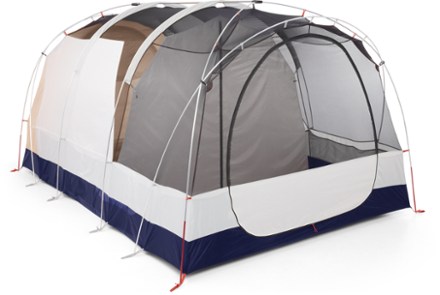
1. REI Co-op Kingdom 8
Best Overall — $599
Capacity
8-Person
Floor Area
120 sq ft
Weight
14.5 lbs
Peak Height
6'4"
Price
$599
Pros
- +Freestanding design holds its shape without staking
- +Removable room divider creates parent and kid zones
- +Covered porch area keeps gear dry and off the ground
Cons
- –Heaviest pick on the list at 14.5 lbs
- –Premium price puts it out of reach for budget shoppers
Verdict: The Kingdom 8 is the gold standard for family car camping — spacious, livable, and built to last multiple seasons.

2. Coleman Sundome 6-Person
Best Budget — $99
Capacity
6-Person
Floor Area
100 sq ft
Weight
11.5 lbs
Peak Height
4'11"
Price
$99
Pros
- +One of the fastest tents to pitch on this list
- +Coleman's proven, decade-tested design holds up season after season
- +Outstanding value for first-time family campers
Cons
- –Lower peak height means adults cannot stand upright inside
- –Budget materials show wear sooner than premium picks
Verdict: If you are new to camping or need a second tent for guests, the Sundome 6 delivers functional shelter at a price that is hard to beat.

3. The North Face Wawona 6
Best Premium — $450
Capacity
6-Person
Floor Area
98 sq ft
Weight
17.6 lbs
Peak Height
6'6"
Price
$450
Pros
- +Exceptional weather resistance with full-coverage rainfly
- +6'6" peak height — most adults can stand fully upright
- +Seam-taped construction keeps the interior dry in heavy rain
Cons
- –At 17.6 lbs, it is the heaviest 6-person pick on the list
Verdict: The Wawona 6 is worth every dollar if you camp in rain-prone areas and want a tent that will hold up for years without compromise.

4. Kelty Wireless 6
Best for Tall Families — $349
Capacity
6-Person
Floor Area
91 sq ft
Weight
15.5 lbs
Peak Height
7'0"
Price
$349
Pros
- +Tallest peak height on the list at a full 7 feet
- +Fast-pitch hub system significantly reduces setup time
- +Good floor-area-to-price ratio for mid-range shoppers
Cons
- –No room divider, so privacy between sleeping areas is limited
Verdict: If anyone in your family is over 6 feet tall or you simply hate crouching inside your tent, the Kelty Wireless 6 solves that problem better than anything else at this price.

5. Marmot Limestone 6P
Best for Wet Weather — $499
Capacity
6-Person
Floor Area
100 sq ft
Weight
18 lbs
Peak Height
6'0"
Price
$499
Pros
- +Factory-taped seams on both fly and floor for maximum rain protection
- +Oversized vestibules on two sides for gear staging in wet conditions
- +Robust pole geometry handles sustained wind without buckling
Cons
- –Heaviest 6-person pick at 18 lbs — strictly a car camping tent
Verdict: Campers who visit the Pacific Northwest, Great Lakes, or any reliably rainy destination will appreciate how seriously Marmot engineers waterproofing into every detail of the Limestone.

6. Eureka! Copper Canyon LX 6
Best Value — $179
Capacity
6-Person
Floor Area
102 sq ft
Weight
18.7 lbs
Peak Height
7'0"
Price
$179
Pros
- +Full 7-foot peak height at a budget-friendly price
- +102 sq ft floor area is the most generous among sub-$200 picks
- +Near-vertical walls maximize usable interior width
Cons
- –Heavy for its size at 18.7 lbs, not ideal for any hiking
Verdict: The Copper Canyon LX 6 punches far above its price tag on space and headroom, making it the strongest dollar-for-dollar option for families who drive to their campsite.

7. Big Agnes Bunk House 6
Best for Camping with Teens — $399
Capacity
6-Person
Floor Area
110 sq ft
Weight
17.2 lbs
Peak Height
6'4"
Price
$399
Pros
- +Built-in room divider creates genuine two-room separation
- +110 sq ft floor is the most spacious 6-person pick on the list
- +Excellent internal organization with multiple pockets and loops
Cons
- –Setup takes around 20 minutes — more complex than most rivals
Verdict: Teenagers need their own space, and the Bunk House 6 delivers that with a proper two-room layout and enough floor area for everyone to spread out without stepping on each other.

8. Coleman Skydome 8-Person
Best 8-Person Under $400 — $300
Capacity
8-Person
Floor Area
162 sq ft
Weight
21.4 lbs
Peak Height
6'2"
Price
$300
Pros
- +162 sq ft is the largest main floor on the list — fits two queen airbeds
- +Pre-attached poles let the spec sheet claim a sub-5-minute pitch
- +Attached 13 x 4 ft screen room adds a covered lounge or extra sleeping space
Cons
- –6'2" center height is shorter than the standing-room picks above
- –Owner reports note the screen room is not waterproof — fine for shade, not storms
Verdict: For large families or two families sharing a campsite, the Skydome 8 pairs the biggest floor here with a fast, pre-attached-pole pitch and a bonus screen room — eight-person capacity without a four-figure price tag.
Family Tent Buying Guide
A family tent is one of the most important pieces of camping gear you will buy. Here is what actually matters when choosing between options.
Capacity: Size Down From the Rating
The capacity printed on a tent box is the number of sleeping pads that physically fit side by side. It assumes no gear inside and no wriggle room. For actual comfort, subtract 1 or 2 from the rated capacity. A 6-person tent is comfortable for 4; an 8-person tent is comfortable for 5 or 6. If anyone in your group has a double-wide sleeping pad or you want space to dress without contorting, size up.
Peak Height for Adults
Peak height is one of the single biggest livability factors in a family tent — more so than for backpacking. When you are managing kids, changing clothes, or waiting out a rainstorm for hours, being able to stand upright transforms the experience. Look for a minimum of 6 feet for comfortable standing. Tents at 6'4\" or higher are significantly more pleasant for average-height adults.
Floor Area Per Person
A useful rule of thumb: aim for at least 20 square feet of floor area per person for comfortable car camping. That gives each person space for their sleeping pad, bag, and a small pile of clothes and gear. 15 sq ft per person is workable but tight. Anything below that and you will feel every bump in the night when a sleeping bag shifts into your space.
Vestibule Space
A vestibule is the covered area outside the main door, under the rainfly. For families, it is where muddy boots, wet jackets, and day packs live so they stay out of the sleeping area. A large vestibule also functions as a covered transition space when it is raining, a place to get dressed and sort gear without standing in the rain. Tents with two vestibules or a dedicated front porch area are significantly more functional for family use.
Setup Complexity
Family tents are larger and require more poles, which makes setup more involved. Most car camping tents take two people and 10 to 20 minutes to pitch. A few, like the Coleman Sundome, set up faster thanks to simpler pole architectures. Color-coded poles and clips make a real difference. Always practice the setup once at home before your first trip — a campsite in failing light with tired kids is not the time to learn the instructions.
Freestanding vs. Non-Freestanding
All tents on this list are freestanding, meaning the pole structure holds the tent upright without staking. This matters for families because it lets you move the tent to adjust its position or orientation after you have set it up. You should still stake out the rainfly for weather protection, but freestanding designs are significantly more beginner-friendly and practical for car camping.
Family Tent Size Guide
Use this table to match tent capacity ratings to real-world comfortable sleeping groups. The “comfortable for” column assumes sleeping bags, moderate gear inside, and adults who value not sleeping on top of each other.
| Tent Capacity Rating | Comfortable For | Typical Use Case |
|---|---|---|
| 4-Person | 2 adults + 1 child | Small families; couples with a toddler or young child |
| 6-Person | 2 adults + 2–3 children | Standard family of 4; comfortable with gear stored inside |
| 8-Person | 2 adults + 4–5 children, or 2 families | Large families; group camping with plenty of floor space |
| 10–12-Person | 6–8 people | Multi-family trips; extended family reunions |
Setup Tips for Family Camping
Practice at Home First
Set up your new tent in the backyard before your first trip. A 15-minute rehearsal at home will save you 45 minutes of frustration at the campsite after a long drive.
Stake Before You Raise
Lay the tent footprint flat and stake the corners first, then assemble and raise the pole structure. This prevents the tent from shifting while you work and keeps the floor taut.
Get Kids Involved
Assign age-appropriate jobs — small children can stake corners, older kids can feed poles. It speeds up the process and invests them in the camping experience.
Always Stake the Rainfly
Even on a clear night, stake out the rainfly fully. Weather can change overnight and a properly tensioned fly also significantly improves ventilation by keeping air moving under it.
Orient the Door Wisely
Position the tent door away from the prevailing wind and toward your campfire or picnic area. This small decision makes daily life in camp noticeably more convenient.
Use a Footprint or Ground Cloth
A footprint under your tent protects the floor from abrasion and punctures, extends the life of the tent dramatically, and keeps ground moisture from seeping through.
Frequently Asked Questions
What size tent do I need for a family of 4?
A 6-person tent is usually the right fit for a family of 4. Manufacturer capacity ratings are based on how many sleeping pads physically fit on the floor, not how many people can sleep comfortably. A 6-person tent gives a family of 4 room for gear, comfortable movement at night, and a less cramped feeling during rainy days spent inside.
Are 6-person tents actually good for 6 people?
Yes, but only if your group sleeps in sleeping bags and does not bring large gear items inside. Six adults shoulder-to-shoulder is technically possible, but most families find a 6-person tent is a genuine fit for 3–4 people with full comfort. If your group is truly 6 people, consider an 8-person tent instead.
What tent is best for car camping with kids?
For car camping with kids, prioritize peak height (so adults can stand), floor area (at least 15 sq ft per person for comfort), and a room divider so parents get a private sleeping space. The REI Co-op Kingdom 8 and Big Agnes Bunk House 6 both excel here. Setup ease also matters, a tent that takes 30 minutes to pitch is painful after a long drive with tired kids.
How much should I spend on a family tent?
For a first tent, $150–$250 gets you a functional shelter like the Coleman Sundome 6 or Eureka! Copper Canyon LX 6. At $300–$500, you get significantly better materials, weather resistance, and peak height. Above $500, you are paying for name-brand engineering and long-term durability. Most families are well-served by a $200–$350 tent.
What is the tallest family tent available?
The Kelty Wireless 6 and Eureka! Copper Canyon LX 6 both hit 7 feet of peak height, the highest on our list. The North Face Wawona 6 reaches 6'6", and the Coleman Skydome 8-Person sits at 6'2". If standing room is your top priority, the Kelty Wireless 6 or Eureka! Copper Canyon LX 6 are your best options.
How do I keep a family tent warm at night?
Warmth in a tent comes primarily from your sleeping bags and sleeping pads, not the tent itself. Use sleeping bags rated at least 10–15°F colder than the expected overnight temperature. Insulated sleeping pads with an R-value of 2 or higher block ground cold. You can also use a tent heater designed for enclosed spaces, but always ensure ventilation is open to avoid carbon monoxide buildup. A smaller tent retains body heat better than a large one on cold nights.
Related Guides
Affiliate Disclosure & Editorial Independence
Peak Gear Guide is reader-supported. When you purchase through links on our site, we may earn an affiliate commission at no additional cost to you. Our editorial team independently researches and recommends products. Affiliate partnerships do not influence our reviews, rankings, or recommendations. All opinions are our own, based on structured research of specs, published test data, and verified-owner reviews. Prices and availability are accurate as of the date of publication and may change.
References & further reading
External, authoritative sources we consulted while researching this guide.