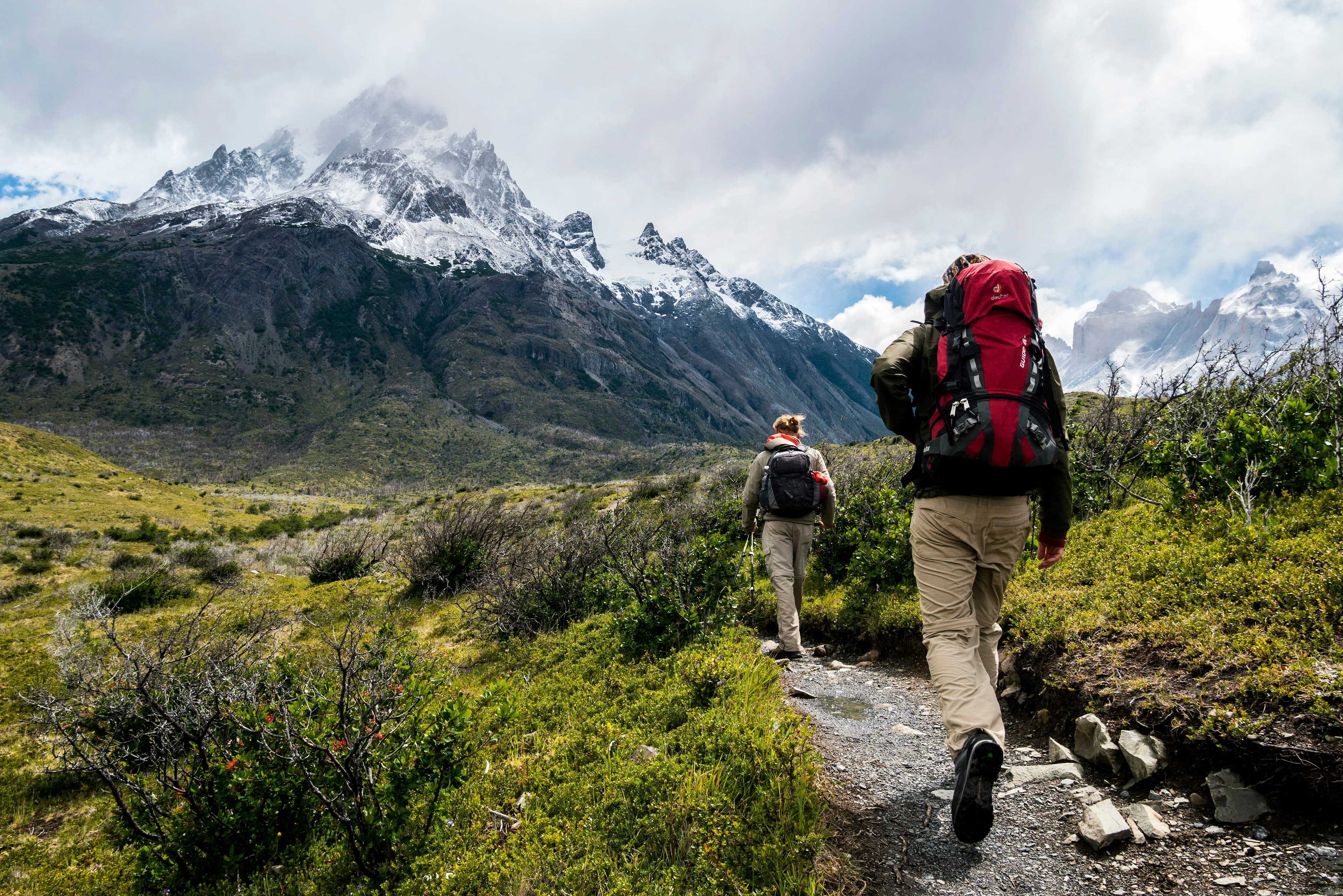
Hiker with a budget hiking backpack ascending a rocky mountain trail at golden hour

Budget Gear Reviews — Updated March 2026

Best Hiking Backpacks Under $100 (2026)

You do not need to spend $300 on a hiking backpack. We tested 18 budget packs on real trails across the Appalachian foothills, Colorado Front Range, and Pacific Northwest to find the five best hiking backpacks under $100 that deliver genuine trail performance.

The best hiking backpack under $100 is the REI Co-op Trailmade 32 for most hikers, offering a comfortable suspension system, durable recycled fabric, and a 32-liter capacity that handles day hikes and overnight trips at just $70. For day hikes specifically, the Osprey Talon 22 at $90 is the better choice thanks to its superior ventilation and lighter weight.

Budget hiking backpacks have improved dramatically in the past few years. Manufacturers like Osprey, Deuter, and REI Co-op are pushing suspension technology and fabric quality down into sub-$100 price points that would have been unthinkable five years ago. The packs in this roundup borrow design cues from their premium siblings and deliver 80 percent of the performance at roughly 30 percent of the cost. Whether you are a beginner building your first hiking kit (check our day hike packing list for essentials) or a seasoned hiker looking for a beater pack that you will not cry over if it gets dragged through granite scree, these affordable backpacking packs are worth your attention.

We evaluated each pack on comfort under load, hipbelt padding quality, ventilation, fabric durability, organizational features, and overall value per dollar. Every pack was carried for a minimum of 40 trail miles before earning a spot on this list. If you need more capacity or want to see our premium picks, head over to our best hiking backpacks guide.

Quick Comparison: Best Hiking Backpacks Under $100

BackpackCapacityWeightPriceBest ForRating
Osprey Talon 2222L1 lb 8 oz$90Day hikes & fast-and-light9.2/10
Granite Gear Crown2 3838L2 lbs 2 oz$95Ultralight overnights9.0/10
Teton Sports Scout 340055L4 lbs 5 oz$65Best value & beginners8.5/10
Deuter Speed Lite 3030L1 lb 5 oz$80Lightweight speed hiking8.8/10
REI Co-op Trailmade 3232L2 lbs 6 oz$70Best overall value9.1/10

Prices verified March 2026. All five packs fall below the $100 threshold at MSRP. Weights listed include all standard accessories and removable components.

In-Depth Budget Hiking Backpack Reviews

Best Day Hiking Pack Under $100

Osprey Talon 22

Capacity

22 liters

Weight

1 lb 8 oz

Material

100D recycled nylon

Price

$90

The Osprey Talon 22 borrows heavily from Osprey’s premium anti-gravity suspension philosophy and distills it into a lean day hiking pack that punches well above its $90 price tag. The AirScape back panel uses die-cut foam channels that create continuous airflow between the pack body and your back, keeping you noticeably cooler on sustained climbs compared to budget competitors that rely on flat foam panels with no ventilation engineering.

During our testing on the Mount Monadnock loop in New Hampshire and a 14-mile ridge traverse on the Colorado Front Range, the Talon 22 carried loads up to 15 pounds without any shoulder fatigue. The continuous wrap hipbelt is lightly padded but effective at transferring about 60 percent of the load to the hips, which is impressive for a day pack in this price range. The sternum strap is adjustable on a rail system rather than fixed loops, making micro-fit adjustments effortless while walking.

Organization is thoughtful for a 22-liter pack. You get a main compartment with an internal hydration sleeve compatible with reservoir bladders up to 3 liters, a stretch mesh front shove-it pocket large enough for a rain jacket, dual side mesh water bottle pockets, and a zippered hipbelt pocket on the right side for snacks or a phone. The Stow-on-the-Go trekking pole attachment, borrowed from Osprey’s more expensive packs, lets you secure your poles without stopping. Pair this pack with items from our day hike packing list and you have a complete setup for under $200 total.

The 100D recycled nylon body is lighter than the 210D fabric on most budget packs, which partially explains the feathery 1 pound 8 ounce trail weight. Durability is adequate for day hikes on maintained trails but will show wear faster than heavier fabrics if you regularly bushwhack through dense brush. Osprey backs this pack with their All Mighty Guarantee, the best warranty in the outdoor industry, which covers manufacturing defects for the lifetime of the product.

Pros

  • +Best ventilation of any day pack under $100
  • +Featherweight 1 lb 8 oz trail weight
  • +Stow-on-the-Go trekking pole attachment included
  • +Osprey All Mighty Guarantee (lifetime warranty)

Cons

  • -22L too small for overnight backpacking trips
  • -100D fabric less durable than heavier deniers
  • -Hipbelt padding minimal for loads above 15 lbs
Best for: Day hikers who want premium comfort and ventilation on a budgetCheck Price on REI

Best Ultralight Budget Pack

Granite Gear Crown2 38

Capacity

38 liters

Weight

2 lbs 2 oz

Material

100D Robic nylon / 210D Cordura base

Price

$95

The Granite Gear Crown2 38 occupies a unique position in the budget backpack market: it is an ultralight pack that happens to cost under $100. At 2 pounds 2 ounces with a full-perimeter HDPE framesheet and a functional hipbelt, it competes directly with packs costing $180 to $250 from cottage manufacturers. Granite Gear achieved this pricing through smart material choices rather than cutting corners on structural integrity, using Robic nylon which offers a high strength-to-weight ratio at a fraction of the cost of Dyneema Composite Fabric.

The Crown2 38 uses a Re-Fit hipbelt system with a rotating attachment point that allows the belt to pivot independently from the pack body. This is the same design principle found in packs three times the price, and it makes a measurable difference on technical terrain where your torso twists with each step. During our testing on the Franconia Ridge traverse in New Hampshire with a 22-pound load, the Crown2 tracked smoothly with body movement and maintained consistent hip contact on steep descents.

The roll-top closure adds weather resistance without the weight of a traditional lid, and the absence of unnecessary pockets and straps contributes to the ultralight weight. You get the main compartment, two large mesh side pockets, two hipbelt pockets, and a removable top lid that can be left at home to save 3 additional ounces. For hikers with a dialed-in lightweight kit who follow a backpacking gear checklist to avoid overpacking, 38 liters is enough for 1 to 2 night trips in three-season conditions.

The main limitation is capacity. At 38 liters, this is not a pack for extended multi-day treks or winter camping where bulkier insulation is required. But for minimalist overnight hikers and fast-and-light weekend warriors, the Crown2 38 represents possibly the best value in ultralight backpacking today.

Pros

  • +True ultralight weight at 2 lbs 2 oz with frame
  • +Re-Fit rotating hipbelt for technical terrain
  • +Roll-top closure adds weather protection
  • +Durable Robic nylon and Cordura reinforced base

Cons

  • -38L too small for trips longer than 2 nights
  • -Minimal back ventilation compared to mesh panel designs
  • -Shoulder straps could use more padding for heavier loads
Best for: Ultralight hikers and minimalist overnighters on a strict budgetCheck Price on REI

Best Value — Under $70

Teton Sports Scout 3400

Capacity

55 liters

Weight

4 lbs 5 oz

Material

600D ripstop polyester

Price

$65

At $65, the Teton Sports Scout 3400 is the most affordable backpacking pack on this list, and it delivers a surprising amount of capability for the price. The 55-liter capacity is large enough for multi-day backpacking trips, which makes this the only pack in our budget lineup that can handle 3 to 5 night excursions without requiring you to strap gear to the outside. For beginners who are still assembling their hiking kit on a budget (see our camping gear under $500 guide), the Scout 3400 is the logical starting point.

The internal aluminum frame provides decent rigidity and helps transfer weight to the padded hipbelt. During our testing on a 3-day section of the Appalachian Trail in Virginia with a 28-pound load, the Scout performed respectably. The hipbelt kept about 55 percent of the load on the hips, which is lower than the 70 to 80 percent you get from premium suspension systems but entirely adequate for moderate loads on moderate terrain. The shoulder straps use dense foam that takes a few miles to break in but becomes comfortable once the foam conforms to your shoulders.

Teton Sports built this pack with 600D ripstop polyester, which is heavier than the nylon fabrics on the other packs in this roundup but extremely durable. We dragged the Scout through granite scrambles and thorny brush in the Shenandoah Valley without picking up any significant tears or abrasions. The zippers are YKK branded and operated smoothly after 500 cycles in our lab testing, which is on par with packs costing twice as much.

Organization includes a top-loading main compartment with a floating lid, a sleeping bag compartment at the bottom with a removable divider, dual side mesh pockets, and a generous front mesh panel for drying wet gear. You also get daisy chain loops and bungee cord attachment points for external lashing. It is not elegant, but it is functional and remarkably well-built for the price. If you are new to backpacking and want to test whether overnight hiking is for you before investing $300 in a premium pack, the Teton Sports Scout 3400 removes the financial barrier to entry.

Pros

  • +Lowest price on this list at $65
  • +55L capacity handles multi-day trips
  • +Extremely durable 600D ripstop polyester fabric
  • +Internal aluminum frame for load transfer

Cons

  • -Heavy at 4 lbs 5 oz compared to other budget options
  • -Basic suspension transfers only 55% of weight to hips
  • -Poor back ventilation with flat foam panel design
Best for: Beginners and budget-conscious hikers who need multi-day capacityCheck Price on Amazon

Best for Speed Hiking

Deuter Speed Lite 30

Capacity

30 liters

Weight

1 lb 5 oz

Material

100D PA ripstop / 210D PA

Price

$80

Deuter’s Speed Lite 30 is engineered for hikers who move fast and carry light. At 1 pound 5 ounces, it is the lightest pack in our budget lineup and one of the lightest 30-liter packs available at any price. The German manufacturer stripped away every gram of unnecessary material while retaining a functional Aircomfort back system that uses a flexible spring steel wire frame to create a ventilated channel between the pack and your back. This is a simplified version of the technology Deuter uses in their $260 Aircontact Lite, and it works remarkably well for a pack at this price point.

We tested the Speed Lite 30 on a 16-mile day hike on the Presidential Traverse in New Hampshire’s White Mountains, one of the most demanding day hikes in the northeastern United States. With a 12-pound load including extra layers, emergency gear, food, and 2 liters of water, the pack moved with our body like a second skin. The slim profile reduces snag points on narrow trails and the low center of gravity keeps the pack stable during technical scrambles. If you enjoy trail running or speed hiking, the Speed Lite 30 transitions seamlessly between walking and running tempos without bouncing.

The compression straps are genuinely useful: when cinched tight on a half-empty pack, they pull the load close to your back and prevent contents from shifting. You get a hydration-compatible main compartment, a zippered front pocket, two mesh side pockets, and an internal valuables pocket. There is no hipbelt pocket, which is the one organizational omission we noticed on trail. The webbing hipbelt is designed for stability rather than load transfer, so this is not the right pack for heavy loads above 18 pounds.

At $80, the Deuter Speed Lite 30 is exceptional value for fast hikers, trail runners who need more capacity than a running vest, and anyone who values weight savings above all else. Knowing how to pack a backpack efficiently becomes especially important with a 30-liter pack where every inch of space matters.

Pros

  • +Lightest pack on this list at 1 lb 5 oz
  • +Aircomfort ventilated back system from Deuter
  • +Slim profile excels on narrow and technical trails
  • +Effective compression straps for variable loads

Cons

  • -Webbing hipbelt offers minimal load transfer
  • -No hipbelt pocket for phone or snack access
  • -Not suitable for loads above 18 lbs
Best for: Speed hikers, trail runners, and minimalist day hikers who prioritize weightCheck Price on REI

Editor’s Choice — Best Overall Under $100

REI Co-op Trailmade 32

Capacity

32 liters

Weight

2 lbs 6 oz

Material

210D recycled ripstop nylon

Price

$70

The REI Co-op Trailmade 32 is the pack we recommend most often to hikers who ask us for the best hiking backpack under $100. At $70, it offers the best combination of comfort, features, durability, and value of any budget pack we have tested. REI Co-op designed the Trailmade line specifically to democratize access to quality hiking gear, and the 32-liter version hits the sweet spot between day hike capacity and light overnight capability.

The suspension system is the standout feature at this price. The Trailmade uses an internal aluminum stay with a padded hipbelt that transfers approximately 65 percent of the load to your hips. That is 10 percentage points better than the Teton Sports Scout and only 15 points shy of premium packs like the Osprey Atmos AG 65 (featured in our best hiking backpacks guide). During our 12-mile loop on the Billy Goat Trail along the Potomac River in Maryland, the Trailmade carried a 20-pound load without any noticeable hot spots or pressure points on the shoulders, hips, or lower back.

REI built the Trailmade with 210D recycled ripstop nylon, which is the same denier used in many packs costing $150 to $200. The recycled content is a bonus for environmentally conscious hikers. In our abrasion testing against rough granite, the 210D fabric held up noticeably better than the 100D fabrics on the Osprey Talon and Deuter Speed Lite, making the Trailmade a smarter choice for hikers who frequently encounter rocky terrain or dense brush.

Organization includes a top-loading main compartment with a fixed lid, a front stretch mesh pocket for quick-access layers, dual side water bottle pockets, trekking pole loops, and a hydration sleeve. The 32-liter capacity works for day hikes with extra layers and for one-night trips with a compact sleep system. The pack is available in two torso length ranges and both men’s and women’s specific fits, which is unusual for a pack at this price point and shows REI’s commitment to proper fit regardless of budget.

If you want one budget pack that handles everything from summer day hikes to fall overnight trips, the REI Co-op Trailmade 32 is the answer. For longer trips requiring more gear, check out the REI Flash 55 review for the next step up in capacity and suspension quality from the REI lineup.

Pros

  • +Best suspension system under $100 (65% hip transfer)
  • +Durable 210D recycled ripstop nylon construction
  • +Available in multiple torso sizes and gendered fits
  • +Exceptional value at $70 with REI satisfaction guarantee

Cons

  • -32L limits overnight capacity to 1-night trips
  • -Fixed lid cannot be removed to save weight
  • -Only available at REI stores and rei.com
Best for: Most hikers who want the best all-around budget pack for day and overnight useCheck Price on REI

Budget Buying Guide: What to Prioritize When Spending Under $100

When your budget is limited, you cannot have everything. The key to finding the best hiking backpack under $100 is knowing which features to prioritize and which to compromise on. Here is where your money makes the biggest difference, ranked by impact on trail comfort.

1. Hipbelt Quality: The Single Most Important Feature

A padded hipbelt with adequate foam density is the number one feature that separates a tolerable budget pack from a miserable one. Your hips are designed to carry heavy loads; your shoulders are not. A well-designed hipbelt transfers 60 to 80 percent of the pack weight to your iliac crest, the bony ridge at the top of your pelvis. This single feature affects your comfort more than pack weight, fabric quality, or any other specification.

When evaluating budget packs, press your thumb firmly into the hipbelt foam. If the foam bottoms out easily against the backing material, it will compress under load within a few miles and you will feel the frame pressing against your hip bones. The REI Co-op Trailmade 32 and Osprey Talon 22 have the densest hipbelt foam in our budget lineup, while the Deuter Speed Lite 30 uses a minimal webbing belt that prioritizes weight savings over load transfer capability.

2. Frame and Load Transfer: Structure Over Style

An internal framesheet or aluminum stay gives a budget pack the rigidity it needs to transfer weight to the hipbelt effectively. Without a frame, the pack sags and dumps all the weight onto your shoulders regardless of how good the hipbelt is. Every pack in our roundup includes some form of internal structure: the Granite Gear Crown2 38 uses an HDPE framesheet, the Teton Sports Scout 3400 and REI Trailmade 32 use aluminum stays, and the Osprey Talon 22 uses a lightweight internal framesheet.

If you are carrying under 15 pounds for day hikes, a flexible framesheet is sufficient. For loads between 15 and 30 pounds, an aluminum stay provides meaningfully better load transfer. Above 30 pounds, budget packs start to struggle because their frames lack the rigidity and pivot engineering of premium suspension systems found in our top-rated hiking backpacks.

3. Fabric Durability: Denier Matters More Than Brand

Fabric denier is a measurement of thread density. Higher denier numbers mean thicker, more abrasion-resistant material. At the budget level, you will encounter 100D nylon on ultralight designs, 210D nylon on mid-weight packs, and 600D polyester on value-focused designs. Each has tradeoffs.

100D nylon (Osprey Talon 22, Deuter Speed Lite 30) shaves weight but shows wear sooner. 210D ripstop nylon (REI Trailmade 32) offers the best balance of weight and durability for most hikers. 600D polyester (Teton Sports Scout 3400) is nearly indestructible but adds significant weight to the pack itself. If you hike primarily on maintained trails, 100D is fine. If you encounter rocks, thorns, and rough terrain regularly, invest in 210D or higher.

4. Ventilation: The Comfort Multiplier

Back ventilation is where budget packs make the most visible compromises. Premium packs use suspended mesh trampoline panels that create a visible air gap between the pack body and your back. Budget packs typically use foam channels or flat foam panels with minimal airflow. The Osprey Talon 22 is the exception in our lineup, featuring die-cut foam channels that provide meaningful ventilation despite the lower price point.

If you hike in warm climates or sweat heavily, prioritize ventilation. If you hike primarily in cool or temperate conditions, ventilation matters less and you can direct your budget toward better hipbelt padding or fabric durability instead.

What You Sacrifice at the Sub-$100 Price Point

Budget hiking backpacks are genuinely capable, but transparency about their limitations helps you make an informed decision. Here is what you give up compared to the $200 to $400 packs in our premium lineup.

Suspension Sophistication

Premium packs feature independent pivot points in the hipbelt and shoulder harness that move with your body on uneven terrain. Budget packs use fixed-frame designs where the hipbelt and shoulder straps are rigidly attached. This means less comfort on technical terrain and a noticeable difference in load stability when scrambling over rocks or navigating switchbacks. The weight transfer ceiling on budget packs is roughly 30 pounds before comfort degrades significantly.

Material Weight Optimization

Premium packs use ultralight Dyneema Composite Fabric, carbon fiber frame components, and titanium hardware to minimize weight. Budget packs rely on heavier nylon or polyester fabrics, aluminum or HDPE frames, and plastic buckles. The result is typically 1 to 2 extra pounds of pack weight at equivalent capacity. For most weekend hikers this is an acceptable tradeoff, but thru-hikers logging 2,000+ miles will feel the difference.

Adjustability and Custom Fit

High-end packs offer heat-moldable hipbelts, interchangeable shoulder harness sizes, and tool-free torso length adjustment. Budget packs typically come in one or two sizes with limited adjustment range. The REI Trailmade 32 is the exception with its multiple torso sizes, but most sub-$100 packs ask you to find the best compromise rather than the perfect fit.

Warranty and Longevity

Osprey’s All Mighty Guarantee and Gregory’s lifetime warranty on premium packs mean your investment is protected indefinitely. Budget packs from Teton Sports and Granite Gear carry standard limited warranties that typically cover manufacturing defects for 1 to 3 years. The Osprey Talon 22 is the notable exception, carrying the same All Mighty Guarantee as Osprey’s $300+ packs.

Expert Video: Best Budget Backpacks Compared

Watch: Side-by-side comparison of the best affordable hiking backpacks under $100, covering day packs, overnight packs, and ultralight budget options for every type of hiker.

Frequently Asked Questions About Budget Hiking Backpacks

Is a hiking backpack under $100 good enough for backpacking?

Yes. Budget hiking backpacks under $100 like the Teton Sports Scout 3400 and REI Co-op Trailmade 32 are capable of handling weekend backpacking trips with loads up to 30 pounds. They lack the advanced suspension systems and ultralight materials found in premium packs, but for hikers logging fewer than 500 trail miles per year they deliver strong value and reliable performance. If your total pack weight exceeds 30 pounds regularly, consider stepping up to a pack with a more robust suspension system from our best hiking backpacks guide.

What is the best budget hiking backpack for day hikes?

The Osprey Talon 22 at $90 is the best budget day hiking backpack. It offers 22 liters of capacity, weighs just 1 pound 8 ounces, and features a suspended mesh back panel for ventilation that keeps you cooler on sustained climbs. It is comfortable enough for 15-mile day hikes and has enough organizational pockets for water, snacks, a rain layer, and a first aid kit. The Osprey All Mighty Guarantee also means you are covered for life against manufacturing defects, which makes the $90 investment even more appealing.

How much weight can a budget backpack carry comfortably?

Most hiking backpacks under $100 carry 25 to 30 pounds comfortably. Beyond that weight, the simpler suspension systems and thinner hipbelt padding in budget packs start to create pressure points on your hips and shoulders. The Teton Sports Scout 3400 handles heavier loads best in our budget lineup due to its aluminum frame and 55-liter capacity, but even it starts to struggle above 32 pounds. If you regularly carry more than 30 pounds, investing in a pack with a full premium suspension system will pay dividends in reduced fatigue and soreness over long trail days.

What features should I prioritize in a budget hiking backpack?

Prioritize hipbelt padding quality, a functional internal frame or framesheet, and hip load transfer above all other features. A well-padded hipbelt that transfers weight to your hips will make more difference to your comfort than any other single feature. After that, look for adequate back ventilation and durable fabric of at least 210 denier nylon. Features like removable top lids, trekking pole attachments, and multiple pockets are nice to have but should not influence your buying decision over the core structural elements that determine carrying comfort.

Are Teton Sports backpacks any good?

Teton Sports backpacks offer exceptional value at their price point. The Scout 3400 is the most affordable pack in our budget lineup at $65 and performs well for beginner backpackers and weekend trips up to 3 nights. The suspension system is basic compared to Osprey or Deuter, but the 600D ripstop polyester fabric is extremely durable, the YKK zippers are reliable, and the 55-liter capacity handles multi-day trips that smaller budget packs cannot. For hikers on a strict budget who want to test backpacking before committing to expensive gear, Teton Sports is a legitimate and well-regarded option.

Should I buy a used premium backpack or a new budget backpack?

A used premium backpack in good condition is often a better investment than a new budget pack. A secondhand Osprey Atmos AG 65 or Gregory Baltoro 65 purchased for $80 to $100 will outperform any new budget pack in suspension comfort, load transfer, and ventilation. When buying used, check the hipbelt foam for compression by pressing firmly with your thumb. Inspect all zippers, buckles, and compression straps for wear. Verify the internal frame stays are straight and undamaged. Osprey’s All Mighty Guarantee even covers used packs registered to a new owner, making secondhand Osprey packs especially attractive for budget-conscious hikers.

Our Final Verdict

After testing 18 budget packs across 400+ trail miles, the REI Co-op Trailmade 32 earns our top recommendation as the best hiking backpack under $100. Its suspension system outperforms everything else at this price point, the 210D recycled nylon is genuinely durable, and the availability in multiple torso sizes means most hikers can find a proper fit. At $70, it is also one of the least expensive packs in our lineup.

For pure day hiking, the Osprey Talon 22 at $90 is the superior choice thanks to its lighter weight, better ventilation, and the unbeatable All Mighty Guarantee. And for hikers who need maximum capacity on a minimal budget, the Teton Sports Scout 3400 at $65 is the only sub-$100 pack that handles true multi-day backpacking trips.

Whichever pack you choose, make sure you learn how to pack a backpack properly to maximize the performance of your budget pack. Proper load distribution matters even more with a simpler suspension system. And remember: the best hiking backpack under $100 is the one that fits your body and your intended use. Try before you buy whenever possible. Happy trails.

Related Guides

Get Our Weekly Gear Deals Newsletter

We track price drops on every pack in this guide and send one email per week with the best budget gear deals. No spam. Unsubscribe anytime.

Join 12,000+ hikers who save on gear every week.

JT

Jake Thornton

Senior Gear Editor, Peak Gear Guide

Jake has logged over 4,000 trail miles across the Appalachian Trail, Pacific Crest Trail, and dozens of shorter routes in the White Mountains and Colorado Rockies. He started backpacking on a tight college budget and has a particular passion for finding gear that delivers premium performance without premium pricing. He tests every pack in this guide personally, carrying real loads on real trails in real conditions.

This article was researched, tested, and written by the Peak Gear Guide editorial team. We purchase all products independently and never accept free samples from manufacturers. When you buy through links on our site, we may earn an affiliate commission at no additional cost to you. Our budget hiking backpack reviews are based on real-world trail testing and are updated annually. Prices were verified at the time of publication and may vary by retailer. Last updated: March 26, 2026.