How Many Miles Can You Hike in a Day?
By Peak Gear Guide Editorial Team · Gear research & fact-checking
Quick answer: Most recreational hikers cover 8 to 15 miles per day on a typical trail. Fit, regular hikers manage 15 to 25 miles. Backpackers carrying heavy packs average 8 to 12 miles. Fastpackers and trail runners push 30 miles or more. The right number for you depends on fitness, terrain, pack weight, elevation gain, and how much of the day you have to hike.
Planning daily mileage is one of the most important skills in hiking. Overestimate and you are out on the trail after dark; underestimate and you are back at the car with hours of daylight to spare. This guide gives you a complete framework: reference tables by hiker type, Naismith’s Rule for elevation, every factor that slows you down, trail-specific benchmarks from the PCT and AT, and a straightforward planning method you can use before any hike.
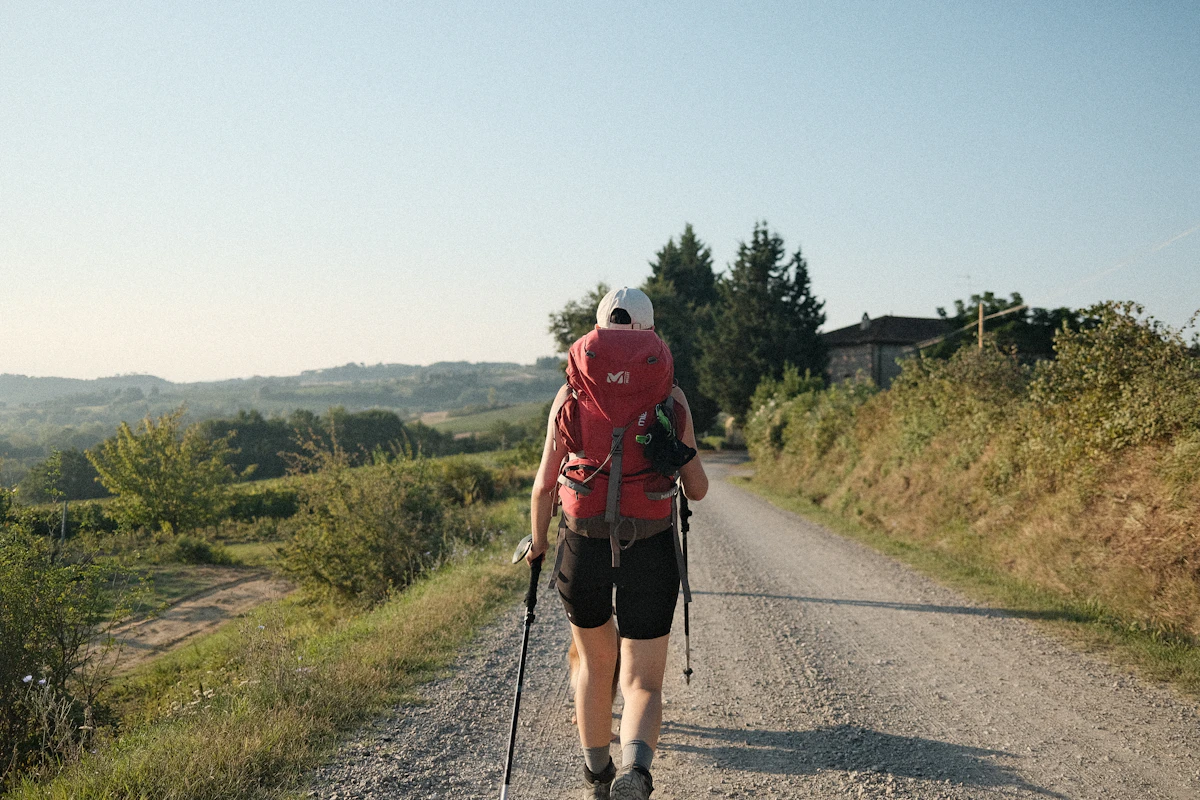
1. Quick Reference: Miles Per Day by Hiker Type
The single most useful starting point is knowing what category of hiker you are, or aspire to be. The table below gives realistic daily mileage ranges for each type, assuming a full day on the trail (6 to 10 hours) with standard rest stops. These are honest averages, not best-case numbers.
| Hiker Type | Expected Miles / Day | Notes |
|---|---|---|
| Beginner | 5 – 8 miles | New to hiking. Moderate terrain, day pack under 15 lbs. Takes frequent breaks. |
| Casual / Recreational | 8 – 12 miles | Hikes a few times a month. Comfortable on moderate trails with 1,000–2,000 ft gain. |
| Fit / Regular Hiker | 12 – 18 miles | Consistent fitness routine. Handles strenuous terrain and sustained elevation well. |
| Experienced Backpacker | 10 – 15 miles | Carrying 35 lb+ overnight pack. Slowed by weight but experienced enough to pace well. |
| Fastpacker | 20 – 30+ miles | Ultra-light kit (under 15 lbs). Moves at a run-hike pace on trails they know well. |
| Trail Runner | 30 – 50+ miles | Running most sections. Minimal gear. Not a practical goal for standard hiking. |
Ranges assume 6–10 hours of trail time on moderate terrain with standard rest stops. Adjust downward for significant elevation gain, technical terrain, or extreme temperatures.
2. Naismith’s Rule: Accounting for Elevation
Daily mileage targets mean nothing if you ignore elevation gain. A flat 15-mile hike and a 15-mile hike with 5,000 feet of climbing are wildly different days. Scottish mountaineer William Naismith solved this problem in 1892 with a formula that is still the gold standard for trip planning.
Naismith’s Rule
3 mph on flat ground + 30 minutes per 1,000 ft of elevation gain
Add a 15–20% buffer for rest stops, rough trail, and pack weight.
Worked example: You are planning a 10-mile hike with 2,000 feet of elevation gain.
- Base time at 3 mph: 10 miles ÷ 3 = 3 hours 20 minutes
- Elevation add: 2,000 ft ÷ 1,000 × 30 min = 60 minutes
- Total moving time: ~4 hours 20 minutes
- With 20% buffer for breaks and pack: ~5 hours 12 minutes trailhead to trailhead
This is why hikers who ask “how many miles can I do today?” are asking the wrong question. The better question is: how many hours do I have, and what does the elevation profile look like? A 20-mile day on the flat desert sections of the PCT and a 10-mile day in the White Mountains of New Hampshire are roughly equivalent in total effort.
Naismith’s Rule was calibrated for fit, experienced hikers moving steadily. If you are a beginner or carrying a heavy pack, add 30 to 50 percent on top of the formula result. For a detailed per-mile breakdown, see our guide on how long it takes to hike a mile.
3. Factors That Reduce Your Daily Mileage
Knowing the average daily mileage for your hiker type is a baseline. In practice, several variables will push your actual mileage below that baseline. Understanding each one helps you set a realistic target and build in the right amount of buffer.
Elevation Gain
The biggest mileage reducer on any trail. Under Naismith’s Rule, every 1,000 feet of gain adds 30 minutes to your day. A trail with 5,000 feet of cumulative gain adds over 2.5 hours compared to a flat equivalent, the same as adding 7 to 8 flat miles to your time budget. On trails with constant rolling elevation (up and down repeatedly), the cumulative fatigue compounds beyond what the formula predicts. If your trail gains more than 500 feet per mile consistently, expect to be at the low end of your mileage range or below it.
Pack Weight
A useful rule of thumb: every 10 pounds of extra pack weight slows your pace by roughly 10 percent and increases fatigue significantly over the course of a day. A 20-pound day pack is relatively manageable. A 40-pound overnight pack shifts you from the “fit hiker” category to the “experienced backpacker” row in the reference table above — even if your fitness is high. This is why many serious backpackers obsess over base weight: shaving 5 pounds off your pack is worth several extra miles per day on a long trip.
Terrain and Trail Surface
Smooth packed dirt allows a natural, efficient stride. Scree (loose rock fields), mud, snow, thick roots, or wet slabs all demand foot placement attention that breaks your rhythm and consumes energy. Off-trail bushwhacking — no trail at all — can reduce pace to under a mile per hour in dense vegetation. If a trail description includes words like “unmaintained,” “scrambling,” or “cross-country travel,” plan your mileage conservatively and add a significant time buffer.
Heat and Altitude
Temperatures above 85°F cause most hikers to slow significantly, both because the body works harder to manage heat and because mandatory water breaks lengthen rest time. Altitude compounds the problem: above 8,000 feet, reduced oxygen levels decrease aerobic capacity. Hikers who are not acclimatized can expect a 20 to 30 percent reduction in pace compared to sea level. The combination of heat and altitude that is common in desert mountain terrain (Colorado Plateau, Sierra Nevada in summer) is particularly demanding.
Stops for Photos, Meals, Water, and Rest
Moving time and total day time are not the same. A 10-mile hike at 2.5 mph is 4 hours of pure walking, but your actual day will be 5.5 to 7 hours once you include stopping for photos at viewpoints, a 30-minute lunch, water filter stops, footwear adjustments, and unplanned rest breaks. Many hikers underplan by calculating moving time and then being surprised by how long the day actually takes. Always plan in terms of total elapsed time, not just walking speed.
Hiking with Kids or Groups
Groups move at the speed of the slowest member, and coordination overhead compounds with size. A group of six should add 20 to 30 percent to any mileage estimate. Hiking with children changes the math entirely: children aged 5 to 10 typically cover 1 to 3 miles comfortably on a good day, and their pace is highly variable depending on interest and energy level. Plan children’s hikes around what they can do, not what the adult members of the group could do unencumbered.
4. Planning Your Daily Mileage
The practical goal for most hikers is not to hike as many miles as possible, it is to hike a distance that feels rewarding and finishes at a predictable time without leaving you wrecked. Here is how to build up to higher mileage systematically.
The 10% Rule
Do not increase your weekly hiking mileage by more than 10% from one week to the next. If you hiked 20 miles this week, cap next week at 22 miles. This applies whether you are building toward a thru-hike or just trying to extend your day hike distance. Most overuse injuries — blisters, knee pain, shin splints, IT band problems — come from ramping up too fast, not from individual long days.
Start from your actual baseline
Your baseline is the distance you can cover comfortably right now, on a typical trail, without excessive soreness the following day. Be honest about this. If your longest hike this year was 6 miles, your baseline is 6 miles — not whatever you did at peak fitness three years ago. Build from where you are, not where you used to be.
Build with back-to-back days
For backpacking preparation specifically, the most useful training is consecutive days on trail, not single long days. Hiking 8 miles on Saturday and 8 miles on Sunday teaches your body to recover and move the next morning. That is a fundamentally different stimulus than hiking 16 miles on Saturday and resting Sunday. Multi-day trips get harder not because individual days are long, but because you compound fatigue across days without full recovery.
Rest days are not optional
On extended trips, most experienced hikers take one rest day for every 5 to 7 days of hiking. Rest days allow tendon and joint recovery that muscle recovery alone does not provide. Skipping rest days is one of the primary reasons thru-hike attempts fail, not lack of fitness, but accumulated wear on connective tissue.
Use a tool to plan your specific route
Before any hike of more than 8 miles, enter your distance and elevation gain into our hiking pace calculator to get a personalized time estimate. Pair that with the sunrise and sunset times for your hike date and you will know exactly how early you need to start to finish safely.
5. Trail-Specific Benchmarks
Abstract mileage ranges are helpful, but real-world trail data is more grounding. Here is what experienced hikers actually do on the most famous trails and trail types in North America.
Pacific Crest Trail (PCT)
PCT thru-hikers average 20 to 25 miles per day over a full northbound thru-hike (~2,650 miles in 5 to 6 months). The PCT’s relatively smooth tread and consistent grade make it one of the faster long-distance trails per mile. Hikers typically start at 10 to 15 miles/day in the Southern California desert, build to 20 to 25 miles through the Sierra, and push 25 to 30 miles/day through Oregon to finish before Washington snowfall. Experienced fastpackers have completed the PCT in under 60 days at 45+ miles/day.
Appalachian Trail (AT)
AT thru-hikers average 15 to 18 miles per day over a full thru-hike (~2,190 miles in 5 to 7 months). The AT’s rocky, rooty terrain and aggressive elevation profile (especially in the Northeast) makes it significantly harder per mile than the PCT. New Hampshire’s White Mountains and Maine’s Hundred-Mile Wilderness are notorious for sub-10 mile days even among experienced hikers. Northbounders typically start cautiously and peak mileage in the flatter mid-Atlantic states.
Day Hikes (General Population)
Survey data from hiking organizations consistently shows that the most popular day hike length is 5 to 10 miles. Most casual hikers are happy at 8 to 12 miles for a full day out. This range fits comfortably within a 4 to 6 hour day, allows time for lunch and photos, and finishes before fatigue becomes a real factor. The sweet spot for an enjoyable day hike — challenging enough to feel worthwhile, short enough to finish fresh — is 7 to 9 miles with 1,500 to 2,500 feet of gain.
Weekend Backpacking Trips
For a 2-night backpacking trip carrying a full pack, 8 to 12 miles per day is the realistic target for most recreational backpackers. This covers enough ground to reach remote campsites that day hikers never see, while keeping the daily effort manageable under a heavy pack. More experienced backpackers targeting specific objectives (a summit, a remote lake) might plan 12 to 16 miles/day with correspondingly lighter kit.
6. Gear That Affects How Far You Hike
The right gear can add real miles to your day. The wrong gear costs you mileage in ways that are easy to underestimate until you experience them. These are the three categories with the highest impact on daily distance.
Footwear: Trail Running Shoes vs. Boots
Trail running shoes are lighter, more flexible, and faster on smooth singletrack than traditional hiking boots. The weight savings alone — typically 8 to 14 ounces per shoe compared to boots — reduces the energy cost of every stride. On well-graded trails with moderate terrain, trail runners allow most hikers to sustain a faster pace with less fatigue over a full day. On technical, rocky, or off-trail terrain, stiff-soled boots provide stability that trail runners lack, and the pace advantage disappears. Match your footwear to your trail type.
Trekking Poles
Trekking poles are the single most effective piece of gear for maximizing daily mileage. On uphills, they give you extra push and help maintain rhythm. On descents, studies show poles reduce knee force by up to 25 percent — meaning your knees arrive at the end of a long day with less cumulative stress, allowing you to push further before fatigue forces a stop. On technical terrain, they provide balance and confidence that speeds foot placement. Most experienced hikers who switch to poles report adding 1 to 3 miles per day to their comfortable range.
Pack Weight and Backpack Fit
A well-fitted, properly loaded pack with a low base weight makes a measurable difference in how far you can hike. A pack that rides high and transfers weight to your hips correctly costs far less energy per mile than a poorly adjusted pack that shifts and strains your shoulders. For backpacking trips, targeting a base weight under 20 pounds (ideally 10 to 15 pounds) gives you a significant mileage advantage. See our guide on best hiking backpacks for options at every weight target and trip type.
Hiking Watch with GPS Tracking
Knowing your real-time pace, cumulative mileage, and elapsed time lets you make better decisions mid-hike about whether to push for the next waypoint or turn around with daylight to spare. A GPS hiking watch also tracks elevation gain in real time, giving you the inputs you need to apply Naismith’s Rule dynamically on the trail. This is more useful than a phone app because it stays on your wrist, works without cell service, and gives continuous feedback without draining phone battery. Our best hiking watches guide covers the top options for every budget.
Frequently Asked Questions
How many miles is a good hike for a beginner?
For a beginner, 3 to 5 miles is a solid first hike. At an average pace of 2 mph on moderate trail, that is 1.5 to 2.5 hours of moving time — long enough to feel like a real outing without risking excessive fatigue. Choose a trail with minimal elevation gain (under 500 feet) for your first few outings, then add distance and elevation gradually.
How many miles can you hike in 8 hours?
In 8 hours of total trail time, most hikers cover 12 to 16 miles on flat to moderate terrain, accounting for breaks. On a strenuous trail with significant elevation gain, the same 8 hours might yield only 8 to 12 miles. Use Naismith's Rule to calculate more precisely for your specific route.
What is considered a long hike?
A long day hike is generally considered to be 12 miles or more, or any hike that takes more than 6 to 8 hours. For most recreational hikers, anything over 15 miles in a single day is a significant undertaking. Thru-hikers on long trails like the PCT regularly do 20 to 30 miles per day, shifting what 'long' means based on experience level.
How many miles a day on the Appalachian Trail?
AT thru-hikers average 15 to 18 miles per day over a full thru-hike. Most hikers start at 8 to 12 miles/day and build to 18 to 22 miles through the flatter middle sections. Rugged terrain in Maine, New Hampshire, and Tennessee keeps daily mileage lower than flatter long trails like the PCT.
Does elevation gain count as miles?
No — elevation gain is measured in vertical feet and is separate from the horizontal miles shown on trail maps. However, it significantly increases hiking time. Naismith's Rule adds 30 minutes for every 1,000 feet of gain on top of your distance calculation. A 5-mile hike with 2,000 feet of gain takes roughly the same effort as an 8-mile flat hike.
How can I hike more miles per day?
The most effective strategies: build fitness gradually using the 10% rule (don't increase weekly mileage by more than 10%); lighten your pack since every 10 lbs reduces pace by roughly 10%; use trekking poles to reduce leg fatigue; start earlier to take advantage of cooler temperatures; take shorter, more frequent rest stops rather than long breaks that let muscles cool and stiffen.
Peak Gear Guide Editorial Team
Contributing Writer, Peak Gear Guide
Jake has hiked more than 4,000 miles across North America, including thru-hikes of the Colorado Trail and long sections of the PCT. He writes about hiking planning, gear selection, and trail fitness for Peak Gear Guide. When he is not on trail, he is usually planning the next one.
Ready to Plan Your Next Hike?
Use our hiking pace calculator to enter your route details and get a personalized daily mileage estimate, or browse our gear guides to lighten your pack and add miles to your day.