
How to Clean a Water Filter (2026 Guide)
By Peak Gear Guide Editorial Team · Gear research & fact-checking
The Quick Version
Backflush a clogged water filter by pushing clean water backward through it. For a Sawyer Squeeze, attach the included syringe to the output end and push 60 mL of clean water through. For a Katadyn BeFree, fill the soft pouch with clean water, cap, shake vigorously for 20-30 seconds, then squeeze the water out. Most filters recover 80-95% of original flow after one cleaning. Repeat for severely clogged filters. Total time: about 5 minutes including diagnosis.
Why Filters Clog
Hollow fiber water filters work by pushing water through microscopic tubes with pores 0.1 micron wide — small enough to physically block bacteria and protozoa. Over time, sediment, biofilm, and organic matter accumulate on those tubes. Each filtered liter leaves a small deposit. Eventually flow rate drops from the original 1.7-2.0 liters per minute to a slow trickle.
Backflushing pushes water in the opposite direction — dislodging the trapped material and flushing it out the input end. Done regularly, this keeps a filter performing like new. Done rarely, deposits become permanent and flow rate degrades irreversibly. For background on how hollow-fiber media removes pathogens, see REI’s expert advice on water treatment and the reference overview of water filters.
Step 1: Diagnose Flow Rate
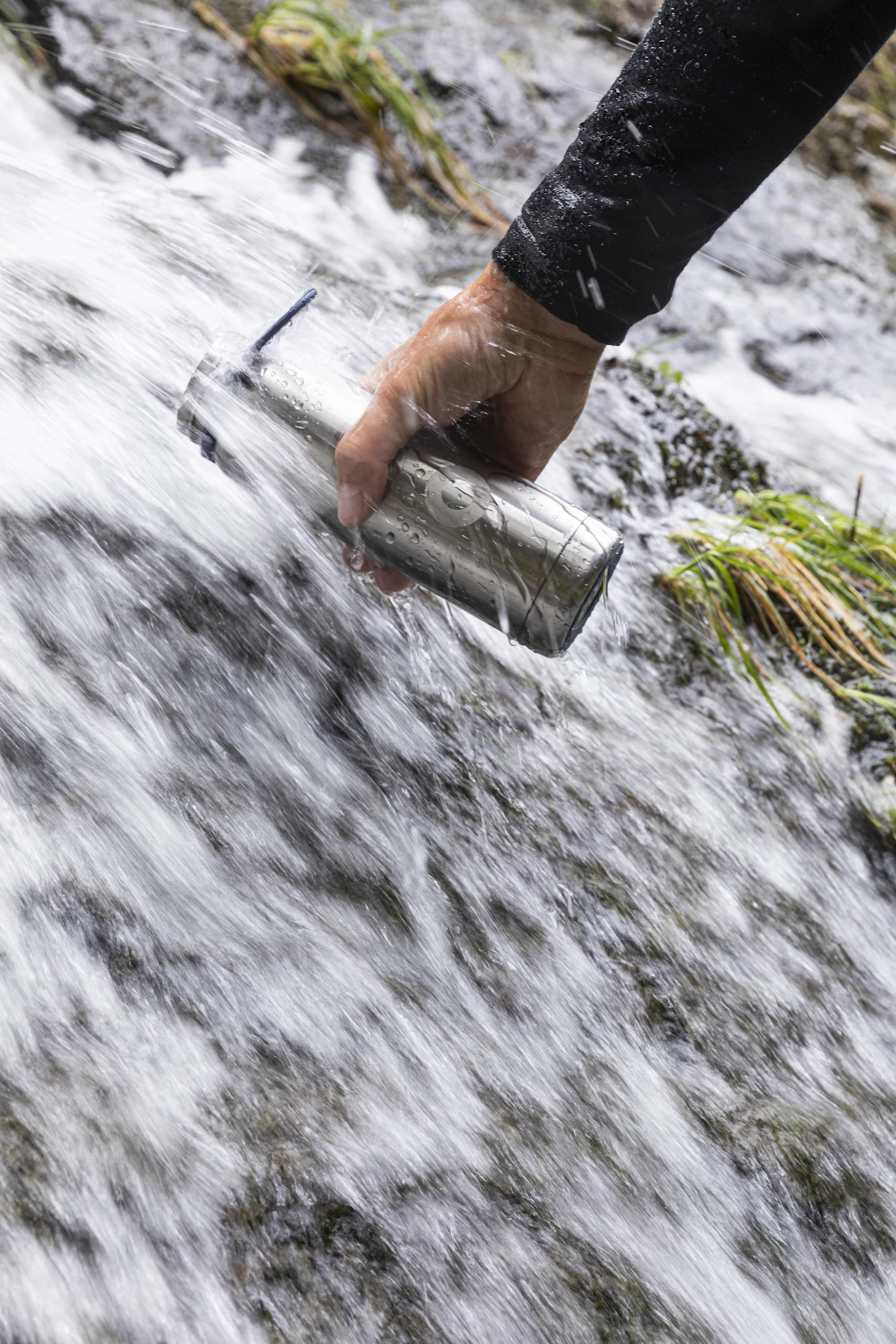
Before cleaning, confirm the filter actually needs it. Time how long it takes to filter 1 liter through a fully squeezed pouch or full reservoir.
- 30-45 seconds: filter is in good condition; no cleaning needed
- 45-90 seconds: light fouling; backflush soon
- 90+ seconds or barely flowing: backflush now; possibly multiple times
- No flow at all: deeply clogged; needs overnight soak + aggressive backflushing
Backflushing a Sawyer Squeeze
Step 2: Fill the Sawyer syringe
Use clean, already-treated water, not raw source water. Backflushing with contaminated water introduces fresh pathogens to the clean output side of the filter. Pull back the syringe plunger to fill it with about 60 mL of clean water (the full syringe).
Step 3: Push water backward through the filter
Attach the syringe to the output end of the Sawyer (the end you normally drink from or screw onto a bottle). Push the plunger firmly. Water will exit the input end carrying dislodged sediment and biofilm with it. Repeat 2-3 times until the water exiting the input runs visibly clean.
Step 4: Test flow rate
Run a normal filtering cycle and time it. If flow rate returned to near-original, you're done. If still slow, backflush 2-3 more times. For severe clogging, soak the filter overnight in clean water before another round of backflushing.
Cleaning a Katadyn BeFree
Step 2 (BeFree): Fill the soft pouch
The BeFree doesn't need a syringe — its design lets you clean it through agitation. Fill the soft pouch with clean treated water until about half full. Screw the filter cap on tightly.
Step 3 (BeFree): Shake vigorously
Shake the capped pouch back and forth for 20-30 seconds. The motion sloshes water through the filter from both directions, dislodging trapped material from the hollow fibers. This is the entire cleaning process — no syringe, no special tools.
Step 4 (BeFree): Squeeze out and re-test
Open the cap, squeeze out the dirty water (it will look cloudy from dislodged material), and rinse with one more cycle of clean water. Test flow rate. The BeFree typically recovers nearly all of its original speed after a single shake-clean cycle.
End-of-Season Storage
Step 5: Sanitize with dilute bleach
For long-term storage (more than 3-4 weeks), sanitize the filter to prevent bacterial growth in any moisture left inside. Mix 1 capful of unscented household bleach (approximately 1/4 teaspoon) into 1 liter of water. Pour into the filter, let it sit 5 minutes, then flush thoroughly with at least 2 liters of clean water until no chlorine smell remains.
Step 6: Store at room temperature
After sanitizing, air-dry the filter completely before storage. Never store a damp filter in conditions below 32°F. Water inside the hollow fibers will freeze, expand, and shatter the fibers invisibly, destroying filtration without any external sign of damage. Store the filter in a cabinet, drawer, or gear room — somewhere indoor and temperature-stable. Avoid garages, sheds, and vehicles in winter.
Avoiding Freeze Damage
Freeze damage is the single biggest hidden killer of hollow fiber filters. The danger: there's no way to detect freeze damage from the outside. A filter that looks perfect can have hundreds of micro-cracks in its fibers, letting bacteria and protozoa pass through into your drinking water.
Three rules to prevent freeze damage:
- In the field: store the filter inside your sleeping bag overnight when temperatures will drop below 32°F. Body heat keeps it above freezing.
- At home between trips: store at room temperature, never in a freezing garage or vehicle.
- If you suspect a freeze: assume the worst and replace the filter. The cost of a Sawyer Squeeze is far less than a giardia infection.
Frequently Asked Questions
How often should I backflush my water filter?
Can I use unfiltered water to backflush my filter?
What if I lost my Sawyer backflush syringe?
How do I know if my filter has freeze damage?
Can I clean a fully clogged Sawyer Squeeze that won't flow at all?
How do I store my water filter between trips?
Related Water Treatment Guides
How to Treat Water While Backpacking
The pillar guide — every treatment method covered.
Sawyer vs Katadyn
Head-to-head of the two dominant filters.
Water Filter vs Purifier
When you need each — viruses, international travel, US backcountry.
Best Water Filters 2026
Top research-backed filter picks.
Best Water Filters for Hiking
Hiking-specific filters tested on real water.
Sawyer Squeeze Review
Single-product deep dive — durability, lessons.