Winter Camping for Beginners: The Complete Guide (2026)
By Peak Gear Guide Editorial Team · Gear research & fact-checking
Winter camping is genuinely rewarding — solitude, snow-covered landscapes, and a sense of competence that you just cannot get from a warm-weather campsite. It is also unforgiving of gear and knowledge gaps. This guide covers everything a beginner needs to start safely: what to sleep in, what to wear, how to stay warm through the night, and what to bring.
Because cold raises the stakes, carry and know how to use The Mountaineers’ Ten Essentials — extra insulation and reliable fire matter far more below freezing. Review the National Park Service hiking-safety guidance on cold-weather and avalanche risk, and the REI Expert Advice library is a useful reference for the winter-specific gear terms in this guide.
In This Guide
Is Winter Camping for You?
If you have comfortable three-season camping experience and want more challenge, solitude, and spectacular scenery, winter camping is a natural next step. The barriers are gear cost and knowledge — both of which are surmountable. Start by camping at developed winter campsites (easier access, closer to help if needed) before moving to the backcountry.
The most common beginner error is attempting winter camping with summer or three-season gear and just adding more layers. A 20°F sleeping bag becomes a 35°F bag on a 2.0 R-value pad — the cold ground pulls heat out faster than the bag can replace it. If you are going to invest in winter camping, the sleep system is where to spend money first.
Sleep System for Cold Temperatures
Your sleep system is a bag plus pad combination, not just a sleeping bag. The pad is arguably more important in winter: conduction (heat transfer to the cold ground) pulls heat out of your back far faster than convection (cold air around you). Use a sleeping pad with an R-value of at least 4.5 for temperatures consistently below 20°F. R-5 and above for camping in sub-zero conditions. Not sure how to choose the right R-value? Our guide breaks it down by season and temperature range.
A sleeping bag rated to 0°F provides a reasonable buffer for nights in the low-teens and occasionally dipping colder. Down fill is the best warmth-to-weight option in dry conditions; synthetic insulation is more reliable if your bag may get wet. Adding a fleece liner adds roughly 5-10°F of warmth to any bag and is a cost-effective way to extend a 20°F bag into winter territory.
Shelter Setup in Snow
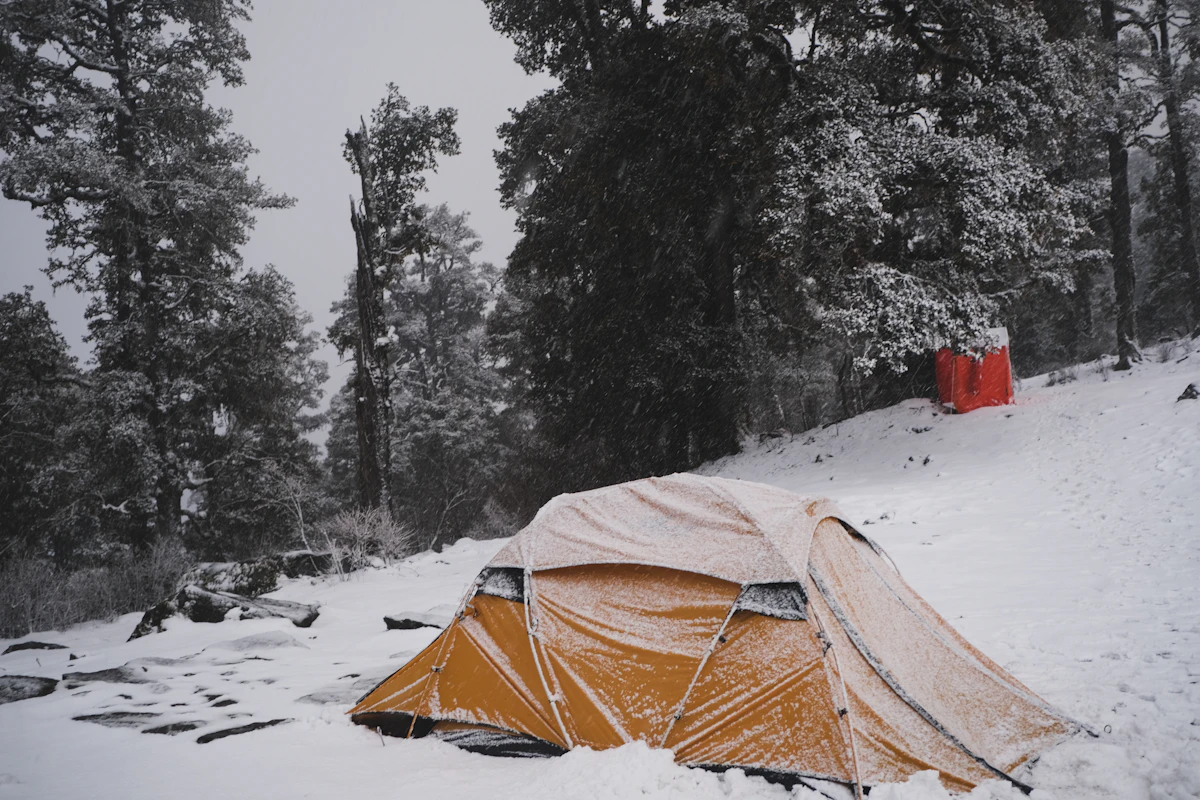
A four-season tent is engineered for snow loads and high wind. The key differences from three-season tents: stronger poles, fewer mesh panels (more fabric for wind protection), lower profile to reduce wind resistance, and reinforced guy-out points. For beginners, a solid three-season tent combined with careful site selection (wind shelter, not under heavy snow-laden branches) works for winter camping that does not involve serious storms.
Site selection is critical in winter: avoid locations under trees that can drop snow loads onto your tent, find natural windbreaks (boulder fields, ridges), and choose slightly elevated positions that allow cold air to drain away from your tent rather than pool around it. Stamp the tent footprint flat and let it freeze for 15-20 minutes before pitching for a stable platform.
Layering for Winter
The three-layer system applies, but each layer runs heavier. Base layer: midweight or heavyweight merino or synthetic. Mid layer: 200-weight fleece plus a synthetic insulated jacket. Outer: waterproof-breathable hardshell with taped seams, hood, and pit zips for ventilation during high-output sections.
Extremity protection is critical. Hands and feet are the first to go cold. Use waterproof gloves or mittens with a liner underneath. Gaiters over waterproof boots prevent snow from entering at the top of the boot. A balaclava (full face coverage) is more versatile than a hat and neck gaiter separately. Keep a dry pair of gloves in an interior pocket at all times — wet gloves in sub-freezing temperatures are a genuine hazard.
Water in Freezing Conditions
Finding liquid water in winter requires more planning than three-season trips. Running water in streams and rivers usually stays liquid longer than standing water, but both can freeze. Carry an insulated bottle (not a reservoir) and keep it inside your jacket or sleeping bag to prevent freezing. Budget stove fuel for snow melting: roughly 1 liter of melted water requires 0.3-0.5 oz of fuel depending on snow density and altitude. Start with at least 1.5x your expected fuel needs when planning a winter trip.
Winter Camp Cooking
Canister stoves underperform in cold temperatures because propane and isobutane gas pressure drops below about 20°F. In very cold conditions, keep your fuel canister warm (inside your sleeping bag at night, inside your jacket during the day) or switch to a white gas stove (MSR Whisperlite), which performs reliably at any temperature.
Hot food and drinks matter more in winter than any other season — both physiologically and psychologically. A hot dinner raises your core temperature before sleep. A hot breakfast makes leaving a warm sleeping bag tolerable. Plan simple, fast meals that require only boiling water: instant oatmeal, ramen, couscous, freeze-dried meals. The fewer steps involved, the better when you are cooking with cold hands.
Safety and Navigation
Snow covers trails, landmarks, and potential hazards. Navigation in winter requires map and compass skills or a downloaded offline GPS track. Do not rely on summer cairns or blazes that may be buried. Check avalanche forecasts for any terrain with slopes above 30 degrees — avalanche.org provides daily forecasts for most mountain regions.
Always tell someone your itinerary and expected return. In winter, darkness arrives earlier, temperatures drop faster, and the consequences of getting benighted without shelter are more serious. Build a weather margin into your plan — if the forecast shows deteriorating conditions, leave earlier than planned.
Winter Camping Gear Checklist
- 0°F sleeping bag — The baseline for serious winter camping. Down fill for dry conditions, synthetic for wet climates.
- R-5 sleeping pad — Non-negotiable for sub-20°F camping. Combined R-value of pad plus insulated ground layer should exceed 5.0.
- Four-season tent — Stronger poles and reinforced structure for snow loads and wind. Required for serious winter backcountry use.
Frequently Asked Questions
What temperature rating sleeping bag do I need for winter camping?▼
For winter camping where temperatures regularly drop below 20°F (-7°C), use a sleeping bag rated to 0°F or lower. The EN/ISO lower limit rating (not the comfort rating) should be at or below your expected low temperature. Pair with an R-value 4.5+ sleeping pad — the pad matters as much as the bag in cold conditions.
How do I prevent condensation in my tent during winter camping?▼
Ventilate even in very cold conditions. Keep a vent or corner of the door cracked to allow moisture vapor from breathing to escape. Moisture from your breath can freeze on the inner tent wall and then melt onto your gear when you heat up in the morning. Never cook inside a tent — moisture from cooking is substantial and creates condensation problems.
Is it safe to camp alone in winter as a beginner?▼
Start with group winter camping or go with someone experienced before attempting solo winter camps. The consequences of gear failure, navigation error, or unexpected weather are much higher in winter. Once you have 3-5 group winter camping trips with clear competency in your sleep system and layering, solo camping becomes more reasonable.
What do I do if my water freezes while winter camping?▼
Keep water bottles inside your sleeping bag at night. Insulated bottles help but are not freeze-proof below about 20°F in sustained cold. In the morning, melt snow if needed using your stove — allow 1-2 liters of fuel capacity per day for snow melting. Hydration tubes on reservoirs freeze quickly in cold; use hard bottles instead.
How do I set up a tent on snow?▼
On packed snow, standard tent stakes may not hold well. Deadman anchors (burying a stake or stuff sack filled with snow horizontally, then stamping the snow firm over it) hold much better than stakes pushed vertically. Allow 30 minutes to an hour for deadman anchors to freeze solid before trusting them in wind. Stamp the tent footprint area flat before pitching.
What sleeping bag temperature rating do I need for winter camping?▼
For winter camping in most of the continental US (temperatures between 0°F and 20°F overnight), a sleeping bag rated to 0°F is the standard recommendation for beginners. Experienced winter campers often use 15°F bags combined with a sleeping pad R-value of 6 or higher, relying on camp management skills to make up the difference. A sleeping bag's rated temperature is the survival limit, not the comfort threshold — most people sleep comfortably 10 to 15 degrees above a bag's rating. If you sleep cold (common in women and lean body types), buy a bag rated at least 10°F below your expected low. A -20°F bag for truly extreme conditions adds significant weight but provides a safety margin in unpredictable mountain weather.
Related Guides
Hiking Layering System
Build a three-layer system that handles temperature swings and keeps you dry on cold trails.
Sleeping Bag Temperature Ratings
What EN/ISO comfort and lower limit ratings actually mean and how to choose the right bag.
How to Stay Hydrated Hiking
Hydration strategies that apply in cold weather too — dehydration in winter is easy to miss.


