Quick Answer
A common guideline is half a litre — about 17 oz — per hour of hiking, rising towards a litre per hour in heat or on steep ground. Drink steadily instead of waiting for thirst, because thirst already means mild dehydration. The early signs are darker urine, less frequent urination, a mild headache and fatigue beyond what the effort explains. On long or hot days replace electrolytes as well as water, since water alone can leave you low on sodium.
How to Stay Hydrated While Hiking (2026)
By Peak Gear Guide Editorial Team · Gear research & fact-checking
Dehydration is one of the most common reasons hikers underperform on trail, and one of the most preventable. Most people do not drink enough, do not recognize the early warning signs of dehydration, and do not account for how altitude, heat, and exertion multiply fluid losses. This guide gives you a complete framework for hydration from trailhead to camp, with field hydration tips drawn from REI’s expert advice.
In This Guide
How Much Water Per Mile
The standard guideline is 0.5 liters per hour of moderate hiking in mild temperatures. Adjust upward to 0.75–1 liter per hour for hot weather, steep ascents, or heavy packs. A 6-hour hiking day in moderate conditions requires 3 liters minimum at the trailhead plus the ability to source and treat water on route.
Plan your water carries by identifying water sources on your map and estimating time between them. On dry trails in summer, carry 1–1.5 liters of buffer capacity beyond what you need to reach the next source. Never pass a reliable water source without topping off if you are uncertain about the next one.
Signs of Dehydration on Trail
Dehydration progresses through stages. Mild (1-2% body weight loss): thirst, slightly darker urine, mild headache, reduced performance. Moderate (3-5%): significant headache, muscle cramps, fatigue disproportionate to effort, irritability. Severe (5%+): dizziness, nausea, rapid heart rate, inability to concentrate, potential for heat illness.
The easiest field check is urine color: pale yellow indicates good hydration, dark yellow or amber indicates dehydration, and dark brown is a medical emergency. Check at every rest stop. In cold weather, the thirst mechanism is suppressed — drink on a schedule rather than waiting to feel thirsty.
Water Sources on the Trail
Running water from mountain streams and rivers is generally higher quality than still water from ponds, lakes, or puddles. Higher elevation sources are typically cleaner than lower elevation sources where more animal and human activity occurs. Even crystal-clear alpine water can harbor Giardia and Cryptosporidium — always treat backcountry water regardless of how clean it looks.
Identify water sources on your map before leaving the trailhead. AllTrails, Gaia GPS, and CalTopo all show intermittent and seasonal streams. In late summer, many lower-elevation streams dry up — check recent trip reports to confirm current conditions.
Treatment Options: Filter, Chemical, UV
Squeeze filters (Sawyer, BeFree): Remove bacteria and protozoa. Fast, reliable, and durable. The Sawyer Squeeze is 3 oz and can last a million gallons. Best overall choice for North American backcountry. Does not remove viruses.
UV purifiers (SteriPen): Destroys bacteria, protozoa, AND viruses with UV light. Fast (about 90 seconds per liter) and effective. Requires batteries and clear water — does not work well with turbid water. Best for international travel where viruses are a concern.
Chemical treatment (Aquatabs, iodine): Tablets kill bacteria and most protozoa. Very light (almost no weight) and cheap. The limitation is contact time (30 minutes for most protozoa, longer in cold water) and the fact that iodine does not kill Cryptosporidium. Best as a backup method, not primary.
Electrolytes and Hyponatremia
Sweat contains sodium, potassium, magnesium, and other electrolytes. Drinking large amounts of plain water replaces fluid but not electrolytes, diluting blood sodium levels. Mild hyponatremia causes headaches and nausea that feel exactly like dehydration, and the natural response (drink more water) makes it worse. On long, hot days, add electrolytes to at least some of your water. Salt tablets, electrolyte capsules, or electrolyte powder (Liquid IV, LMNT, Nuun) are all effective. Salty snacks also help.
Hydration Packs vs Water Bottles
Hydration reservoirs (bladders with a drinking tube) encourage more frequent sipping because drinking requires no stopping or reaching — just bite and sip. Studies consistently show hikers with reservoirs drink 30-40% more water than those using bottles. The downside: hard to monitor how much you have consumed, awkward to treat water on-route, and freeze in cold weather.
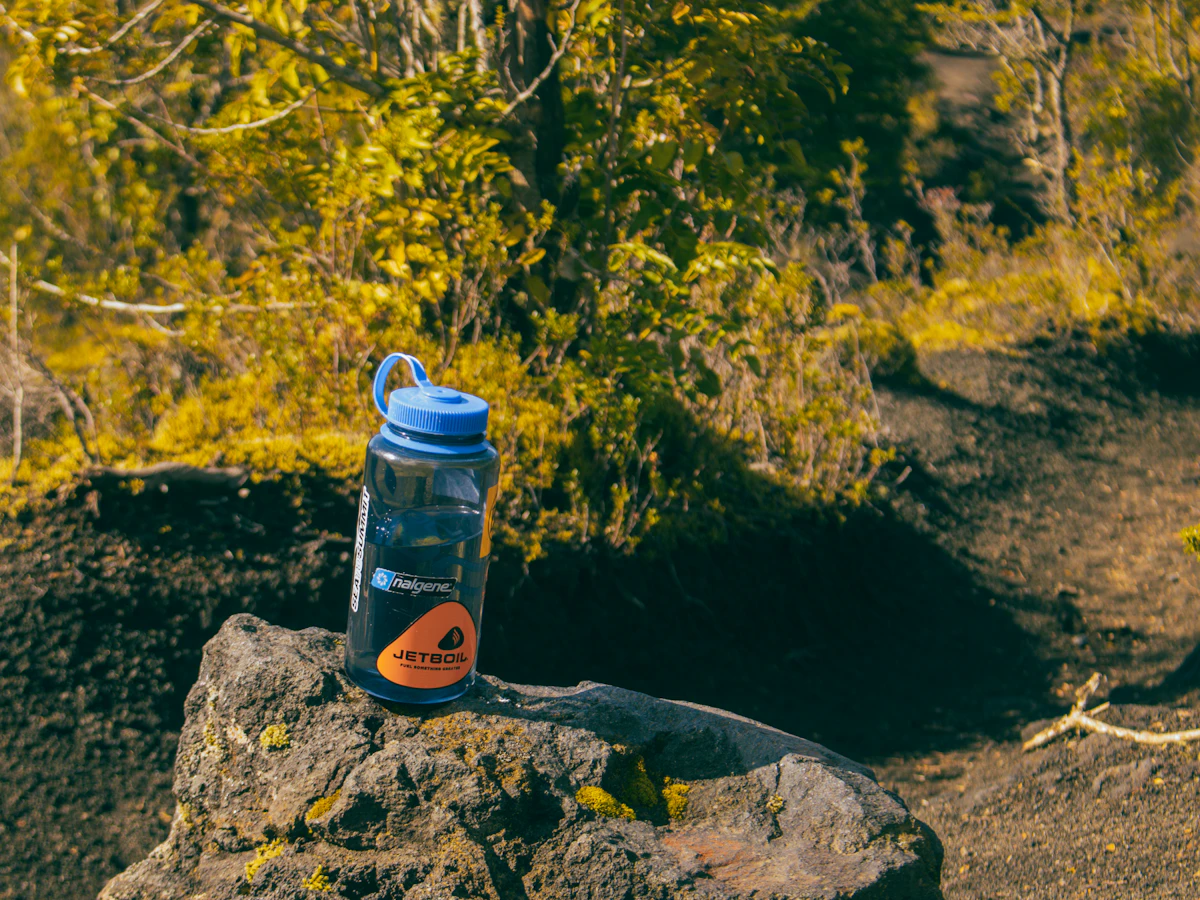
Hard-sided bottles (Nalgene, Hydro Flask) are more durable, easier to treat water in, visible so you know your supply level, and work in freezing temperatures. Most experienced backpackers use a hybrid: a 2L reservoir for the main carry and one 1L hard bottle for treated water and cold-weather backup.
Cold Weather Hydration
Cold suppresses thirst even as it increases respiratory moisture loss (visible breath in cold air is water leaving your body). In winter, set a hydration schedule — drink 500ml every 60-90 minutes regardless of thirst. Use insulated bottles and keep them inside your jacket or sleeping bag at night. Melting snow for water is possible but slow and fuel-intensive — avoid if you can find running liquid water. A stove with a pot dedicated to snow melting is essential for winter bivouac situations.
Hydration at Altitude
At elevations above 8,000 feet, the body accelerates water loss through increased breathing rate and reduced ability to concentrate urine. The altitude-induced increase in respiratory rate effectively doubles the amount of moisture exhaled compared to sea level. Many hikers mistake altitude symptoms — headache, fatigue, poor sleep — for dehydration because the two are closely linked and often occur together.
The standard advice for altitude acclimatization is to drink more than you think you need: 3-4 liters per day minimum during the first 48 hours at elevation. This does not prevent acute mountain sickness (AMS) on its own, but it reduces one of the compounding factors. Alcohol is especially dehydrating at altitude — even a single drink at 10,000 feet can produce dehydration symptoms within a few hours.
A useful practical rule at altitude: if you are not urinating at least every 2-3 hours, you are likely under-hydrated. The body's regulation changes significantly at elevation, so your normal thirst signals cannot be trusted as the primary guide. Drink proactively, check urine color consistently, and combine hydration with proper pacing and acclimatization stops.
Hydration Gear Picks
- Sawyer Squeeze water filter — 3 oz, removes bacteria and protozoa, rated for 1 million gallons. The go-to filter for North American backpacking.
- 2-liter hydration reservoir. Encourages consistent sipping while moving. Look for wide-mouth openings that make refilling and drying easier.
- Electrolyte tablets for hiking. Compact, lightweight, and essential for hot-weather days. Add one to every other liter on high-sweat hikes.
Frequently Asked Questions
How much water should I drink per mile hiking?▼
A commonly cited guideline is half a liter (about 17 oz) per hour of hiking, adjusted for temperature and exertion. On hot days or steep terrain, that rises to 1 liter per hour. Distance-based estimates vary because pace affects everything — use time as your baseline and adjust based on how much you are sweating.
What are the early signs of dehydration on the trail?▼
The earliest signs are thirst (which means you are already mildly dehydrated), darker yellow urine, reduced urine frequency, mild headache, and slight fatigue beyond what the effort should produce. These symptoms are easy to miss in cool weather or at altitude where thirst is suppressed. Check urine color at every rest stop.
Is it possible to drink too much water while hiking?▼
Yes. Hyponatremia (low sodium from overdrinking) is a real risk on long, hot hiking days. It occurs when you drink large amounts of plain water without replacing electrolytes. Symptoms resemble dehydration: headache, nausea, confusion. Adding electrolytes (salt tablets, electrolyte drinks, or salty snacks) to your hydration routine prevents it.
What is the lightest water filter for backpacking?▼
The Sawyer Squeeze is one of the lightest effective filters at 3 oz, removes bacteria and protozoa, and can filter water directly into a soft-sided water bottle. The BeFree by Katadyn is similarly lightweight and flows faster. Neither removes viruses, which matters in international travel but is typically not a concern in North American backcountry.
How do I keep my water from freezing while winter hiking?▼
Start with near-boiling water in an insulated bottle, carry it inside your jacket close to your body on cold days, and keep the bottle upside-down in your pack (ice forms from the top, and inverted keeps the opening usable longer). Hydration reservoirs are very prone to freezing in cold weather — switch to insulated hard bottles for winter use.
Does thirst accurately signal when I need to drink while hiking?▼
Thirst is a lagging indicator — by the time you feel thirsty during exercise, you are already 1 to 2 percent dehydrated, which measurably reduces physical and cognitive performance. On strenuous or hot hikes, rely on a drink schedule rather than thirst: aim for 4 to 8 ounces every 15 to 20 minutes during moderate exertion, more in heat. Urine color is a better real-time indicator than thirst: pale yellow means adequately hydrated; dark yellow or amber means drink more. Clear urine can indicate overhydration (hyponatremia), which is a real risk if you are drinking large volumes of plain water without electrolytes on very long efforts. Add electrolytes to at least one bottle during multi-hour hikes in heat.
Related Guides
Backpacking Gear Checklist
The complete packing list for multi-day trips, organized by category with weight targets.
Hiking in Hot Weather
Heat management, clothing choices, and timing strategies for summer trail conditions.
Leave No Trace Principles
Proper water source etiquette and waste disposal to protect backcountry ecosystems.


