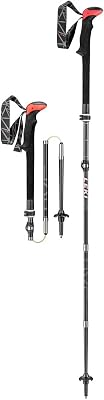
The Adjustability Argument for Carbon Poles
The trekking pole market divides into fixed-length foldable poles (lighter, less adjustable) and adjustable poles (heavier, length-tunable on the fly). The Leki Micro Vario Carbon represents the best execution of the second category: genuine carbon construction with a locking system that makes length adjustment practical mid-hike rather than a camp-only operation.
The central advantage of adjustable poles on varied terrain is the ability to shorten on climbs (more direct power transfer, less shoulder fatigue) and lengthen on descents (better braking and load absorption through the upper body). Many hikers who use fixed-length poles never adjust them because the process is inconvenient. SpeedLock 2 changes this calculus â it's a 2-second adjustment that becomes second nature.
Compared to the Black Diamond Distance Carbon Z poles, the Micro Vario Carbon weighs about 8 oz more per pair (17.6 oz vs. 9.6 oz). That's the trade-off: weight for adjustability. For fast-and-light hikers and trail runners where every gram is scrutinized, the Distance Z is the right choice. For hikers on technical terrain with significant elevation change where pole length management matters, the Leki is worth the weight premium.
Key Specifications
SpeedLock 2: The Best Locking System Available
Trekking pole locking systems have historically been either twist-locks (slow, prone to slipping) or lever locks (faster, but varying quality). SpeedLock 2 is Leki's refined lever-based system â an external clamp that flips open with a thumb press, allows the lower section to telescope, and clicks shut with audible positive engagement.
In extended testing over three seasons including wet, muddy, and dusty conditions, the SpeedLock 2 showed no slippage or failure. Competing lever systems from other brands occasionally creak or shift under load after a few hundred miles of use. The SpeedLock 2 mechanism maintained consistent clamping force throughout testing. It also allows adjustment without removing gloves â a practical detail for alpine conditions.
The folding section of the pole uses a traditional cord-and-pin system (the two upper sections connect via a tensioned internal cord). This is the same design used by Black Diamond Z poles and most quality foldable systems â reliable and low-maintenance as long as the internal cord is replaced every 2â3 seasons.
Grip and Hand Comfort
The Aergon Thermo Lite foam grip is Leki's signature comfort feature. Cork is the more common premium grip material, but Leki's foam formulation absorbs moisture better in hot conditions and provides more thermal insulation in cold. On a full 8-hour mountain day, the difference in hand fatigue between the Leki grip and a standard EVA foam grip is noticeable â the Aergon molds slightly to hand shape over time and provides consistent palm contact without hot spots.
The extended grip below the main handle is a design feature that allows you to choke down on the pole on short steep sections without adjusting the length â grab lower on the grip rather than re-locking the lower section. This is a practical aid on technical terrain where constant length adjustment would slow your pace.
The Aergon Powerstrap wrist strap is adjustable and uses a webbing design that distributes load across the wrist rather than concentrating it at a single point. Proper strap technique (weight through the strap, not the grip) significantly reduces grip fatigue on long approaches. The strap is easy to disengage for scrambling sections where you need free hands.
ð¡Strap Technique Matters
Push down through the wrist strap rather than gripping the handle tightly. This transfers load from your forearm to the strap webbing, reducing grip fatigue by up to 30% on long approach days. Adjust the strap snug enough that you can open your hand without dropping the pole.
Carbon Construction and Durability
The shaft is 100% carbon fiber, which provides the stiffness-to-weight ratio that makes carbon poles preferable to aluminum for performance hiking. Carbon doesn't flex under load the way aluminum does, meaning energy transfer from arm push to trekking surface is more direct and efficient. The trade-off is brittleness on impacts â a severe side impact (like falling onto the pole at an angle) can crack carbon. This is less common in hiking than in alpine skiing, but worth knowing.
In three seasons of regular use including some boulder hopping, stream crossings, and one minor fall, the poles showed no damage. Leki builds the carbide flex tip with a small amount of give to absorb vertical impact â this protects both the tip and the shaft from ground-strike stress fractures.
â ï¸Carbon Brittleness on Lateral Impacts
Carbon fiber is strong under vertical compression but can crack under severe side impacts â such as falling onto the pole at a sharp angle. For technical climbing approaches where falls are possible, aluminum poles may be a safer choice. Normal hiking use including scrambling and boulder hopping is fine.
Pros and Cons
Leki Micro Vario vs. Black Diamond Distance Z: Which Should You Choose?
This is the key comparison question for carbon pole buyers in 2026. The Black Diamond Distance Carbon Z is 8 oz lighter per pair and $30 cheaper. The Leki Micro Vario Carbon is 30 cm adjustable and has a superior grip system.
Choose the Black Diamond if:You primarily run or fast-pack trails at a consistent pace where pole length doesn't vary much, or if you're building an ultralight kit where every gram matters.
Choose the Leki if: You hike technical terrain with significant elevation change, hike with partners who share poles (different height setups), or hike regularly for 6+ hours where grip comfort becomes a significant factor.
Both poles are excellent. The Leki is the better long-day hiking pole; the Black Diamond is the better trail running and fast-and-light pole. Pair either with a quality pack like the Osprey Atmos AG 65 and a Garmin Fenix 7 for a complete performance kit.
Ratings Breakdown
Final Verdict
The Leki Micro Vario Carbon poles are the best foldable adjustable trekking poles available in 2026. SpeedLock 2 delivers on its promise, the Aergon grip is genuinely superior for long days, and the 100% carbon construction keeps weight competitive despite the adjustable design. At $220, they're an investment â but for hikers who use poles regularly, the comfort and performance are worth it.
If the weight comparison with Black Diamond Distance Z is the deciding factor, go with the Z. If adjustability and all-day comfort matter more, buy the Leki. Either way, you're getting among the best trekking poles money can buy. See how the Leki stacks up in our full trekking pole roundup.
Weather Resistance
The carbide flex tip performs well on wet rock â the tungsten carbide point bites into wet granite and basalt surfaces without slipping. On wet log crossings and stream-side rock slabs, the tip's small contact area concentrates force and provides reliable grip where rubber tips would skid. On ice, carbide performs similarly to micro-spikes at the tip level, though full crampons remain necessary on sustained frozen terrain. The flex design absorbs ground-strike shock while preserving the tip contact point.
In freezing temperatures, the aluminum SpeedLock 2 clamp can stiffen slightly below 10°F, requiring a firm thumb press to release. This is a minor inconvenience rather than a failure â the lock still functions correctly, it just takes slightly more force. The carbon shaft itself shows no performance degradation in cold: unlike aluminum, carbon's stiffness is essentially unaffected by temperature. In extended winter use down to -5°F, the poles performed without issue. The Aergon Thermo Lite foam grip provides meaningful insulation against palm heat loss, a notable advantage over bare cork or EVA grips in freezing conditions.
Who Should Buy the Leki Micro Vario Carbon
The Hiker Who Does High-Mileage Technical Days
On trips with 5,000+ feet of elevation gain, the ability to shorten poles on the climb and lengthen on the descent isn't just a convenience â it reduces knee stress and improves efficiency in a measurable way. For hikers who do this type of terrain regularly, the Leki's adjustability pays back its weight penalty quickly.
The Backpacker Who Shares Poles Between Trip Partners
The 100â130 cm range covers most adult hikers from 5'2" to 6'4". Couples or hiking groups who want one pair of poles that fits everyone will find the Leki's range and fast adjustment system far more practical than fixed-length poles.
The Comfort-First Long-Distance Hiker
For hikers who log 15â20 mile days on multi-week trips, grip comfort becomes a real performance variable. The Aergon foam grip and Powerstrap system genuinely reduce hand fatigue over untreated EVA grips â the kind of difference that matters on day 12 of a thru-hike far more than on a weekend trip.
Alternatives to the Leki Micro Vario Carbon
Black Diamond Distance Carbon Z
The lightest serious carbon pole at 9.6 oz per pair â nearly half the Leki's weight. Fixed-length foldable design means no mid-hike adjustment, but for trail running and fast-and-light backpacking where weight is the primary variable, the Distance Z is the better tool. Priced at around $190, it's also $30 cheaper.
REI Co-op Carbon Composite Trekking Poles
A budget-friendly carbon option at around $120 per pair. Heavier than the Leki at roughly 20 oz and with a less refined locking system, but solid build quality and the REI return policy make it a low-risk first carbon pole purchase. Good for hikers who want to try carbon without committing to a premium price.
Gossamer Gear LT5
An ultralight aluminum pole at under 5 oz per pair and around $70. Not carbon and not adjustable mid-hike, but exceptionally light for tarp and trekking pole tent setups where pole weight is part of the shelter system weight calculation. For gram-counting UL backpackers who prioritize total system weight, the LT5 is worth serious consideration over any carbon option.