Brand Comparison
Salomon vs Merrell Hiking Boots (2026)
By Peak Gear Guide Editorial Team · Gear research & fact-checking
Two of the most trusted names in trail footwear, but they are built for different hikers. This guide breaks down performance, waterproofing, fit, weight, and price so you can pick the right brand for your next adventure.
By Peak Gear Guide Editorial Team · Updated April 24, 2026
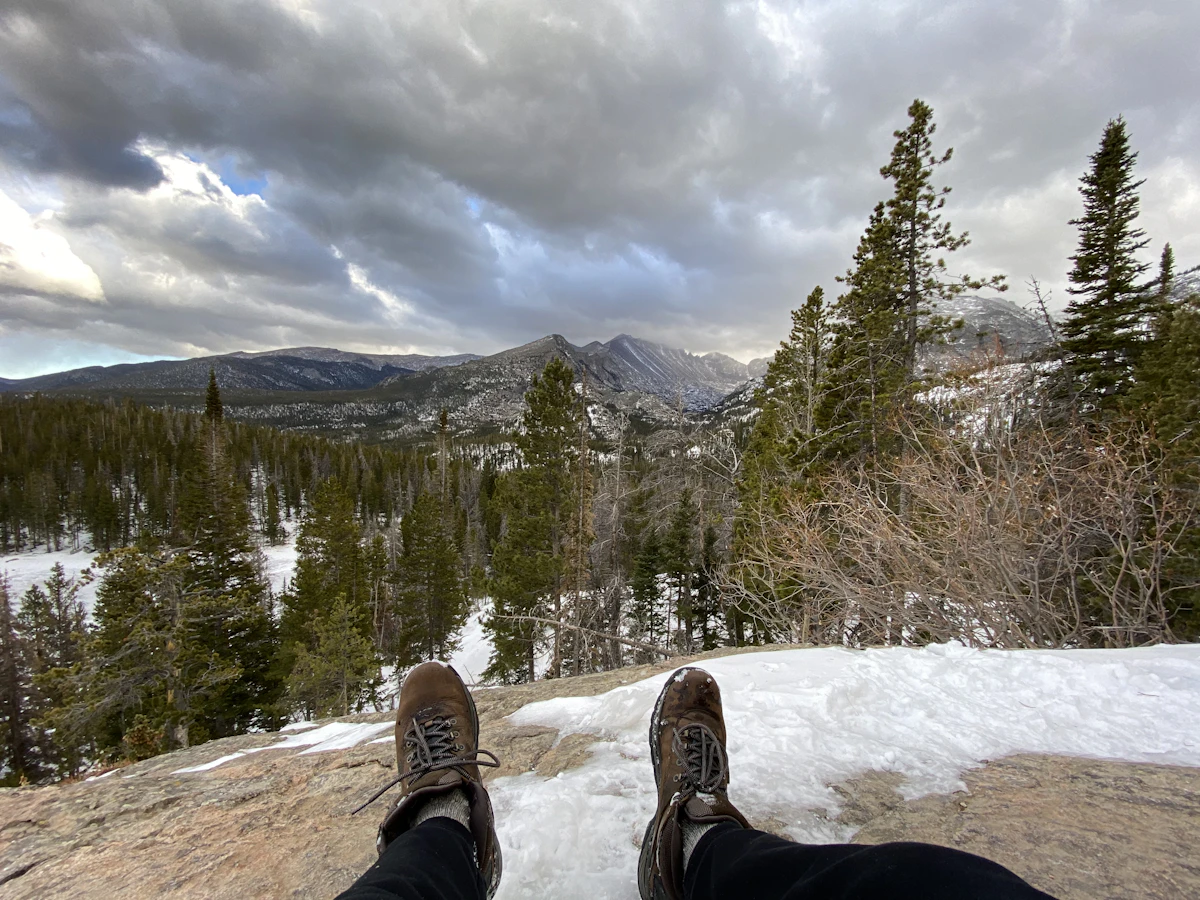
Salomon dominates the technical performance end of the hiking boot market. Its trail-running DNA, the brand built some of the world's fastest trail shoes before applying that engineering to boots — shows up in every feature: aggressive Contagrip outsoles, a locked-down Quicklace system, and a low-profile chassis designed for speed and precision on difficult terrain. The X Ultra series is the flagship proof of that philosophy.
Merrell dominates value and everyday hiking. Founded in Michigan in 1981 with a comfort-first mandate, the brand hit a global nerve with the Moab series — now the bestselling hiking boot line in the world. If you've seen a hiking boot on a trail in the last decade, there is a very good chance it was a Moab.
This guide tells you when each brand shines and which one belongs on your feet. We compare them across eight criteria, walk through the flagship model matchups, and give you a clear recommendation for each type of hiker.
Outsole, lacing, and waterproofing specs throughout are taken from the brands’ official catalogs — Salomon for the X Ultra and Quest lines, and Merrell for the Moab and Nova lines. For independent guidance on Gore-Tex versus proprietary membranes, see REI’s expert-advice library.


Quick Verdict: Salomon vs Merrell
| Criteria | Salomon | Merrell |
|---|---|---|
| Performance | Excellent — technical & fast | Good — relaxed & steady |
| Weight | Lighter (~2.1 lbs) | Slightly heavier (~2.4 lbs) |
| Technical terrain | Outstanding | Solid on moderate trails |
| Waterproofing | Gore-Tex (flagship) — industry-best | M Select DRY — good, breathable |
| Price | $160–$200 flagship | $130–$170 flagship |
| Toe room | Snug / trail-running fit | Roomier, better for wide feet |
| Break-in time | Minimal — trail-running last | Very minimal — comfort-first |
| Best hiker type | Technical, high-mileage, fast | Recreational, comfort-focused |
Brand Overview
Salomon. Technical Performance Since 1947
Salomon was founded in Annecy, France in 1947 as a ski equipment manufacturer. That ski-boot engineering heritage — precision fit, lateral stiffness, lockdown systems — transferred directly into their hiking and trail running line when they expanded beyond snow. The Quicklace system (a one-pull, self-locking lace mechanism) is a signature Salomon innovation that hikers either love immediately or learn to love after a 15-mile day.
Contagrip outsoles are the other defining feature: a proprietary rubber compound optimised for multi-surface grip across wet rock, mud, and loose trail. The X Ultra series is Salomon's best-selling hiking boot line and represents their performance philosophy at its most refined. Trail-running influence is visible throughout — lower stack height, articulated midsole, and a fit designed for movement rather than maximum cushioning.
Merrell. Comfort and Everyday Hiking Since 1981
Merrell was founded in Michigan in 1981 with a single mandate: make hiking boots that are comfortable enough to wear all day, every day, on any trail. The brand has never wavered from that mission. Vibram outsoles appear on their premium models. Vibram is the gold standard for rubber outsole traction, used across mountaineering and technical footwear globally.
The Moab series (Moab stands for Mother of All Boots) is the beating heart of Merrell's lineup and arguably the bestselling hiking boot on the planet. M Select DRY is their proprietary waterproof membrane, not Gore-Tex, but effective for most conditions and generally more breathable. Merrell consistently offers wider width options than competitors, making them a go-to for hikers who struggle to find a comfortable fit elsewhere.
Performance vs Comfort: A Design Philosophy Difference
The most important thing to understand about this comparison: Salomon and Merrell are not in a quality race. Both brands make excellent boots. They are in a philosophy race, and they have chosen different finish lines.
Salomon excels on technical terrain and fast-paced movement. Their boots are engineered to work hardest when the trail gets difficult — loose talus, exposed ridgelines, steep descents, extended days above treeline. The precision fit and aggressive outsole are not accidents; they are the product of a brand that builds boots the same way it builds ski boots: around performance under stress.
Merrell excels on long, comfortable days on mixed and moderate terrain. Their boots are engineered to cause zero problems — no hotspots, no blisters, no soreness at mile 12. For the hiker covering 5–10 miles on a maintained national park trail, that is exactly what they need. The Moab outsells nearly everything because it does this job better than almost anything else at its price point.
Weight Comparison
Weight matters more than most hikers realise. Research consistently shows that adding one pound to your feet costs more energy per mile than adding one pound to your pack. Salomon's trail-running influence keeps their boots lighter than most hiking competitors.
Salomon
~2.1 lbs
X Ultra 4 Mid GTX (per pair)
Merrell
~2.4 lbs
Moab 3 Mid WP (per pair)
A 0.3 lb difference per pair adds up to roughly 600 extra foot-lifts worth of extra weight across a 10-mile day. For long-distance hikers or those covering 15+ miles in a session, Salomon's lighter construction is a meaningful advantage. For weekend hikers covering 5–7 miles, the difference is largely imperceptible.
Waterproofing: Gore-Tex vs M Select DRY
Both brands offer waterproof versions of their flagship boots, but the technology differs, and that difference matters in serious conditions.
Salomon uses Gore-Tex on the X Ultra 4 GTX. Gore-Tex is the industry standard for waterproof-breathable membranes, it keeps water out while allowing moisture vapor (sweat) to escape. In stream crossings, prolonged rain, or heavy dew on tall grass, Gore-Tex outperforms every proprietary alternative. It is why serious mountaineers specify it by name.
Merrell uses M Select DRY on the Moab 3 Mid WP. This is a proprietary membrane, not Gore-Tex. It is genuinely waterproof for most hiking conditions — light rain, morning dew, shallow puddles, and is often more breathable than Gore-Tex in warmer temperatures. For hikers in mild climates or doing day hikes, M Select DRY is entirely adequate. For serious wet-weather or multi-day hiking in unpredictable conditions, Gore-Tex is worth the premium.
Head-to-Head Model Matchups
The best way to understand how these brands stack up is to compare equivalent models at each price tier. Here are the three most relevant matchups, with direct Amazon links so you can check current pricing and reviews.
Flagship
Salomon
Salomon X Ultra 4 Mid GTX→Merrell
Merrell Moab 3 Mid WP→The most direct head-to-head. Salomon edges Merrell on grip and waterproofing; Merrell wins on comfort and price.
Heavy-Load / Backpacking
Salomon
Salomon Quest 4 GTX→Merrell
Merrell Moab 3 Apex Mid→Both handle multi-day pack weight. Salomon's stiffness aids stability on long descents; Merrell is more comfortable on flat terrain.
Lightweight / Day Hiking
Merrell
Merrell Nova 3 Mid→Closest in weight. Salomon's trail-running DNA shows at speed; Merrell's cushioning wins for all-day comfortable pacing.
Links are affiliate links. We earn a small commission at no extra cost to you. See our full Salomon X Ultra 4 GTX review for a deep dive on the flagship.
Who Should Buy Salomon
- ▶Technical hikers who regularly tackle rocky, unstable, or exposed terrain where grip and stability are non-negotiable.
- ▶Hikers who want trail-running responsiveness in a boot — faster movement, lower weight, higher energy return.
- ▶High-mileage hikers covering 15+ miles per day, where every 0.1 lb saved and every increment of stability pays dividends.
- ▶Anyone who needs Gore-Tex waterproofing — serious multi-day hikers, shoulder-season hikers, or those who hike in reliably wet climates.
- ▶Hikers with medium to narrow feet who want a locked-down fit with zero heel slippage on descents.
Who Should Buy Merrell
- ▶Comfort-first hikers who prioritise an all-day comfortable feel over technical performance — especially on maintained or well-graded trails.
- ▶Budget-conscious buyers: Merrell delivers outstanding quality at $20–$40 less than comparable Salomon models.
- ▶Recreational hikers covering 2–3 days per week on national park, state park, or established trail systems.
- ▶Wide-foot hikers: Merrell offers wider width options across more models than Salomon, making fit significantly easier.
- ▶Beginners who want a proven, forgiving boot with minimal break-in time and a lower barrier to entry.
Price Comparison
Neither brand is cheap, but there is a consistent $30–$40 gap between them at the flagship level. For serious hikers, that gap is easy to justify. For casual hikers, it is harder to rationalise.
| Model | Brand | Typical Price | Best For |
|---|---|---|---|
| X Ultra 4 Mid GTX | Salomon | $160–$200 | Technical / all-conditions |
| Quest 4 GTX | Salomon | $180–$220 | Heavy loads / backpacking |
| Predict Hike Mid GTX | Salomon | $140–$170 | Lightweight day hiking |
| Moab 3 Mid WP | Merrell | $130–$160 | Everyday trail hiking |
| Moab 3 Apex Mid | Merrell | $150–$180 | Moderate backpacking |
| Nova 3 Mid | Merrell | $110–$140 | Lightweight & casual |
Prices fluctuate on Amazon and at major retailers. Merrell delivers the better value proposition for casual hikers. Salomon is worth the extra spend if you are hiking serious terrain or logging serious miles. Check our best hiking boots under $100 guide if budget is the primary constraint.
Related Guides
Frequently Asked Questions
- Is Salomon or Merrell better for beginners?
- Merrell is generally the better pick for beginners. The Moab 3 Mid WP is forgiving, comfortable straight out of the box, and priced lower than comparable Salomon models. Beginners rarely need the technical performance Salomon is engineered for, they need a boot that feels good on day one and holds up on maintained trails.
- Do Salomon hiking boots run narrow?
- Yes. Salomon boots are cut with a snugger, trail-running-inspired fit that works well for medium to narrow feet. If you have wide feet or high-volume feet, you may find them uncomfortable, especially in the toe box. Merrell offers wider width options across more models and is the safer choice for wide-foot hikers.
- Are Merrell boots good for rocky terrain?
- They perform adequately on moderate rocky trails, especially premium models with Vibram outsoles. However, Salomon's Contagrip outsoles and stiffer midsole platform give you a noticeable edge on highly technical or exposed rocky terrain. For scrambling or off-trail rocky routes, Salomon is the stronger performer.
- Which brand lasts longer. Salomon or Merrell?
- Both brands produce durable boots, but durability depends heavily on the specific model and how hard you push them. Salomon's upper materials and outsole compounds tend to resist wear slightly better under high-mileage technical use. Merrell boots hold up well for recreational hikers covering moderate miles. Neither brand has a clear advantage for casual use.
- Are Salomon X Ultra boots worth the extra money?
- If you hike technical terrain, cover 10+ miles regularly, or prioritize Gore-Tex waterproofing, yes. The X Ultra 4 GTX delivers a meaningfully superior grip, lateral stability, and waterproofing system versus the Merrell Moab 3. If you mostly hike maintained trails a few days a month, the Merrell likely delivers 90% of the performance at a lower price.
- Which brand is better for women's hiking boots?
- Both brands offer dedicated women's lasts (foot shapes), not just smaller men's boots. Merrell has a slight edge here, the women's Moab 3 is one of the most popular women's hiking boots globally due to its comfort, width options, and value. Salomon's women's X Ultra 4 is excellent for technical hikers. For general trail use, Merrell wins on fit variety. See our full roundup of the best women's hiking boots for detailed comparisons.
About the Author
Peak Gear Guide Editorial Team
Jake is a long-distance hiking specialist and gear reviewer with over 12,000 trail miles logged across North America and Europe. He has tested more than 60 pairs of hiking boots in the field, including multiple generations of both Salomon and Merrell's flagship lines. His reviews focus on real-world performance rather than spec sheets — because spec sheets don't carry you down a wet scree field at dusk.
Browse All Hiking & Camping Guides
Every Peak Gear Guide how-to, gear list, brand comparison, and national park guide. Research-vetted expertise organized by topic.
Getting Started
Checklists & Gear Lists
National Park & Trail Guides
- Acadia Hiking Guide
- Bryce Canyon Hiking Guide
- Glacier Hiking Guide
- Grand Canyon Rim to Rim
- Grand Teton Hiking Guide
- Mount Whitney Hiking Guide
- Olympic Hiking Guide
- Rocky Mountain Hiking Guide
- Smoky Mountains Hiking Guide
- Yellowstone Hiking Guide
- Yosemite Hiking Guide
- Zion Hiking Guide
- Appalachian Trail Gear List
- Colorado Trail Gear List
- John Muir Trail Gear List
- Pacific Crest Trail Gear List
Boots & Footwear How-To
Backpack How-To
Tent & Shelter How-To
Sleep System How-To
Apparel & Layering
Cooking, Water & Food
Trekking Poles
Navigation, Tech & Headlamps
Brand Comparisons
- Arc'teryx vs Patagonia
- The North Face vs Patagonia
- Columbia vs The North Face
- Darn Tough vs Smartwool
- Garmin vs Suunto
- Keen vs Merrell Boots
- Salomon vs Merrell
- Salomon vs Merrell Boots
- Osprey vs Gregory Backpacks
- Osprey vs Deuter Backpacks
- MSR vs Jetboil
- Sawyer vs Katadyn
- Therm-a-Rest vs Nemo
- Big Agnes Copper Spur Comparison
- Black Diamond vs Petzl Headlamps
- Hiking Boots vs Trail Runners
- Trail Running vs Hiking Shoes