Quick Answer
A temperature rating is a survival number, not a comfort number: a 20°F bag means you should survive at 20°F, not sleep well there. Choose for the coldest night you realistically expect and leave margin. Down is lighter, packs smaller and lasts longer but fails when wet; synthetic keeps some warmth when damp and costs less, at a penalty in weight and bulk. Your pad's R-value matters as much as the bag, because cold ground pulls heat away faster than cold air.
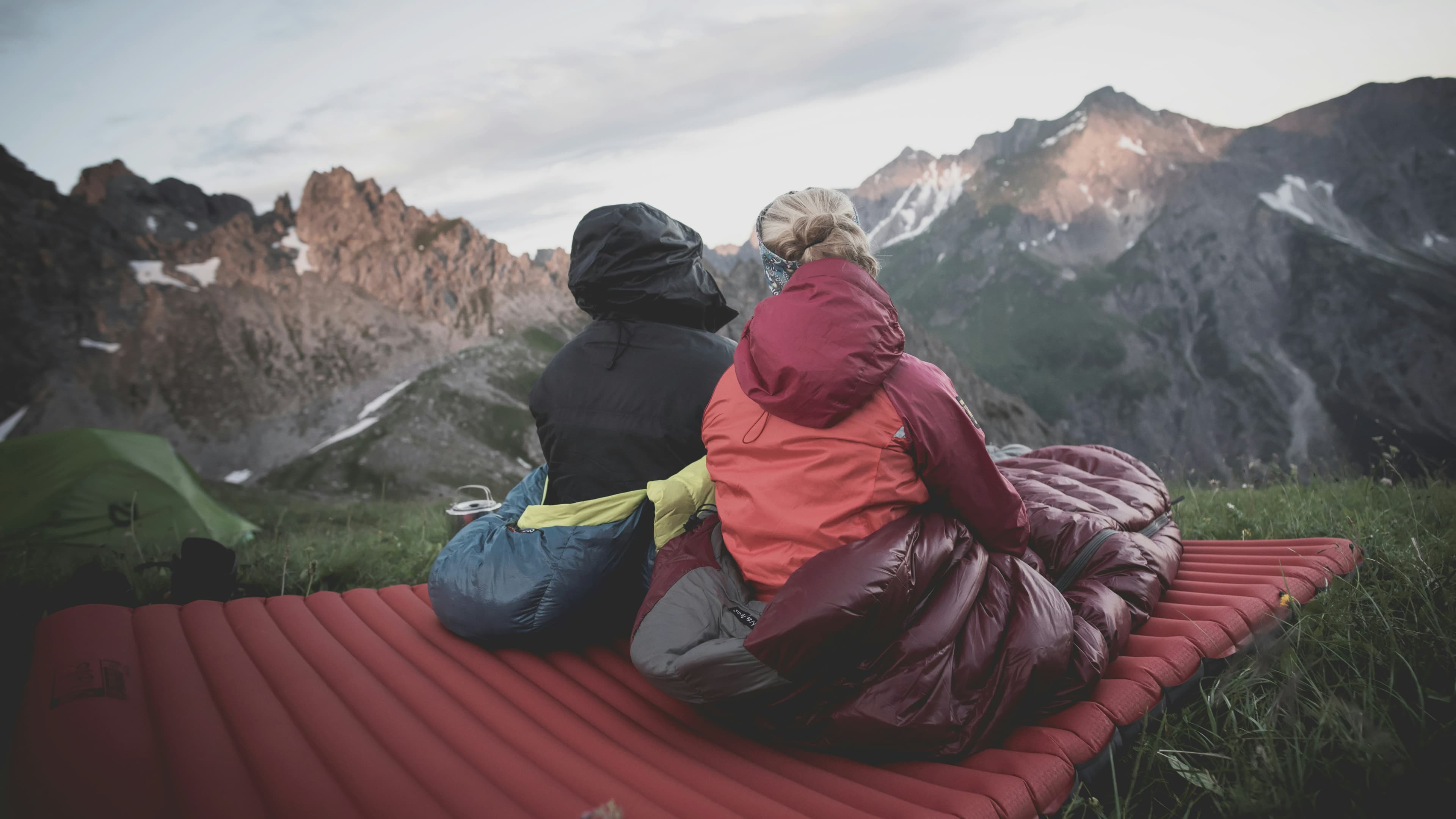
How to Choose a Sleeping Bag 2026
By Peak Gear Guide Editorial Team · Gear research & fact-checking
A sleeping bag is one of the most consequential pieces of gear you will own. Too warm and you will overheat and wake up drenched. Too cold and you will shiver through the night, drain your energy reserves, and risk hypothermia on exposed trips. The right bag depends on four things: the temperatures you will face, the type of fill that suits your conditions, the shape that fits your sleep style, and how much weight you are willing to carry. This guide breaks down every variable so you can make a confident decision at any budget.
In This Guide
Temperature Rating
Temperature rating is the single most important number on a sleeping bag. In 2005, the European Union introduced the EN 13537 standard — updated and replaced by ISO 23537 in 2016 — which created a standardized testing protocol that all reputable bag manufacturers now follow. This means ratings across brands are finally comparable, unlike the "season ratings" used by older bags, which were entirely manufacturer-defined and inconsistent. (See also REI’s guide to choosing a sleeping bag.)
The EN/ISO standard produces three key temperatures for each bag tested on a manikin in a controlled lab environment:
- Comfort rating: The temperature at which a standard woman can sleep in a relaxed position without feeling cold. This is the conservative number — useful for cold sleepers.
- Lower limit: The temperature at which a standard man can sleep in a curled-up position without waking from cold. This is the number most commonly shown in marketing materials.
- Extreme: The minimum temperature at which a standard woman can survive for six hours without risk of death from hypothermia. This is a survival number, you will not sleep at this temperature.
The 10°F Buffer Rule
Always choose a bag rated at least 10°F (6°C) colder than the lowest temperature you expect to encounter. Lab ratings assume ideal conditions: clean, dry insulation at full loft, and a sleeping pad with adequate R-value beneath you. Real-world conditions are rarely ideal. Cold sleepers, women (who generally sleep colder than men), or anyone camping above treeline where wind accelerates heat loss should consider a 15–20°F buffer.
3-season bags (rated to 15–32°F / -9 to 0°C) are the most versatile choice for most campers in the US, handling spring, summer, and fall camping in temperate regions. Winter bags (rated to 0°F / -18°C or lower) are necessary for snow camping, alpine trips, and high-altitude expeditions. Summer bags (rated 35°F+ / 2°C+) are appropriate only for warm-weather camping where nighttime temperatures reliably stay above 45°F.
Down vs Synthetic Fill
Fill material is the second most important decision after temperature rating. Down and synthetic insulation have genuinely different strengths, and choosing the wrong type for your conditions will cost you in either performance, weight, or both.
Down
Down is the natural undercoating of waterfowl (usually goose or duck). Its insulating power comes from its three-dimensional loft structure, the tiny interlocking filaments trap enormous amounts of air relative to their weight. A well-constructed 850-fill-power down bag can weigh under 1 lb and compress to the size of a water bottle while keeping you warm at 20°F. That warmth-to-weight and warmth-to-volume ratio is simply not achievable with current synthetic materials.
The core weakness of down is moisture. When down gets wet — from external rain, swamp camping, condensation, or even sustained body moisture over a multi-week trip — the filaments clump together and lose most of their loft. A wet down bag can provide little to no insulation. Drying down in the field is slow and requires direct sun or camp conditions that are rarely available. Hydrophobic down treatments (DownTek, DriDown) improve moisture resistance but do not eliminate the vulnerability.
Synthetic
Synthetic insulation — polyester fibers engineered to mimic down's loft structure — retains meaningful warmth even when damp and dries much faster than down. It is also hypoallergenic, tends to be more durable against compression cycles, and costs significantly less for an equivalent temperature rating. For car campers, canoe trippers, and anyone camping in consistently wet conditions (Pacific Northwest, Scotland, tropical highlands), synthetic is the pragmatic choice.
The tradeoff is bulk and weight. A synthetic bag rated to 20°F will weigh 30–50% more than an equivalent down bag and compress to a much larger volume, a real problem in a loaded backpack where space is limited.
| Factor | Down | Synthetic |
|---|---|---|
| Warmth-to-weight | Excellent | Good |
| Compressibility | Excellent | Fair |
| Wet performance | Poor (untreated) | Good |
| Dry time | Slow | Fast |
| Cost | Higher | Lower |
| Lifespan | Longer | Good |
| Best for | Backpacking, dry climates | Wet climates, budget camping |
Fill power explained: Fill power measures how many cubic inches one ounce of down occupies. Higher fill power means more loft per ounce — 800-fill and above is considered high quality, 850–950 is premium ultralight territory. A higher fill power bag achieves the same warmth with less down, reducing weight. Budget down bags often use 550–650 fill power, which is still genuine down but heavier.
Sleeping Bag Shape
Shape determines thermal efficiency, weight, and how comfortable you will feel sleeping in the bag. The three primary shapes each make a different tradeoff.
Mummy
The mummy bag tapers from shoulders to feet, following the shape of the body closely. This minimizes dead air space, the interior volume your body must heat — making mummy bags the warmest and lightest option for a given temperature rating. A hood cinches down around your head, which is critical at low temperatures since a significant percentage of heat loss occurs through an uninsulated head. Mummy bags are the standard choice for all serious backpacking and cold-weather camping. The tradeoff is that some sleepers find the tapered shape restrictive, particularly those who move around or sleep on their side.
Semi-Rectangular (Barrel)
Semi-rectangular bags offer more room at the shoulders and hips than a mummy bag while still tapering slightly toward the feet. They are a middle-ground option: more comfortable for restless sleepers, less thermally efficient than mummy bags of the same rating, and a bit heavier. Good for car camping and basecamp use where you want comfort without the full bulk of a rectangular bag.
Rectangular
Rectangular bags have consistent width from shoulders to feet and often unzip fully to open as a blanket. They are the most comfortable shape for camp sleepers who want freedom of movement, and two rectangular bags can frequently be zipped together into a double. They are the heaviest and bulkiest option and the least thermally efficient per ounce. Best suited for car camping, cabin use, and guests who need a flexible, easy-to-use bag.
Weight and Packability
For backpacking, sleeping bag weight is a primary specification alongside temperature rating. The general target for a 3-season backpacking bag is under 2 lbs (900g). Serious ultralight backpackers target under 1 lb (450g) for a 30°F bag — achievable with 850+ fill power down at a higher price point. Every ounce you save on your sleep system is weight you can redistribute to food, safety gear, or simply carry less.
For car camping, weight is irrelevant. Comfort and ease of use are more important specifications, a heavier rectangular synthetic bag might be the right tool because it is easy to launder, forgiving of moisture, and comfortable for guests who are not performance-oriented outdoor enthusiasts.
Weight Benchmarks by Use Case
Packability — how small the bag compresses — matters for backpackers who are fitting a sleep system into a 50–65L pack alongside tent, food, and layers. Down bags compress dramatically smaller than synthetic equivalents. An 800-fill down bag at 20°F will compress to roughly the size of a 32oz water bottle; a synthetic equivalent may be three times that volume.
Budget Guide
Sleeping bag pricing is closely correlated with fill power and fill weight. Here is what to expect at each price tier.
Under $100
Entry LevelSynthetic fill, typically 550–650 fill power if down is used at all. Expect heavier bags (2.5–4 lbs) with adequate 3-season performance. Good for: occasional campers, car camping, family camping, first-time backpackers who want to try the hobby without a large investment. Brands: Kelty, Teton Sports, Coleman.
$100–$200
Mid RangeEntry-level down (600–700 fill power) or quality synthetic. This is where the value proposition of down starts to pay off, you can find genuine 20°F down bags in the 2 lb range. Good for: regular backpackers who want down performance without the premium price. Brands: Kelty, Marmot, REI Co-op.
$200–$400
PerformanceQuality down at 750–850 fill power in well-constructed baffled shells. Bags in this range hit 1–1.5 lb weights for 20°F ratings. This is the sweet spot for serious backpackers who want a bag they will use for 5–10+ years. Brands: Sea to Summit, Mountain Hardwear, Nemo, Rab.
$400+
Ultralight / ExpeditionPremium 850–950 fill power down with ultralight shell fabrics. Bags in this range can achieve sub-1 lb weights at 20°F, or 0°F ratings in the 2 lb range. Designed for ultralight backpackers, mountaineers, and expedition use. Brands: Western Mountaineering, Feathered Friends, Enlightened Equipment.
Top Picks for Each Use Case
These are our recommended starting points in each category based on value, performance, and reputation. Prices are approximate and subject to change.
Our Pick. Best 3-Season Backpacking
Sea to Summit Spark SP I
850+ fill RDS-certified down in an ultralight 7D shell — one of the lightest mummy bags available at a 3-season rating, with a proven track record in the backpacking community. Approx. $180.
Check Price on Amazon →Our Pick. Best Budget 3-Season
Kelty Cosmic Down 20
600-fill DriDown insulation at a 20°F rating for around $100. The best entry point into down sleeping bags — warm, compressible, and priced for hikers who are just getting started. Approx. $100.
Check Price on Amazon →Our Pick. Best Winter
Western Mountaineering Alpinlite
850+ fill power down in a 0°F expedition-grade mummy bag that weighs under 2 lbs — a benchmark product for serious alpine camping and winter backpacking. Approx. $400.
Check Price on Amazon →Our Pick. Best Synthetic
Marmot Trestles Elite 20
SpiraFil synthetic insulation at a 20°F rating with a good warmth-to-weight ratio for synthetic, a stretch comfort panel, and a price point under $120. The benchmark mid-range synthetic bag for wet-climate campers. Approx. $120.
Check Price on Amazon →Frequently Asked Questions
What sleeping bag temperature rating do I need?▼
The right temperature rating depends on the coldest night you expect to encounter, but you should not cut it close. A bag rated to 20°F (-7°C) does not mean you will be comfortable at 20°F; it means you will survive at 20°F under ideal conditions. The EN/ISO standard distinguishes between a "comfort" rating (the temperature at which an average woman sleeps comfortably) and a "lower limit" (the temperature at which an average man sleeps comfortably). Most bags list the lower limit prominently in their marketing. A reliable rule of thumb: choose a bag rated at least 10°F (-12°C) lower than the coldest temperature you expect. If you camp in 3-season conditions in the US where nighttime lows hit 30°F (-1°C), a 20°F bag gives you that buffer. Cold sleepers — people who tend to feel cold easily — should add an additional 10°F margin, or opt for a bag one full season rating warmer than the conditions suggest.
Is down or synthetic sleeping bag better?▼
Neither is universally better, the right choice depends on your use case. Down sleeping bags are superior for backpacking because they offer more warmth per ounce and compress smaller, saving critical pack space and weight. A quality 800-fill-power down bag can be half the weight of an equivalent synthetic bag at the same temperature rating. The drawback is that down loses most of its insulating ability when wet, and it takes a long time to dry in the field. Down bags also cost significantly more. Synthetic sleeping bags are better for kayaking, canoe camping, wet climates, and any situation where your bag is likely to get wet — synthetic insulation retains meaningful warmth when damp and dries faster. Synthetic is also the right choice for budget-conscious campers doing car camping or occasional trips where pack weight and size are not critical factors. Treated down (hydrophobic down, marketed under names like DownTek or DriDown) partially bridges the gap by repelling light moisture, but it still underperforms synthetic in prolonged wet conditions.
Can I use a summer sleeping bag in fall?▼
In most cases, no, not safely. A summer sleeping bag is typically rated to 35-50°F (2-10°C) and is designed for warm conditions where temperatures stay above freezing at night. In fall camping in the US, nighttime temperatures in mountainous or northern regions can easily drop below 25°F (-4°C), which is well outside the safe range for a summer bag. Using a summer bag in cold conditions risks hypothermia — your body will keep shivering to generate heat all night, leading to poor sleep and potential danger if temperatures drop unexpectedly. If you want to extend a summer bag into shoulder seasons, the most cost-effective solution is a sleeping bag liner, which can add 10-15°F of warmth. However, a purpose-rated 3-season bag (rated to 15-25°F / -9 to -4°C) is the correct tool for fall camping and is a much more versatile investment.
How do I store a sleeping bag?▼
You should never store a sleeping bag compressed in its stuff sack for extended periods — doing so permanently damages the insulation (both down and synthetic) by compressing the loft over time. This means the bag will no longer trap as much air and will no longer reach its rated temperature. The correct way to store a sleeping bag is loosely, in a large mesh or cotton storage sack, hanging in a closet, or laid flat under a bed. Both down and synthetic bags should be stored in a cool, dry place away from direct sunlight, which degrades the shell fabric. Before long-term storage, make sure the bag is completely dry — storing a damp bag encourages mildew growth, which can permanently damage down insulation and create odors that are difficult to remove. Most sleeping bags ship with both a compression stuff sack for the trail and a larger storage sack — use the storage sack at home.
What's the difference between a sleeping bag and a quilt?▼
A sleeping bag is a fully enclosed insulated sack with a zipper that surrounds your entire body, including the back and bottom. A backpacking quilt (sometimes called an underquilt when used with a hammock) is an open-back insulated blanket that wraps around the top and sides of your body but has no insulated panel underneath you. The logic behind quilts is that the insulation directly beneath your body gets compressed by your body weight and loses most of its loft — meaning that insulation is not contributing much warmth regardless. By removing the underside insulation, quilt manufacturers save significant weight and pack volume. Quilts are popular with ultralight backpackers who use them in conjunction with a sleeping pad (which provides the under-body insulation). The tradeoff is that quilts require more technique to use properly — drafts can enter around the edges, and cold sleepers who move around at night may find a traditional sleeping bag more secure and foolproof. For most campers and beginner backpackers, a sleeping bag is the easier choice. Experienced ultralight backpackers often prefer quilts once they have refined their sleep system.


