Quick Answer
The North Face has the edge on build quality and materials, particularly in its mid-range and premium lines: stitching, zippers and construction are noticeably more refined, and the brand invests in proprietary technologies like DryVent and FutureLight. Columbia wins on price, and its Omni-Heat and Omni-Tech lines cover most three-season hiking for meaningfully less money. Buy Columbia for occasional hiking in moderate conditions, The North Face if you need technical performance or you are hard on gear.
Columbia vs North Face Jacket (2026)
By Peak Gear Guide Editorial Team · Gear research & fact-checking
By Peak Gear Guide Editorial Team | Updated April 2026
Columbia and The North Face are the two brands most hikers consider when buying their first, or fourth — rain jacket or insulated layer. Both are widely available, cover the full spectrum from entry-level to mid-range, and make genuinely capable outdoor gear. The question is whether the North Face premium is worth paying, or whether Columbia delivers enough performance to make the price gap irrelevant.
This guide runs both brands through six head-to-head rounds — price, waterproofing, durability, style, warmth, and technical performance, and gives you a specific model comparison between the Columbia Watertight II and The North Face Venture 2 (rain jackets) and the Columbia Silver Ridge vs TNF Apex Flex (softshells). We also cover who should buy what, with direct Amazon links for both.
Membrane and insulation claims here are checked against each brand’s own technology pages — Columbia documents its Omni-Tech and Omni-Heat systems, while The North Face publishes specs for DryVent and Futurelight. For a brand-neutral primer on jacket waterproofing, REI’s expert-advice library is a useful reference.
In This Guide
Direct from brand
The North Face
Venture 2 Jacket
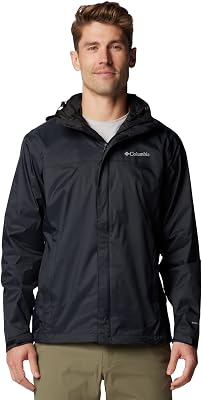
11 oz packable rain shell with DryVent 2.5-layer waterproofing, fully seam-sealed, Pit-Zip ventilation. TNF's most popular sub-$120 rain jacket — sold direct, not reliably on Amazon.
View at thenorthface.comRain Jacket Comparison: Watertight II vs Venture 2
| Feature | Columbia Watertight II | TNF Venture 2 |
|---|---|---|
| Price | $80 | $100 |
| Weight | 11.5 oz | 11 oz |
| Waterproofing | Omni-Tech | DryVent |
| Packability | Stuff-sack pocketed | Stuff-sack pocketed |
| Seam sealing | Fully seam-sealed | Fully seam-sealed |
| Hood | Adjustable, non-helmet | Adjustable roll-away |
| Zipper quality | Functional entry-level | YKK — more durable |
| Fit | Regular / relaxed | Slightly more athletic |
Category-by-Category Head-to-Head
Round 1: Price & Value
Columbia WinsColumbia
Columbia consistently prices jackets 20–40% below comparable North Face models. The Watertight II at ~$80 versus the Venture 2 at ~$100 is representative across the entire range. Columbia's Silver Ridge, Steens Mountain, and Interchange lines all deliver strong performance-to-dollar ratios, making the brand the clear winner for budget-conscious buyers.
The North Face
North Face costs more across the board, a premium that reflects higher build quality and brand positioning. Recreational hikers may find the price gap hard to justify when Columbia's real-world performance is close. The premium makes more sense at the $150+ tier where North Face's construction quality advantage becomes more apparent.
Verdict: Columbia wins on price. The gap is consistent across all product tiers, and for casual hikers who do fewer than 20 trail days per year, the extra spend on North Face is difficult to justify on performance grounds alone.
Round 2: Waterproofing
TieColumbia
Omni-Tech is Columbia's waterproof-breathable membrane, a proprietary technology applied across its rain jacket and hardshell lines. Fully seam-sealed construction prevents water ingress at every stitch point. In real-world conditions — trail rain, afternoon storms, waterfall spray. Omni-Tech performs reliably. It is not GORE-TEX and performs below Futurelight in sustained extreme conditions, but for 3-season hiking it is entirely adequate.
The North Face
DryVent is North Face's proprietary waterproof-breathable technology used in the Venture 2 and much of the mid-range line. Like Omni-Tech, DryVent is fully seam-sealed and provides solid rain protection in standard hiking conditions. North Face also offers Futurelight, an advanced ePE membrane that competes directly with GORE-TEX Pro on breathability and waterproofing, available on premium Summit Series jackets.
Verdict: Tie at the entry and mid range. Both Omni-Tech and DryVent deliver comparable protection for most hiking scenarios. North Face earns an edge only at the premium tier with Futurelight, which Columbia has no equivalent for.
Round 3: Durability
North Face WinsColumbia
Columbia jackets are durable for recreational use and hold up well across multiple seasons of light to moderate trail use. Zippers are functional but use lower-cost hardware on entry-level jackets. Fabric face treatments require occasional re-DWR treatment after heavy use. The value is excellent, but you are getting value, not premium build.
The North Face
North Face uses better zipper hardware (YKK on most jackets above $100), more durable face fabrics, and more precise seam construction. The Venture 2's reinforced shoulder seams and the Summit Series' welded construction reflect a consistent investment in build quality that extends jacket lifespan in hard use. Users consistently report North Face jackets lasting 5+ years of regular use with proper care.
Verdict: North Face wins. Better zipper quality, more durable face fabrics, and tighter seam construction add up to a jacket that outlasts Columbia across equal use intensity — though Columbia holds up fine for casual hiking.
Round 4: Style & Design
North Face WinsColumbia
Columbia's aesthetic tends toward the functional and utilitarian — technical-looking jackets with limited crossover appeal in urban settings. Colors are often muted or conventional. Recent seasons have improved, but Columbia has not prioritized fashion-forward design the way North Face has.
The North Face
North Face has successfully straddled outdoor performance and streetwear culture, particularly with the Nuptse puffer, the 1996 Retro Nuptse, and its collaborations with Supreme and other brands. Even its functional rain jackets like the Venture 2 have cleaner cuts and more contemporary colorways than comparable Columbia models. The brand is equally at home in cities and on trails.
Verdict: North Face wins clearly. The brand has built genuine crossover appeal between outdoor and urban markets — something Columbia has not matched despite solid functional design.
Round 5: Warmth (Insulated Jackets)
TieColumbia
Columbia's Omni-Heat Infinity technology is a genuine differentiator in insulated jackets, a gold-dot reflective lining that reflects up to 20% more body heat than standard thermal linings according to Columbia's own testing. The Turbodown series combines 650-fill down with synthetic insulation for warmth even when wet. Columbia's insulated jackets at $80–$150 consistently over-deliver on warmth for the price.
The North Face
ThermoBall and ThermoBall Eco synthetic insulation provide high warmth-to-weight ratios in North Face's puffer jackets, with the advantage of maintaining warmth when compressed or damp. The Nuptse and McMurdo lines use premium 700-fill down for cold weather performance. At equivalent price points, warmth is comparable to Columbia.
Verdict: Tie. Both brands offer excellent insulated options at comparable warmth levels across their respective price tiers. Columbia's Omni-Heat technology provides a slight edge in reflective warmth retention at entry-level price points; North Face's ThermoBall is marginally better in wet conditions.
Round 6: Technical Performance
North Face WinsColumbia
Columbia performs well for recreational hiking, camping, and multi-day backpacking in moderate conditions. Omni-Tech and Omni-Heat are reliable technologies for the target use case. However, Columbia does not have a technical alpine line that competes with North Face's Summit Series for mountaineering, ski touring, or serious high-altitude use.
The North Face
The Summit Series represents North Face's technical pinnacle. Futurelight membrane jackets with welded seam construction designed for genuine mountaineering and alpine climbing. Futurelight is one of the most breathable waterproof membranes available, outperforming even Gore-Tex Pro in some independent tests. For hikers who push into technical terrain, North Face has no Columbia equivalent.
Verdict: North Face wins. The Summit Series and Futurelight technology create clear distance from Columbia at the technical end of the market. For recreational hiking and camping the gap is less significant, but it exists.
Model Matchups
Columbia Watertight II vs North Face Venture 2. Rain Jackets
These are the brand-defining entry-level rain jackets from each camp, the jackets most hikers are actually choosing between. Both pack into an internal chest pocket, are fully seam-sealed, and perform reliably in light to heavy rain. The Venture 2 has a slightly more athletic cut, better zipper construction, and a roll-away hood that disappears into the collar. The Watertight II costs $20 less and matches the Venture 2 feature-for-feature at the functional level. The weight difference (0.5 oz) is negligible.
Bottom line: If budget is the primary concern, the Watertight II is the right call, the $20 saving is real and the functional difference is minimal for recreational day hiking. If you want a jacket that will outlast two seasons of regular use and hold up through more demanding hikes, the Venture 2 justifies the small premium.
Columbia Silver Ridge vs North Face Apex Flex. Softshells
Softshells are water-resistant (not fully waterproof) stretch jackets that prioritize breathability and freedom of movement over absolute weather protection — ideal for active hiking in variable but not torrential conditions. Columbia's Silver Ridge is a lightweight, highly packable softshell with Omni-Shield water repellency and a clean minimalist design. The North Face Apex Flex is a more substantial softshell with DryVent 2.5L construction that bridges the gap between softshell and light hardshell, it handles genuine rain better than a standard softshell while retaining softshell stretch and comfort.
Columbia Silver Ridge
- Water resistance: Omni-Shield (light rain)
- Stretch: Good — 4-way stretch panels
- Breathability: Excellent
- Packability: Highly packable
- Price: ~$65
TNF Apex Flex
- Water resistance: DryVent 2.5L (heavier rain)
- Stretch: Excellent — full-body stretch
- Breathability: Very good
- Packability: Moderate
- Price: ~$130
Verdict: The Apex Flex is the better technical softshell, it handles genuine rain better and the full-body stretch construction makes it the superior choice for high-output trail days. The Silver Ridge is a strong value softshell for lighter conditions and hikers who don't need the extra weather resistance.
Score Tally: 6 Rounds
1
Columbia wins
(Price & Value)
2
Ties
(Waterproofing, Warmth)
3
North Face wins
(Durability, Style, Technical)
Verdict. Which Brand to Buy
Frequently Asked Questions
Is Columbia or North Face better quality?▼
The North Face has a slight edge in build quality and material selection, particularly on its mid-range and premium lines. Stitching, zipper quality, and overall construction are noticeably more refined on North Face jackets in the $100–$200 range. Columbia counters with strong value at the entry level, the Watertight II and Silver Ridge lines deliver solid performance for the price. If quality is the primary driver and budget is flexible, North Face wins. If you want the most performance per dollar spent, Columbia consistently over-delivers.
Why is North Face more expensive than Columbia?▼
North Face commands a premium for three reasons: brand positioning, technical R&D investment, and build quality. The brand actively invests in proprietary technologies like DryVent, FlashDry, and Futurelight (an ePE membrane competing with Gore-Tex), and its Summit Series line is designed for and tested in genuine alpine conditions. North Face also carries more aspirational status in outdoor and urban markets, which supports pricing power. Columbia focuses on accessible performance — wide distribution, competitive entry pricing, and reliable technology like Omni-Tech and Omni-Heat at lower manufacturing costs.
Is Columbia Omni-Tech waterproofing good?▼
Yes, Omni-Tech is a solid waterproof-breathable technology well suited for 3-season hiking, trail running, and day hikes in moderate to heavy rain. It uses a proprietary membrane bonded to the outer fabric with fully seam-sealed construction, providing reliable protection in sustained precipitation. It is not in the same performance tier as Gore-Tex or North Face's Futurelight for technical mountaineering or extended alpine use, but the average hiker spending 2–10 days per year on trail in wet conditions will find Omni-Tech entirely sufficient. For serious backcountry use in variable mountain weather, you may want to step up to a Gore-Tex jacket from either brand.
Which brand is warmer. Columbia or North Face?▼
Warmth is jacket-specific rather than brand-specific, and both Columbia and North Face offer insulated jackets across the same warmth tiers. Columbia's Omni-Heat Infinity reflective lining technology provides genuine warmth amplification, it reflects body heat back to the wearer and is a real differentiator in their insulated jackets. North Face ThermoBall and Thermoball Eco insulation deliver comparable warmth-to-weight ratios. When comparing jackets at the same price point, warmth is roughly equivalent between brands. Check the insulation type and fill weight rather than brand name when evaluating warmth.
Are North Face jackets worth the price?▼
For serious hikers, backpackers, and anyone who spends extended time in demanding weather, yes. North Face jackets at the $150–$300 price point deliver meaningfully better build quality, durability, and technical performance than most competitors. The Summit Series and Futurelight lines represent genuine technical outerwear that competes with Arc'teryx and Patagonia at lower prices. Where the premium is harder to justify is at the entry level ($80–$120), where Columbia often delivers comparable real-world performance. The answer depends on how much time you spend outdoors and in what conditions.
What Columbia jacket is comparable to the North Face Venture 2?▼
The Columbia Watertight II is the closest direct comparison — both are packable, fully seam-sealed rain jackets designed for 3-season hiking and outdoor activity. They use comparable waterproofing technologies (Omni-Tech vs DryVent), weigh nearly the same (11.5 oz vs 11 oz), and both stuff into an internal pocket. The Venture 2 costs around $20 more and has a slightly more refined fit and better zipper construction. The Watertight II saves money without a significant performance trade-off for recreational use. See our full comparison table above for a feature-by-feature breakdown.


