
Black Diamond vs Petzl Headlamps (2026): Full Brand Comparison
By Peak Gear Guide Editorial Team · Gear research & fact-checking
Black Diamond and Petzl are the two brands that dominate the serious headlamp market for hikers and climbers. Both have deep technical roots, broad lineups across every price point, and models that consistently top best-of lists. The real differences come down to lighting philosophy. Black Diamond favors consistent manual control, Petzl favors adaptive and reactive modes. This guide covers both brands in detail, then goes model-to-model on the matchups that matter most.
Lumen, beam-distance, and IP-rating figures here are taken from each brand’s official product pages — Black Diamond publishes specs for its Spot and Icon lines, and Petzl documents the reactive-lighting behavior of its Actik, REACTIK+, and NAO+ models. REI’s expert-advice library offers neutral guidance on how many lumens you actually need.
In This Guide

Brand Overview
Black Diamond Equipment was founded in 1957 in Salt Lake City, Utah, growing out of the climbing gear workshop of Yvon Chouinard before becoming its own company. The brand built its reputation on technical climbing hardware and has applied that same engineering ethos to its lighting products. Black Diamond headlamps are known for rugged construction, consistent high-output performance, and straightforward user interfaces that prioritize reliability over complexity.
Petzl was founded in 1975 in France by Fernand Petzl, a caver who invented the modern headlamp to free his hands during underground exploration. The brand is widely credited with pioneering the headlamp category and remains the standard reference for technical headlamp design. Petzl's engineering focus has long been on adaptive lighting — systems that respond intelligently to conditions rather than requiring constant manual adjustment. The REACTIK+ and NAO+ lines represent the apex of this philosophy.
Lumens and Beam Distance
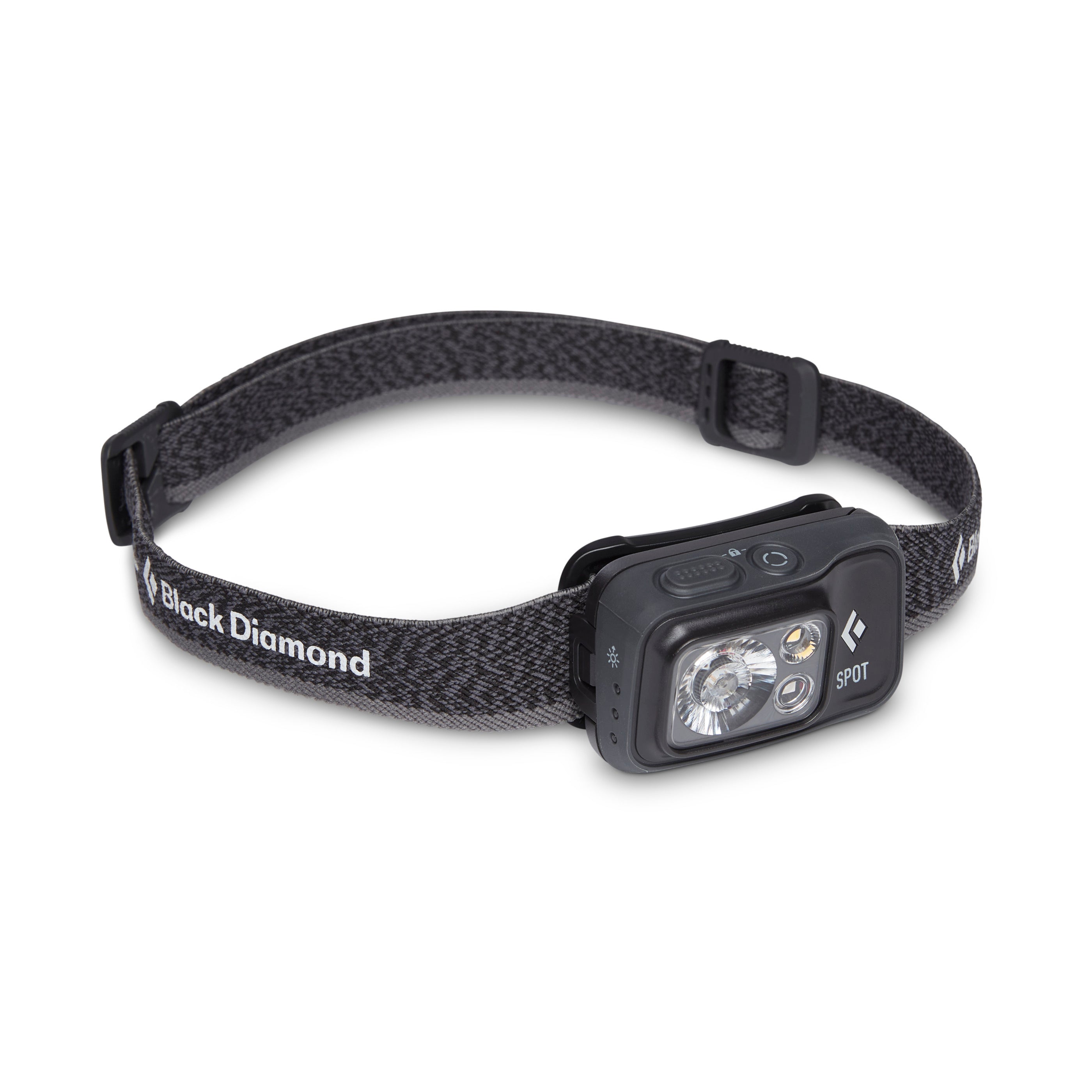
Both brands offer headlamps across the full lumen range — from compact 100-lumen models for camp use up to 1000+ lumen high-performance models for technical mountaineering and trail running. The Petzl REACTIK+ delivers up to 300 lumens with reactive auto-adjust; the NAO+ reaches 750 lumens with full reactive capability. Black Diamond's Spot 400 hits 400 lumens; the Icon delivers 500 lumens with a separate battery pack for extended runtime.
The key difference is how each brand reports and sustains lumen output. Black Diamond advertises maximum burst brightness alongside a sustained output figure, the Spot 400 delivers its full 400 lumens for a consistent period before stepping down. Petzl's reactive models continuously modulate output, so peak lumens is less relevant than the adaptive range.
For beam distance, both brands achieve 80–100 meters at maximum output in the mid-range, and 200+ meters in their high-end models. For the full rundown of top options across both brands, see our best headlamps guide.
Battery Life
Petzl's reactive lighting technology is its single biggest advantage for battery endurance. The REACTIK+ can extend runtime from around 2 hours at constant maximum brightness to 8+ hours in reactive mode, because the sensor is continuously reading ambient conditions and reducing output when full brightness is unnecessary. In practice, hikers rarely need maximum brightness for the entire duration of a trip, and Petzl's system delivers that savings automatically without requiring the user to manually manage brightness levels.
Black Diamond's approach uses PowerTap technology, a tap on the top of the headlamp instantly toggles between full brightness and a dimmed mode. This gives the user manual battery management control without navigating a menu. The Spot 400 provides approximately 2 hours at max, 70 hours at minimum setting. Both brands' mid-range headlamps use USB rechargeable batteries, and both accept standard AAA batteries as a backup on hybrid models. For a full gear packing breakdown, our backpacking gear checklist covers what to carry on multi-night trips.
Beam Type
Petzl uses what it calls the HYBRID concept on several models, a combination of a broad flood beam for close-range tasks (reading a map, cooking, setting up camp) and a focused spot beam for distance visibility on trail. The two beam types are integrated into a single reflector design rather than requiring the user to switch between separate LEDs. This produces a useful transitional zone that avoids the hard cutoff you get from a pure spot beam.
Black Diamond's multi-mode approach offers distinct spot, flood, and dimmed settings via sequential button presses. The Spot series uses a single LED with a reflector optimized for a balance between throw distance and peripheral spread. The Icon uses a dual-LED configuration for a wider combined beam pattern. Neither system is clearly superior — the Petzl HYBRID integration is seamless, while Black Diamond's discrete modes give more explicit control. See our camping gear for beginners guide if you're choosing your first headlamp.
Water Resistance
Both brands offer IPX4 to IPX8 ratings across their respective lineups, meaning there is a headlamp from each brand to match any weather condition you are likely to encounter. IPX4 (splash-resistant) covers standard rain hiking. IPX7 (submersion to 1 meter for 30 minutes) covers river crossings and heavy downpours. IPX8 is found on work and rescue headlamps from both brands designed for sustained immersion.
For trail hiking specifically: the Petzl Actik Core is rated IPX4; the Petzl NAO+ is rated IPX4. The Black Diamond Spot 400 is rated IPX8, an unusually high rating for a mid-range hiking headlamp, and a meaningful differentiator if you regularly hike in heavy rain or creek crossings. The Black Diamond Icon is also IPX8. If water resistance is a priority, Black Diamond's higher IPX ratings at equivalent price points are an advantage. For general hiking, IPX4 is sufficient for rain.
Weight and Headband
Petzl headlamps are generally lighter than Black Diamond equivalents at equivalent lumen output levels. The Petzl Actik Core weighs 87g; the Black Diamond Spot 400 weighs 95g. At the high end, the difference is more pronounced, the Petzl NAO+ is 115g while the Black Diamond Icon reaches 227g, though the Icon uses a separate battery pack design for a different performance purpose. For Black Diamond vs Leki trekking poles, the same brand-comparison thinking applies across gear categories.
On headband comfort, opinions are split. Black Diamond's headbands use a wide, padded single-strap design that many hikers find more stable under a hat or helmet. Petzl uses a three-point strap system on most models — two straps across the crown and one around the back of the head — which distributes the headlamp weight more evenly but can feel more complex to adjust. Both are comfortable for multi-hour use; preference is genuinely personal and worth testing before a long trip.
Head-to-Head Comparison Table
| Category | Black Diamond | Petzl | Winner |
|---|---|---|---|
| Max lumens (mid-range) | 400 lm (Spot 400) | 300 lm (Actik Core) | Black Diamond |
| Reactive lighting | No — manual PowerTap only | Yes. REACTIK+ and NAO+ | Petzl |
| Battery life (max brightness) | ~2 hrs (Spot 400) | ~2 hrs constant / 8+ hrs reactive | Petzl |
| Water resistance (mid-range) | IPX8 (Spot 400) | IPX4 (Actik Core) | Black Diamond |
| Weight (mid-range) | 95g (Spot 400) | 87g (Actik Core) | Petzl |
| Beam type | Spot / flood / dimmed modes | HYBRID (integrated spot + flood) | Tie |
| USB charging | Yes (Spot 400, Ion) | Yes (Actik Core, NAO+) | Tie |
| AAA battery fallback | Yes (Spot 400) | Yes (Actik Core hybrid) | Tie |
| Price (mid-range) | ~$50–60 (Spot 400) | ~$55–65 (Actik Core) | Tie |
Model Matchups
Petzl Actik Core vs Black Diamond Spot 400
This is the core mid-range matchup for trail hikers and backpackers. Both headlamps sit in the $50–65 range, accept USB charging, and include a standard battery fallback. They are the models most frequently compared by hikers choosing their primary headlamp for multi-day trips.
Petzl Actik Core
- Max output: 300 lumens
- Beam distance: 80m
- Battery: Rechargeable Core + AAA backup
- Water resistance: IPX4
- Weight: 87g
- Price: ~$60
Black Diamond Spot 400
- Max output: 400 lumens
- Beam distance: 100m
- Battery: USB rechargeable + AAA backup
- Water resistance: IPX8
- Weight: 95g
- Price: ~$50
Verdict: The Black Diamond Spot 400 wins on raw lumens, beam distance, water resistance, and price. The Petzl Actik Core wins on weight. For most trail hikers, the Spot 400 offers more output and better weather protection at a lower price point, it is the stronger value buy in this matchup.
Petzl NAO+ vs Black Diamond Icon
The high-end matchup for technical mountaineers, trail runners, and hikers who spend long hours in the dark. The Petzl NAO+ is the flagship of Petzl's reactive lighting lineup — delivering up to 750 lumens with full adaptive brightness control and Bluetooth connectivity for custom programming. The Black Diamond Icon is a high-output work and mountaineering headlamp with a separate battery pack for extended runtime. These are different products targeting partly overlapping use cases.
Petzl NAO+
- Max output: 750 lumens
- Beam distance: 140m
- Reactive lighting: Full adaptive
- Bluetooth app: Yes
- Water resistance: IPX4
- Weight: 115g
- Price: ~$170
Black Diamond Icon
- Max output: 500 lumens
- Beam distance: 100m
- Reactive lighting: No
- Separate battery pack: Yes
- Water resistance: IPX8
- Weight: 227g
- Price: ~$90
Verdict: The Petzl NAO+ is the better choice for trail runners and alpine hikers who want adaptive brightness and lighter weight. The Black Diamond Icon wins on water resistance (IPX8 vs IPX4) and price, it is a more rugged, utilitarian headlamp suited to work and mountaineering contexts where durability outweighs intelligent lighting modes.
Which Brand to Buy
For a broader look at the full headlamp category, see our complete best headlamps guide.
Frequently Asked Questions
Is Black Diamond or Petzl better for hiking?▼
Both are excellent headlamp brands, the right choice depends on what matters most to you. Black Diamond is generally favored by hikers who want consistent, reliable maximum brightness without the light automatically adjusting. Petzl is preferred by hikers who value reactive and adaptive lighting modes that extend battery life by reading ambient conditions and dimming accordingly. For straightforward trail hiking, either brand serves well. For long nights out or technical terrain where battery endurance matters, Petzl's reactive modes are a meaningful advantage.
What lumens do I need for hiking?▼
For standard trail hiking, 200–400 lumens is sufficient for most conditions. At that output level you can see clearly at a comfortable pace on a well-defined trail. For technical scrambling, fast trail running, or off-trail navigation where you need to read terrain quickly at distance, 500 lumens or more is beneficial. Very high-output headlamps (700–1000+ lumens) are useful for technical mountaineering, route-finding in complex terrain, or search-and-rescue contexts. High-lumen settings drain batteries quickly, so most hikers use max brightness only when needed and run at 100–200 lumens for sustained hiking.
Does reactive lighting actually help?▼
Yes — on headlamps like the Petzl REACTIK+, reactive lighting makes a real difference to battery endurance. The sensor continuously measures ambient light and adjusts output to maintain a consistent perceived brightness, rather than running at fixed maximum power. In practice this means the light dims automatically when you look at a map, your tent wall, or a nearby rock, and brightens when you look down a dark trail. Battery runtime on the REACTIK+ can be substantially extended compared to running at a fixed high lumen setting. That said, not every hiker prefers auto-adjust — if you want full control over your brightness, Black Diamond's manual mode switching is a simpler and more predictable system.
Which is lighter. Black Diamond or Petzl?▼
Petzl is generally slightly lighter at equivalent brightness levels. The Petzl Actik Core weighs approximately 87g; the Black Diamond Spot 400 weighs approximately 95g. The difference is small but consistent across the mid-range lineup. At the high end, the Petzl NAO+ (115g) and Black Diamond Icon (227g) differ more substantially, the Icon is a much heavier work-oriented headlamp with a separate battery pack. For backpacking where gram counts matter, Petzl has a slight edge at most equivalent brightness tiers.
Are rechargeable headlamps worth it for backpacking?▼
Yes, for most backpacking contexts. USB-C rechargeable headlamps can be topped up directly from a power bank — which most backpackers carry anyway for phones and GPS devices. This eliminates the need to carry spare AAA or AA batteries, reduces pack weight, and avoids the cost and waste of single-use batteries over time. The main limitation is that recharging takes time and requires a power source. For very remote trips where you can't recharge, carrying a headlamp that accepts standard batteries (or a hybrid model like the Petzl Actik Core, which accepts both) gives you a fallback option.
How long do headlamp batteries last on a backpacking trip?▼
A fully charged rechargeable headlamp typically provides enough power for 3–7 nights of normal hiking use, depending on how many hours per night you run it and at what brightness level. At moderate brightness (100–200 lumens) for 2–3 hours per evening, a 1000–1200 mAh battery lasts 4–6 nights before needing a recharge. On longer trips, plan to recharge from your power bank every 3–4 nights, or carry a headlamp that accepts standard batteries as a backup. Most mid-range Petzl and Black Diamond headlamps have battery indicators so you can monitor remaining charge before it becomes critical.


